

Kraken, one of the world’s most trusted crypto exchanges, has recently announced the launch of Kraken Ramp. Ramp represents an API that lets any app or platform seamlessly switch between fiat and crypto. Kraken Ramp makes it easy for businesses worldwide to add crypto buy/sell features for their users without redirecting users to other sites or dealing with complicated compliance issues.
By leveraging Kraken’s proven infrastructure and global footprint, the platform aims to make fiat-to-crypto gateways as easy and common as any other digital financial service.
Read on to learn whether Kraken’s efforts to unlock global crypto payment methods can truly become the missing link that simplifies Web3 adoption.
The Real Barriers to Crypto Adoption, And Why Seamless On/Off-Ramps Matter
Crypto adoption has been relatively slow due to pressing issues like fragmented fiat on-ramps, regional payment limits, and complex compliance requirements. New users often struggle to convert their local currency into crypto because each region or platform typically follows a different process, creating more friction and outright discouraging participation.
To eliminate these barriers, investors globally have recognized the need for seamless crypto integration. Platforms that make it easy to buy and sell crypto in-app can make digital assets more accessible to regular people, regardless of their geographic location. In fact, Kraken’s head of banking and payments noted that smooth, dependable fiat on/off-ramps are essential for driving the next phase of global crypto adoption.
How Kraken’s Unified API Unlocks Real-Time Crypto Liquidity
Simply put, Kraken Ramp is a crypto liquidity API that makes it easy for developers to embed crypto buying and selling directly into their products on any platform. In practice, it can even support experiences where users buy crypto with a card worldwide, using familiar payment methods, no matter where they live.
How will this exactly work? Users will buy and sell cryptos directly from the platform’s interface. There are no annoying redirects to third-party exchanges, and users don’t even need to create separate accounts or go through verification processes.
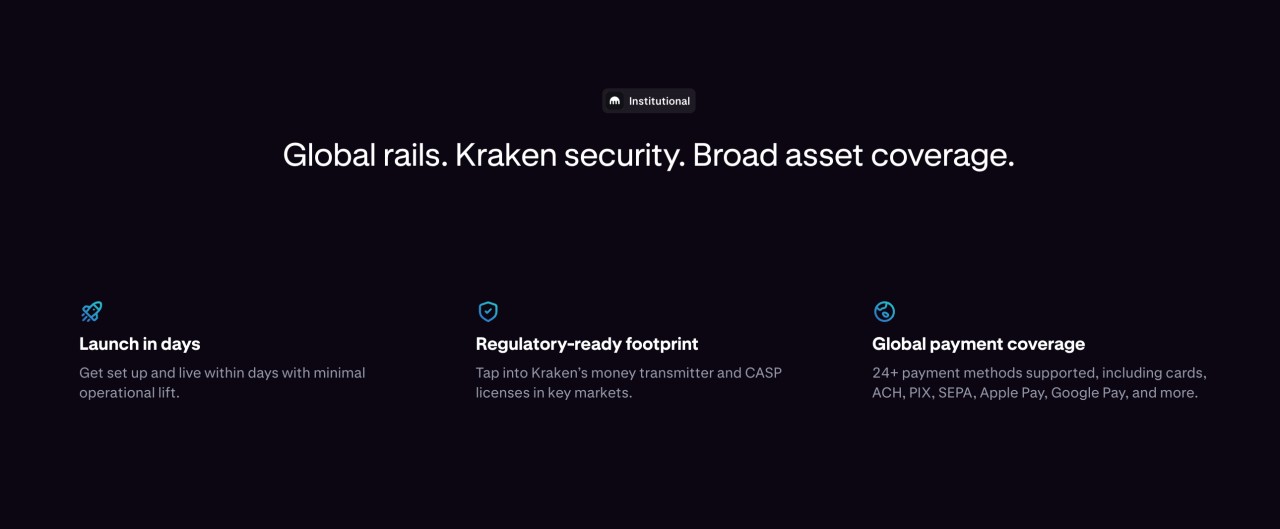
The API will handle the heavy lifting behind the scenes by connecting to Kraken’s exchange infrastructure to provide you with real-time prices, trade execution, and custody. It is built on the same infrastructure as Kraken’s exchange, which has more than 13 million users around the world and offers high security and deep liquidity. Basically, Kraken Ramp lets any app connect to the crypto ecosystem without the platform having to build its own exchange or Web3 compliance stack.
What Sets Kraken Ramp Apart From Other Platforms
Here’s why Kraken Ramp stands out from other crypto on-ramp solutions on the market:
- Trusted, compliant infrastructure: Kraken will ensure compliance with all applicable rules, licenses, and fraud prevention measures. Thus, platforms won’t need their own KYC/AML processes or money transmitter licenses.
- Global payment coverage: It’s worth noting that Kraken Ramp supports global cards, PIX, ACH, SEPA, Google Pay, and Apple Pay, among others. Customers can make deposits on platforms from almost anywhere using familiar local methods.
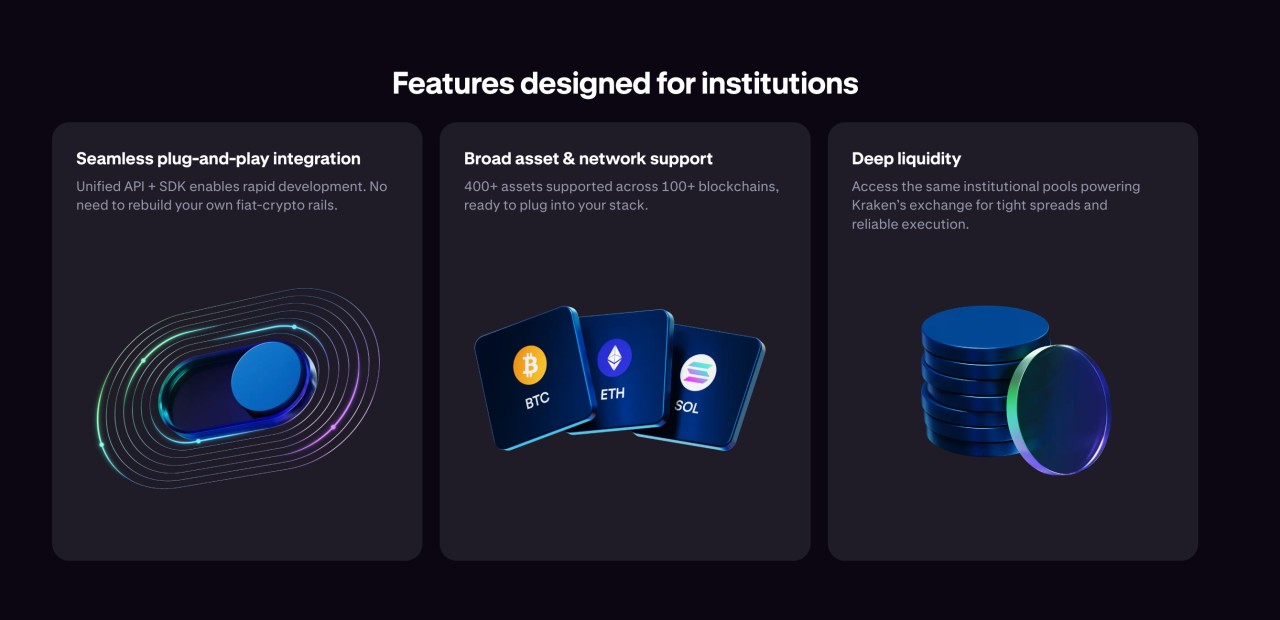
- High Liquidity: Users can access high liquidity and tight spreads with reliable execution at fair market prices by connecting directly to Kraken’s institutional-grade crypto infrastructure.
- Broad asset support: With just one integration, the API supports more than 100 blockchains and over 400 cryptos.
- Seamless integration: With a single REST API and SDKs, teams can set up crypto on-ramps in just a few days (rather than months) and with minimal technical work.
Which Businesses Can Integrate Kraken Ramp?
Kraken Ramp can cater to a host of businesses looking to integrate crypto payment features into their products. For example, fintechs and banks can add crypto trading features without obtaining new licenses or starting from scratch. On the other hand, wallets and protocols can easily onboard new users, potentially increasing the total value locked and reducing overall user friction.
Additionally, exchanges and marketplaces can quickly expand their asset coverage and even the number of countries they globally cater to. Also, Platforms that build GameFi or other dApps can empower users to buy in-game items or pay for blockchain transactions using familiar local payment options.
Can Kraken Ramp Provide a Future-Proof Compliance Layer?
One of the main challenges in providing fiat-to-crypto services is navigating the relatively complex regulations across multiple jurisdictions. This is precisely why Kraken Ramp will handle compliance, fraud prevention, licensing, and even payment processing as part of its services. Kraken’s established compliance team will handle all user identity verification, regulatory reporting, and even transaction monitoring.
The API is centrally managed and version-controlled, so updates for new rules, payment methods, or supported assets are automatically rolled out. Kraken will also handle improvements to the platforms’ code, so they don’t have to do it continuously. In the long run, you get a lasting solution that’s always up to date with the latest requirements.
The Surge in Demand for Global Crypto Payment Methods
Before we officially enter 2026, the need for an easy-to-use crypto exchange API solution is real. Users globally today want to seamlessly access financial products, including cryptos, in real time from anywhere in the world. According to industry research, the global crypto payment gateway market is set to grow by over 18% annually, reaching about $5.4 billion by 2031.
Meanwhile, regulators have begun paying closer attention to crypto transactions, making compliant solutions more critical than ever. Kraken Ramp comes at a time when many companies are genuinely looking for a safe and quick way to meet this demand.
Setup Guide: Integrating Kraken’s Fiat-To-Crypto API
It’s easy to integrate Kraken Ramp into a business. For perspective, companies can sign up on Kraken’s institutional website, set up the SDK or API, set up payment methods and asset lists, test in a sandbox environment, and then go live.
As we briefly discussed, companies can launch the APY days. As a result, even companies with minimal crypto exposure can set up a functional fiat-to-crypto gateway in a short time, especially with Kraken providing adequate documentation and support.
Conclusion
Kraken Ramp could prove pivotal in the broader shift toward integrating cryptos into everyday financial products. People are no longer viewing Web3 access as a separate service, but rather looking for ways to incorporate it into the platforms they already use.
By providing a single, global API for all fiat and crypto transactions, Kraken Ramp is helping the industry leap toward a connected digital economy. And platforms that embrace this integration can provide their customers with an intuitive interface where managing crypto is just another feature, instead of an external process.