


Selecting between Crypto.com and Coinbase can present a significant challenge for potential cryptocurrency investors. Both platforms serve as portals to the active cryptocurrency market but have distinct user bases.
Crypto.com boasts a more comprehensive coin selection and real-world spending options, like a crypto debit card, while Coinbase prioritizes user-friendliness and established coins with strong regulatory compliance.
This article breaks down the pros and cons of each platform, helping you pick the crypto exchange that’s the ultimate fit for your trading style.
Crypto.com vs Coinbase – A Guide for Crypto Investors
- Trade 240+ cryptos
- Deposit with debit card or bank transfer
- Trusted by over 110 million customers in 100+ countries

Coinbase is a US-based cryptocurrency platform tailored for beginners entering the crypto space. Its intuitive interface simplifies buying, selling, and storing major cryptocurrencies. Coinbase also emphasizes education, offering resources to help users understand and explore the world of crypto. While the fees are slightly higher, it’s an excellent starting point for new investors.
Crypto.com offers a complete cryptocurrency ecosystem, featuring Visa debit cards that reward purchases with crypto, interest-earning options on a wide range of coins, and its own blockchain. The platform may feel less intuitive, but it provides extensive features, lower fees for frequent traders, and numerous opportunities to grow and manage crypto assets.
- Show Full Guide
Who has more users?
Coinbase currently boasts the largest user base, with estimates of around 120 million registered users with over 8.7 million monthly transacting users (MTUs) in Q2 2025, compared to Crypto.com’s over 100 million users, up from 70 million a year ago. A larger user base usually translates to platform stability and higher liquidity, which can result in smoother trades as there are more buyers and sellers to match orders.
| Coinbase | Crypto.com | |
| Category rank (According to CoinGecko) | 2nd | 15th |
| 24-hr trading volume | ~ $3.7B | ~ $4B |
| Most active trading pair(s) | BTC/USD: ~ $980M (24hrs) | BTC/USD: ~ $1.5B (24hrs) |
| Monthly pageviews | 67M | 8.94M |
| X (Twitter) followers | 6.3M | 2.9M |
| Alexa’s global rank | 730 | 5390 |
Who is better regulated?
Crypto.com
Crypto.com focused on Europe in 2025. It secured MiCA CASP authorization from Malta’s MFSA, enabling EU passporting under the new regime. To meet those obligations, it removed USDT and several other tokens for EEA users by January 31, 2025. It is also working to meet DORA’s cybersecurity and incident obligations now in application across the EU.
Beyond the EU, Crypto.com relaunched its Exchange for U.S. institutional and advanced traders on January 21, 2025. In Canada, it obtained nationwide Restricted Dealer registration on May 8, supporting continued access while it pursues full investment dealer status. In the UAE, its Dubai entity holds full operational approval from VARA and is operational with fiat. The platform also holds an MAS Major Payment Institution licence for digital payment token services in Singapore and has signaled alignment with the U.S. GENIUS Act.
Coinbase
Coinbase recorded several licensing gains in 2025. It secured UK FCA VASP registration on February 3, obtained a MiCA authorization in Luxembourg on June 20, and saw the SEC dismiss its civil case on February 27. These steps expand the services it can offer in Britain and across the EU. They also align Coinbase with the most significant rulebooks now live in Western markets.
Later in the year, the Central Bank of Ireland fined Coinbase Europe €21.46 million for AML and CFT monitoring failures between 2021 and 2025. The company says the issues were remediated, yet the action shows regulators are enforcing against operational lapses. Coinbase is engaging in GENIUS Act rulemaking and urges that the interest ban apply only to stablecoin issuers. It also gained approval to launch in Argentina in January 2025 and had already delisted USDT in the EEA in December 2024.
Verdict
For 2025, Crypto.com takes a narrow lead on regulatory readiness: it paired an early MiCA authorization with concrete product changes, added Canada Restricted Dealer status, and is already operational with fiat under VARA in the UAE. Coinbase still offers unmatched liquidity and brand accountability, and it cleared major hurdles with UK VASP, MiCA, and the SEC case dismissal. And while both are engaging the GENIUS Act era, Crypto.com’s multi-region licensing map looks slightly cleaner right now.
What changed in 2025
- Feb 3, 2025: Coinbase obtained UK FCA VASP registration.
Coinbase - Feb 27, 2025: SEC v. Coinbase was dismissed.
- Jan 27 / Mar 21, 2025: Crypto.com received EU MiCA CASP authorization via Malta’s MFSA (announced Mar 21).
- Jun 20, 2025: Coinbase obtained EU MiCA license via Luxembourg.
- Jan 17, 2025: DORA entered application across the EU.
- Jan 21, 2025: Crypto.com Exchange launched for U.S. institutional/advanced traders.
- May 8 / May 12, 2025: Crypto.com Canada gained Restricted Dealer registration nationwide.
- Jan 31, 2025: To align with MiCA, Crypto.com removed USDT and other assets for EEA users; Coinbase had already delisted USDT in Dec 2024.
- Nov 6, 2025: Ireland’s central bank fined Coinbase Europe €21.5m over AML/CFT monitoring failures.
Updated regulatory standing: Coinbase vs. Crypto.com
| Feature / Category | Coinbase | Crypto.com |
| US Federal Licenses | FinCEN MSB (Money Services Business) | FinCEN MSB (Money Services Business) |
| US Derivatives | Has regulatory filings for futures and derivatives | Full suite of CFTC derivatives licenses (DCM, DCO amendment, FCM registration) as of September 2025 |
| EU Regulation | MiCA License (Luxembourg CSSF) for all 27 EU member states (as of June 2025). Also licensed in Germany, France, Ireland, Italy, and The Netherlands. | FCA-registered as a cryptoasset business in the UK. Actively building on its commitment to regulatory compliance globally. |
| Global Licenses | Licensed/Registered in Ireland (CBI EMI), Singapore (MAS), Australia, and others globally. | Licensed/Registered in Singapore (MAS), Australia, Canada, Italy, France, Spain, and others globally. |
| Security & Custody | Publicly listed company (high transparency), custodian for multiple US Spot ETFs, 98%+ assets in cold storage. | Proof-of-Reserves system, 95%+ assets in cold storage. |
Who offers a better trading platform?
While both platforms offer access to the crypto market, they cater to different audiences and prioritize distinct features. Here’s a breakdown to help you pick the better option.
Coinbase: The established powerhouse
Coinbase dominates the crypto exchange space with a platform that’s ridiculously easy to use. Whether for a newbie or a seasoned trader, the interface feels smooth, clean, and intuitive. Signing up is a breeze, and buying crypto takes just a few taps. It’s no wonder Coinbase is the go-to for many first-time investors.
But don’t mistake simplicity for lack of depth—Coinbase Pro (now integrated into the main app) offers powerful charting tools, limit and stop orders, and deep liquidity. The app is also optimized for mobile, so you can trade on the go without feeling like you’re using a watered-down version of the desktop site.
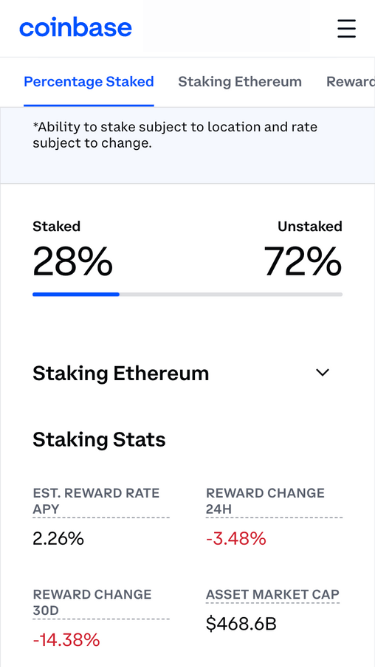
Security-wise, Coinbase is rock solid. It’s a publicly traded company, fully regulated in the U.S., and insures digital assets against hacks. Plus, with advanced features like staking, a self-custody wallet, and Coinbase One (offering zero trading fees for a monthly subscription), there’s plenty for power users, too.
Crypto.com: The feature-rich contender
If you love perks, Crypto.com delivers. The platform is more than just a trading hub, it’s an entire ecosystem. You get an exchange, an integrated DeFi wallet, staking, and even a Visa card that gives cashback in CRO tokens.
Crypto.com also offers a range of features for crypto enthusiasts. Earn up to 8% rewards on stablecoins, trade over 350 cryptocurrencies, and soon get up to a 3% deposit bonus when trading stocks, including NVIDIA and over 5,000 other options. The platform also has growing banking features with up to 8% rewards and personal accounts for global transfers.
Their Visa Card offers up to 8% cashback, letting you spend your crypto anywhere. For advanced traders, Crypto.com Advanced lets you trade spot & margin on 590+ pairs, use leverage, and automate trading with bots like DCA, Grid, and TWAP.

On the on-chain side, you can swap 10,000+ tokens across any chain, stake through top DeFi protocols, and browse dApps to earn on over 25 tokens. With 64 million TPS and 370ns latency, Crypto.com is built for high-performance trading.
Security is tight, too, with cold storage, multi-factor authentication, and proof of reserves. And if you’re into NFTs, Crypto.com has its own marketplace. While it may not have Coinbase’s mainstream credibility, it’s an all-in-one powerhouse for anyone looking to maximize their crypto experience.
Who offers more cryptocurrencies?
Crypto.com offers more trade asset option currently listing ~438 coins with 625 pairs, while Coinbase lists ~340 coins and 475 pairs.
Coinbase’s philosophy is to prioritize security when selecting cryptocurrencies. It is consistently expanding its list, with new Coinbase listings often catching the interest of investors looking to explore emerging assets.
They meticulously evaluate each project before listing it, ensuring users can access established and reputable coins. This focus on compliance means they avoid high-risk categories like privacy coins (e.g., Monero) and meme coins, which are susceptible to scams (“rug pulls”).
Crypto.com, in contrast, embraces a wider variety of cryptocurrencies. Their expansive list includes newer and less established projects, offering users more choices but potentially higher volatility and risk.
| Coinbase | Crypto.com | |
| Cryptocurrencies | 272 | 394 |
| Pairs | 424 | 623 |
Who offers more deposit methods?
Crypto.com provides a broader range of deposit methods, offering more flexibility for users with various preferences. However, the availability of specific methods might differ based on your location.
Here’s a comparison:
| Deposit Method | Coinbase | Crypto.com |
|---|---|---|
| Bank Transfer (ACH/SEPA/FPS) | Yes (ACH in the U.S., SEPA in Europe, FPS in the UK) | Yes (ACH, SEPA, FPS, SWIFT, domestic bank transfers) |
| Wire Transfer | Yes (U.S. domestic & international wires) | Yes (More international options) |
| Debit Card | Yes (Visa/Mastercard) | Yes (Visa/Mastercard) |
| Credit Card | No (Only for purchases, not deposits) | Yes (Higher fees apply) |
| Apple Pay | Yes (For U.S. users) | Yes |
| Google Pay | Yes | Yes |
| PayPal | Yes (Only for U.S. deposits) | No |
| Crypto Deposits | Yes (Multiple blockchains) | Yes (Wider blockchain support) |
| Fiat Wallet Top-Ups | No | Yes (Direct funding from the app) |
Overall: Crypto.com supports more deposit methods, especially for international users, thanks to credit card deposits and broader fiat currency support. Coinbase, however, remains strong for U.S. users with PayPal deposits.
Who offers better deposit fees?
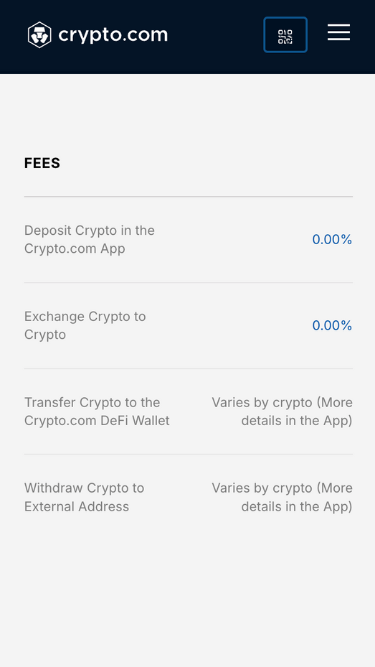
While both platforms offer free deposits for ACH bank transfers, Crypto.com trading fees are often lower for other deposit methods.
Here’s a comparison of deposit fees on Coinbase vs. Crypto.com, based on available data:
| Deposit Method | Coinbase Fees | Crypto.com Fees |
|---|---|---|
| Bank Transfer (ACH – U.S.) | Free | Free |
| Wire Transfer (U.S.) | $10 deposit fee | $25 deposit fee |
| SEPA Transfer (Europe) | Free | Free |
| Faster Payments (UK) | Free | Free |
| SWIFT Transfer | Varies by bank | Varies by region |
| Debit/Credit Card | 3.99% | Up to 2.99% |
| PayPal (U.S. only) | 2.49% | Not available |
| Apple Pay / Google Pay | Same as debit/credit card (3.99%) | Same as debit/credit card (up to 2.99%) |
For detailed fee structures, check Coinbase’s fees page and Crypto.com’s fee section.
ACH is a U.S. financial network used for electronic fund transfers.
Explanation:
- ACH bank transfer: Both platforms waive fees for ACH deposits, the most common and cost-effective method.
- Debit card deposits: Crypto.com often charges lower fees for debit card deposits than Coinbase. However, both platforms can have significant fees associated with debit card deposits, so it’s generally not recommended.
- Credit card deposits: Due to high processing fees and potential risks, Coinbase and Crypto.com have hefty charges for credit card deposits. It’s best to avoid this method altogether.
- Wire transfer: Fees for wire transfers on both platforms can vary depending on the transfer amount. Be sure to check their latest fee schedules before using this method.
Overall: While Crypto.com generally offers lower deposit fees, especially for debit card deposits, it’s important to consider your preferred deposit method. Always check the latest fees on both platforms before making a deposit.
Who offers better withdrawal fees?
Determining the clear winner for withdrawal fees is difficult because it depends on several factors:
- Specific cryptocurrency: Withdrawal fees can vary significantly between different cryptocurrencies.
- Withdrawal method: Fees for sending crypto to an external wallet might differ from sending it to another exchange.
- Trading volume: Some platforms offer tiered fees based on your monthly trade volumes.
However, here’s a general comparison:
| Withdrawal Method | Coinbase Fees | Crypto.com Fees |
|---|---|---|
| Bank Transfer (ACH – US) | Free | Not supported |
| Bank Wire (USD) | $10 | Varies (via SWIFT) |
| SEPA (EUR – EU/UK) | €0.15 | Free |
| Faster Payments (UK – GBP) | Free | £1 |
| PayPal (USD/EUR/GBP) | 2.49% | Not supported |
| Crypto Withdrawals (BTC, ETH, etc.) | Network fees apply | Network fees apply (varies by coin) |
| Crypto.com App to Exchange | Not applicable | Free (off-chain transfers) |
| Crypto.com Exchange to External Wallet | Not applicable | Network fees apply |
Analysis
- Coinbase has a lower-cost structure for bank transfers, particularly for ACH (free) and SEPA (€0.15). However, PayPal withdrawals come with a 2.49% fee.
- Crypto.com offers free SEPA withdrawals but charges £1 for Faster Payments in the UK. Crypto withdrawals depend on network fees, similar to Coinbase
Here’s an example to illustrate the withdrawal process on Crypto.com vs Coinbase:
Let’s say you want to withdraw $100 worth of Bitcoin (BTC):
- Coinbase: They might charge a fixed withdrawal fee of $10 + network fee (which can fluctuate).
- Crypto.com: They could offer a flat fee of 0.0004 BTC (currently around $8) or a percentage fee based on your withdrawal method. However, if you use their CRO token to pay the fee, it could be significantly lower.
Overall:
- Coinbase: Generally has higher withdrawal fees, with a less transparent fee structure.
- Crypto.com: Potentially, it has lower fees, especially with CRO token usage, but its fee structure can be more complex.
For occasional withdrawals: Crypto.com could be a better option, especially if you utilize their CRO token for fee discounts. For frequent withdrawals: Coinbase’s flat fee structure might be simpler to manage, even if it’s slightly higher.
Who is more appealing to institutional traders?
Coinbase: strengths & weaknesses
✅ Trust & security – Coinbase is a publicly traded company with strong regulatory compliance, making it a preferred choice for institutions needing a trusted custodian. It has extensive insurance coverage and security protocols.
✅ Liquidity & market depth – Coinbase Prime offers deep liquidity, enabling large transactions with minimal slippage, making it attractive for institutional traders.
✅ ETF & custodial services – Coinbase serves as a custodian for major Bitcoin and Ethereum ETFs, further reinforcing its institutional credibility.

🚫 Higher fees – Coinbase’s institutional trading fees are generally higher compared to Crypto.com, which can be a drawback for frequent traders.
🚫 Slower expansion of trading features – While Coinbase is a leader in compliance, its platform evolves more cautiously compared to Crypto.com, which rapidly integrates new trading features.
Crypto.com: strengths & weaknesses
✅ Higher trading volumes – As of August 2024, Crypto.com surpassed Coinbase in 24-hour trading volume, mainly due to increased institutional demand and the launch of spot Ether ETFs.
✅ Lower fees – Crypto.com offers more competitive fee structures, making it attractive for high-frequency traders and institutions looking to minimize costs.
✅ More aggressive expansion – The exchange is actively onboarding new institutional clients, having launched a US-based institutional crypto investing platform and announced the international expansion of its Custody services for institutional wallets.

🚫 Regulatory uncertainty – Compared to Coinbase, Crypto.com faces more regulatory risks since it is not a publicly traded company and does not have the same level of regulatory clarity in the U.S.
🚫 Less established reputation – While growing quickly, Crypto.com lacks the same level of institutional trust and recognition as Coinbase, especially in Western markets.
Verdict
- For regulated institutions prioritizing security and compliance, Coinbase remains the stronger choice.
- For institutions seeking lower fees and higher trading volume, Crypto.com is emerging as a compelling alternative.
Users’ opinions on the Crypto.com vs Coinbase debate




Crypto.com vs Coinbase: Final verdict
Both Crypto.com and Coinbase offer strong platforms for buying, selling, and trading crypto, but they cater to different types of users. Your choice depends on your priorities—whether it’s security, fees, asset selection, or ease of use.
For Coinbase
Coinbase is known for its user-friendly interface, making it an excellent choice for beginners. It has a strong reputation for security and regulatory compliance, making it one of the most trusted crypto exchanges in the world. Coinbase lists over 270+ cryptocurrencies, focusing on established, reputable projects.
One of its biggest new features is the return of DeFi-backed Bitcoin loans, allowing U.S. users to borrow cash using BTC as collateral. Coinbase also introduced Coinbase One, a subscription service offering zero trading fees and priority customer support. For more experienced traders, Coinbase Advanced Trade provides lower fees and better trading tools.
However, the biggest downside is higher fees. Instant buy/sell transactions come with a 1% fee, while advanced traders using Coinbase Advanced Trade still face higher fees than some competitors.
For Crypto.com
Crypto.com has a wider asset selection, supporting over 350 cryptocurrencies, including newer altcoins that aren’t available on Coinbase. The platform also offers lower trading fees, starting at 0.4% and decreasing with higher trading volume. Users who stake CRO tokens can enjoy additional fee discounts and staking rewards.
Another major advantage is the Crypto.com Visa Card, which allows users to spend crypto in real life while earning cashback rewards. Crypto.com also supports more fiat currencies for deposits and withdrawals, making it more accessible to global users.
The downside? The platform can be overwhelming for beginners, and some of the smaller altcoins have lower liquidity, making large trades harder. Customer support is also less responsive compared to Coinbase One’s priority assistance.
The verdict: Choose Coinbase
While Crypto.com offers lower fees, more features for individuals, developers, more assets, and more trading options, Coinbase remains the better platform overall. Its ease of use, security, and strong regulatory standing make it a safer and more reliable choice, especially for beginners and long-term investors. With features like DeFi-backed Bitcoin loans and Coinbase One, the platform is evolving beyond a simple exchange.
If you want low fees, more trading and developer options, plus more coins, Crypto.com is worth considering. But if you prioritize security, ease of use, and liquidity, Coinbase is the way to go.
Before making a decision, please read our other articles comparing Kraken & Coinbase and Binance & Bybit for a more comprehensive understanding of the available options.
FAQs
Crypto.com vs Coinbase, which one is better?
Which exchange offers a better platform for beginners?
Which exchange has more users?
Is Coinbase safe for trading cryptocurrencies?
Is Crypto.com a legitimate exchange?
Trying to decide between Crypto.com vs Coinbase?
Wondering about trading fees on Crypto.com vs Coinbase?
References
Crypto.com Overtakes Coinbase to Dominate North American Crypto Trading | Yahoo Finance
Crypto.com to launch US institutional crypto investing platform | CoinTelegraph
Coinbase launches DeFi-backed Bitcoin loans for US users | DL News
Crypto.com to delist Tether USDT, 9 other tokens in Europe on Jan. 31 | CoinTelegraph
Crypto.com gets major payment institution licence from MAS | Strait Times