


We compared Bybit and Binance, which are dominant players in the world of cryptocurrency exchanges, each with unique offerings.
With the ongoing evolution of the digital asset market, investors face a critical choice between these two options.
While Binance is currently the top crypto exchange in terms of trading volume, Bybit is rapidly gaining popularity due to its user-friendly interface and emphasis on derivatives trading.
This detailed analysis compares Bybit and Binance, uncovering the intricacies that differentiate them and exploring which one might better align with your investment needs.

- The world's largest and most popular crypto exchange
- Trade, earn, or spend 500+ cryptocurrencies
- Grow your portfolio with trading bots, derivatives, lending and NFTs

- Trade 500+ cryptos with leverage
- Deposit with credit, debit or bank transfer
- Grow your portfolio with trading bots, copy trading and staking
- Show Full Guide
Source note: All figures and data used in this article were current and accurate at the time of publication.
Is Binance safer than Bybit?
This section examines whether Binance or Bybit offers a more secure environment for digital assets. We compare their safety features and track records to help you decide which platform best protects your crypto.
Basic defenses
Binance and Bybit offer two-factor authentication (MFA) and comply with KYC/AML regulations. This secures your account and deters illegal activities.
Cold storage
Bybit surpasses Binance here. Bybit stores most assets in cold wallets, offering superior protection against hacking. Binance uses a mix of hot and cold wallets, increasing vulnerability.

Audits & Insurance
Both platforms undergo security audits. However, Binance boasts a Secure Asset Fund for Users (SAFU) – a financial safety net for user assets in emergencies. Bybit currently lacks such insurance.
Decision: It’s close. Bybit wins on cold storage, but Binance counters with SAFU. The US SEC’s lawsuit against Binance has been placed on hold.
Which exchange is regulated in the US?
Before we dive into the features, let’s settle on a key difference: regulations. Binance US operates as a licensed Money Services Business, while Bybit doesn’t have equivalent US licensing. Here’s a breakdown:
| Region | Binance’s Regulations | Bybit’s Regulations |
|---|---|---|
| United States | Binance.US registered with FinCEN as an MSB | Not available; Bybit restricts U.S. users |
| Europe | Registered as a DASP in France, Italy, and Spain | MiCAR-licensed entity in Austria; EEA services were adjusted in 2024 during transition |
| Middle East | Dubai: VARA VASP Licence; Bahrain: CBB Category 4 CASP licence | Dubai: no operational VARA licence; previously held provisional/non-operational approval |
| Others | Australia: AUSTRAC-registered DCE; Brazil: Central Bank–approved acquisition of Sim;paul (broker-dealer) | Seychelles: listed with status “Assessment”; Kazakhstan: full AFSA licence |
Binance also boasts a wider reach with regulatory approval in various regions, including:
- US (Limited): Binance US operates as a licensed Money Services business.
- Europe: Offers crypto-related services under regulations in France, Italy, and Spain.
- Middle East: Licensed in Dubai by VARA and Bahrain by CBB.
- Other: Registered with financial authorities in Canada, Australia, and Kazakhstan. The central bank of Brazil approved Binance’s acquisition of Sim;paul Investimentos, which means the exchange may now hold a securities brokerage license in Brazil.
Bybit focuses on global operations but with a lighter regulatory footprint:
- Dubai: Holds a minimal viable product (MVP) license from VARA.
- Europe: Regulated by the Maltese authorities. It was removed from France’s Autorité des Marchés Financiers (AMF) blacklist and is in the progress of obtaining a MiCA license in Austria.
- Global: Registered with financial authorities in Seychelles and Mauritius.
Which exchange has better trading features?
Choosing the right crypto exchange hinges on transaction fees. This head-to-head between Binance and Bybit dissects their cost structures to help you pick the most cost-effective platform.
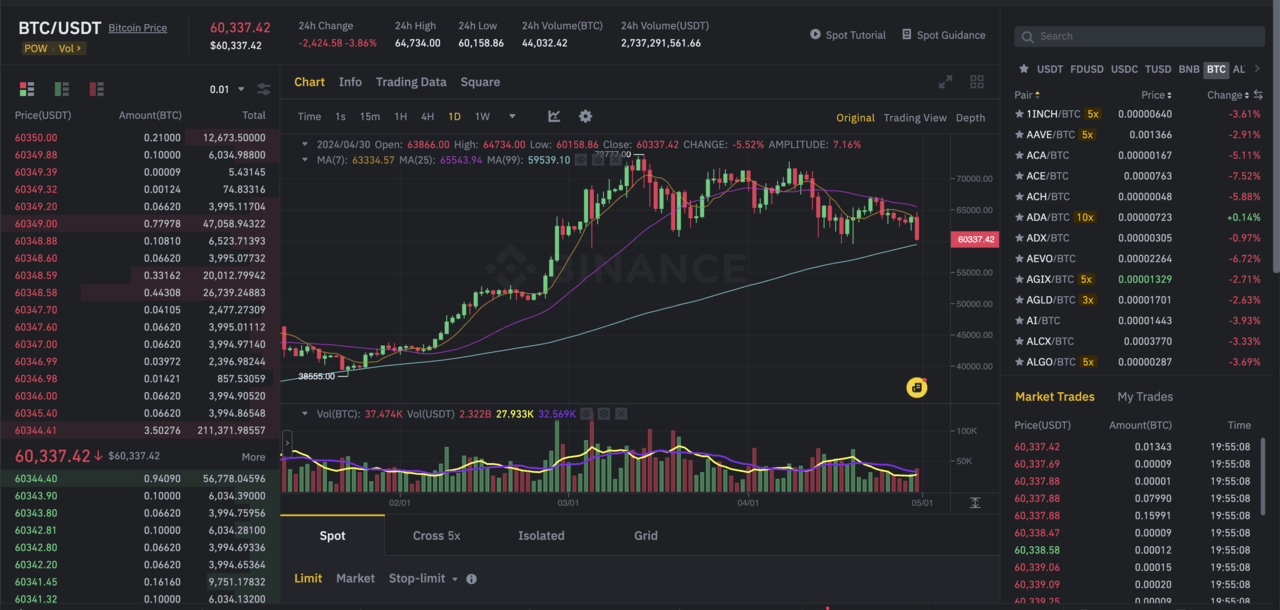
Spot trading fees
Binance boasts some of the lowest spot trading fees in the industry, with discounts for holding Binance Coin (BNB). Bybit counters with a competitive maker-taker fee structure.
Copy trading
Both exchanges offer copy trading features to their clients. In December 2024, Binance added a new feature, ‘Lead Trader Comparision.’ Users can compare up to 4 Lead Traders to see which one best suits their needs.
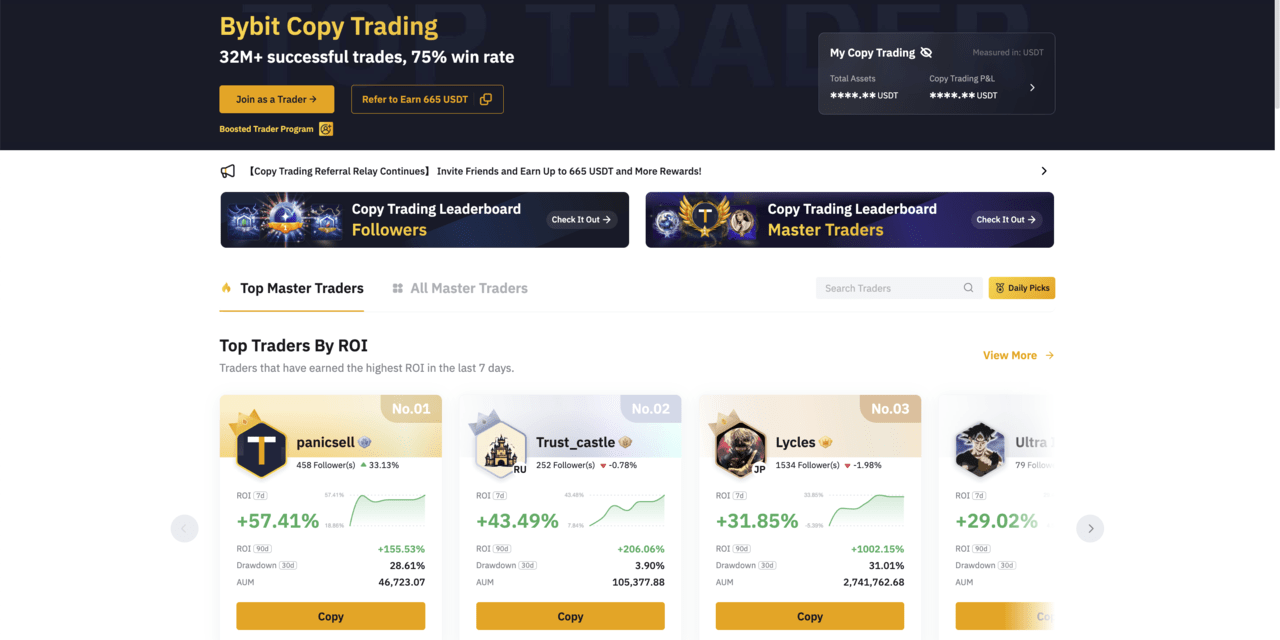
Bybit also provides a similar option; however, the focus is mainly on derivatives and futures (leveraged products), while Binance also offers great exposure to spot trading.
Margin trading fees
Bybit takes the lead here. It offers lower margin trading fees compared to Binance.
Deposit and Withdrawal Fees
Binance and Bybit accept various deposit methods, but the associated fees may vary. Binance P2P allows traders to engage in peer-to-peer trading to reduce deposit fees. Bybit generally keeps the deposit fees for most cryptocurrencies at a minimum. However, withdrawal fees differ based on the specific coin selected.
KYC overview
Both Binance and Bybit offer different KYC verification levels. Bybit’s higher KYC levels unlock features like higher withdrawal limits. Binance news suggests they might introduce similar KYC-linked benefits in the future.
Mobile app
Both Binance and Bybit provide user-friendly mobile apps for trading on the go. Binance’s app is consistently rated among the best in the industry, offering a wide range of features and functionalities. Bybit’s app is known for its sleek design and ease of use, making it a good option for new traders.
The verdict
If you are interested in spot trading, Binance provides a great option with its low fees and BNB discounts. On the other hand, if you prefer margin trading, Bybit may be a better choice due to its lower margin fees. Before making a decision, it’s important to consider your trading style and preferred features. Both platforms also offer mobile apps for convenient trading.
| Feature | Binance | Bybit |
|---|---|---|
| Spot Trading Fees | Lower, with BNB discounts | Competitive maker-taker fees |
| Margin Trading Fees | Higher | Lower |
| Deposit Fees | Can vary, P2P option available | Mostly minimal |
| Withdrawal Fees | Vary by coin | Vary by coin |
| KYC Impact | Potential future benefits for higher tiers | Higher withdrawal limits for higher tiers |
| Mobile App | Available | Available |
Which exchange is more innovative?
Regarding innovation in the cryptocurrency exchange space, both Binance and Bybit have made significant strides, each showcasing unique features and advancements.
Binance, one of the largest exchanges globally, has continuously pushed boundaries with its diverse range of products and services, including the introduction of Binance Smart Chain and its native token, BNB.
Bybit, on the other hand, has gained traction for its user-friendly interface and advanced trading tools, particularly in derivatives trading.
While Binance has a broader reach and more extensive offerings, Bybit has carved out a niche focusing on perpetual contracts and leveraged trading.
Recent news

Despite its history, Binance is constantly pushing the boundaries of innovation. Their new platform, Binance Megadrop, gamifies token launches by combining airdrops with Web3 quests.
Users can earn rewards from new projects before they hit the exchange. This unique approach educates users and fosters early engagement within the crypto ecosystem.
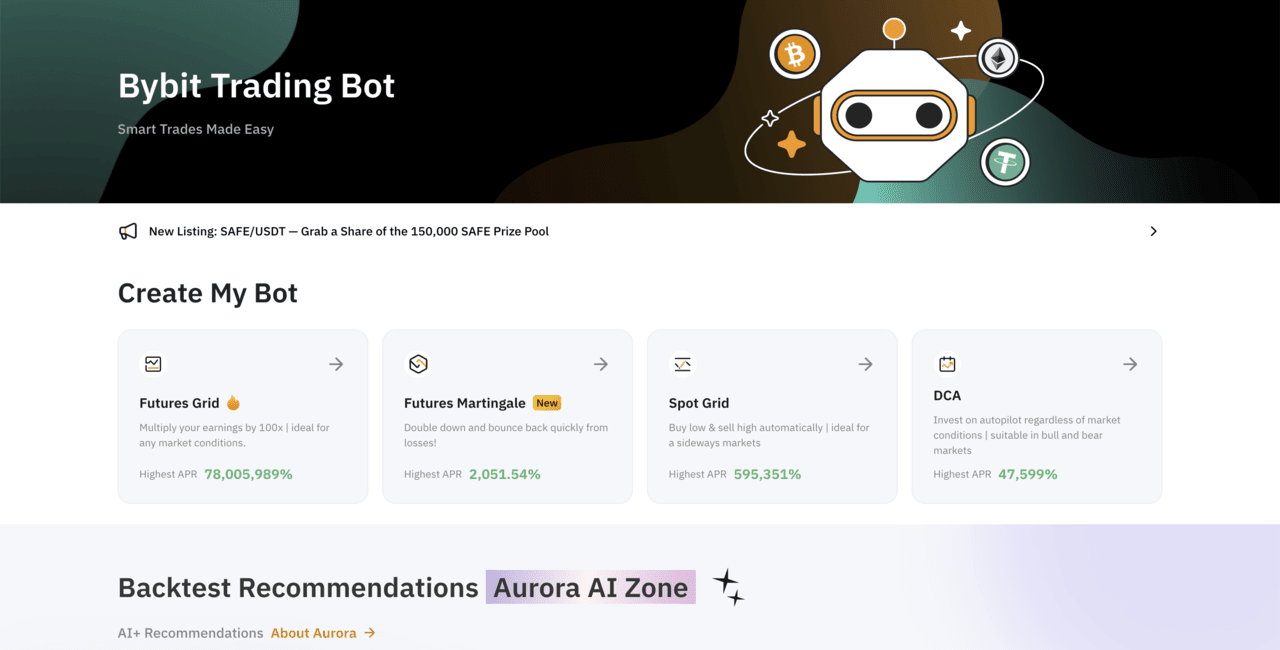
Bybit, however, focuses on refining existing features. Their upgraded Spot Grid 3.0 bot offers more flexibility and control. Users can now choose between three investment modes and a wider grid range, allowing for more nuanced trading strategies.
While Bybit innovates through improvements, Binance takes a bolder approach with entirely new platforms and experiences.
Which is better for trading Bitcoin futures?
Let’s compare Binance and Bybit in a head-to-head format for Bitcoin futures trading.
| Features | Binance | Bybit |
|---|---|---|
| Fees | Spot fees start at 0.10% maker/taker; futures maker around 0.02% and taker around 0.04–0.05% depending on tier. | Spot fees start at 0.10% maker/taker; futures maker around 0.02% and taker around ~0.055% depending on tier. |
| Leverage | Up to 125x on select futures contracts. | Up to 125x on many futures contracts. |
| Derivatives markets | Large selection of USD-M and coin-M perpetuals and quarterlies; exact counts change frequently. | Very large selection of perpetuals and options; exact counts change frequently. |
| Fiat options | P2P marketplace and card/third-party providers for deposits and withdrawals. | P2P marketplace plus card/third-party providers for deposits and withdrawals. |
| Regulation | Licenses/registrations vary by country; check local entity pages. | Licenses/registrations vary by country; check local entity pages. |
| KYC requirements | KYC required for all users to trade and use core features. | KYC required for all users to trade and use core features. |
| Mobile app | iOS and Android apps available. | iOS and Android apps available. |
| Research & education | Binance Academy, in-house research, market updates. | Bybit Learn, in-house research, market updates. |
The choice between Bybit and Binance depends on your priorities. Binance offers maximum leverage and specific coin futures, while Bybit provides more future pairs.
Trading volumes compared
Binance still boasts a massive user base (245M registered users) and sky-high trading volumes ($14.0 billion daily).
Though smaller, Bybit is a rising star. Its BTC/USDT pair thrives with over $1 billion in daily trades. Bybit is user-friendly and caters to growth markets.
| Feature | Binance | Bybit |
|---|---|---|
| Category rank (by trading volume) | 1st (top spot and derivatives) | 2nd (spot) and top-3 (derivatives) |
| Established | 2017 | 2018 |
| Incorporation / HQ status | Global HQ undecided; operates via multiple regional entities | Incorporated entities updated since BVI unit was dissolved; global HQ: Dubai |
| Trading volume (24h) | Highly variable; recent spot snapshot ≈ $22–24B | Highly variable; recent spot snapshot ≈ $4.5–5B |
| Monthly website visits | ~54.5M (binance.com, Aug 2025) | ~19.8M (bybit.com, Aug 2025) (Similarweb) |
Conclusion: Binance offers vast liquidity and established dominance. Bybit provides a strong alternative focused on growth and user-friendliness. Before moving, consider your trading needs, risk tolerance, and preferred platform features.
Trading fees compared
Binance boasts competitive trading fees of 0.10% per spot trade. However, users can reduce these fees by holding Binance Coin (BNB). Bybit counters have even lower base trading fees of 0.075%. This rate applies to makers and takers, making Bybit a potentially more cost-effective option for frequent traders.
For casual traders, Binance’s fee structure might be sufficient. However, Bybit’s lower fees have become increasingly attractive due to the higher trading volume. Remember, Bybit KYC verification unlocks their full suite of features.
| Market | Binance | Bybit |
|---|---|---|
| Spot trading | 422 | 515 |
| Total tradable pairs | 1545 | 618 |
| Margin trading | Spot Margin offers up to 10x on Isolated and up to 20x on Cross (pair-dependent). | Spot Margin maximum leverage is 10x. |
| Futures | Binance Futures lists 500+ trading pairs; leverage varies by contract. (Binance) | Perpetuals and futures offer leverage 25x–125x depending on the pair; contract list is extensive and changes frequently. |
| 24-hour BTC open interest | Changes constantly by market conditions; reference a live dashboard (e.g., Coinglass) instead of a fixed number. |
The amount of open interest signifies the total number of contracts that traders hold and are ready for trading.
Withdrawal fees (and deposit fees) compared
Both Binance and Bybit demonstrate strengths in terms of withdrawal fees. Binance’s extensive cryptocurrency support and transparent fee structure are commendable, while Bybit’s competitive fees and innovative P2P crypto withdrawal feature provide added convenience.
| Market | Binance | Bybit |
| Withdrawal Fees (Spot) | BNB 0.0005, BTC 0.005, ETH 0.001, LTC Free, NEO 0.01, QTUM 50, SNT 0.6, BNT 2, EOS 0.0005, BCC GAS Free 5, USDT 2, OAX 30, DNT 0.15, MCO 0.5, ICN 0.2, WTC 0.1, OMG 5, ZRX 0.1, STRAT 4, SNGLS 2, BQX 1, KNC 50, FUN 10, SNM 5, LINK 0.1, XVG 1, CTR 0.3, SALT Free, IOTA 0.5, MDA 0.15 | 0.0005 BTC |
| Withdrawal Fees (Futures) | N/A | BTC 0.0005, ETH 0.01, XRP 0.25, EOS 0.1 |
| Fiat withdrawals | Fiat withdrawals supported | Fiat withdrawals are facilitated via third-party integrations, while P2P withdrawals are exclusively for crypto |
Lower Withdrawal Fees: Bybit generally offers lower withdrawal fees than Binance. Binance charges a flat percentage, while Bybit charges a fixed amount per coin, which can be significantly cheaper for larger withdrawals.
Additional Considerations:
- Minimum withdrawal amount: Check the minimum withdrawal amount for each exchange before initiating a withdrawal.
- Network fees: Depending on the chosen coin and network congestion, Binance and Bybit might pass on additional fees.
Now let’s move on to deposit fees
Deposit Fee Comparison: Bybit vs. Binance
| Exchange | Deposit Fee (Crypto/Stablecoin) | Deposit Fee (Fiat) |
|---|---|---|
| Bybit | Free | Not Offered (Fiat deposits require 3rd party services with variable fees) |
| Binance | Free | Variable (depends on deposit method) |
- Both Bybit and Binance offer free deposits for cryptocurrencies and stablecoins.
- Bybit does not offer direct fiat deposits. Users need to utilize third-party services, which may incur variable fees.
- Depending on the chosen deposit method, Binance charges fees for fiat deposits (e.g., bank transfer or credit card).
Recommendation: Bybit generally has a simpler deposit fee structure, while Binance offers fiat deposits but with variable fees. However, when considering withdrawal fees, Bybit’s fixed structure might be more cost-effective, though Binance’s minimum withdrawal fees could be lower for very small amounts.
Which exchange has more liquidity?
Short answer: Binance usually has deeper liquidity than Bybit across spot and derivatives.
You’ll notice tighter spreads on major pairs like BTC and ETH, larger resting size near the top of book, and lower slippage for big orders.
That advantage grows during peak hours and around market-moving events. Bybit is competitive on perpetuals and options, and it can beat Binance on a handful of niche pairs at times. But the lead on breadth and aggregate depth typically sits with Binance.
You should still check live data before executing. Compare order book depth, recent trade size, open interest, and a market-impact estimate for your order size. Then route to the venue that gives you the lowest expected slippage.
Proof of reserves compared
Binance and Bybit use Merkle-tree based attestations and public wallet disclosures so users can verify asset inclusion with a unique identifier. These snapshots show asset holdings at a point in time. They do not confirm total liabilities in the same way a GAAP audit would, nor do they analyze off-exchange obligations or corporate balance sheets. Treat them as transparency signals, not guarantees.
Unique features compared
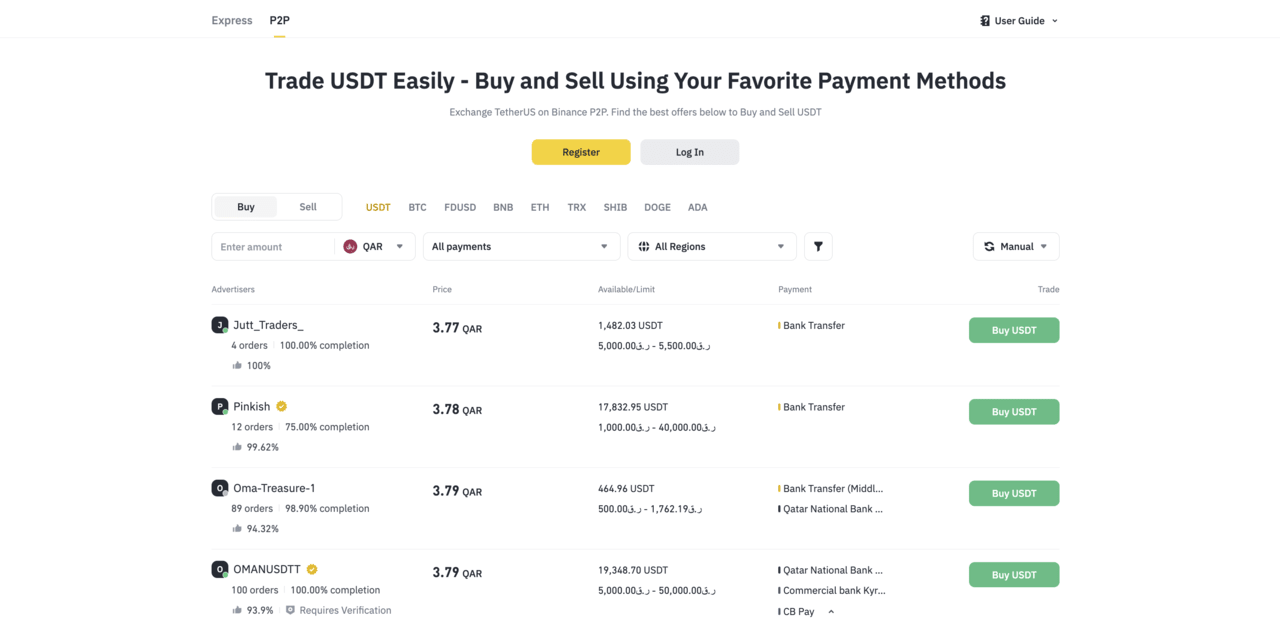
Binance and Bybit offer core functionalities like spot trading, margin trading, and derivatives, but critical differences emerge in their unique features. Binance boasts a robust peer-to-peer (P2P) marketplace, Binance P2P, which allows users to buy and sell crypto directly with other users.
Bybit, on the other hand, emphasizes derivatives trading with innovative products and high-leverage options. Both platforms provide mobile apps (Binance app, Bybit app) for on-the-go trading. Still, Binance News offers a constant stream of industry updates and educational content directly within its platform.
Bybit takes a user-centric approach with its ‘Easy Options,’ a simplified options trading tool. It highlights popular options, key information, and one-click buying for effortless profit-seeking. This user-friendly feature caters to beginners and those who want to copy experienced traders, making the trading experience more accessible and less intimidating.
On the other hand, Binance counters with its innovative ‘Discover‘ feature for copy trading. This intuitive swipe interface allows users to easily explore and follow successful traders’ strategies.
The simple ‘right swipe to favorite’ and ‘left swipe to pass’ system streamlines discovery and instills confidence in users, making them feel in control of their trading decisions. Binance’s copy trading has seen a surge in participation and assets under management, solidifying its user-centric approach.
User Opinions on Bybit vs Binance


Final verdict, Binance or Bybit?
Binance reigns supreme as a one-stop crypto shop, boasting millions of users and catering to all experience levels. Its feature-rich platform offers everything a crypto enthusiast could desire. However, this abundance can be overwhelming, potentially confusing new users.
Bybit, with its streamlined interface and powerful trading engine, caters to serious traders. Its top-notch copy trading product attracts investors seeking to mirror successful strategies. While lacking Binance’s sheer variety, Bybit has carved a niche for itself, capturing market share with rapid project listings.
Binance is actively countering Bybit’s rise by strategically listing popular Bybit projects. This fierce competition benefits users by driving innovation and potentially lower fees. So, the choice boils down to preference: a feature-rich giant (Binance) or a streamlined platform with a strong trading focus (Bybit).
You may also find reading our other comparison articles, which highlight Kraken and Coinbase or Crypto.com, Crypto.com vs Coinbase.

How We Rate Cryptocurrency Exchanges
We manually review the crypto exchanges on our list. Below are the key metrics we check before listing a crypto exchange on the website. For further details, you can also take a look at our cryptocurrency exchanges rating guide, featured on ValueWalk.
Fee structure
Deposit methods
Regulations
Customer support
Digital assets & liquidity
FAQs
Is Binance in trouble?
Is Bybit banned in Asia?
Is Binance a good option for beginners?
Why is Bybit popular?
Is it safe to keep your money on exchanges?
How to decide which exchange is better for my needs?
References
- https://www.dlnews.com/articles/regulation/asia-crypto-crackdown-expands-to-thailand/
- https://www.cryptotimes.io/2024/02/08/bybit-launches-spot-grid-3-0-to-enhance-automation-in-trading/
- https://www.newswire.ca/news-releases/simplify-options-trading-bybit-launches-new-easy-options-feature-827537626.html
- https://financefeeds.com/bybit-web3-launches-industrys-first-bitcoin-layer-2-airdrop-campaign-paving-the-way-for-a-new-bitcoin-era/
- https://www.binance.com/en/support/announcement/binance-launches-megadrop-a-token-launch-platform-with-airdrops-and-web3-quests-748b7181f5d14d6fb2add4048374d646