


The term FOMO is often used in the crypto community, but what is FOMO in crypto? Broadly speaking, it’s the anxiety that investors may feel when they see others seemingly making substantial profits in the crypto market, causing them to make impulsive investment decisions.
Understanding this concept can be crucial to making wiser investment decisions and avoiding potential pitfalls. FOMO isn’t unique to crypto, but crypto’s volatility can cause FOMO to spread quickly. Let’s start with a simple definition.
What is FOMO in Crypto?
FOMO is an abbreviation for Fear Of Missing Out. The FOMO slang term refers to a phenomenon that traders and investors face across various markets, including the crypto space.
To understand FOMO’s meaning in a crypto context, imagine the price of Bitcoin doubling in a few months. The initial price surge may have been due to fundamental reasons. The price spike that follows may be the result of FOMO as investors crowd into the trade. FOMO is the fear of missing out on big price moves.
This fear can lead investors to make impulsive decisions, such as buying a cryptocurrency at a high price without proper research or analysis, just because others are doing so.
FOMO is particularly prevalent in the crypto market due to its high volatility, where prices can skyrocket in hours. Investors often flock to assets surging with rapid price movements, but it doesn’t always end well.
What triggers FOMO?
A strong price movement triggers FOMO. On many occasions, the price does not rally without a reason. Below are the most common reasons that cause FOMO in crypto:
- New partnerships with reputable companies. If a company like Amazon announces it is considering accepting a particular cryptocurrency for payments, it may trigger a rally, thus creating FOMO.
- The cryptocurrency project is announcing the launch of its product, following its development and the unveiling of a new feature that has been worked on behind the scenes.
- Crypto whale are shifting their holdings towards a new cryptocurrency. Numerous tools often track whales’ activity. Traders may fear missing out and tend to follow the lead of the whale.
- When a large cryptocurrency exchange announces it is listing an existing cryptocurrency, a rally may occur, and if it does materialize, traders may rush to buy due to FOMO.
How to Deal With Crypto FOMO
Dealing with FOMO effectively requires understanding its signs and building strategies to manage its impact on your investment decisions.
Signs of crypto FOMO can include a sudden surge in a crypto asset’s price or an increased chatter on various social media platforms. To manage FOMO effectively, consider the following strategies:
- Stick to your investment strategy. Having a clear investment strategy can help you avoid making impulsive decisions influenced by FOMO.
- Conduct thorough research. Always research before investing in any cryptocurrency.
- Learn Technical Analysis. This can help you recognize FOMO-driven price movements and build trading strategies around them.
- Don’t follow the herd. Just because others are investing in a particular cryptocurrency, it doesn’t mean you should. Always make informed decisions based on research and analysis.
- Avoid emotional trading. By definition, FOMO is driven by the fear of missing an opportunity. In a later section, we’ll detail situations in which FOMO led to big losses if the trade exit wasn’t perfectly timed.
Next, we’ll explore why FOMO is so common in crypto trading.
Why Is FOMO So Prevalent in the Crypto Industry?
The crypto industry’s volatile nature, coupled with instant online hype, creates the perfect environment for FOMO. Cryptocurrency prices can fluctuate dramatically, and the fear of missing out on potential gains can spread quickly among investors. Crypto’s market volatility, combined with the 24/7 nature of the crypto market, allows news and rumors to spread rapidly, contributing to the prevalence of FOMO.
Much of the chatter about crypto asset prices occurs on platforms like X and Telegram. These social media hubs often create a sense of urgency and excitement around specific cryptocurrencies. A circulating news story, rumor, or even a single influencer post can spread like wildfire. Investors may feel pressure to make impulsive decisions, fearing they will miss out on significant profits if they don’t act quickly.
Additionally, crypto markets aren’t contained by the same guardrails as traditional investments. There is no T+2 (trade date plus two days) settlement rule, like in stock trading. Traders can quickly move from one trade to the next, chasing candles without any real friction. Leverage, a common tool used by crypto traders, also adds fuel to the bear market FOMO fire.
Examples of Crypto FOMO
Crypto FOMO can manifest in various ways, often resulting in significant price movements. Here are a few notable examples:
- Bitcoin rallied in 2017, with its price surging from $1,000 to nearly $20,000. While a prime example of Bitcoin FOMO in action, the hype didn’t last. Bitcoin’s price dropped to around $3,200 in December 2018, representing a significant decline of over 80% from its peak.
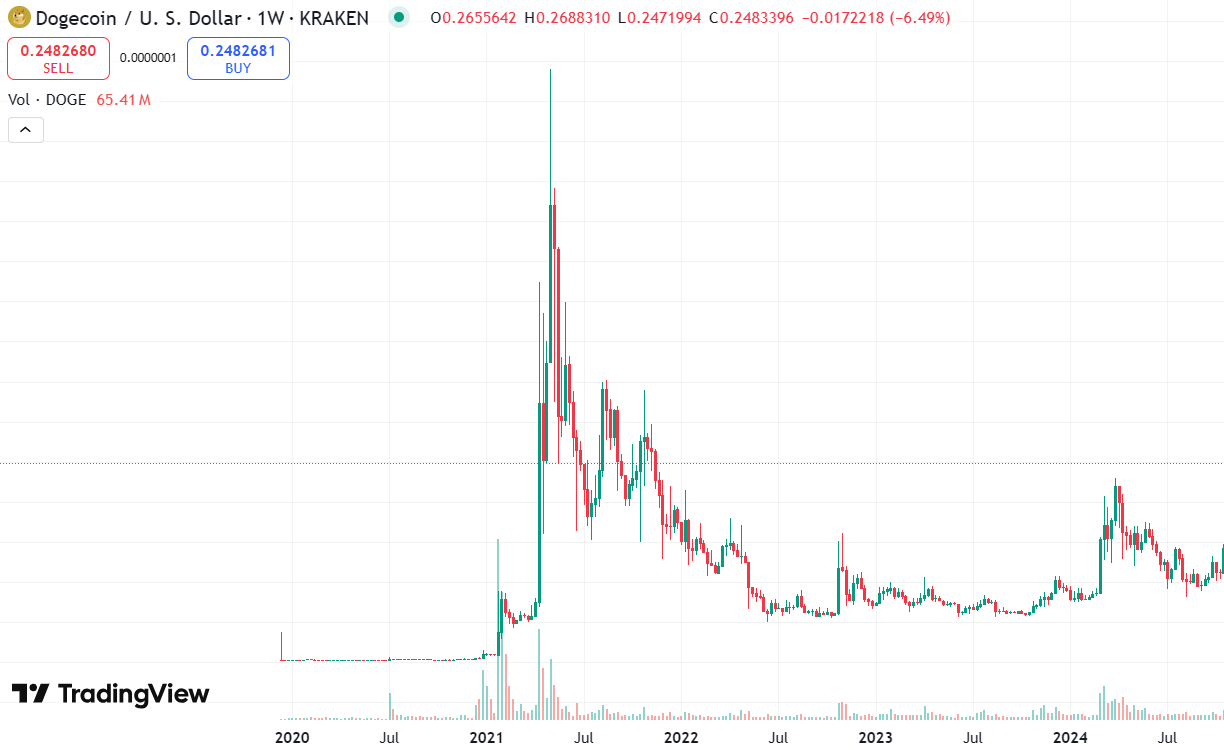
- Dogecoin’s price skyrocketed in 2021 due to social media hype, with its value increasing by over 10,000%. However, the frenzy was short-lived, and Dogecoin’s price later declined as the hype dissipated.
- In another example, the non-fungible token (NFT) market saw a surge in popularity in 2021, with some digital art pieces selling for as much as $69 million. However, as with other speculative markets, the NFT market also experienced significant price volatility. Once-popular NFT collections can quickly fall out of favor.
Risks of FOMO Investing and Trading
No asset price goes straight up forever, and steep corrections often follow sudden rises. For example, investors who bought late in the cycle in 2021 faced steep losses as Bitcoin’s price fell from a then-all-time high of nearly $70,000 down to less than $16,000. The earlier FOMO led many investors to continue buying after volume waned.
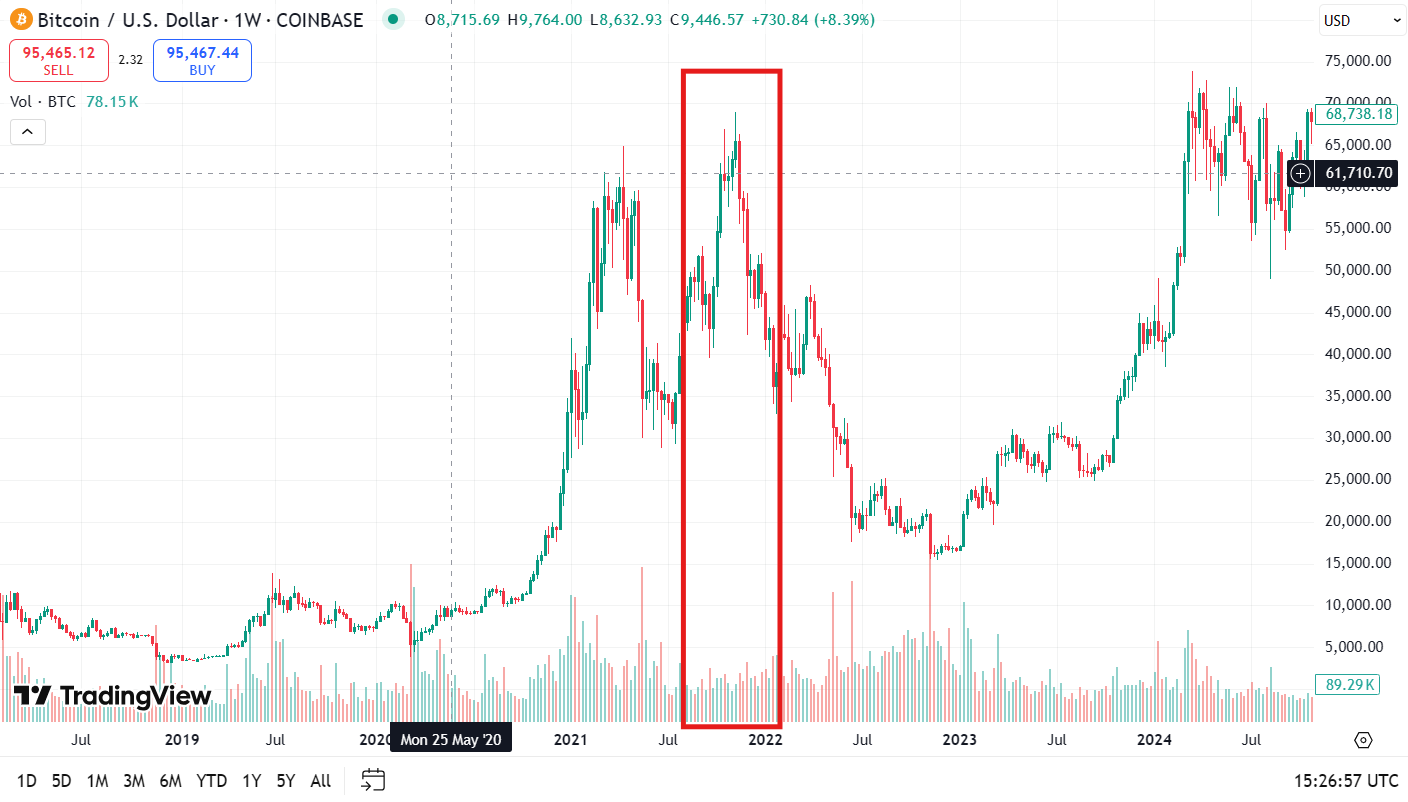
Weak buying pressure quickly turned to selling as investors exited the trade.
If you had invested $10,000 at the 2021 cycle top, your investment would be worth about $2,300 by the time Bitcoin reached a bottom for the cycle, losing more than 75% of the investment on paper. Many sold, locking in the losses. The highs represented the FOMO crypto price, where investors eagerly bought in at the peak, only to see their investments plummet in value, resulting in significant losses when the cryptocurrency market eventually bottomed out.
Approach crypto investments prudently, much like you would with other investments. Question the hype. Look at the fundamentals to ensure you have a well-reasoned investment thesis rather than buying because the chart has gone parabolic. A measured approach based on fundamentals or sound technical analysis can reduce loss risks.
How to Avoid Crypto FOMO
Check impulsivity at the door and maintain a disciplined investment approach. However, avoiding FOMO doesn’t mean you have to sit on the sidelines while the market rallies. Study the trending cryptos and watch for warning signs like waning volume.
Tools like trailing stop-loss orders can help protect your downside risk while allowing you to earn a bit more if the market still shows some potential upside.
The real risk in FOMO trading comes from making impulsive moves. Instead, the market volume and chart activity should be studied to make a carefully considered decision. Markets that go parabolic can continue their moon mission, but not forever.
Study the market before making an entry, and prepare an exit strategy before buying.
Also, study the fundamentals behind the tokens you’re considering. For example, maybe you discovered a killer shitcoins list, and one of the featured tokens has tripled in value with no end in sight. Invest some time in learning the tokenomics and market potential. There may be a good reason for FOMO investing, or there might be several reasons to use tight stop losses.
Taking Advantage of FOMO
If a certain cryptocurrency is overhyped and FOMO buying takes place, it can be used to your advantage.
It is merely a matter of time before those who earned a significant return on their capital may begin liquidating (selling their tokens). In online crypto exchanges, cryptos can be shorted (sold in spot crypto trading or futures). Traders may then consider shorting cryptos that rally due to FOMO.
It is important to highlight that the above is insufficient for trading decisions. However, it may increase the odds of a price retracement.
Conclusion
FOMO is fear of missing out on gains, but it can be managed with the right approach. By understanding the signs of FOMO and implementing strategies to mitigate its risks, crypto investors can avoid impulsive decisions and make more informed choices. This includes setting clear goals, conducting thorough research, and using risk management techniques.
FOMO isn’t always bad, and it can create outstanding profit opportunities if you recognize that the market has entered full FOMO mode. However, it’s essential to research and plan your exit strategy before joining the FOMO fray.