


Crypto Yield farming has become a cornerstone of DeFi, driving innovation in the industry by providing the liquidity needed to drive adoption. With over $13B of value locked in yield farming tokens and over $2B in daily trading volumes, this practice offers significant earning potential for cryptocurrency enthusiasts.
It is one of the most significant driver in DeFi’s rapid expansion solidifies. This article explains how to start yield farming, examines today’s market’s most promising yield farming platforms, and shows you how to start earning through cryptocurrency farming.
- Show Full Guide
What is yield farming?
Crypto yield farming is a DeFi strategy in which users earn rewards by using their cryptocurrency without selling it. It is considered a high-risk strategy and may not be suitable for all.
Unlike simply holding assets, yield farming involves actively participating in decentralized finance protocols to generate passive income. This approach has become popular among investors looking to maximize the utility of their holdings and make money from cryptocurrency.
More and more crypto holders are realizing that an annual income, often in the form of APY/APR can be earned on their cryptocurrencies rather than just waiting for a price appreciation.
How does yield farming work?
As mentioned above, crypto yield farming can earn rewards on your cryptocurrency. It can be achieved by providing liquidity, lending, or staking within DeFi protocols.
As the blockchain market continues to evolve, a passive yield can also be earned via Bitcoin staking, which was not possible when BTC first emerged.
At its core, it provides liquidity to a liquidity pool, essentially a pool of funds used by decentralized exchanges (DEXes) or finance and lending platforms to facilitate crypto trading or lending activities. In return, you earn interest, rewards, or a share of the transaction fees generated by the pool.
Yield farming strategies
Liquidity providers (LPs)
Liquidity providers (LPs) are the backbone of some of the best DeFi tokens.
By depositing cryptocurrency into liquidity pools, LPs enable trading, lending, or other activities on decentralized exchanges (DEXes) like Uniswap or lending platforms like AAVE. These pools require equal amounts of two tokens (e.g., ETH and USDC), ensuring seamless transactions.
In return, LPs earn rewards such as transaction fees or governance tokens like UNI or COMP, distributed proportionally based on their pool share. Beyond earning rewards, LPs receive LP tokens as proof of their contribution, representing their pool ownership.
When you deposit funds into a liquidity pool, you are issued LP tokens, which act as a receipt for your contributions — basically proof of ownership in the liquidity pool. These tokens track your pool share, including the rewards it generates.
Example: Add liquidity to a PancakeSwap pool (not Syrup staking)
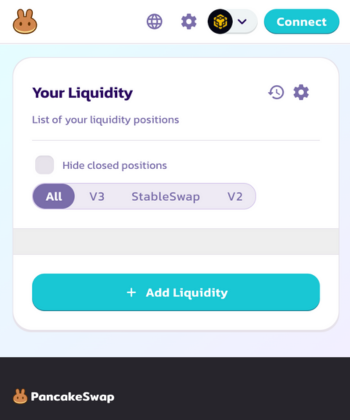
In the PancakeSwap app, go to Trade → Liquidity → Add Liquidity. You’ll see the V3 add-liquidity interface.
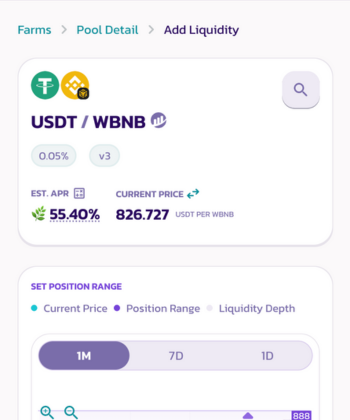
Pick your pair. For example, USDT/WBNB (or your preferred pair) and the fee tier shown for that market.
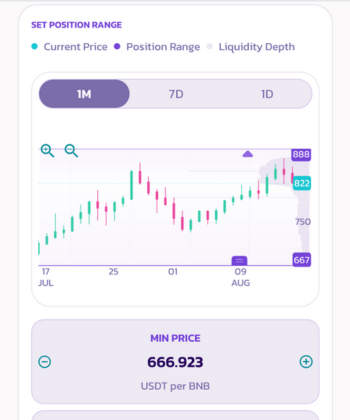
Set your price range (V3/CLMM). Keep Full Range if you’re new, or narrow it to concentrate liquidity around the current price for higher fee capture.
Enter amounts + approve. Input token amounts, approve both tokens in your wallet, then Add to mint your LP position. Your screen should resemble the V3 “Add Liquidity” view.
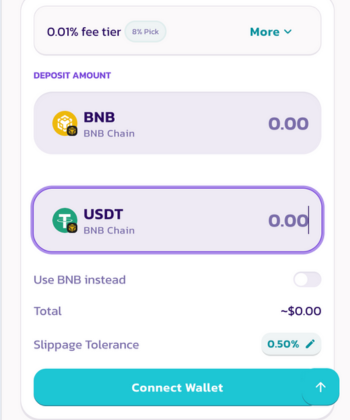
You’re farming via fees. Once added, you earn a pro-rata share of swap fees from that pool while your liquidity stays active.
This dual functionality as proof of ownership and a tool for further rewards makes LP tokens integral to yield farming strategies, especially for maximizing returns through compounding.
Crypto lenders
Lenders act as the financiers of the ecosystem, providing liquidity to DeFi lending platforms by depositing their cryptocurrencies into lending platforms and earning interest on their deposited assets.
These funds are pooled and made available to borrowers, who pay interest on their borrows. Interest rates depend on market demand and the supply of specific assets, offering lenders a way to earn passive income with relatively low risk, especially when using stablecoins.
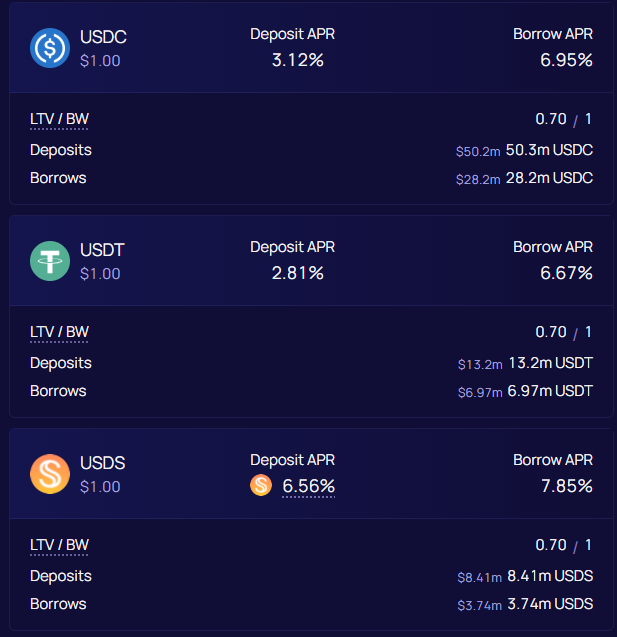
Unlike liquidity providers, Lending is a simpler way to engage in crypto farming since you don’t need to manage liquidity pairs or worry about impermanent loss.
Additionally, lenders retain control of their deposits, withdraw their funds, and earn interest at any time. They can also use this method to farm stable yields.
Crypto borrowers
Borrowers in DeFi access funds from liquidity pools by depositing collateral, typically worth more than the amount they intend to borrow. For example, depositing ETH as collateral allows borrowers to access USDC without selling their ETH.
This enables users to maintain exposure to their original assets while utilizing borrowed funds for trading, staking, or other strategies.
Interest rates are dynamic and influenced by the demand and supply of the borrowed asset. Borrowing offers flexibility but comes with risks, including liquidation if the collateral value drops. Borrowers are vital to the DeFi ecosystem, creating opportunities for lenders and LPs to earn rewards.
The yield is often presented in two forms: APR and APY.
How is APR/APY calculated in yield farming?
APR (Annual Percentage Rate) and APY (Annual Percentage Yield) are two methods of calculating returns in yield farming and the key metrics for measuring returns in DeFi. APR is the simple interest earned annually without considering compounding.
For example, if you deposit $1,000 in a pool with a 10% APR and earn $100 annually. The reward is often given in real-time, hourly, daily, or weekly.
APY, on the other hand, includes the effect of compounding, where rewards are reinvested to generate additional returns. If the same pool compounds daily, the APY might increase to 10.5% or higher, depending on the frequency of reinvestment.
See our APY guide for further guidance.
What are the risks of yield farming?
While offering attractive returns, crypto yield farming carries several risks that participants should consider before participating.
We can group these risks according to various factors, but mainly as platform and security risks, market and price risks, regulatory and legal risks, liquidity risks, and economic risks. Below, we’ll break down the main risks associated with yield farming.
Platform and security risks
Smart contract vulnerabilities: Yield farming relies on smart contracts to execute transactions and manage assets. Errors in the code or unforeseen vulnerabilities can result in exploits, leading to loss of funds. Even platforms with audited contracts have been hacked (e.g., the 2020 Harvest Finance exploit). Smart contract security is an ongoing challenge, even for well-established DeFi platforms.
Oracle manipulation attacks: Oracles are vital for yield farming protocols, supplying external data like asset prices to smart contracts. However, they are vulnerable to hacking, and if the data is manipulated, it can lead to incorrect calculations and financial losses. Poorly designed or insufficiently decentralized oracles are particularly at risk, making them targets for attackers.
Operational risks: Technical issues like platform outages, network congestion (e.g., during market volatility on Ethereum), or bugs in operational logic can disrupt user activity.
For instance, delays in transaction processing during high network usage can lead to missed opportunities or unintended financial exposure.
Market (and price) risks
Impermanent loss: When you provide liquidity to a pool, the value of the assets you supply can change. If the price of one asset increases or decreases significantly relative to the other, this creates an impermanent loss situation.
For liquidity provision: When you provide liquidity to a pool, the value of the assets you supply can change. If the price of one asset increases or decreases significantly relative to the other, this creates a situation known as impermanent loss.
For lending: The risks differ when you lend assets to a DeFi protocol. While you earn interest on your assets, the primary risk is the potential for borrower defaults or the solvency of the lending platform itself. Unlike liquidity provision, you don’t face impermanent loss but are exposed to platform risks.
Liquidity and counterparty risks
Liquidity concentration risk: If a single entity controls a large portion of liquidity in a given pool, that entity could manipulate the market. This risk can lead to price instability and the potential for market manipulation, affecting the performance of your yield farming investment.
Counterparty risk: When lending or borrowing assets through yield farming platforms, there’s a risk that the counterparty might default on their obligations. This could lead to losses, especially in platforms without collateral or guarantees.
Strategic and economic risks
Capital re-allocation risk: This is indeed a valid risk in the DeFi space. Changes in reward structures, token emissions, or platform tokenomics can reduce the yield for liquidity providers or stakers. For example:
Protocol upgrades: DeFi platforms often undergo updates, which may involve reallocating incentives or reprioritizing certain liquidity pools.
Liquidity migration: When a protocol reduces rewards, capital may flow to more lucrative platforms, potentially diminishing the liquidity and stability of the original protocol.
Market sentiment: Investors shifting capital to newer or trendier projects could exacerbate risks such as impermanent loss or lower overall returns.
Sybil attacks
This is also a recognized risk, particularly for governance-focused DeFi platforms:
Mechanism: Malicious actors create multiple fake accounts or control numerous wallets to gain disproportionate influence in governance votes. This undermines decentralized governance principles.
Outcome: Sybil attacks can result in decisions favoring the attacker, such as adjusting tokenomics, allocating rewards, or even approving fraudulent proposals.
Mitigation: Some protocols use measures like quadratic voting or reputation-based systems to mitigate this risk, but these solutions are not foolproof.
Other risks to consider include regulatory and compliance issues, as yield farming operates in a gray area in many regions, and changes in government regulations could affect the legality of participation or fund withdrawals.
Additionally, psychological risks come into play, as the high-risk, high-reward nature of yield farming can lead to emotional decisions, such as FOMO or panic selling, increasing the chances of significant losses.
Yield farming vs. staking
DeFi yield farming refers to earning rewards by supplying crypto to decentralized finance platforms. You could do this by adding your assets to liquidity pools on DEXs or lending them to protocols for interest. Both methods offer rewards but come with distinct risks.
Staking is like being a landlord. You lock up your coins to help secure a blockchain network. In exchange, you earn more coins as a reward. Some of the best staking coins are listed here. Here are more differences you might not have been aware of:
| Feature | Yield Farming | Staking |
| Core concept | Actively providing liquidity to DeFi protocols to earn rewards. | Passively holding cryptocurrencies to support network security and earn rewards. |
| Risk profile | Higher risk due to market volatility, impermanent loss, and smart contract exploits. | Prone to slashing, inflation, or asset devaluation risks. |
| Reward potential | Potentially higher returns, especially in bull markets. | Lower returns but more stable returns. |
| Technical complexity | Can be complex, requiring an understanding of DeFi protocols, smart contracts, and liquidity dynamics. | Generally more straightforward, involving basic wallet interactions, may vary for validator roles. |
| Key considerations | Impermanent loss, smart contract exploits, and market volatility. | In some platforms, a higher return is given only if the tokens are locked for a long period of time. |
Best platforms for yield farming
Yield farming, a popular decentralized finance (DeFi) strategy, allows users to lend their crypto assets to earn rewards. Here’s a brief guide on the best yield farming platforms to get you started.
Yield farming on decentralized exchanges
Decentralized exchanges (DEXs) are used to swap and trade cryptocurrencies. A crypto wallet is required.
Unsiwap DEX
A decentralized trading protocol on the Ethereum blockchain valued at $5 billion aims to automate token trading while remaining completely open to all token holders, improving trading efficiency compared to traditional exchanges. In addition to yield farming rewards, its purpose is to create liquidity.
Pancakeswap DEX
Decentralized finance protocol that allows for the exchange of cryptocurrencies using blockchain technology, specifically through an automated market maker (AMM) model for BEP-20 tokens. The recent PancakeSwap V3 introduces innovations to enhance capital efficiency, reduce trading fees, and increase earnings for liquidity providers.
Raydium DEX
Decentralized exchange built on the Solana blockchain boasts over $2 billion in total value locked (TVL).
It offers high-speed transactions and unique yield farming opportunities in everything from Solana meme coins to utility tokens, making it an appealing platform for yield farmers.
Raydium operates using an automated market maker (AMM) model, allowing users to swap and trade tokens and become liquidity providers.
YieldFlow
A DeFi platform focusing on yield farming strategies, providing tools and insights to optimize returns. YieldFlow simplifies the process of yield farming by automating strategies and offering better-than-industry-average APYs averaging 20% – 25%, though returns may vary with market conditions.
Yield farming on centralized exchanges (CEXs)
MEXC: This MEXC review outlines that this centralized exchange offers a unique staking product called MX-DeFi. This yield farming solution allows users to stake their MX tokens or tokens from other projects to earn high yields. The staked tokens are utilized in various DeFi protocols, and the returns generated are distributed to the stakers.
OKX: Diverse range of yield farming opportunities with competitive APRs. With OKX Earn, you can earn interest on your assets through various investment options. The products available include Simple Earn, Loan, and On-chain Earn. You’ll discover multiple yield farming pools featuring different assets and reward structures.
Bybit: Earn up to 100% APR on crypto by adding liquidity to pools with Bybit. You can leverage your investment for higher yields or remove your liquidity anytime, as seen in this Bybit review. Furthermore, Bybit’s liquidity mining pool offers potential 100% returns and enhance yields with up to 3x leverage.
Borrowing and lending yield farming protocols
These are some of the top lending and borrowing protocols you can use today to earn a passive yield on your cryptocurrencies.
Compound protocol
On the surface, the decentralized lending protocol works as an algorithmic, autonomous interest rate protocol with over $2B TVL that allows users to lend and borrow crypto assets and earn interest on their deposits. You can earn interest in COMP tokens by lending your crypto assets on Compound.
Aave protocol
Well-known DeFi lending protocol with an impressive total value locked (TVL) of $17 billion as of the publication date. It provides various lending and borrowing options, including flash loans. Users can lend their cryptocurrency assets and earn interest in the form of AAVE tokens.
Alchemix protocol
A DeFi protocol that enables the creation of synthetic tokens representing a deposit’s future yield. It allows users to obtain near-instant tokenized value against temporary deposits of stablecoins. Alchemix offers a unique approach to yield farming by enabling users to leverage their staked assets to earn additional rewards.
DeFi yield aggregators
Crypyo yield aggregators are automated protocols. They distribute the user’s cryptos across many protocols including staking, lending, and farming. Among the most popular yield aggregators are Beefy Finance and Yearn Finance.
What to expect from yield farming in 2025
Yield farming remains a valuable strategy in cryptocurrency markets even in bear markets. It requires careful planning and an understanding of evolving trends.
Liquid restaking is also gaining popularity in 2025. Rather than just staking your tokens, the yield can be amplified via restaking although it may be overwhelming for beginners.
FAQs
How much money do you need to start yield farming?
Is yield farming safe?
Will yield farming make you rich?
Is a DEX safer than a centralized platform?
Do I need to lock tokens in yield farming?
References
- Crypto Funds Are Hunting for Yield | The Information
- DeFi Market Rebounds to $50B as Speculators Hunt for Yield | CoinDesk
- MEXC Launches “MX DeFi” Yield Farming to Remain the top Centralized DeFi Token Supporter | MEXC Blog
- Decentralized Finance (DeFi): opportunities, challenges and policy implications | Study by Eurofi