



Launched in 2017, Binance is a popular exchange for trading digital assets via spot markets and derivatives. Traders gain exposure to over 1,500 pairs in a highly liquid and secure environment, with 24/7 customer support. In this Binance review, we’ll look at the exchange’s listed cryptocurrencies, trading and non-trading fees, safety controls, and other important factors.
Our review methodology relied on real platform experiences with funded and verified accounts. We evaluated the onboarding process, required learning curve, accepted payment methods, withdrawal times, and more. Read on to learn everything to know about the Binance exchange in 2025.
- Show Full Guide
Our Binance review: Key takeaways
Binance is the biggest crypto exchange by trading volume (up to $217 billion per day for futures and spot markets combined), and provides deep liquidity across over 1,500 trading pairs. Platform users can buy digital assets with fiat payment methods, and trade via the spot exchange. Diverse asset support extends to derivative products, as Binance offers over 620 futures and options pairs.
We analyzed Binance’s fee structure and found it offers competitive trading commissions. Spot trading fees are just 0.1%, which is significantly cheaper than Coinbase and Kraken. While the exchange offers professional trading tools, our Binance exchange review confirms the platform is suitable for all skill sets, including first-time investors.
Regarding accessibility, Binance operates on web and mobile browsers. It also offers native software for iOS and Android smartphones, and Windows and Mac desktops. Crypto investors in more than 100 countries can use Binance, although notable restrictions apply, such as in Canada and China.
The pros and cons of Binance
Our Binance review process discovered the following advantages and disadvantages:
Pros
- The world’s largest crypto exchange by spot and derivative volume ($217 billion total)
- Almost 293 million traders use the platform regularly
- Trade digital assets with low fees and deep liquidity
- Access more than 1,500 trading pairs in one safe place
- Easily deposit and withdraw funds with local money and crypto
- The demo trading account offers a risk-free trading experience
- Supports long and short trading with leverage of up to 150x
Cons
- Derivatives, DeFi tools, and other features remain banned in some countries
- Users must trade significant amounts to increase their VIP account tier
What is Binance exchange? An overview
Binance is an online crypto exchange that provides access to over 500 digital assets and more than 1,500 trading pairs. The exchange offers various ways to invest in cryptocurrencies like Bitcoin (BTC), Solana (SOL), and BNB (BNB).
Intermediate-to-advanced traders can buy and sell pairs on the spot exchange or derivative markets. Inexperienced users may prefer to purchase coins or tokens with familiar payment methods such as Visa, Mastercard, and Google/Apple Pay.

Binance handles substantial trading volumes, and it now serves nearly 293 million users. In addition to providing services for users looking to trade futures, spot, and advanced derivatives markets, Binance supports savings accounts, dual investments, and other yield-bearing products. Platform users can also access a decentralized wallet, launchpool airdrops, and pre-programmed trading bots.
Company overview
The Chinese-Canadian entrepreneur Changpeng Zhao founded the Binance exchange in 2017. Here are some essential insights about the company:
- Date Launched: July 17th, 2017
- Incorporated: Binance Holdings Ltd, Cayman Islands
- Owner: Changpeng Zhao is the majority owner
- CEO: Richard Teng
- Headquarters: Binance has no official HQ, although global offices include Malta and the U.S.
- Licenses and Registrations: The Binance.US platform is available in most U.S. states. Binance’s global platform can be accessed in over 100 other countries, including Japan, France, Spain, Portugal, Sweden, Bahrain, Dubai, Abu Dhabi, India, Thailand, New Zealand, Mexico, Brazil, South Africa, and more
Binance trading products
The main Binance spot exchange provides real asset ownership through trading pairs. The most popular markets are BTC/USDT, USDC/USDT, and ETH/USDT, as per exchange data. The derivative exchange handles the most trading volume, which often exceeds $100 billion daily. Supported derivative products include options, perpetuals, and delivery futures.
We found that beginners often prefer Binance’s direct purchase via fiat service, where they can invest in cryptocurrencies without using the spot or derivative exchange interfaces. Instead, users can make asset purchases with debit/credit cards and other popular methods. Meanwhile, Binance’s peer-to-peer (P2P) exchange service appeals to investors who want to transfer funds to local sellers and avoid foreign exchange charges.
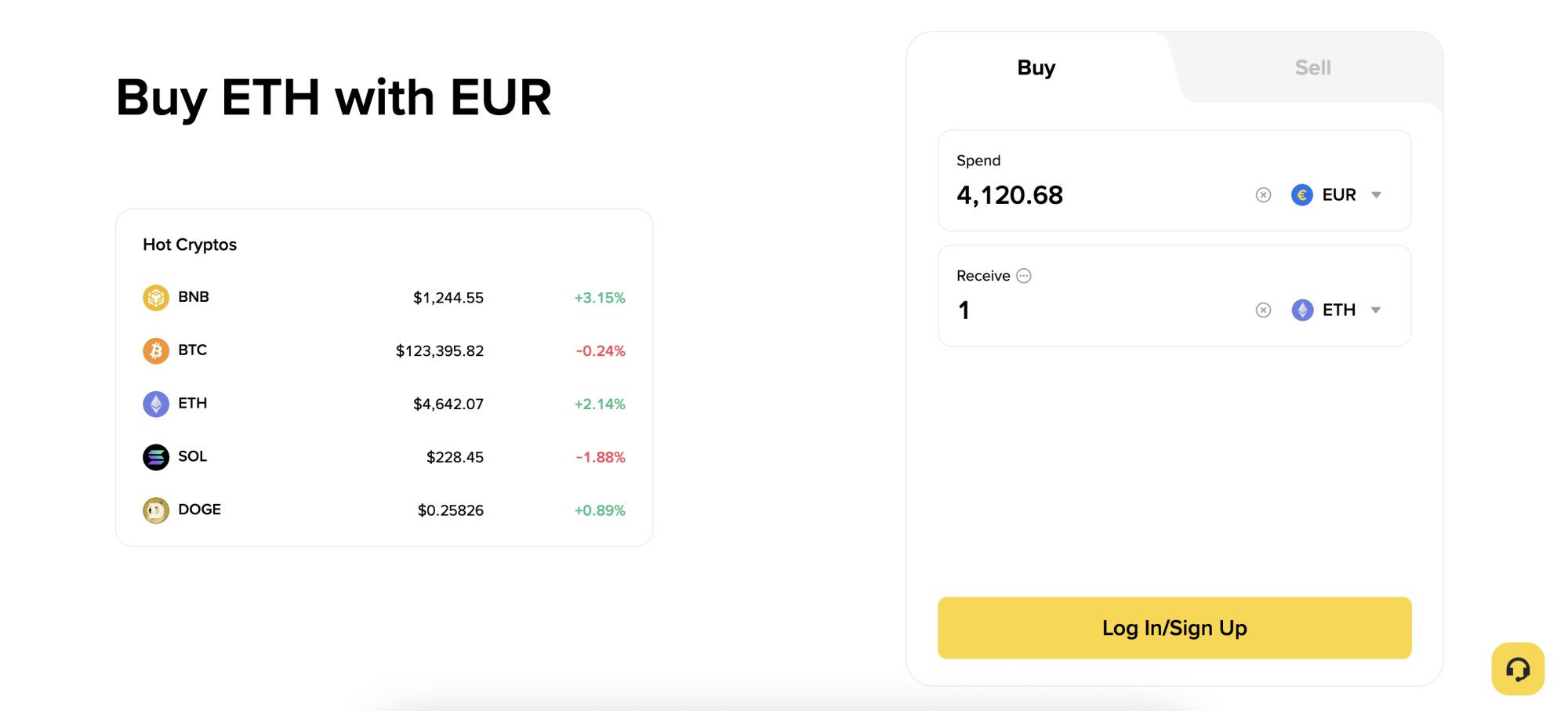
Our Binance review confirms that inexperienced traders also prefer using the Binance convert tool. Simply enter two cryptocurrencies to trade, along with the amount, and Binance instantly exchanges those assets at the best available price. While fees are slightly higher than spot trading, the convert feature simplifies the volatile global crypto market for newbies.
Binance’s passive investment and savings products also include yield-bearing vehicles. Platform users can deposit account balances into a variety of centralized finance (CeFi) initiatives, like dual investments and savings accounts. On the decentralized finance (DeFi) front, on-chain staking offers passive yields on the Ethereum blockchain.
The platform’s more advanced features also include the decentralized Binance Wallet, a token launchpad, and an NFT marketplace.
Binance.US
Binance.US is a specialist exchange for U.S. residents. It operates independently from the Binance.com platform, and offers fewer coins and investment markets. In particular, U.S. traders cannot access derivative instruments like futures and options.
What coins and tokens does Binance list?
With over 500 listed coins and tokens, Binance is one of the best crypto exchanges for building highly diversified portfolios. The easiest way to access these markets is to trade fiat-based pairs like BTC/EUR and ETH/ZAR, as investors swap local fiat currencies directly for the chosen asset. Alternatively, most spot exchange markets trade against stablecoins such as Tether (USDT) and USDC (USDC).
In addition to BTC and major altcoins like BNB, SOL, and XRP, Binance lists the top trending cryptocurrencies from high-growth narratives. Traders can explore tokens across sectors like artificial intelligence (AI), infrastructure, Layer 2 chains, and real-world assets (RWAs).
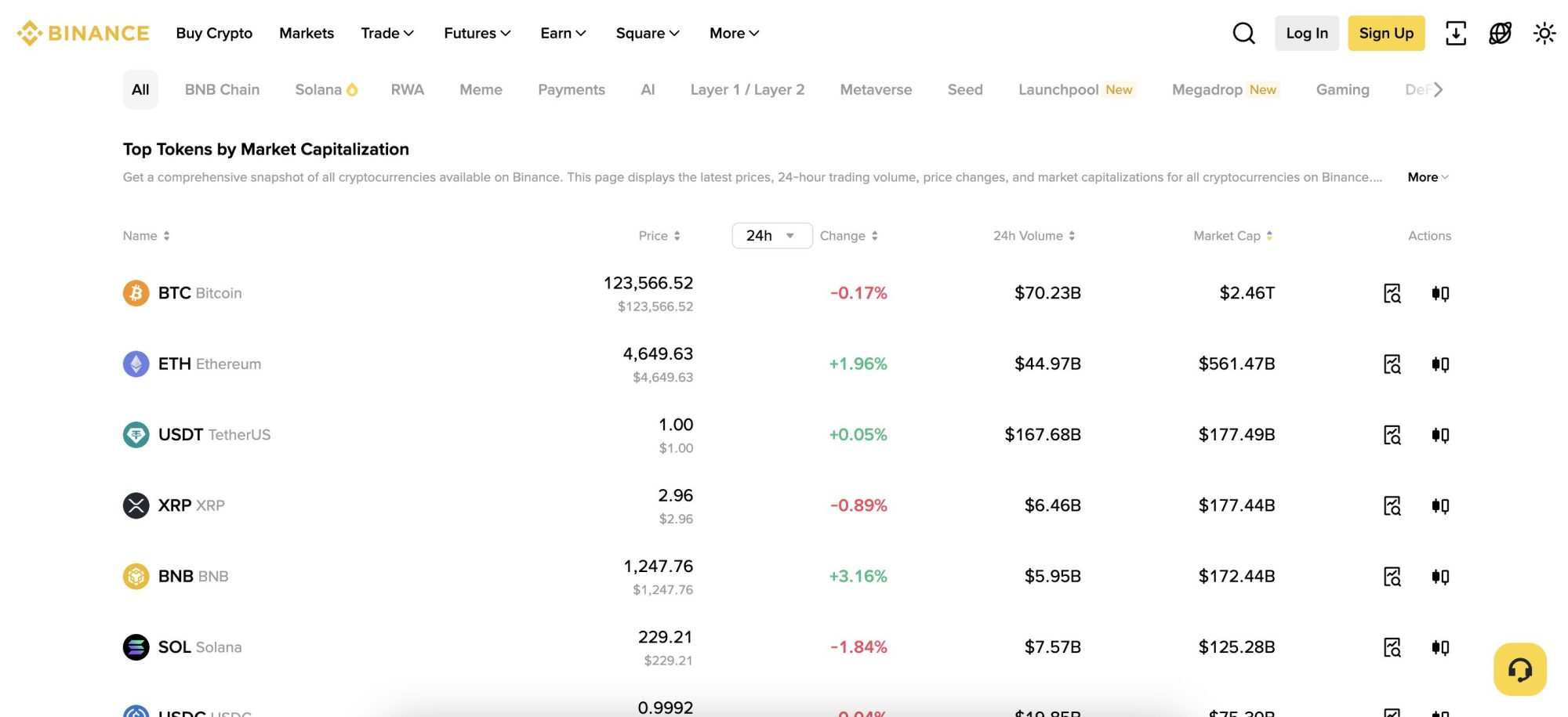
While the spot exchange is extensive, Binance’s futures trading ecosystem also offers a wide selection of markets. Perpetual futures support the best Solana meme coins like Bonk (BONK), dogwifhat (WIF), and Fartcoin (FARTCOIN), and sometimes includes tokens that are not available for spot trading.
Note that Binance adds and removes trading pairs frequently based on demand and trading volumes. Follow the Binance X page to stay updated on the latest asset listings.
Binance fees and commissions
Binance traders pay fees to enter and exit positions. Spot trading fees start at 0.1% per side, reduced by 25% when users hold BNB coins. Once traders reach VIP level 1, which requires 25 BNB in their account or monthly volumes of over $1 million, they pay 0.0675% (makers) or 0.075% (takers).
Binance has 9 VIP levels in total, and the highest tier reduces standard fees to 0.008250% (makers) and 0.017250% (takers). We compared these fees with other exchanges and found they resemble the market average. KuCoin, OKX, and Bybit each offer entry-level spot commissions of 0.1% with various ways to secure discounts.
Binance charges a 0.024% commission to buy and sell options contracts. It remains the only trading product to have a fixed structure, since VIPs do not receive reduced commissions.
The Binance futures platform initially charges 0.02% (makers) and 0.05% (takers), and similar to the spot exchange, BNB holders get discounts. However, the futures discount is lower at just 10%. Higher VIP tiers, as well as market makers, enjoy more competitive fees.
Bybit, which is Binance’s nearest competitor for derivative volume, charges futures commissions of 0.02% (makers) and 0.055% (takers). Just like Binance, Bybit’s highest account tiers receive 0% commissions.
| Spot Trading (Max) | 0.1% |
| Spot Trading (Min) | 0.00825% |
| Futures Trading (Max) | 0.05% |
| Futures Trading (Min) | 0% |
| Options | 0.024% (reduced from 0.03%) |
| Instant Buy | Averages 2% |
| P2P | 0% to 0.2% depending on the currency and order type |
Binance user experience
To evaluate the user experience, we traded on the Binance website and native desktop software for Windows and Mac. We also used the Binance app, which we will cover shortly.
In our view, Binance suits beginners and experienced traders alike. The spot exchange and derivative platform supports advanced trading tools that help seasoned investors make informed decisions. Charting features include indicators and trend lines, and users may create custom order book filters with real-time market depth. We also appreciate the wide range of order types available, including limit, market, stop-limit, TWAP, OCO, and trailing stop.
The instant buy platform streamlines investments for first-time traders who are not comfortable with the order book system. Users input their favorite asset, purchase amount (minimum $15), and payment method, which includes Visa and Mastercard. They enter the payment details like any other online purchase, and Binance credits the coins or tokens right away.
We also found setting up security mechanisms is simple, especially on the main desktop website. Users can easily activate account controls like two-factor authentication (2FA) and biometrics, which connect to the user’s smartphone.
Binance mobile app
Binance offers a highly-rated mobile app with full functionality. The exchange optimizes the mobile trading experience with simple-to-navigate icons. Users can buy, sell, and swap cryptocurrencies on the move, as well as deposit and withdraw funds. Other features, such as copy trading and savings accounts, remain just a tap away.
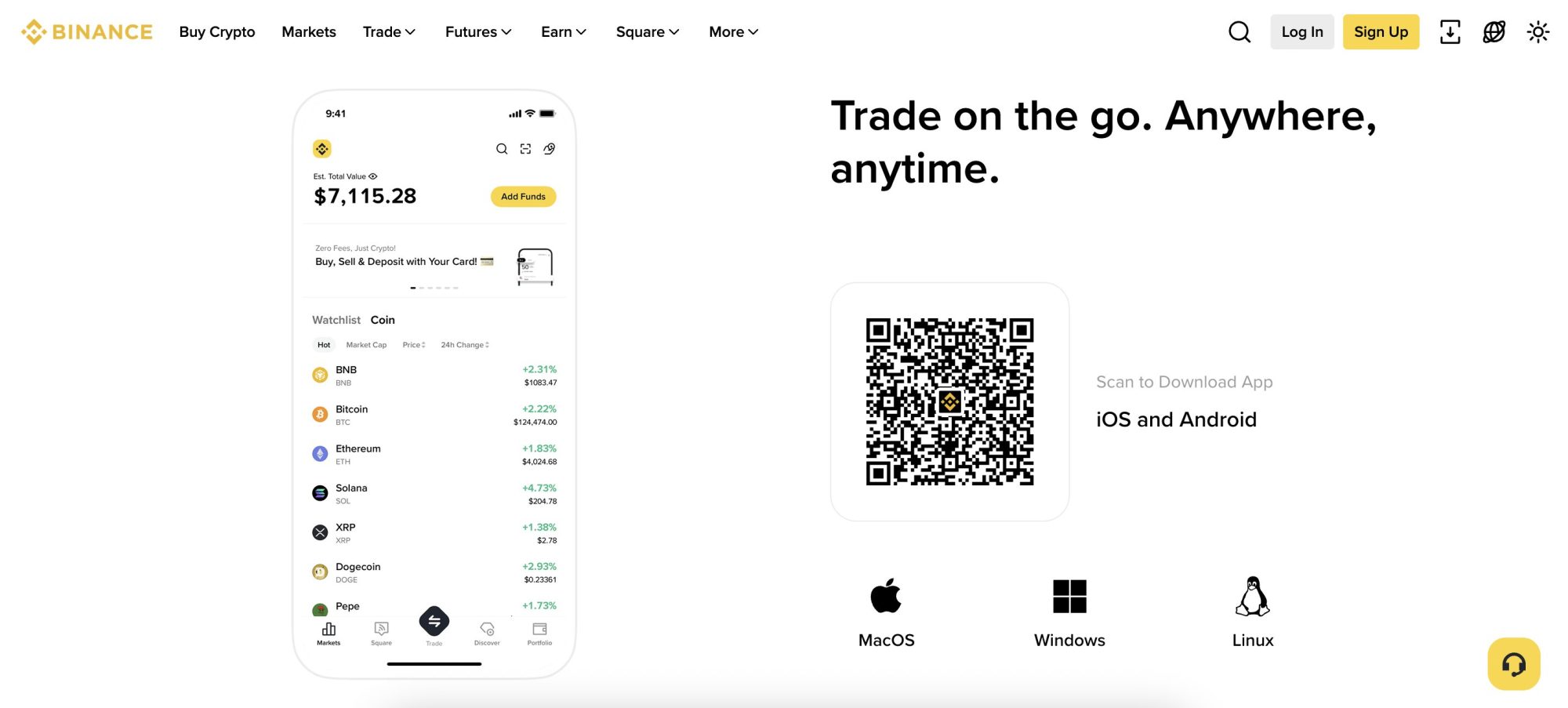
Although serious technical traders are likely to prefer larger desktop screens, the Binance app allows users to evaluate basic and advanced technical indicators such as moving averages, the Stochastic RSI, and Bollinger Bands. It also supports real-time market insights, trending cryptocurrencies, and the best-performing tokens. To stay connected to the market 24/7, app users create watchlists and alerts with custom triggers.
Top Binance features
The Binance exchange offers an extensive range of features. Here are the most popular investment tools to explore.
Derivatives trading with leverage
Our research shows that Binance is one of the top crypto leverage trading platforms for 2025.
The exchange offers a maximum leverage of 150x on major markets up to the first 300,000 USDT, and limits are reduced as traders exceed position brackets. When users apply the highest multiplier, they increase their trading capital by 150 times.
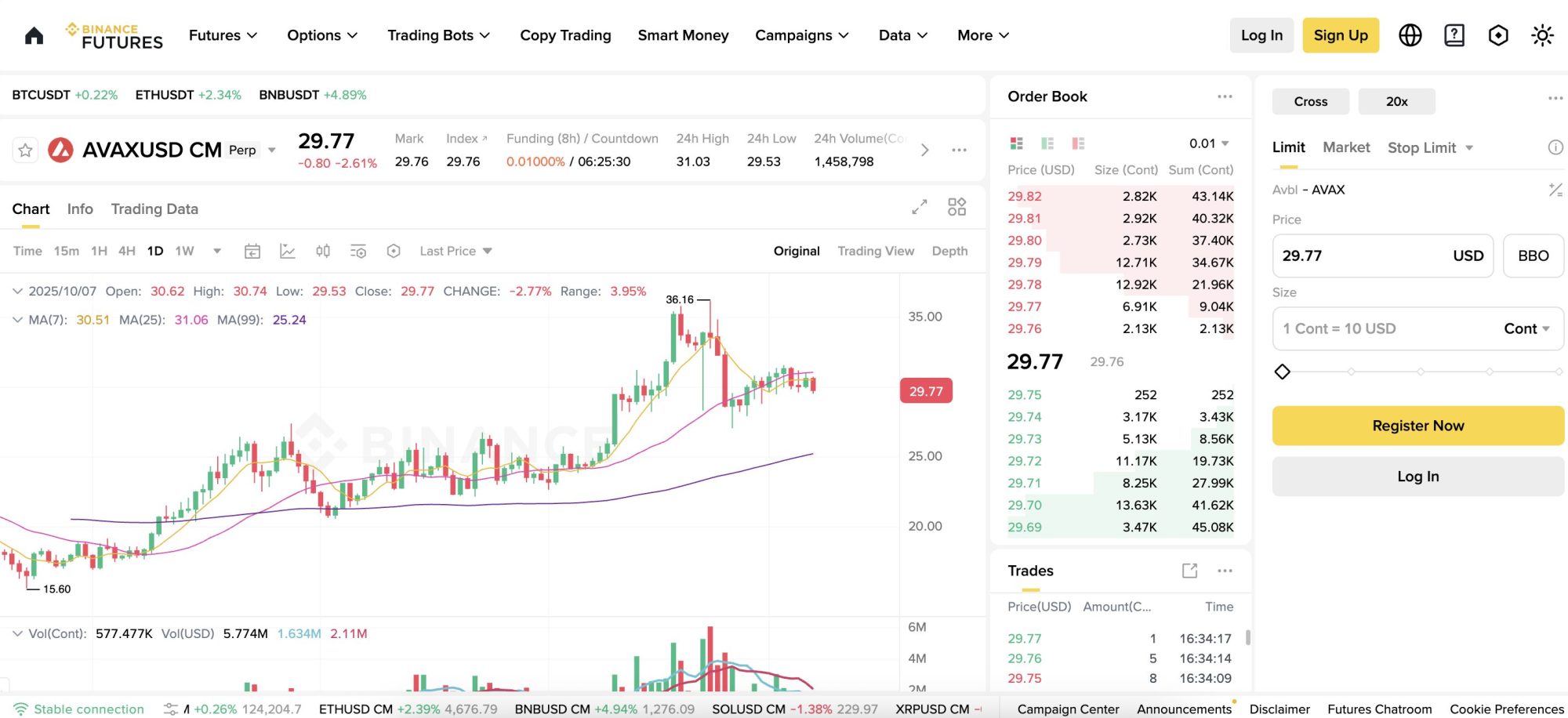
Delivery futures, as well as lower-cap perpetuals, typically offer 50x leverage with a 1.5% maintenance margin requirement. Remember that adverse price movements may cause liquidation, which means traders lose the original margin.
CeFi savings accounts
Platform users earn high interest rates when they deposit assets into Binance savings accounts. The CeFi service generates yields from various low-risk sources, including secured loans and traders who pay interest on margin trading accounts. Some CeFi products are “Principal Protected,” so Binance ensures users receive the original investment back in the event of unforeseen issues.
Binance offers the highest APYs (annual percentage yields) on less established cryptocurrencies. To mitigate volatility risk, some investors also deposit stablecoins. Fixed accounts average 8% to 13%, while flexible terms are less competitive.
DCA tools
Dollar-cost averaging (DCA) bots take the age-old investment strategy to the next level. Instead of manually buying cryptocurrencies at fixed amounts and intervals, Binance bots automate the process based on custom triggers. An investor may choose to buy an asset by percentage increases or decreases, at specific price targets, or within a predefined range.
A more user-friendly way to DCA on Binance is the recurring investment tool. Investors select the purchase amount and frequency, such as every hour or week, and the platform automatically buys those assets from the spot exchange.
Binance Card
In some locations, Binance issues a Visa debit card known as Binance Card. The card automatically converts crypto into fiat currencies, enabling users to purchase goods and services from over 60 million merchants worldwide. Some eligible purchases also generate up to 8% cashback in BNB tokens, with payouts varying based on the user’s total BNB holdings.
Launchpool airdrops
The Launchpool feature rewards BNB holders with early access to new cryptocurrencies. After an extensive due diligence process, the Binance team adds the latest tokens to its launchpad ecosystem. Participants stake their BNB coins for a certain timeframe, which makes them eligible for airdrop rewards.
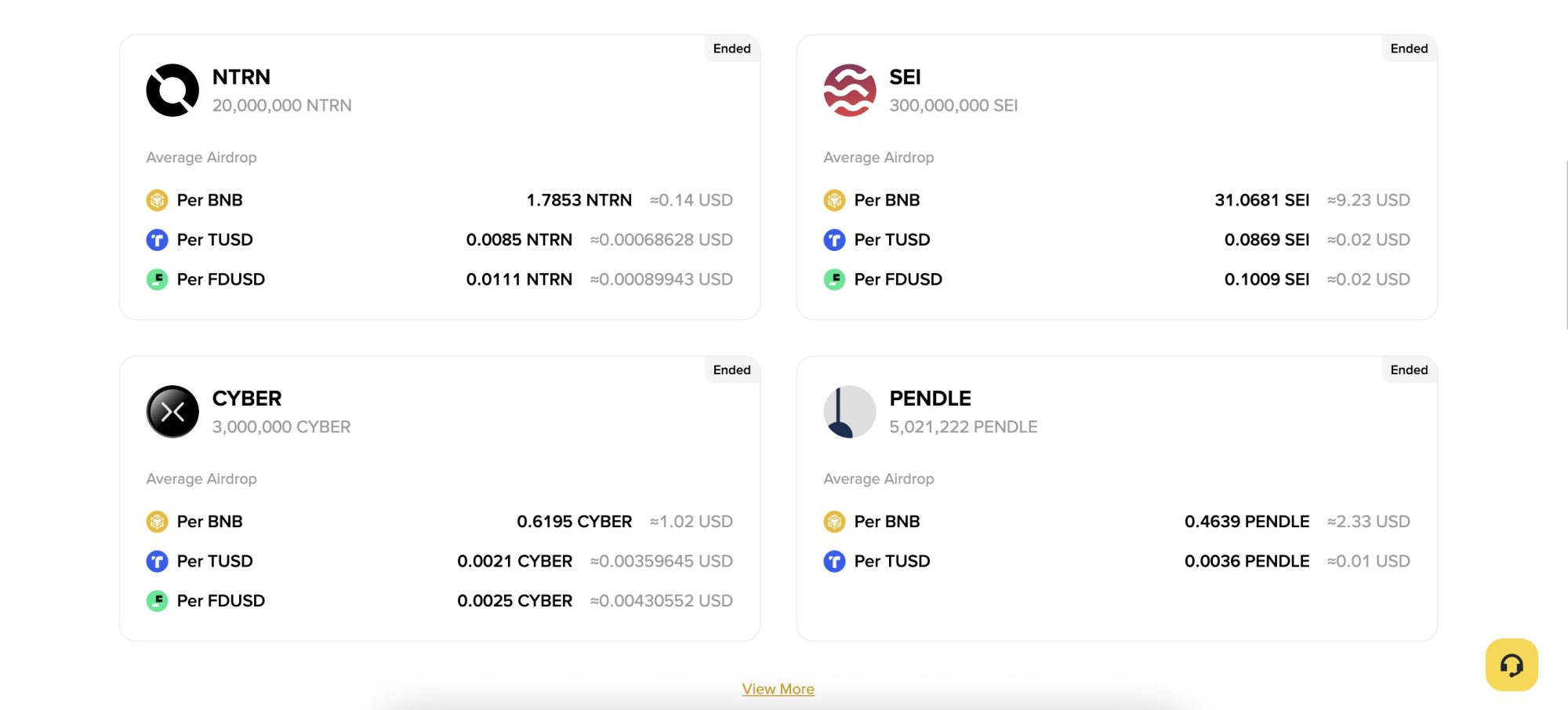
This dynamic means BNB holders earn digital assets without investing money. The key risk is BNB volatility, but this occurs regardless of whether investors stake their coins.
Previous Launchpool projects that achieved notable success include Sei (SEI), Pendle (PENDLE), and Cyber (CYBER).
P2P trading
The P2P dashboard unlocks market access for over 125 national currencies and more than 800 payment methods. As a popular alternative to the standard fiat service, users from emerging countries can buy cryptocurrencies directly from local sellers.
On Binance, buyers input the purchase asset and amount, with their preferred payment types. Deposit channels include domestic transfers, e-wallets like Skrill and Neteller, and challenger banking apps such as Cash App, Monzo, Wise, and Revolut. Based on the buyer’s parameters, the P2P exchange displays available sellers and sorts them by market prices.
Once the seller funds the platform’s escrow account, the buyer makes the payment, and Binance credits funds to their exchange balance.
Crypto staking
Binance offers a range of cryptocurrency staking services, which give users the choice of locking their tokens up for a fixed period of time or applying more flexible staking options. Staking reward (APY) rates can vary widely depending on the required lock-up time, and the range of staking choices available may depend on your location.
Copy trading
Binance competes with other top crypto copy trading platforms like Bybit, OKX, and MEXC. While these exchanges support futures only, Binance’s copy trading service also works on spot markets.
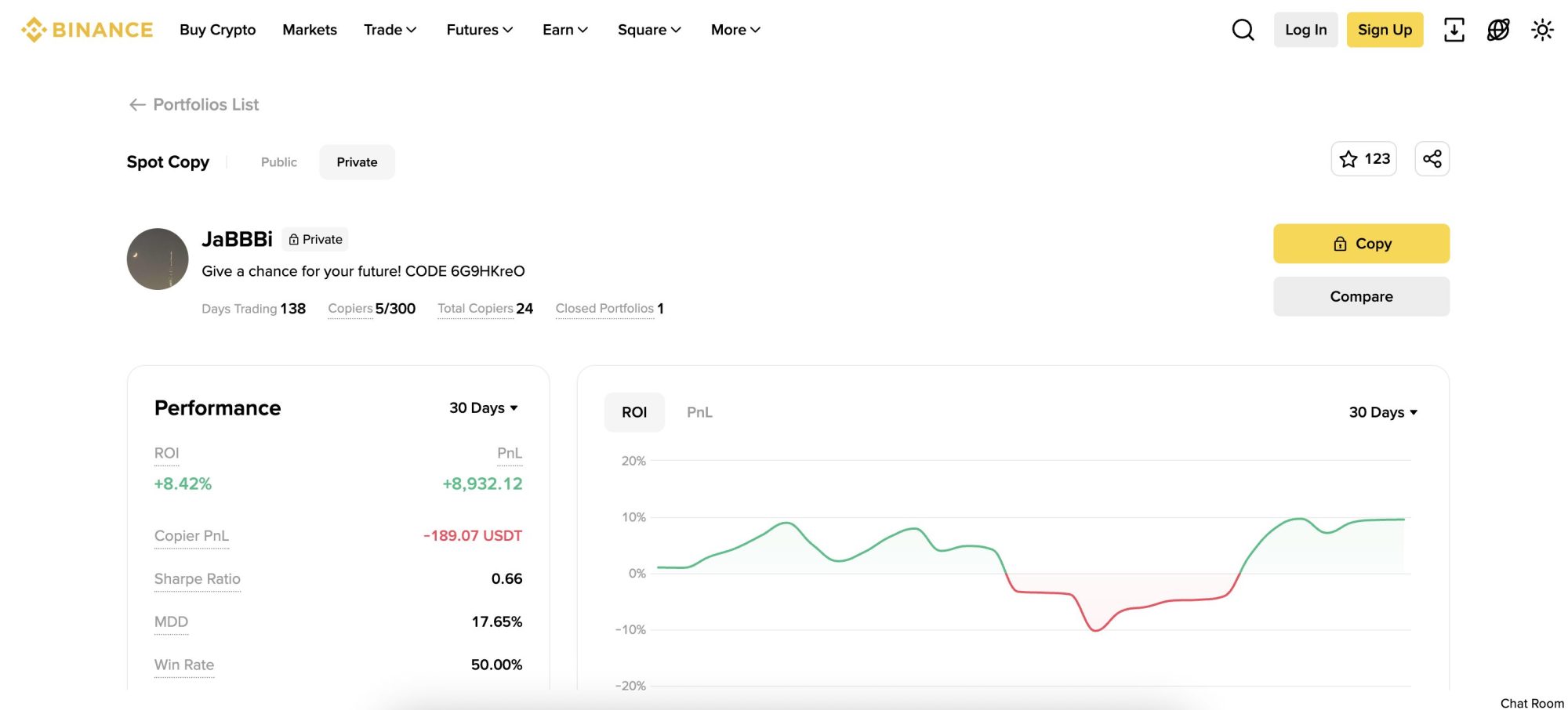
The copy trading interface lists several hundred traders, each displaying key data such as assets under management, maximum drawdown, profit and loss, and the overall win rate in percentage terms. On average, the minimum copy trading requirement is under $10, although the best-performing traders charge a 10–25% profit-sharing fee.
Binance Wallet
Binance users store cryptocurrencies within their exchange account by default. The built-in custodial system lets traders easily invest digital asset balances into their preferred market without making wallet-to-wallet transfers. The default exchange wallet relies on standard security features like two-factor authentication and email confirmations to prevent unauthorized access.
However, as this is still a centralized wallet, Binance retains control of the private keys. This structure exposes users to counterparty risks. They cannot connect the wallet to third-party applications like decentralized exchanges (DEXs) or decentralized applications (dApps), and the exchange approves withdrawal requests before users can make external transfers.
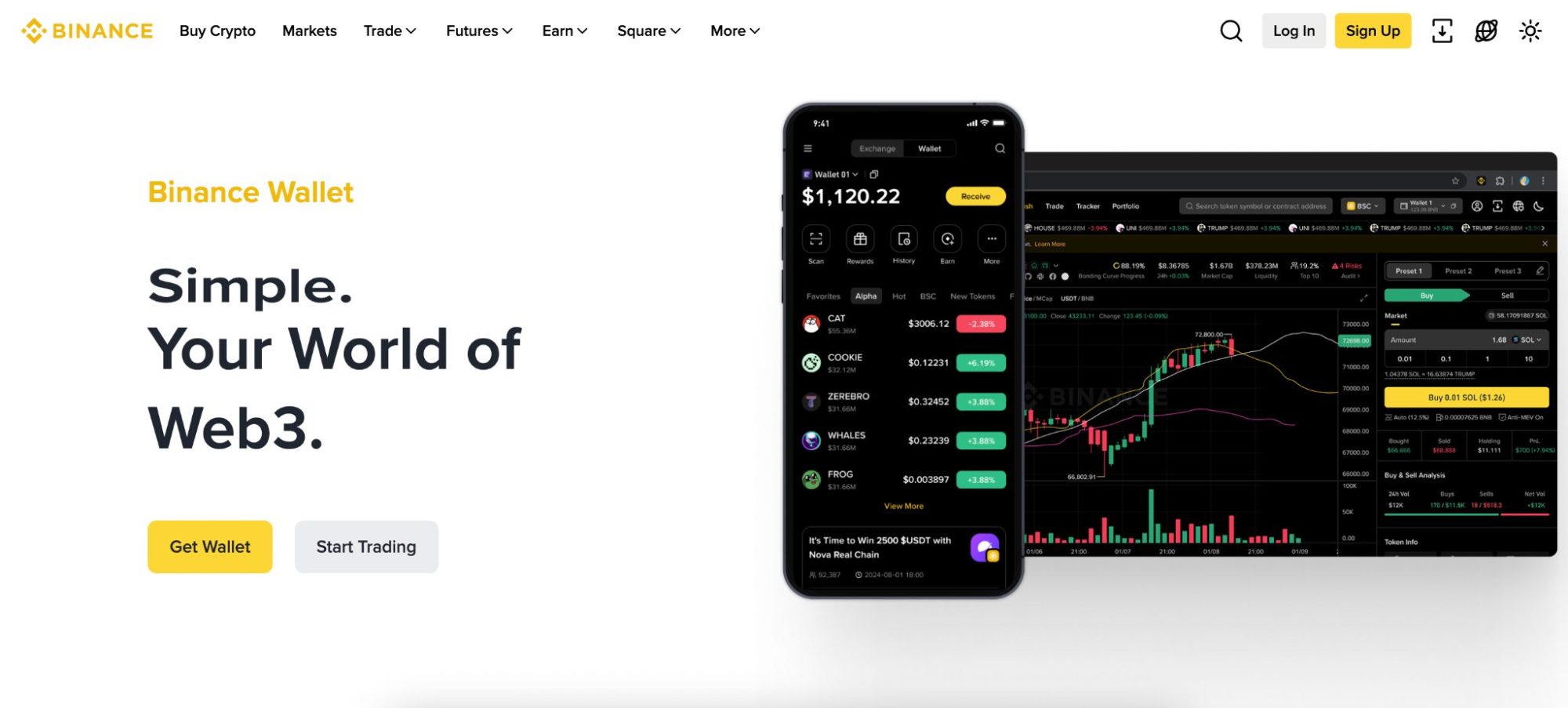
To address these concerns, Binance also offers a self-custody wallet (Binance Wallet) that operates separately from the exchange. Available as a free mobile app and browser extension, Binance’s Web3 wallet lets users store digital assets in a decentralized environment. Wallet users are free to send and receive funds with complete autonomy while bypassing Binance’s custodial service.
The non-custodial wallet supports a wide range of networks, including Bitcoin, Ethereum, BNB Chain, and Solana. It also supports instant token swaps without leaving the wallet interface, as well as yield products like savings accounts and staking. This makes Binance Wallet a strong choice for users who want to explore the Web3 space and engage with decentralized protocols.
Binance deposits, withdrawals, and limits
Our review of Binance found the exchange supports crypto deposits via wallet transfers, as well as a broad selection of traditional payment methods.
Account holders may deposit any digital asset that the Binance exchange supports, which includes over 500 coins and tokens. Binance generates a unique wallet address for each asset, and credits payments once the network provides block confirmation. Most crypto transfers process in seconds, although Bitcoin runs slower than other blockchains, so BTC payments require about 10 minutes.
Users who prefer conventional deposit methods may purchase cryptocurrencies with a debit/credit card or e-wallet. Binance supports bank transfers in some countries, which reduces fees. Direct fiat deposits are also possible in select countries. Traders then exchange the funds for their preferred asset on the spot exchange.
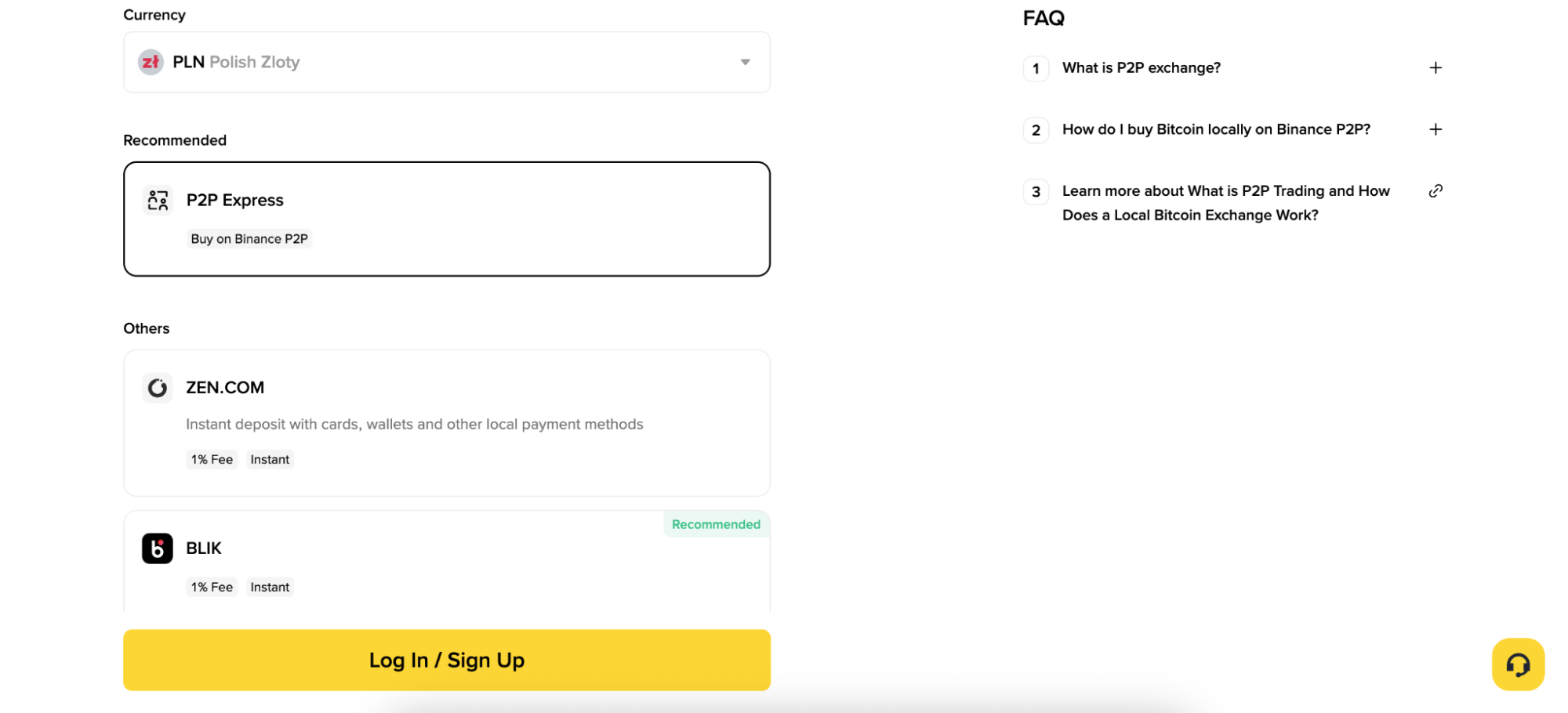
Some Binance users rely on the P2P exchange, since it supports hundreds of additional payment types. Once Binance confirms the seller has deposited the exact asset amount into the escrow wallet, the buyer transfers funds directly to the seller.
Minimum deposit requirements vary by coin, token, payment method, and currency. Crypto deposits typically have small minimums of a few cents, while debit/credit card purchases require at least $15. Minimum withdrawals and withdrawal fees are relatively modest, but also depend on the payout type.
| Crypto Deposits and Withdrawals | All Binance-supported coins and tokens |
| Direct Fiat Purchases | Visa, Mastercard, Google/Apple Pay, and select banking networks |
| P2P Payments | Over 800 international and local payment methods |
| Minimum Deposit | $15 for debit/credit cards. Varying limits for other deposit types |
| Maximum Deposit | Limits vary by the payment type and KYC level |
| Minimum Withdrawal | Typically low minimums but they vary by digital asset or fiat payment method |
| Maximum Withdrawal | Limits vary by the payment type and KYC level |
| Supported Account Currencies | Over 40 fiat currencies including TRY, EUR, BRL, ARS, COP, PLN, RON, UAH, ZAR |
Binance safety and security
The blockchain security firm Hacken awarded Binance a AAA cybersecurity score and a 975/1000 safety rating. Based on 100 crypto exchanges, Binance ranked as the fourth most secure, based on Hacken’s report.
In terms of the security framework, the global Binance platform keeps user funds in multiple cold storage wallets without internet capabilities. This system protects client-owned funds against cyber threats. In addition to AI-powered risk engines and 24/7 security teams, Binance offers various account safety features.
Passkey biometrics lets users confirm account access through their smartphone’s facial recognition or fingerprint ID. Two-factor authentication is also available, plus email confirmations, anti-phishing measures, and withdrawal whitelisting. Users may also whitelist IP addresses and devices for added security.
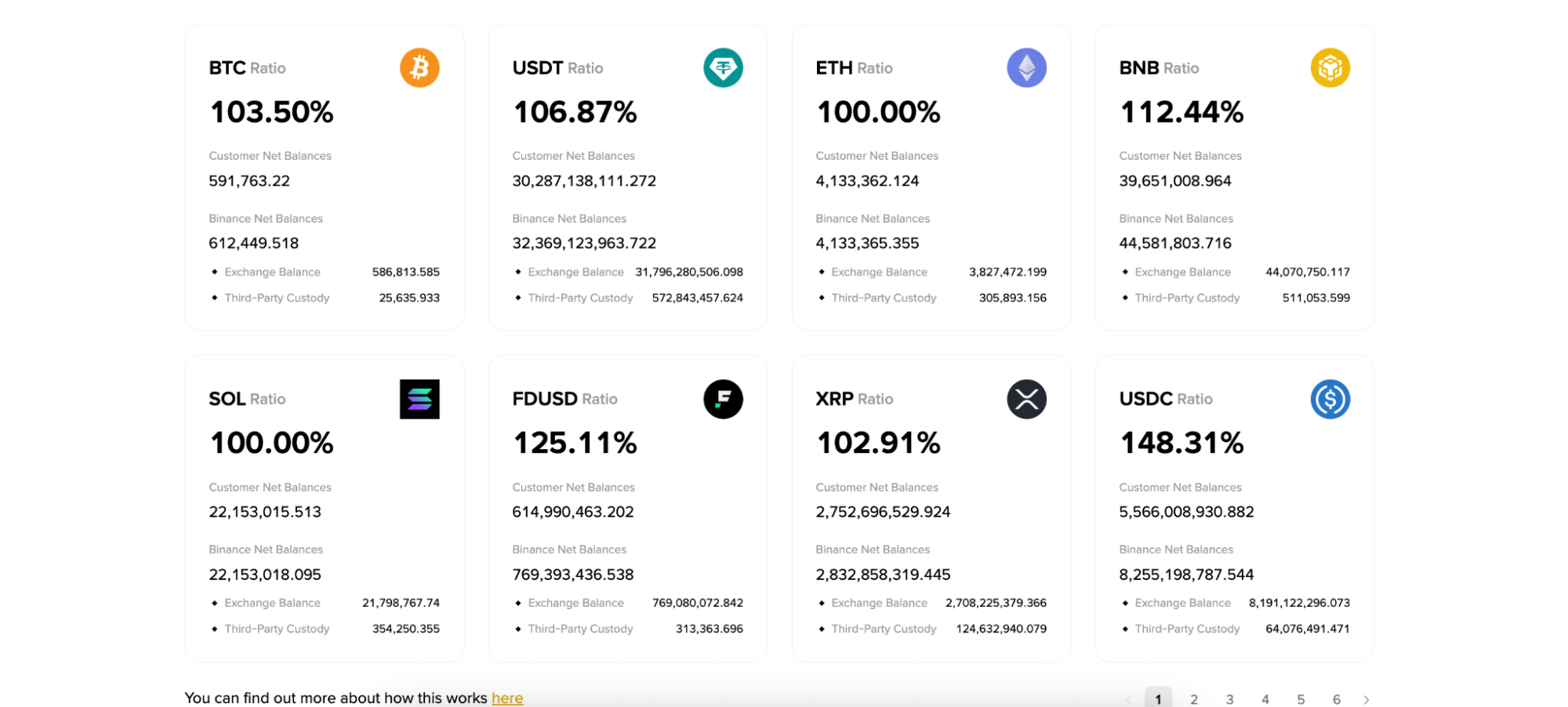
After the FTX bankruptcy, Binance was one of the first exchanges to implement proof of reserves (PoR). This system enables users to verify that the exchange holds sufficient reserves to cover customer funds, as well as its own account balances. Binance maintains a minimum 1:1 reserve per coin and token, as verified by recent reports. It keeps the majority of its reserves in major cryptocurrencies like BTC and ETH, plus stablecoins such as FDUSD, USDT, and USDC.
Does Binance offer good customer service?
Binance provides 24/7 customer service via email and live chat. While the exchange does not offer telephone support, this makes sense, since Binance serves almost 293 million accounts in over 100 countries.
Most live chat requests connect with an agent in minutes. Yet, during busy trading periods, users should expect longer waiting times. The customer service team provides support in 33 languages, including English, French, Russian, Japanese, and Chinese.
Our research shows the help center can resolve most customer queries. It contains comprehensive guides for payments, trading rules, initial and maintenance margin requirements, withdrawal times, and KYC verification.
Binance account types
Most Binance users open standard trading accounts, regardless of their nationality. Within the account, the exchange separates balances by the trading product used, such as spot, margin, futures, and P2P. Standard account holders may open sub-accounts, which allow them to segregate funds, portfolios, and investment strategies.
Binance also offers business accounts for small to medium-sized companies and corporate institutions. The onboarding process requires enhanced customer due diligence, including business registration documents, shareholder information, and proof of source of funds.
How to use Binance: Beginner’s guide
It takes minutes to get started with Binance. First-time traders open an account, upload their ID, and deposit funds. Thereafter, users can access over 1,500 markets, including spot and derivatives trading.
Step 1: Open a Binance account
On the Binance website, click “Sign Up” and input an email address or mobile number.
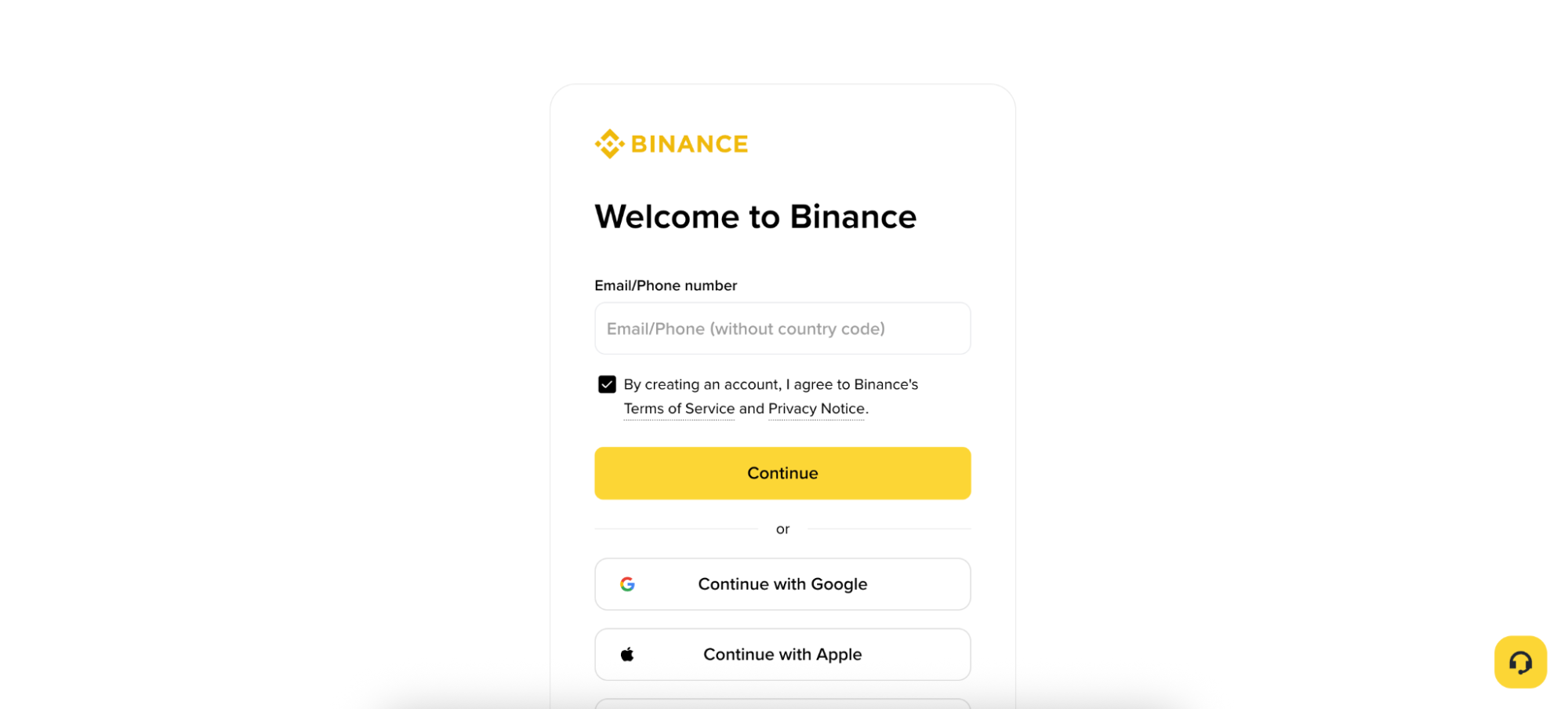
Confirm the email/number by entering the six-digit verification code.
Step 2: Upload government-issued ID
Provide Binance with personal information and upload a government-issued ID, such as a driver’s license or passport.
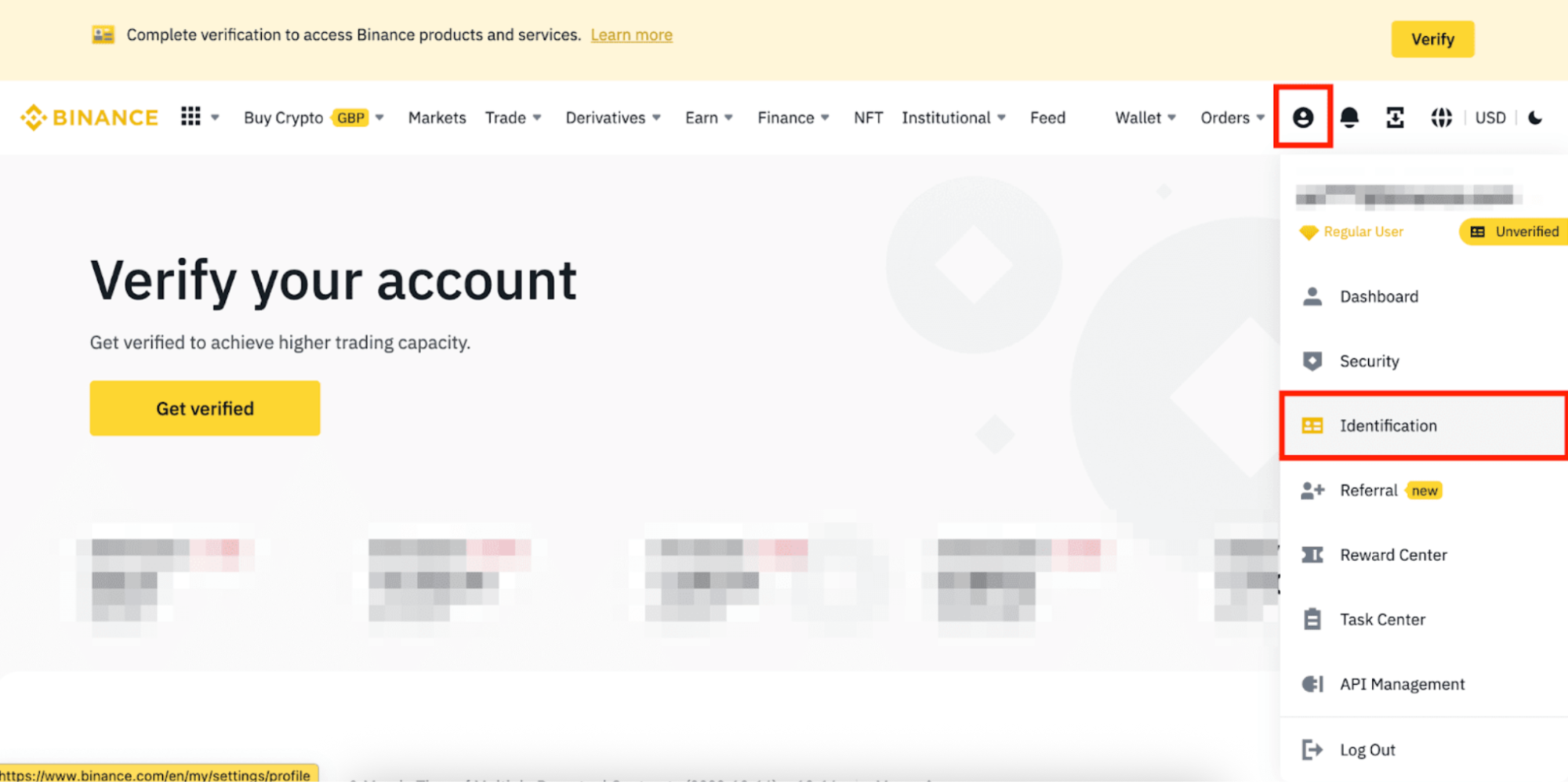
Depending on the country of residence, Binance might require an automated video call, which matches your face with the photo ID. Some nationalities must also upload proof of address.
Step 3: Secure your Binance account
In the account settings, click “Security” and activate available safety features. Recommended security tools include anti-phishing codes, IP, device, and wallet whitelisting, plus passkeys or two-factor authentication.
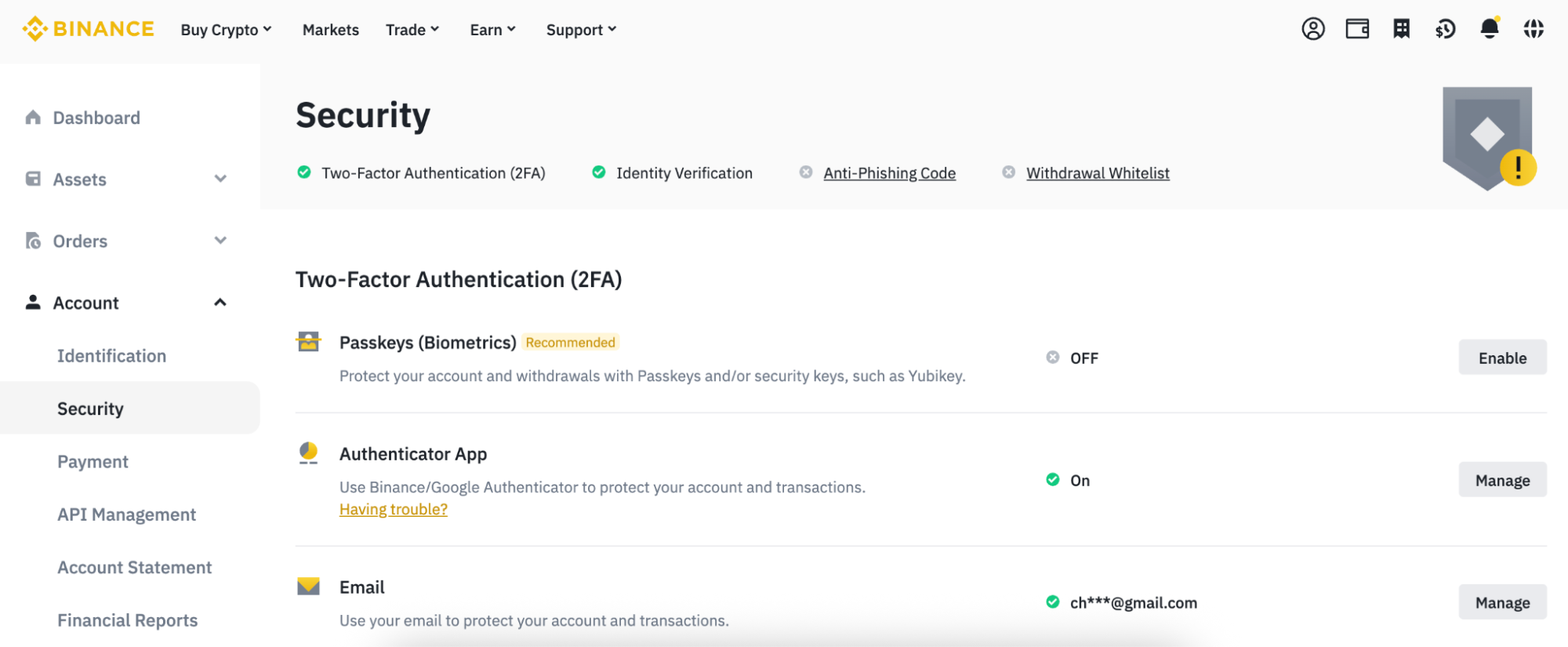
Maximizing security controls ensures a safe trading experience and protects the account from unauthorized access.
Step 4: Add account funds
Binance supports seamless account deposits, but the process varies by payment method.
If you want to buy digital assets directly from Binance with fiat money, click “Buy Crypto.” Choose a deposit method like a debit/credit card, input the purchase amount, and complete the payment. You will find the cryptocurrencies in your Binance spot account balance.
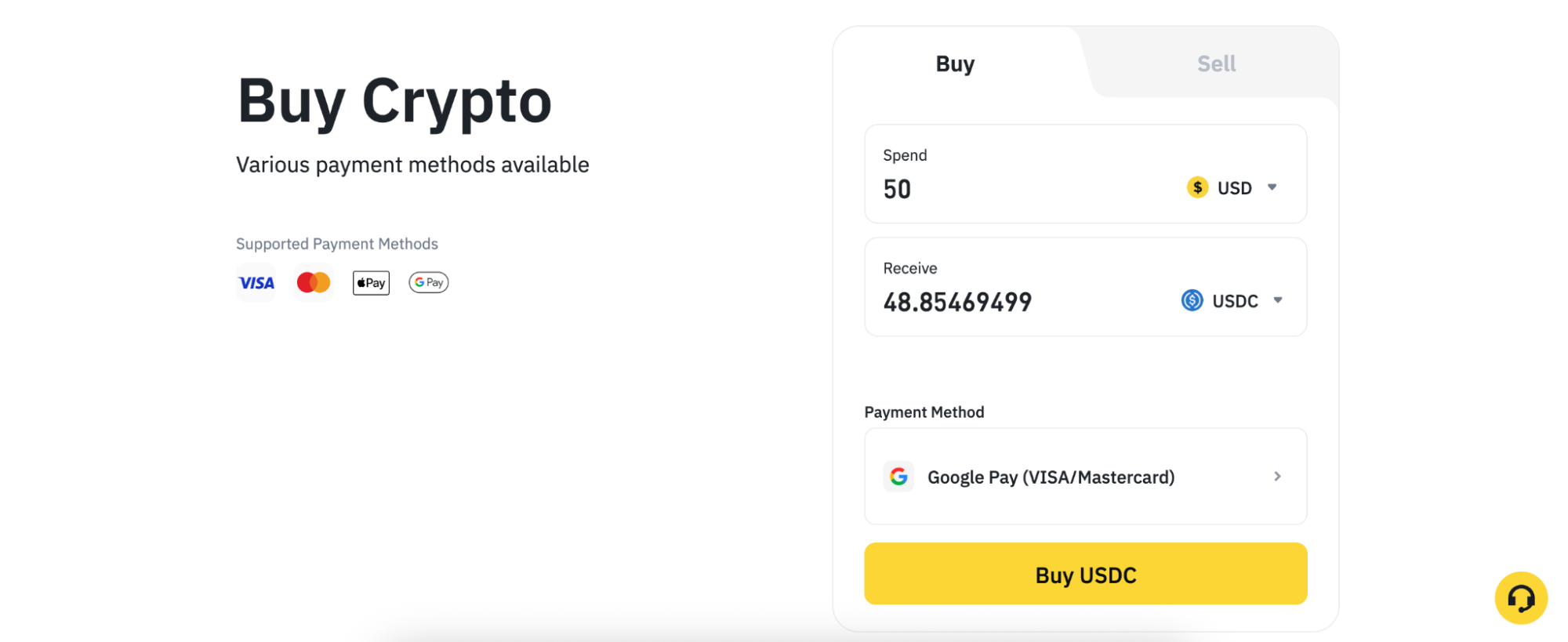
Can’t find a suitable payment type or currency? Go to the Binance P2P exchange and purchase cryptocurrencies from a local seller.
The exchange also supports crypto payments via wallet transfers. Click “Deposit Crypto,” select a digital asset and network, and transfer cryptocurrencies to the provided wallet address.
Step 5: Place a spot or futures trade
Click “Spot” or “Futures” depending on your preferred crypto product. The spot exchange suits investors who want to buy cryptocurrencies with full asset ownership. Futures enable long and short trading with leverage of up to 150x.
To the right of the pricing chart, search for a trading pair. Binance provides real-time market data for the selected pair, including price movements, order books, and market depth.
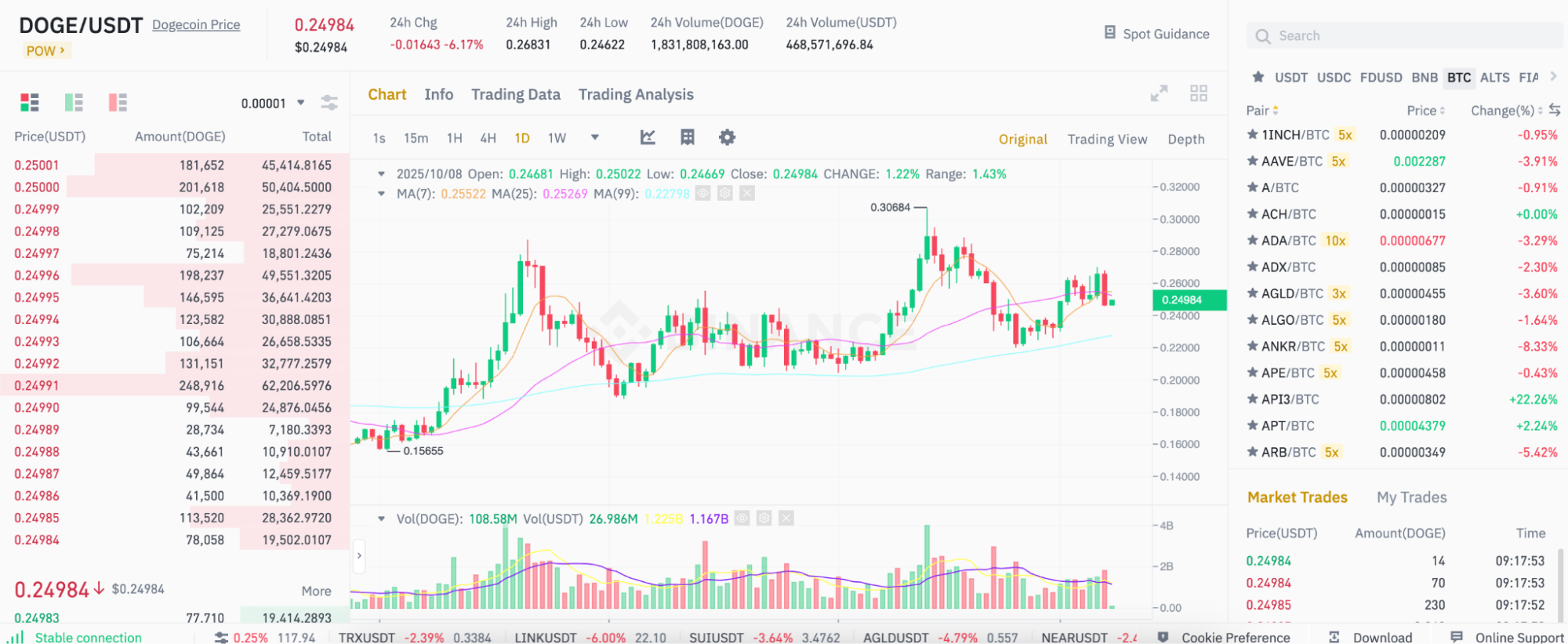
Below the chart, choose between a market or a limit order. Beginners often choose market orders, as Binance executes the position instantly. Experienced traders can use limit orders to enter the market at a specific price.
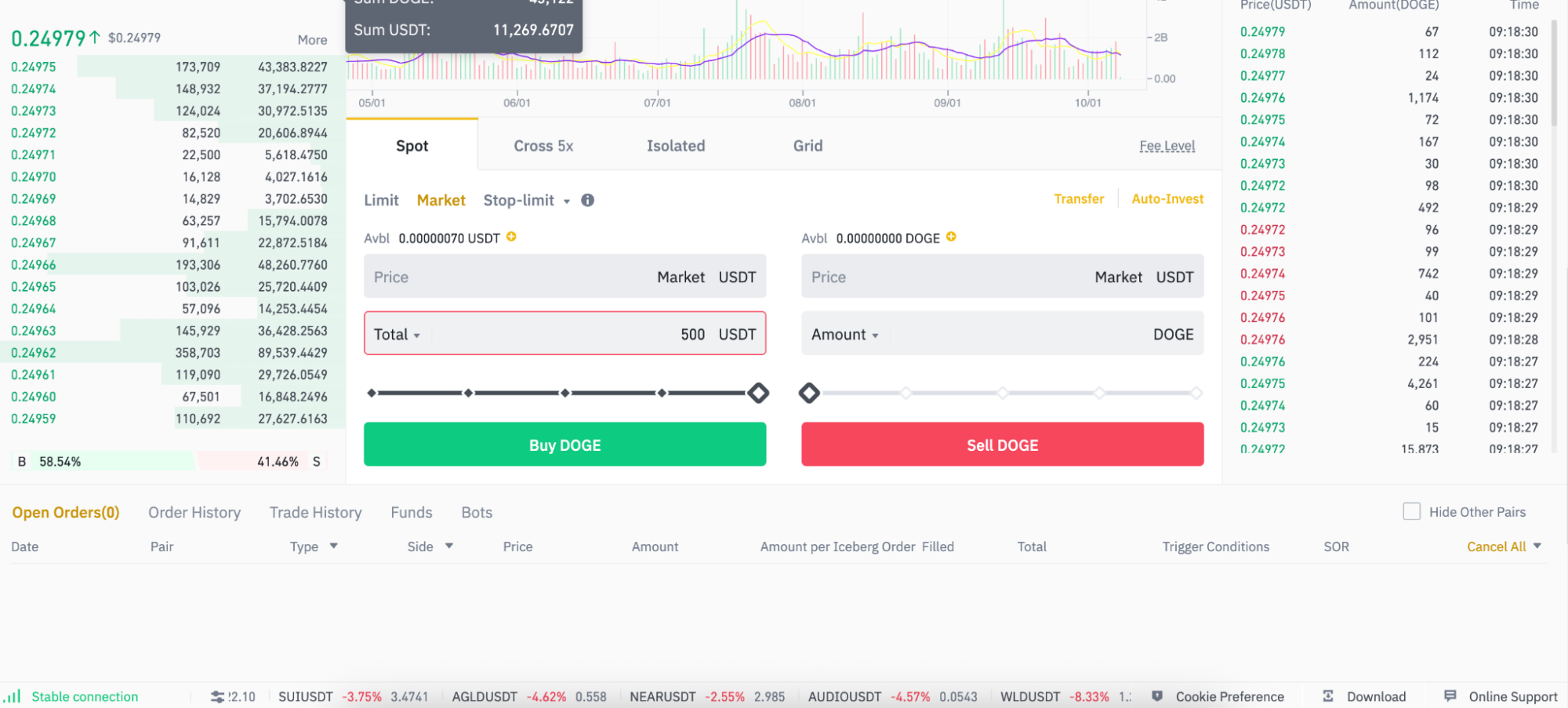
Input the total position size and click “Buy” to confirm the order.
Step 6: Sell crypto and withdraw
The purchased cryptocurrencies appear in the Binance account balance. The exchange offers various ways to cash out an existing position.
If you want to withdraw the assets to a private wallet, click “Withdraw” in the account settings and select the coin or token from the drop-down list. Choose the network, paste the wallet address, and confirm. Binance credits crypto withdrawals in minutes.
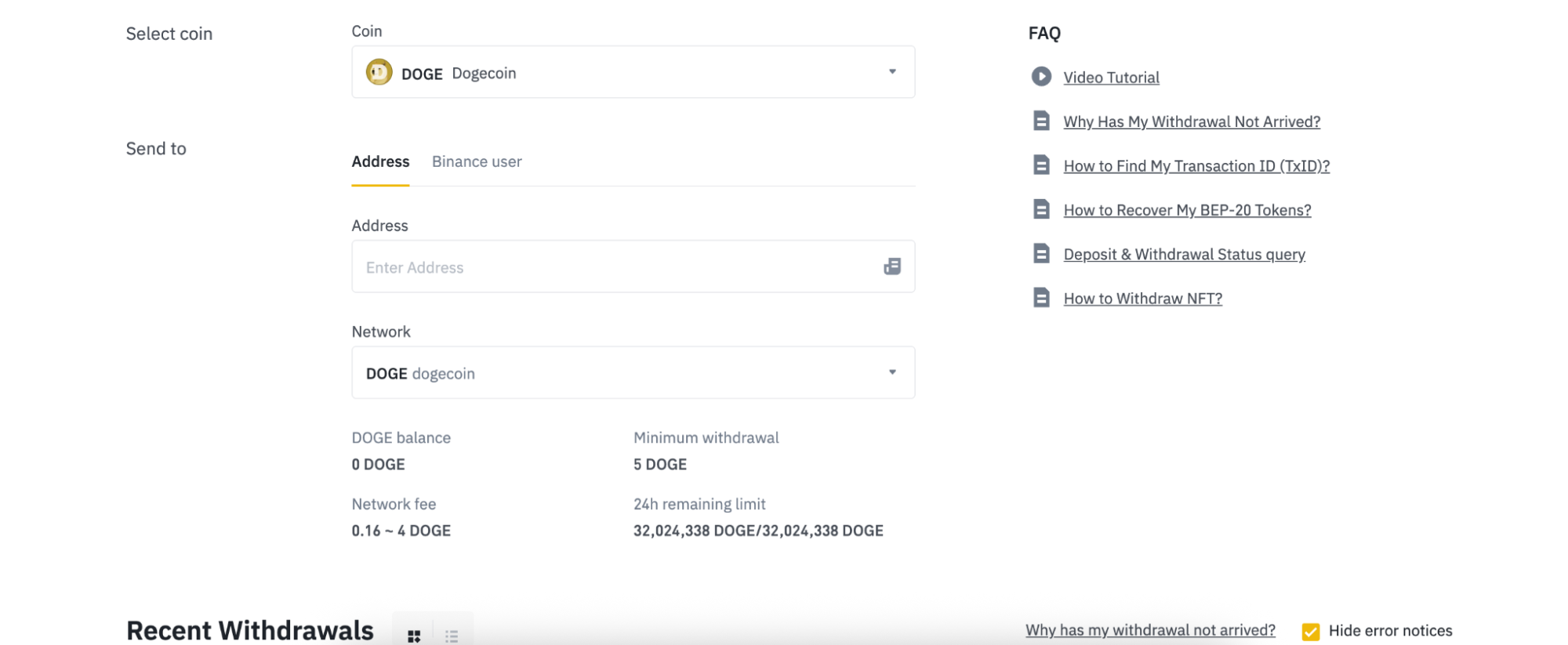
To sell the account asset for another crypto, go back to the spot exchange. If you hold DOGE, for instance, and want to swap the coins for USDT, use the DOGE/USDT pair. Then create an order and click “Sell” to confirm.
Binance allows direct fiat withdrawals in some regions. The exchange transfers money to a local bank account. You first need to swap the asset for fiat money on the spot exchange. Then go to the account settings, click “Withdraw Fiat,” and complete the withdrawal form.
How we reviewed Binance: Our research methods
We used the Binance exchange with real account funds to help readers make an informed choice. Key research tasks included placing orders on the spot and derivative exchange, exploring available markets, and recording average liquidity and execution speeds across hundreds of pairs.
The Binance review team evaluated the trading experience across desktop and mobile devices and compared it with dozens of other online exchanges. We reviewed Binance documents to assess trading and non-trading fees, supported jurisdictions, minimum margin requirements, and supported payment methods.
All research findings are accurate at the time of publication. We also update our review frequently to reflect Binance changes to markets, products, services, and general terms and conditions.
Conclusion
Overall, the Binance platform is a secure crypto exchange that supports a huge selection of markets. The platform suits all investing goals, from instant crypto purchases and day trading to speculating on derivative contracts with low margin requirements.
The user experience remains strong across mobile and desktop devices, and the exchange’s robust security mechanisms and proof of reserves ensure safety. While Binance does require users to follow mandatory KYC procedures, verified accounts can access one of the world’s most advanced crypto exchanges – and a truly market-leading Web3 ecosystem.
FAQs
Who is the real owner of Binance?
Can Americans use Binance?
Does Binance allow VPN?
Can I use Binance without ID?
Is Binance secure?
What is the maximum leverage on Binance?
How long does it take Binance to withdraw to the bank?
Is BNB related to Binance?
References
- Binance Holdings Ltd Company Profile (Bloomberg)
- Binance still to choose location for global headquarters, CEO Teng says (Reuters)
- TOP-100 Exchanges By Cybersecurity Score #5 (Hacken)
- Binance Proof of Reserves (Binance)