


Making money with cryptocurrency isn’t just about buying low and selling high. There are multiple ways to earn with crypto, even while you sleep.
In this guide, we’ll break down exactly how to make money with cryptocurrency, including step-by-step explanations, pros and cons, and how to get started as a beginner.
Quick look at how to make money with crypto
There are several ways to make money with cryptocurrency, each with different risk levels and earning potential. Here’s a quick overview of the most common methods:
- Staking – A process where users lock up digital assets to support blockchain operations and receive rewards.
- Yield farming – A decentralized finance (DeFi) strategy that involves earning returns by providing liquidity to crypto platforms.
- Lending – A method where cryptocurrency holders loan out their assets to earn interest over time.
- Crypto savings accounts – Platforms that offer fixed or variable interest on deposited crypto funds.
- Mining – The process of validating blockchain transactions using computational power in exchange for crypto rewards.
- Play-to-earn and Learn-to-earn – Blockchain-based models where users earn tokens by playing games or completing educational activities.
- Affiliate programs – Earn commissions by promoting crypto products, exchanges, or tools through referral links.
- Trading cryptocurrencies – Buy and sell digital assets to profit from their volatile nature and frequent price swings.
How to make money with crypto – 8 Best Strategies
Each method of making money with cryptocurrency works differently, and the potential earnings, risks, and effort required can vary.
Some methods provide passive income, while others require active participation in the cryptocurrency market.
Below, we’ll break down each method in detail so you can decide which is best for you.
Staking
Staking is one of the easiest ways to earn passive income with cryptocurrency. Unlike mining Bitcoin, which requires expensive hardware, staking is energy-efficient and accessible to most investors.
This method allows holders to lock up their assets to help secure a proof-of-stake (PoS) blockchain, and in return, they receive rewards.
In PoS blockchains, transactions are validated by users who “stake” their crypto rather than miners solving complex puzzles.
The more coins you stake, the higher your chances of being chosen to verify transactions and earn rewards.
Many platforms allow you to stake through a crypto exchange, a staking pool, or directly via a crypto wallet.
Some of the most popular staking coins include Ethereum (ETH), Solana (SOL), and Cardano (ADA).
If you’re also exploring ways to monetize your crypto knowledge or audience, don’t miss this roundup of the Best crypto affiliate programs, which offer excellent rewards and opportunities for passive income.
Pros of staking
- Easy way to earn passive income: No need for trading skills; just hold and stake your coins to receive rewards.
- Lower cost than mining: No need to buy expensive equipment or pay high electricity costs like mining crypto.
- Higher returns than traditional savings: Some staking coins offer annual yields of 5-20%, far better than bank savings rates.
Cons of staking
- Funds may be locked for a period: Some staking platforms require you to lock your crypto for weeks or months, making it inaccessible.
- Rewards depend on market conditions: If the staked coin loses value, your earnings could be worth less.
- Risk of platform failure: Staking through an exchange or staking pool means trusting a third party, which could be hacked or go bankrupt.
Yield farming
Yield farming is a high-reward strategy in DeFi that allows users to earn income by providing liquidity to crypto platforms.
Instead of simply holding tokens, investors deposit them into liquidity pools that facilitate lending, trading, and borrowing on DeFi exchanges.
In return, they receive a share of the platform’s transaction fees or additional tokens as rewards.
Many farmers frequently move funds between protocols like Uniswap, Curve, and Aave to chase the best returns, but doing so requires careful strategy and risk management.
Besides these risks, yield farming offers potential returns significantly higher than other passive income methods.
If you’re interested, you can get started easily by following this detailed guide on how to start yield farming in the crypto markets.
Pros of yield farming
- Higher potential returns: Yield farming can generate much higher yields, often exceeding 20% APY.
- Flexibility to move funds: Unlike staking, funds aren’t locked, allowing farmers to shift assets to platforms with better rewards.
- Passive income from DeFi platforms: Earn rewards without actively trading or holding assets long-term.
Cons of yield farming
- High risk due to market volatility: If the value of the most profitable cryptocurrency in the pool drops, earnings may not cover losses.
- Smart contract vulnerabilities: Bugs or exploits in DeFi protocols can lead to permanent fund losses.
- Impermanent loss: If the price of your deposited assets changes significantly, you could end up with lower returns than holding them normally.
Lending
Crypto lending allows investors to earn passive income by loaning their digital assets to borrowers in exchange for interest payments.
This is done through centralized platforms like BlockFi and Nexo or decentralized lending protocols like Aave and Compound.
Interest rates vary based on market demand, the type of cryptocurrency lent, and loan terms.
Some platforms offer flexible withdrawals, while others require lenders to lock funds for a fixed period to receive higher returns.
Lending stablecoins like USDC and DAI is often considered a lower-risk option, as their value remains stable compared to volatile assets like Bitcoin.
Pros of lending
- Steady passive income: Earn interest payments regularly, similar to a savings account but with higher returns.
- No need to sell crypto: Keep exposure to potential price gains while generating income from holdings.
- Lower risk with stablecoins: Lending assets like USDC reduces volatility risks compared to other cryptocurrencies.
Cons of lending
- Counterparty risk: Borrowers may default, or lending platforms may become insolvent, leading to losses.
- Withdrawal restrictions: Some platforms require funds to be locked up, limiting liquidity.
- Regulatory uncertainty: Crypto lending regulations vary by region, affecting platform availability and terms.
Crypto savings accounts
Crypto savings accounts function similarly to traditional bank accounts, but instead of earning interest on fiat currency, users earn rewards on their crypto holdings.
Cryptocurrency exchanges and specialized lending platforms offer these accounts, allowing users to generate passive income with minimal effort.
Popular platforms that provide crypto savings accounts include Nexo, Crypto.com, and Binance Earn, each offering different rates based on the cryptocurrency and account type.
Interest rates vary based on the cryptocurrency deposited, the platform, and whether the user chooses a flexible or fixed-term account.
Some platforms offer higher rates for stablecoins like USDC and DAI, making them a preferred option for risk-averse investors.
Managing your balance in this way means you don’t have to worry so much about the best time to buy crypto in the long term.
However, unlike a bank account, funds in a crypto savings account are not insured, and the platform’s security is a key consideration.
Pros of crypto savings accounts
- Easy way to earn passive income: No need for trading or complex strategies—simply deposit funds and earn interest over time.
- Higher returns than traditional savings: Interest rates often exceed those banks offer, making it a better option for growing funds.
- Stablecoin support reduces volatility: Many platforms allow savings in stablecoins, protecting against market fluctuations.
Cons of crypto savings accounts
- Not insured like a bank account: Unlike traditional financial institutions, cryptocurrency investing through savings accounts carries higher risk.
- Withdrawal restrictions may apply: Some platforms require users to lock funds for a fixed period to earn higher rates.
- Platform risk: If an exchange or lending platform becomes insolvent, users could face significant loss of funds.
Mining
Mining is one of the oldest methods of earning money with cryptocurrency. It involves using computational power to validate transactions and secure a blockchain network.
Miners are rewarded with new coins for solving complex mathematical problems that confirm transactions on proof-of-work (PoW) blockchains like Bitcoin and Litecoin.
The mining process can be done individually or through a mining pool, where multiple miners combine their computing power to increase their chances of earning rewards.
However, mining cryptocurrency requires specialized hardware, high energy costs, and technical knowledge, making it less accessible for beginners.
Pros of mining
- Earn newly minted cryptocurrency: Miners receive new coins as rewards, which can be highly profitable in the right conditions.
- Supports network security: Contributes to the blockchain network by verifying transactions and preventing fraud.
- More predictable income with mining pools: Joining a mining pool allows for more consistent earnings, reducing the uncertainty of solo mining.
Cons of mining
- High energy costs: Mining requires significant electricity consumption, making it expensive in regions with high energy prices.
- Specialized equipment needed: Profitable mining requires ASIC miners or powerful GPUs, which can be costly.
- Market volatility affects profitability: If the price of Bitcoin or other mined coins drops, mining may become unprofitable.
Play-to-earn & learn-to-earn
Blockchain-based gaming and educational programs offer unique ways to earn free crypto without an upfront investment.
Play-to-earn games reward players with cryptocurrency or NFTs for completing in-game tasks. At the same time, learn-to-earn platforms give users digital assets for completing educational resources about blockchain technology.
Axie Infinity, The Sandbox, and Gods Unchained are among the best crypto games to explore, where players can trade in-game items for real-world value.
Meanwhile, platforms like Coinbase Earn and Binance Academy allow new users to earn crypto by watching tutorials and answering quizzes.
These methods are beginner-friendly but require time and effort to generate substantial income.
Pros of play-to-earn & learn-to-earn
- Earn free crypto with no upfront cost: Many platforms offer rewards to new users just for participating.
- Engaging and educational: Ideal for those who enjoy gaming or want to learn about cryptocurrency investing while earning.
- A low-risk way to build a crypto portfolio: Accumulate small amounts of digital currency without needing to trade or invest.
Cons of play-to-earn & learn-to-earn
- Earnings can be low: It requires a significant time investment to earn money compared to other methods like staking rewards or yield farming.
- In-game assets and tokens are highly volatile: Rewards are market-dependent, and gaming coins can lose value rapidly due to sudden price fluctuations.
- Not all platforms are legitimate: Some play-to-earn games and educational resources may be scams or require personal data.
Affiliate programs
Affiliate programs let investors earn passive income by promoting crypto products or services to their audience.
After signing up, affiliates receive a unique referral link that tracks new users or purchases. Each time someone signs up or makes a transaction using the link, the affiliate earns a commission.
This strategy is different from staking or lending because it doesn’t require holding crypto assets. Instead, the focus is on leveraging content, reach, or community influence.
Many centralized exchanges, wallets, and trading platforms offer affiliate programs with both one-time and recurring commissions.
Well-known affiliate programs include those from Coinbase, Binance, and Ledger, as well as specialized crypto platforms like tax software providers and trading bots.
Pros of affiliate programs
- Low barrier to entry: No need to invest upfront. You just need an audience or platform to promote links.
- Recurring income potential: Some programs pay ongoing commissions as long as referred users remain active.
- Diverse opportunities: From exchanges to wallets, NFT marketplaces, and trading tools, affiliates can choose products that align with their audience.
Cons of affiliate programs
- Audience required: Without a blog, YouTube channel, or social media following, it’s difficult to generate significant income.
- Highly competitive: Many influencers already promote affiliate links, so standing out can be challenging.
- Variable earnings: Income depends heavily on trading volume, platform fees, and how many referrals convert.
Trading cryptocurrencies
Trading cryptocurrencies is one of the most active ways to make money in the digital asset market. Instead of holding for the long term, traders buy and sell frequently to take advantage of price volatility.
There are different strategies depending on risk tolerance and time commitment:
- Day trading: Buying and selling within the same day to profit from small market moves.
- Swing trading: Holding for days or weeks to capture larger price swings.
- Scalping: Executing dozens of trades per day, profiting from tiny shifts in value.
Trading can deliver more money in less time than staking or lending, but it requires a deep understanding of market value, and technical analysis, among many other things.
Traders also need to factor in platform fees and tax implications, as every trade can be considered a taxable event.
Pros of trading cryptocurrencies
- High earning potential: Successful traders can make more in a few trades than staking might earn in a year.
- Globally accessible: With just an internet connection and a digital wallet, trading is open 24/7.
- Flexible strategies: Traders can adapt to different market conditions, either to bull runs or crashes.
Cons of trading cryptocurrencies
- High risk: The volatile nature of crypto means losses can occur as quickly as gains.
- Time-consuming: Active monitoring is needed, especially for day traders.
- Technical expertise required: Understanding charts, market indicators, and risk management is critical.
Ways to make money with crypto – Quick comparison table
| Method | Difficulty | Earnings potential (APY) | Risk level | Effort required | Best for |
| Staking | Easy | 4–20% annually | Low to Medium | Minimal – just hold & lock | Long-term holders |
| Yield farming | Medium–High | 10–50%+ (can vary significantly) | High | Active monitoring required | DeFi users with experience |
| Lending | Medium | 5–15% annually | Medium | Moderate – funds may lock | Investors seeking steady income |
| Crypto savings accounts | Easy | 3–10% annually | Medium | Low effort | Beginners in crypto investing |
| Mining | Hard | Varies by market value & rewards | High (high energy consumption + costs) | Requires technical expertise | Tech-savvy users with cheap electricity |
| Play-to-earn / Learn-to-earn | Easy | Small earnings | Low–Medium | Time investment needed | Beginners, gamers, learners |
| Affiliate programs | Medium | Recurring commissions (varies) | Medium | Requires audience & effort | Content creators |
| Trading cryptocurrencies | Hard | Unlimited but risky | High (volatile markets) | High – constant monitoring | Active traders |
The risks of trying to earn passive income through crypto
Earning passive income with cryptocurrency can be highly rewarding, but it’s not without risks.
From scams to market volatility, investors must be cautious when choosing lending platforms, DeFi protocols, or staking programs.
Below are the most significant risks to consider before generating passive crypto income.
The best cryptocurrencies to buy for passive income in 2025
Some cryptocurrencies let investors earn passive income just by holding or staking them.
1. Bitcoin Hyper (HYPER)
- Blockchain network: Bitcoin Layer 2
- Presale supply: Stage based allocation with increasing prices per stage
- Purchase methods: ETH, SOL, BNB, USDT, USDC, Credit Card
- Ways to earn: Stake HYPER tokens during presale for up to 150% APY
- Investor benefits: Faster and cheaper Bitcoin transactions, governance rights, and early staking rewards
Bitcoin Hyper is a new Layer 2 solution designed to scale Bitcoin beyond its current transaction limits.
By allowing wrapped BTC to move across its network at high speed and low cost, it opens the door for decentralized apps and smart contracts directly tied to Bitcoin’s security.

The presale has already raised millions of dollars, making it one of the most anticipated crypto launches of the year.
Early adopters can stake tokens during presale and enjoy APYs well above 100 percent, which makes it an attractive option for investors looking for both passive income and exposure to Bitcoin’s long term growth potential.
Analysts have already highlighted Bitcoin Hyper among the most promising new crypto presales, showing how serious projects can still emerge from the meme coin scene.
2. Maxi Doge (MAXI)
- Blockchain network: Ethereum
- Presale supply: 150.24 billion tokens in total with around 40% available during presale
- Purchase methods: ETH, BNB, USDT, USDC, Credit Card
- Ways to earn: Stake MAXI tokens for APYs ranging from 180% up to more than 300% during presale
- Investor benefits: Strong meme branding, audited tokenomics, staking rewards, and a vibrant community focus
Maxi Doge takes meme coin culture to the next level with its playful gym-inspired branding and community-driven roadmap.
Beyond the humor, the token has been structured with transparency in mind, including independent audits and a fair token distribution.
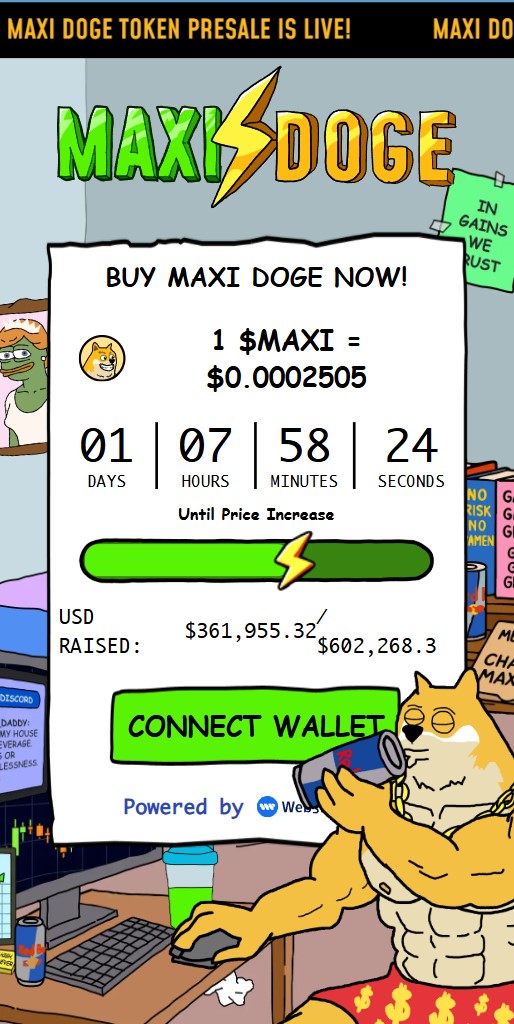
During its presale, Maxi Doge has already raised over a million dollars, showing strong demand for a project that blends fun with financial incentives.
The staking system rewards early holders with some of the highest yields in the meme coin space, making it appealing for those who want passive income alongside community engagement.
For investors who like to spot early-stage opportunities, the project has even been featured in lists of the best crypto private sales.
3. Best Wallet Token (BEST)
- Blockchain network: Ethereum
- Presale supply: N/A
- Purchase methods: ETH, USDT, Credit Card
- Ways to earn: Staking rewards and reduced transaction fees
- Investor benefits: Priority access to new projects and exclusive staking perks
Best Wallet Token is the utility token for Best Wallet, a popular non-custodial cryptocurrency wallet.
Holding BEST tokens comes with multiple benefits, including discounted transaction fees and early access to new crypto presales.
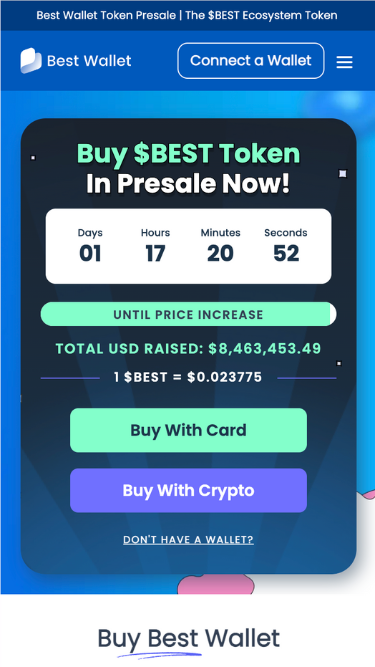
Investors can also stake BEST tokens and earn up to 170% APY, making it an attractive option for those looking to generate passive income.
On top of that, the token’s integration with Best Wallet gives holders extra perks, such as priority access to exclusive cryptocurrency projects.
4. Ethereum (ETH)
- Blockchain network: Ethereum (Layer 1)
- Staking supply: No fixed cap
- Purchase methods: Available on all major exchanges (Coinbase, Binance, Kraken, etc.)
- Ways to earn: Stake ETH to secure the network and earn between 4%–6% annually
- Investor benefits: Institutional adoption, staking rewards, core infrastructure for DeFi and NFTs
Ethereum remains one of the strongest long-term investments in the crypto space. As the leading smart contract blockchain, it powers most decentralized applications, NFT marketplaces, and DeFi platforms.
Since transitioning from Proof-of-Work to Proof-of-Stake (PoS), Ethereum now allows holders to stake ETH to validate transactions and secure the network.

Depending on the validator pool or staking service, investors can typically earn 4%–6% APY. While these yields are lower than the triple-digit returns offered by new presales, they come with much greater stability and adoption support.
Ethereum’s dominance in DeFi and the launch of Ethereum ETFs in key markets have further solidified its position as a blue-chip crypto. For investors looking for steady staking rewards and reduced risk, ETH remains a top choice.
5. Solana (SOL)
- Blockchain network: Solana
- Staking supply: No fixed cap
- Purchase methods: Available on all major exchanges (Coinbase, Binance, Kraken, etc.)
- Ways to earn: Stake SOL tokens with validators for yields between 6%–8% annually
- Investor benefits: Fast transactions, low fees, rapidly growing DeFi and NFT ecosystems
Solana has become one of the fastest-growing blockchain ecosystems thanks to its high-speed transactions and low fees. In 2024, Solana experienced a major comeback, regaining its all-time highs and expanding its DeFi and NFT presence.

By staking SOL with validators, investors can typically earn 6%–8% APY, depending on the platform. This makes Solana more attractive than traditional savings accounts and even slightly higher yielding than Ethereum.
Beyond staking, Solana’s growth is driven by meme coins, decentralized exchanges, and NFT marketplaces that continue to attract new users. With billions of dollars locked across its DeFi ecosystem, Solana is positioning itself as a long-term competitor to Ethereum.
Best cryptocurrencies for passive income in 2025
| Cryptocurrency | Blockchain network | APY / rewards | Risk level | Key benefit |
| Bitcoin Hyper (HYPER) | Bitcoin Layer 2 | Up to 150% APY during presale | Medium | BTC scaling + early staking rewards |
| Maxi Doge (MAXI) | Ethereum | 180–300% APY during presale | High | Meme coin + high-yield staking |
| Best Wallet (BEST) | Ethereum | Up to 170% APY | Medium | Wallet utility + exclusive perks |
| Ethereum (ETH) | Ethereum Layer 1 | 4–6% staking yield | Low | Institutional adoption + stable staking income |
| Solana (SOL) | Solana | 6–8% staking yield | Medium | Fast network + strong DeFi/NFT growth |
Conclusion – How to make money with cryptocurrency
Throughout this guide, we’ve explored several ways to make money with cryptocurrency. From staking and yield farming to lending and play-to-earn games, each method offers different opportunities to earn passive income
However, like any investment, crypto comes with risks, from market volatility to platform failures, so it’s important to research and choose the strategies that align with your goals.
If you’re looking for new tokens that offer high staking rewards and other earning opportunities, Solaxy, MIND of Pepe, and Best Wallet Token stand out as strong choices.
Now that you know the different ways to generate passive income, the next step is to choose the methods that fit your goals and take action.