



Green hydrogen, produced by using renewable electricity sources like wind, solar, or hydroelectric power to split water (electrolysis), is rapidly gaining prominence in fighting climate change. The adoption of this clean fuel source is boosting hydrogen stocks in the UK and globally.
Hydrogen’s role as a clean fuel presents a significant growth opportunity for companies and a chance for investors to buy into a rising trend. Read on for our seven picks of the top UK hydrogen companies.
eToro Review
- Trade the most popular cryptocurrencies with a simple interface
- Deposit with debit, credit, PayPal or bank transfer
- Invest in stocks, ETFs, gold and bonds from the same account

The best UK hydrogen companies to invest in right now
Here’s a quick look at the top hydrogen companies based in the UK that have promising revenue and earnings growth potential:
- Linde: The global engineering company’s gases are used in hydrogen capture systems that are crucial to emission reductions. It’s a key player in nearly every step of the hydrogen value chain.
- Ceres Power Holdings: The firm develops solid-oxide electrolyser cell and solid-oxide fuel cell technology. It licensed its green energy to clients, including China’s Weichai and South Korea’s Doosan.
- EQTEC: The bioscience energy company, based in London, uses gasification to make hydrogen, natural gas, ethanol and methanol from waste materials. It has multiple projects in Europe and one in the US.
- AFC Energy: The UK-based hydrogen power technology supplier makes alkaline fuel cell systems that use hydrogen to make clean energy. Its generators break down ammonia into hydrogen and nitrogen.
- BP: One of the world’s top 10 oil companies, it also operates green hydrogen projects in the UK, Germany, and Spain. It aims to produce 0.5-0.7 million tonnes of low-carbon hydrogen per year by 2030.
- ITM Power: Its electrolyser systems produce green hydrogen based on proton exchange membrane (PEM) technology. Its electrolysers run on renewable electricity and water, with oxygen as the only byproduct.
- Powerhouse Energy Group: The UK company, based in Bingley, has developed technology that takes plastic and other wastes, such as tyres, and turns them into hydrogen-based synthetic gases.
Your capital is at risk.
- Show Full Guide
An in-depth look at these top hydrogen stocks
All of the hydrogen stocks we picked have their headquarters in the UK and trade on the London Stock Exchange. Here’s a little more detail on each of them:
1. Linde: Great pick and shovel hydrogen play
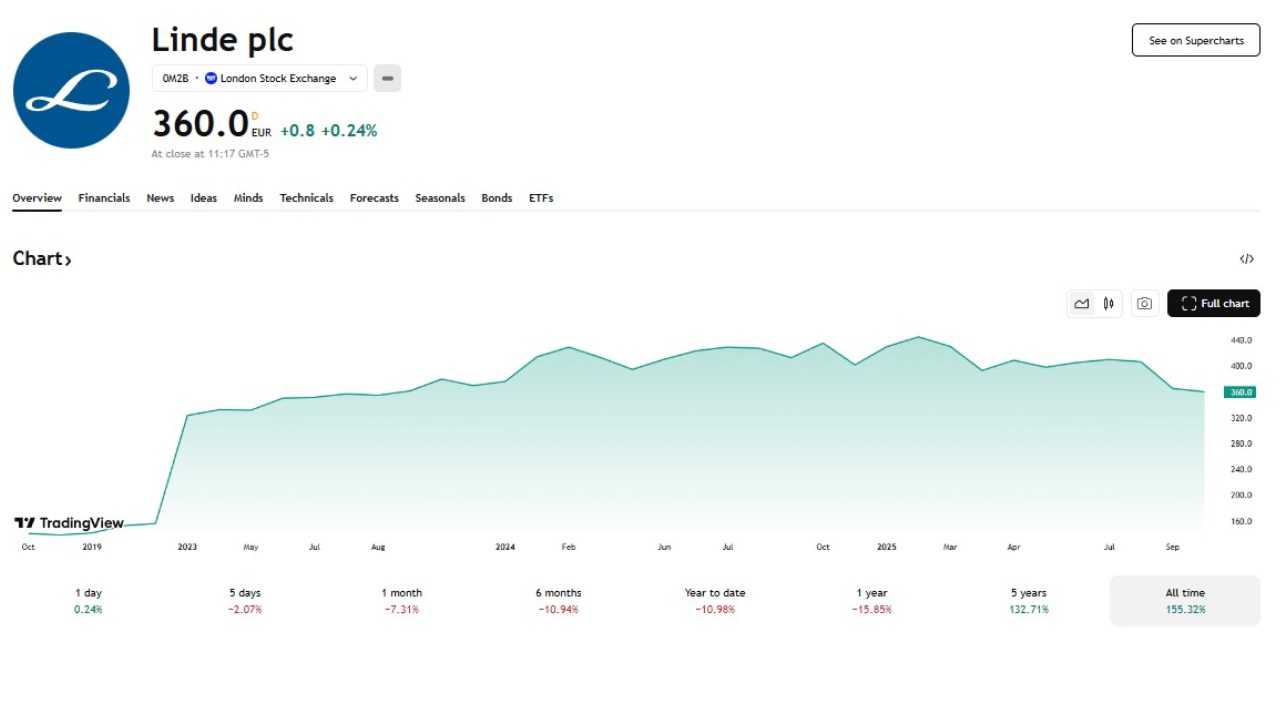
Linde (LON:OM2B) makes a wide range of industrial gases, including atmospheric gases such as oxygen, nitrogen and argon, alongside specialty gases such hydrogen, making it a key player providing low-carbon intensity hydrogen options through its “Linde Green” program.
Its products are used in a variety of sectors such as chemicals and energy, food and beverage, electronics, healthcare, manufacturing, metals and mining.
Linde has a plant underway that should double its carbon dioxide output in the US Gulf Coast, with a liquefaction plant expected to go online in 2027 in Freeport, Texas.
While it may not have the growth potential of some other UK hydrogen stocks, it has been consistently profitable, making it a safer play for many investors. Its shares are down more than 1% so far this year.
In the third quarter, Linde had revenue of $8.615 billion, up 3%, year over year, and earnings per share (EPS) of $4.09, up 27% over the same period last year. The company said it expects full-year adjusted EPS to be in the range of $16.35 to $16.45, up 5.5% from 2024 at the midpoint.
An added bonus for Linde is its steady dividend growth. It has raised its dividend for 33 consecutive years, including an 8% increase this year to $1.50 per quarterly share, equaling a yield of around 1.46%, with a sustainable payout yield of 40.16%.
Your capital is at risk.
2. Ceres Power Holdings: Huge growth in revenue, promising new licensees
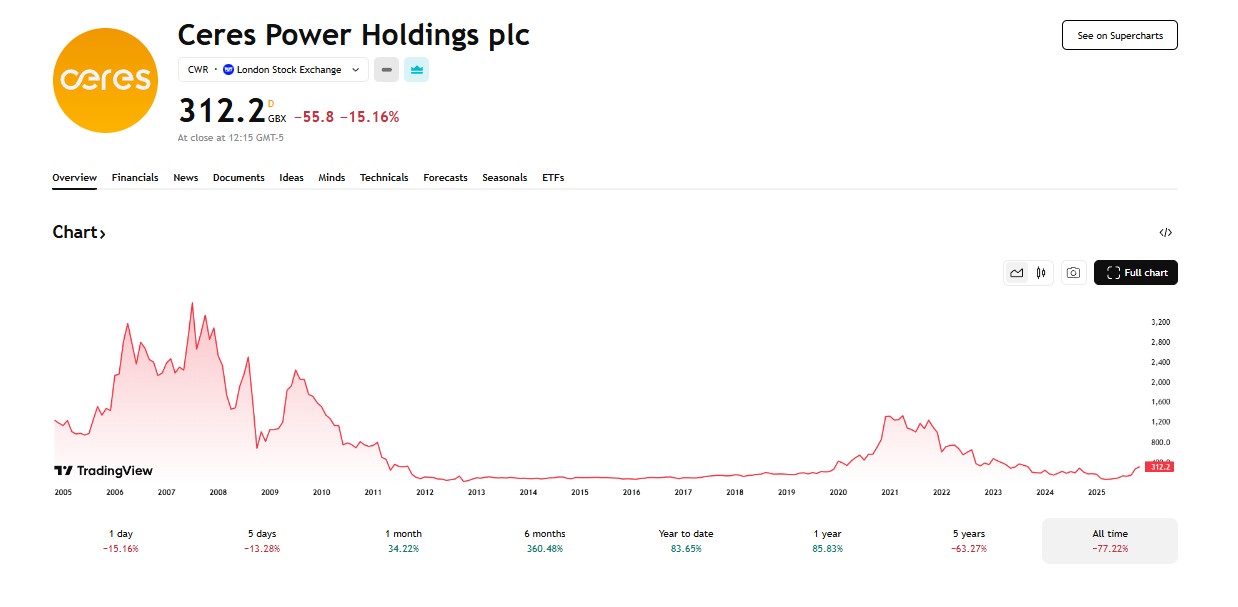
Shares in Ceres (LON: CWR) is up more than 82% this year, even though the company isn’t turning a profit.
The company has successfully licensed its technology to a growing number of businesses interested in its green hydrogen technology, including notable names such as China’s Weichai and South Korea’s Doosan.
Ceres makes solid oxide electrolysis cells (SOEC) and solid oxide fuel cells. (SOFCs). SOECs are a type of electrochemical devices that use high temperatures to convert electrical energy into chemical energy, specifically by decomposing water vapour into hydrogen and oxygen.
SOFCs are fuel cells that use a solid ceramic electrolyte to conduct oxygen ions. This electrolyte enables high-temperature operation, making it more efficient and compatible with a variety of fuels.
In May, it signed a deal with Weichai, where that company will manufacture Ceres’ SOFCs and stacks for stationary power and data centre applications in China, helping the country deal with new energy requirements due to the rapid growth of AI.
In its interim report, revenue decreased 26% from the same period a year earlier to £21.1 million, and the company reported an adjusted EBITDA loss of £11.3 million, compared to a £9 million loss in the first half of 2024.
Despite those numbers, the stock is up because it has successfully crossed over from being a research and development company to one with actual commercial sales, and soon it will begin receiving royalty payments.
Your capital is at risk.
3. EQTEC: Turning rubbish into hydrogen as it edges closer to profitability
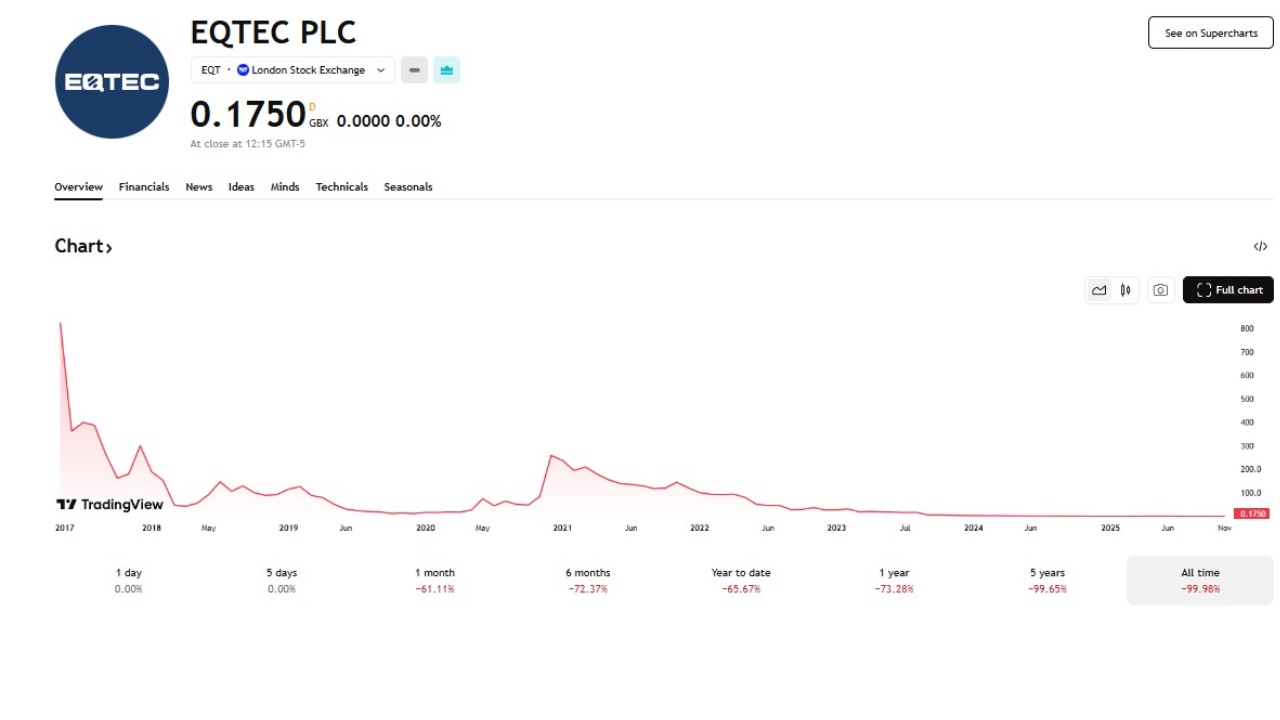
Waste-to-gas company EQTEC (LON:EQT), which converts waste into hydrogen and other fuels and materials, generates revenue from the sales and services of its EQTEC-designed equipment and essential ancillary equipment.
Its shares are down more than 63% so far this year. The green hydrogen company, however, is already seeing financial improvements from its shift from high-capital projects to high-margin, intellectual property services.
In October, the company’s board appointed James Parsons as the new CEO and announced a belt-tightening plan that involves streamlining operations and realigning its funding strategy.
In its 2025 first-half report, EQTEC mentioned that delays and cutbacks by its customers have made its business more difficult. It reported revenue of €600,000, down 57% year over year, but gross margin improved to 82% from 53%, and EBITDA loss improved from €1.6 million to €1.1 million. The company has recently sold additional stock, diluting its share price.
The concern about this UK hydrogen stock is that there is growing competition in the waste-to-gas space, and, of course, it isn’t profitable. However, the significant positive is that the company’s proprietary technology has already been proven, which should help it scale up its operations more quickly than other companies.
Your capital is at risk.
4. AFC Energy: Replacing diesel generators with clean energy power
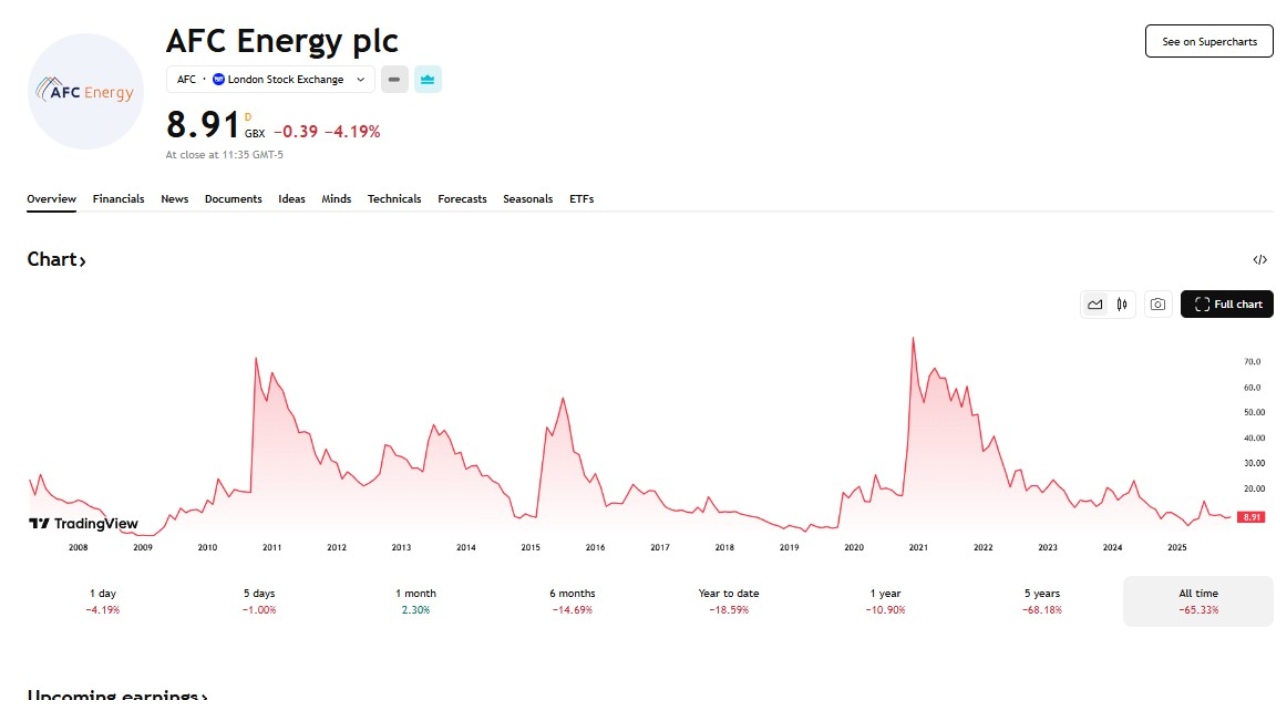
AFC Energy (LON:AFC) has a lot of changes going on: a new CEO, a new joint venture, and a stock that has dropped more than 16% this year. New CEO John Wilson took the helm at the start of 2025, shortly after AFC raised £15.8 million in two share issues.
It aims to use the proceeds to ramp up production for its joint venture with Speedy Hire, called Speedy Hydrogen Solutions, JV, which will rent out hydrogen fuel-cell-powered generators.
The projects earned it a spot on our list of the top UK hydrogen stocks. They have the potential to make a significant impact in industries such as construction and mining, which currently rely on diesel generators.
However, it’s essential to note that the company is still a long way from profitability. In the first half of 2025, it reported revenue of only £17,000 and a loss after taxes of £10.2 million.
A potential game-changer is that the company launched Hy-5, a first-of-its-kind portable hydrogen generation module under its Hyamtec brand. Set for delivery in 2026, Hy-5 is the world’s first containerized cracking module capable of manufacturing up to 1,100 pounds (500 kg) of hydrogen per day.
Looking at the company’s long-term prospects, there are numerous opportunities for growth beyond construction and mining companies, particularly with the increasing demand for power for electric vehicle charging, maritime applications, and data centres.
Your capital is at risk.
5. BP: Oil and gas giant eyeing hydrogen in its future
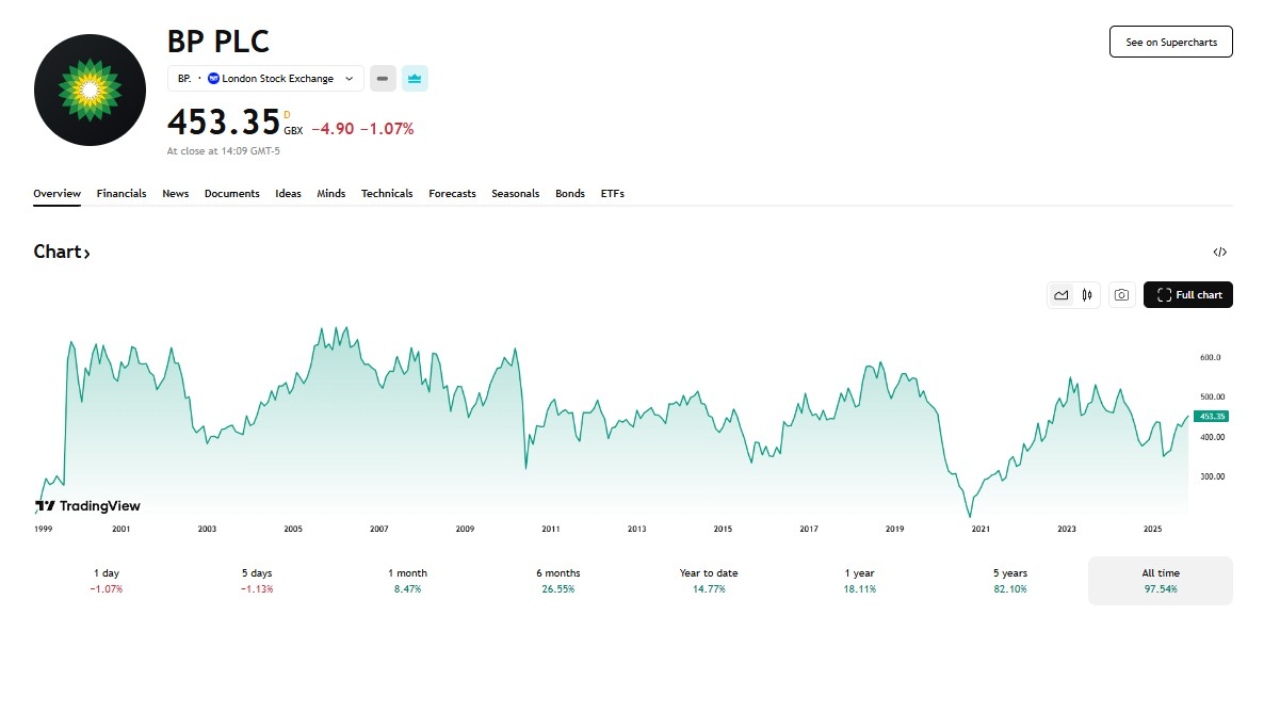
London-based oil and gas company BP (LON:BP) aims to continue generating profits from its legacy fossil fuel operations while gradually increasing revenue from its low-carbon efforts, including hydrogen.
The stock is up more than 15% so far this year and has faced speculation about becoming a takeover target by competitors such as Shell, ExxonMobil or Chevron. It has recently announced a three-month share buyback program of $750 million, which has underpinned its share price.
BP’s gas business encompasses upstream activities that produce natural gas, as well as integrated gas and power, and gas trading. Its low-carbon business includes solar, offshore and onshore wind, hydrogen, carbon capture and storage, and power trading.
Shell, earlier this year, said it planned to cut renewable spending and prioritise its traditional oil and gas business.
In the third quarter, it reported revenue of $49.25 billion, a 1.9% increase year over year. Profit before taxes was $3.2 billion, up 131% on the same period a year earlier. EPS was $7.38, up from $1.23 in the third quarter of 2024.
BP continues to develop new oilfields while planning two crucial low-carbon hydrogen projects that would create sustainable aviation fuel and green hydrogen. These projects are carried out at its Castellon refinery in Spain, and a potential 100-megawatt (MW) green hydrogen plant in Germany.
The concern about BP is that its revenue has been declining in recent years, it has a relatively large debt, and whether a legacy fossil fuel company can adapt quickly enough to a low-carbon world. A part of this is embracing green hydrogen.
BP gives investors a reason to be patient for a turnaround, as it delivers an above-average dividend with a yield of 6%. It recently raised its interim dividend by 4% to $8.32
Your capital is at risk.
6. ITM Power: Hyper-focused hydrogen company ramping up production of electrolysers
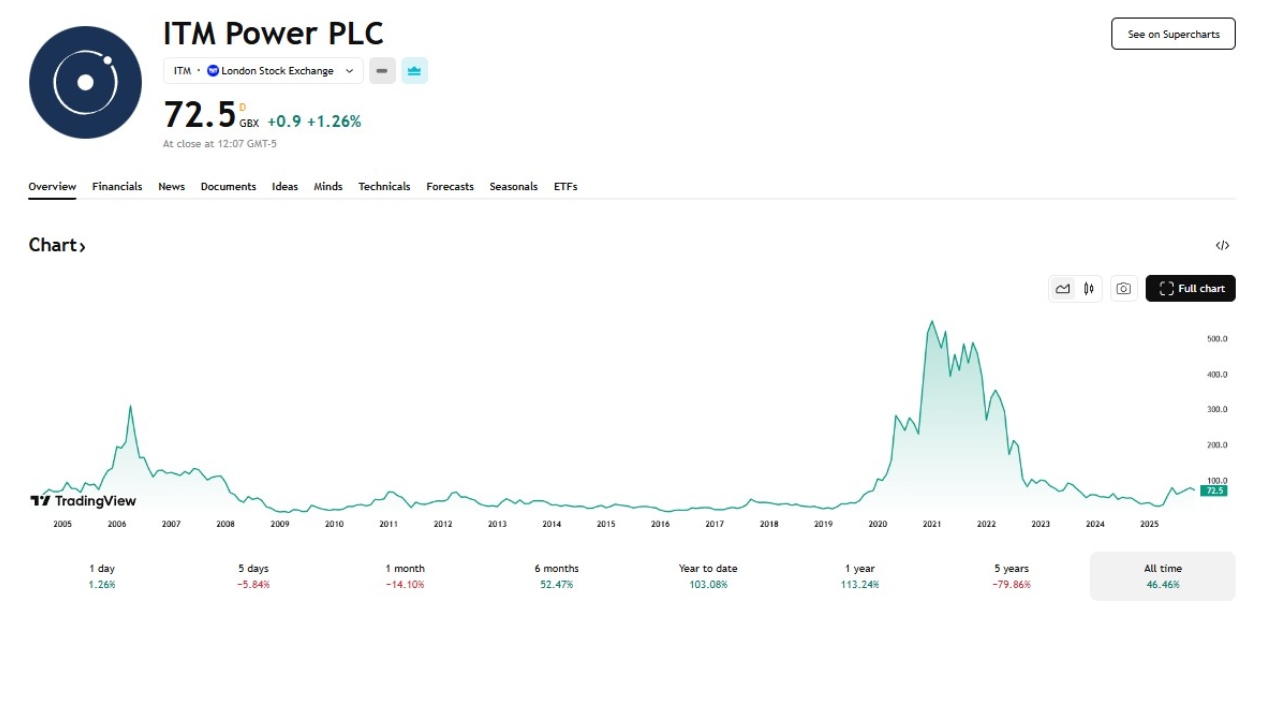
ITM (LON:ITM) is an early mover in green hydrogen and has seen a huge rise in demand for its electrolyser systems. Investors are excited about the company’s potential, as its shares have increased by more than 103% year-to-date. The stock, trading at around £0.50 a share, is volatile, however.
It has recently been revealed that it has been selected as the technology partner for two significant energy infrastructure projects in Germany, totaling 710 MW of electrolyser capacity.
The company, founded in 2000, was the first PEM electrolyser maker to be listed on the London Stock Exchange. The company sells four models of electrolysers, led by its flagship product, the Trident, a 2 MW electrolyser skid.
In fiscal 2025, revenue climbed more than 50% to £26.0 million, soaring past its earlier guidance of between £18 million and £22 million, while it had an adjusted EBITDA loss of £33.0 million compared to an adjusted EBITDA loss of £30.4 million in the prior year.
In fiscal 2026, ITM predicts that yearly revenue will grow by another 50% to be between £35 million and £40 million, with the majority of that growth coming from the contracted order backlog. It also expects its adjusted EBITDA loss to decline to between £27 million and £29 million.
The biggest concern for ITM is that it isn’t profitable, despite being in business for 25 years. However, the shift to a green economy is lifting demand for its products. ITM is hyper-focused on electrolysers, enabling it to improve margins as production ramps up.
Your capital is at risk.
7. Powerhouse Energy Group: Turning rubbish into hydrogen treasure
Powerhouse Energy’s DMG technology efficiently converts waste plastic, tires, and other materials into synthesis gas (syngas), mixtures of hydrogen and carbon monoxide, in various ratios, which can be used to create valuable products such as chemical precursors, hydrogen, electricity, and industrial goods.
Powerhouse also offers engineering, testing, and ongoing customer support through its engineering arm, Engsolve. Its attractiveness as a UK-based hydrogen stock stems from its early mover status in localised energy recovery and industrial gas production from wastes.
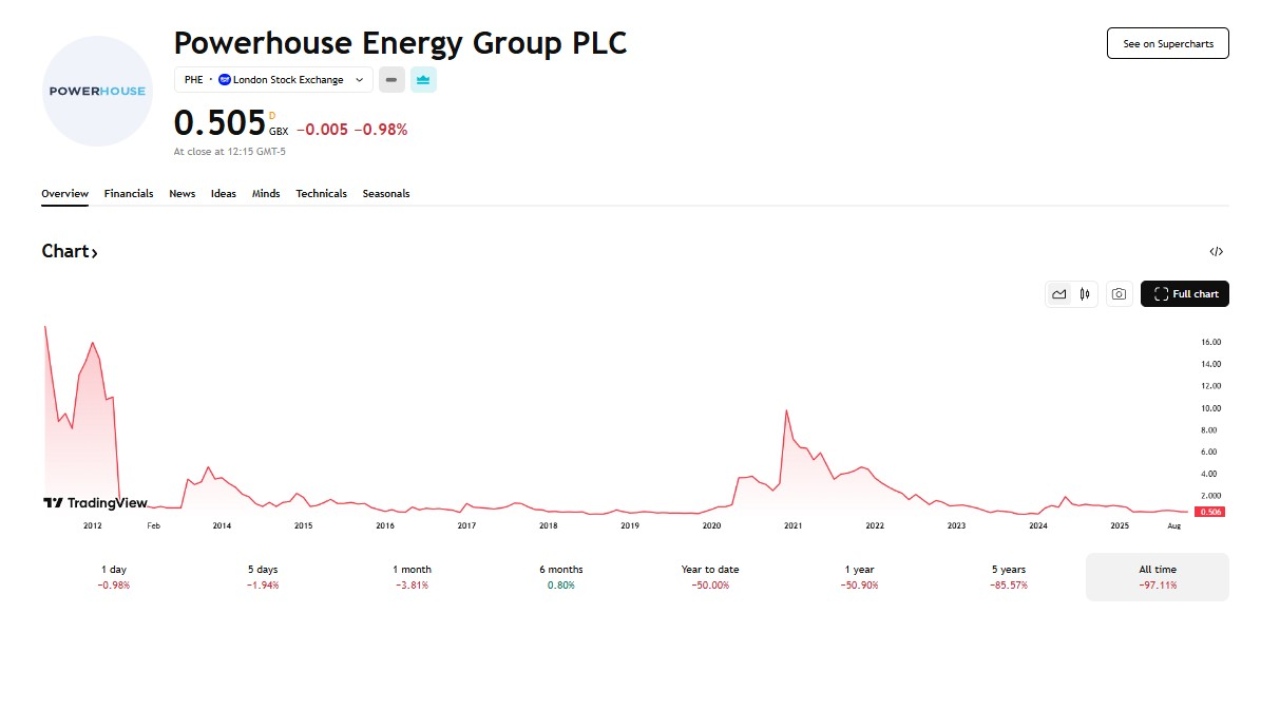
Though its shares are down more than 54% so far this year, the company is still in its early stages of growth. It needs to be noted that at such a small market cap (£22.38 million), and trading at around £0.50 a share, there’s plenty of risk associated with Powerhouse, as there would be with any penny stock.
In its 2025 interim report, Powerhouse posted revenue of £474,900, up 23.1% year over year, while gross profit rose by £166,200, an increase of 69.2% over the same period last year. It had an EPS loss of $0.04 compared to $0.03 in the first half of 2024.
The company just announced that it has been granted several new patents in the United States, Indonesia, and Australia for its technology that converts non-recyclable waste into low-carbon energy.
Your capital is at risk.
| Ticker on LSE | Company | Performance (YTD) |
| ITM | ITM Power | +103.08% |
| CWR | Ceres Power Holdings | +82.57% |
| BP | BP | +15.36% |
| OM2B | Linde | -1.42% |
| AFC | AFC Energy | -16.10% |
| PHE | Powerhouse Energy Group | -54.09% |
| EQT | EQTEC | -63.54% |
Your capital is at risk.
What are hydrogen stocks?
Hydrogen stocks are investments in companies involved in the production, storage, distribution, or utilisation of hydrogen. These companies play a pivotal role in the transition to a hydrogen economy, which aims to reduce reliance on fossil fuels and mitigate climate change. There are several types of hydrogen stocks.
The main types of hydrogen stocks
Hydrogen production companies:
- Electrolysers: These companies produce hydrogen through electrolysis, a process that uses electricity to split water into hydrogen and oxygen.
- Reformer companies: These companies produce hydrogen from fossil fuels (like natural gas) through a process called reforming. While not as clean as electrolysis, they can be a stepping stone towards a hydrogen economy.
Hydrogen storage companies:
- Storage tank manufacturers: These companies design and produce tanks or containers for storing hydrogen, for domestic and industrial use.
- Underground storage companies: These companies utilise geological formations to store large quantities of hydrogen safely.
Companies involved in hydrogen distribution:
- Pipeline companies: These companies transport hydrogen through pipelines, connecting production sites to end-users such as industries and power plants.
- Fuel cell companies: These companies manufacture fuel cells, devices that convert hydrogen into electricity.
Hydrogen End-Use Companies:
- Transportation companies: They utilise hydrogen as a fuel for vehicles, such as fuel cell cars, buses, and trucks.
- Industrial companies: These companies use hydrogen in various industrial processes, such as steelmaking and ammonia production. There are also companies that use waste and turn it into green hydrogen.
Why invest in hydrogen stocks?
The growing global commitment from governments, businesses, and investors to combat climate change, largely driven by fossil fuel pollutants, highlights the growing demand for green hydrogen.
When pure hydrogen is used as a fuel, it combines with oxygen to produce only water, emitting no carbon dioxide. This makes green hydrogen companies crucial players in achieving net-zero emissions and transitioning to a clean energy economy.
According to a report by Global Market Insights, the global green hydrogen market was valued at $7.7 billion in 2023 and is anticipated to have a compound annual growth rate (CAGR) of 41.6% from 2024 to 2032.
Numerous large-scale projects are underway in Europe, North America, and the Asia-Pacific region, fueling industry demand. As electrolyser technology advances, the cost of producing green hydrogen is projected to drop significantly, further driving industry growth.
How to invest in UK hydrogen stocks?
There are several ways to invest in UK hydrogen stocks. While there are risks, if you do your research, you can identify potential solid picks. If you look at market share, financial performance and technical advances, you’ll find gems.
Stock tip services and stock screeners can assist you in making informed selections. It also helps to stay up on industry news, though, as the technology is evolving at a rapid rate.
Green energy ETFs
There are also green energy exchange-traded funds (ETFs) that invest in a basket of hydrogen-related stocks that could diversify your portfolio and de-risk it a bit. Once you’ve found a hydrogen stock or ETF, you need to set up an account with a broker, fund the account and then purchase stocks or ETFs.
Do I need to pay tax on dividends from hydrogen shares in the UK?
Yes, you still generally need to pay tax on dividend stocks in the UK. However, dividend stocks can deliver certain tax benefits. Some things to consider:
Dividend Allowance: You have a tax-free dividend allowance, which is currently £500 for the 2023/24 tax year. This means you can receive up to £500 in dividends without paying any tax.
Tax Bands: The tax rate you pay on dividends depends on your overall income. If your income falls into the basic rate tax band, you’ll pay a lower rate on dividends than if you’re in the higher or additional rate bands.
ISA Investments: Dividends from stocks held within an Individual Savings Account (ISA) are generally tax-free.
Pros and cons of investing in hydrogen stocks
Hydrogen is the most abundant element on earth. It can be developed virtually anywhere, meaning it can create an independence from traditional supply chains to help countries reduce their reliance on fossil fuels and improve energy efficiency – making it an area of growing interest for those looking for UK stocks to buy.
Some of the pros to investing in hydrogen stocks:
- Government incentives: Due to hydrogen’s potential to reduce carbon emissions, governments worldwide are offering tax breaks and other incentives.
- The UK Government’s Hydrogen Strategy target is to have up to 10 GW of low-carbon hydrogen production capacity by 2030. At least half of this should be coming from electrolytic hydrogen production methods for clean hydrogen production.
- Significant emissions reduction: Green hydrogen production, when powered by renewable sources like solar or wind, emits no greenhouse gases. That makes it a good investment for the planet.
- Enhanced energy storage: Hydrogen can be stored efficiently for long periods, making it a valuable asset in balancing energy supply and demand.
- Decarbonization of energy systems: Green hydrogen can be used to power various sectors, including transportation, industry, and electricity generation, contributing to a more sustainable energy landscape.
Some of the cons to green hydrogen stocks:
- The need for a specialised infrastructure: Refining, storage, and distribution require specialised infrastructure that may not currently exist and can be expensive to develop.
- Safety concerns: Hydrogen’s flammability and low ignition point necessitate stringent safety measures for handling, storage, and transportation. This adds to the development costs for companies involved in hydrogen.
- Investment requirements: Significant investments are needed to develop and expand the necessary infrastructure and production capacity for hydrogen production.
Pros
- Government incentives
- Hydrogen fuel is an investment in sustainability
- Plenty of growth potential
Cons
- The hydrogen fuel-cell technology is still in its infancy
- Hydrogen shares can be volatile
- Green hydrogen companies require significant investment on infrastructure
Methodology: How we made our picks
We focused on companies involved with green hydrogen that are seeing improved revenue. It’s still a relatively new technology, so many of the companies involved in green hydrogen aren’t yet profitable. However, the key for us was companies that had certain advantages going forward. Some of the factors we looked at when selecting recommended UK hydrogen stocks:
Stock Performance: While historical performance can serve as a reference point, we examined which companies are likely to benefit from future government policies aimed at implementing hydrogen.
Earnings Growth: We focused on a company’s ability to generate revenue from hydrogen-related activities, even if it’s not yet profitable. We also assessed its potential for future earnings growth based on market trends and technological advancements.
Valuation: We considered the specific valuation metrics relevant to the hydrogen industry. For example, the price-to-book ratio may be more suitable for companies with substantial capital investments in hydrogen production facilities.
Market Share: We evaluated the company’s position within the UK hydrogen market.
Competitive Advantages: We assessed each company’s unique selling points, including proprietary technology, access to low-cost renewable energy, and strong partnerships.
Growth Catalysts: We identified specific catalysts for growth, such as upcoming projects, partnerships, or regulatory changes that could benefit the company.
Capital/Financial Strength: We evaluated the company’s financial health, considering factors like debt levels, cash flow, and funding sources.
Efficiency: We evaluated the company’s operational efficiency, focusing on energy consumption and production costs.
Leadership: We evaluated the experience and expertise of the company’s leadership in the hydrogen industry.
Analyst Estimates: We looked at the consensus among analysts covering UK hydrogen stocks, but used their opinions as a supplementary factor rather than a sole determinant.
Best place to trade UK hydrogen stock CFDs in 2025
FP Markets is one of the best brokers for trading UK hydrogen share contracts for difference (CFDs). It offers one of the widest selections of trading instruments, including the stocks of many UK companies. The broker offers two platforms for trading stocks: direct stock trading through the IRESS platform, and trading stock CFDs on MetaTrader 4 or 5.
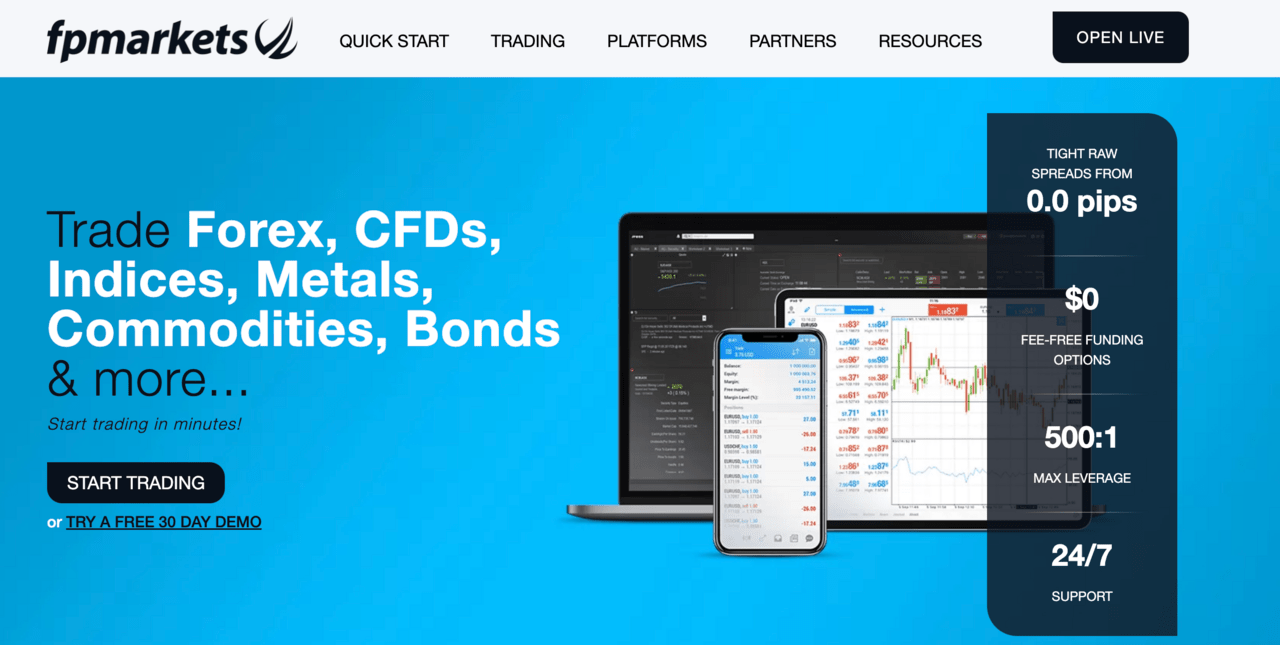
The platform also differentiates itself through its competitive pricing, with just a 0.1% commission on UK stocks per side and a minimum charge of 2 GBP. FP Markets also ensures a seamless user experience, from account registration to trading execution, and offers many educational resources, such as webinars, eBooks, and trading guides.
FP Markets is regulated by the European Securities and Markets Authority, ASIC, and CySEC, ensuring a high level of security for traders. With its strong support system and reliability, it’s also a valuable choice for those exploring the best UK dividend stocks, providing access to trusted markets and resources for income-focused investors.
FAQs on UK hydrogen stocks
What are the best hydrogen stocks in the UK to watch?
Who is the biggest hydrogen producer in the UK?
Are hydrogen shares worth investing in?
Is the UK investing in hydrogen?
What’s driving the growth of hydrogen generation in the UK?
References
Ceres Power 2025 interim report
Powerhouse Energy Group full-year report
ITM Power fiscal 2025 annual report
Powerhouse Energy interim report
Disclaimers:
eToro is a multi-asset platform which offers both investing in stocks and cryptoassets, as well as trading CFDs.
Please note that CFDs are complex instruments and come with a high risk of losing money rapidly due to leverage. 46% of retail investor accounts lose money when trading CFDs with this provider. You should consider whether you understand how CFDs work, and whether you can afford to take the high risk of losing your money.
This communication is intended for information and educational purposes only and should not be considered investment advice or investment recommendation. Past performance is not an indication of future results.
Copy Trading does not amount to investment advice. The value of your investments may go up or down. Your capital is at risk.
Don’t invest unless you’re prepared to lose all the money you invest. This is a high-risk investment and you should not expect to be protected if something goes wrong. Take 2 mins to learn more