


A stocks and shares Individual Savings Account (ISA) is a UK specific form of tax efficient investment. The UK government introduced ISAs in 1999 to encourage people to save or invest more by giving them tax incentives.
UK residents over 18 can save or invest up to a set amount (ISA allowance) each year and never pay tax on it. No tax will be due on the income or capital gains made from your investments held in a stocks and shares ISA.
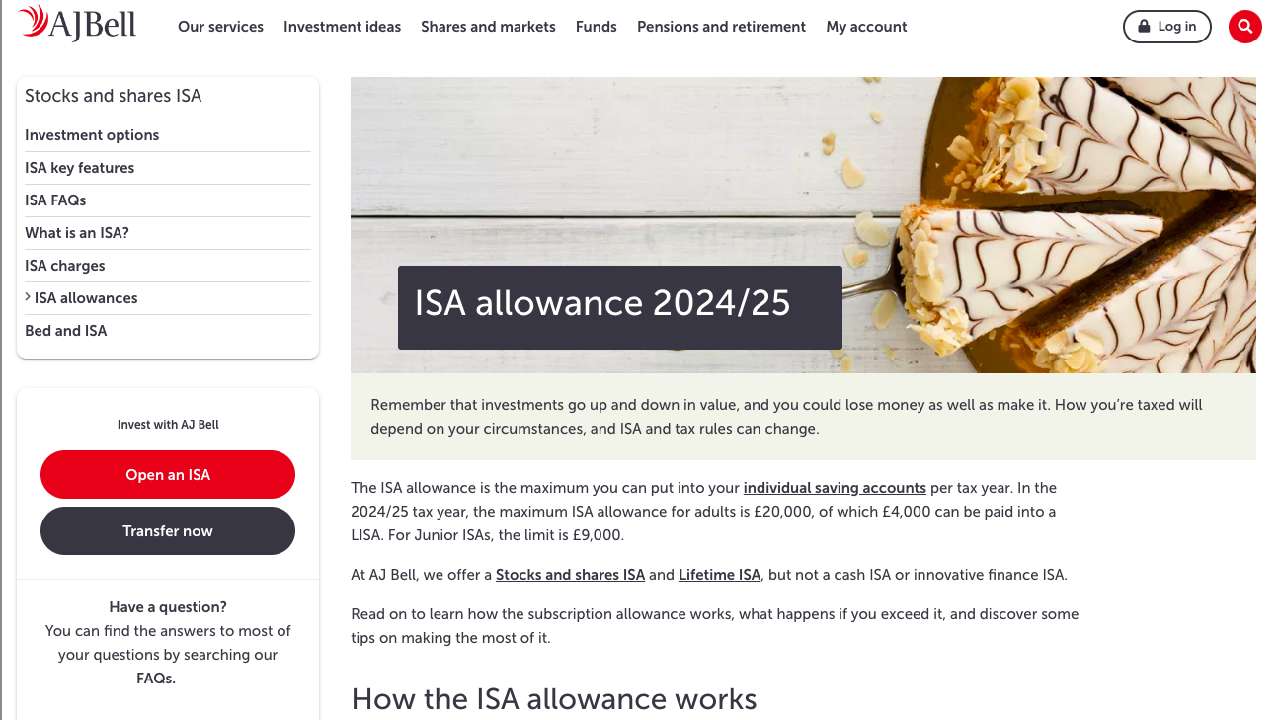
In the current 2025/26 tax year, which ends April 5 next year, £20,000 is the most you can invest in an ISA. The cap applies to all types of ISAs: cash, stocks and shares, lifetime and innovative finance ISAs.
In this guide, we feature 10 of the best stocks and shares ISA platforms in the UK. Keep reading for our recommendations.
A quick overview of the 10 ISA stocks and shares platforms for UK investors we are recommending. The list will help you choose the one that suits your investing style, experience and funds:
- eToro: The broker, known for its social trading platform, offers a stocks and shares ISA to its UK clients through a partnership with Moneyfarm. It’s a great option for investors who already have an account with eToro.
- Trading 212: The platform, founded in 2004 in Bulgaria as Avus Capital, offers more than 13,000 stocks and ETFs in its stocks and shares ISA.
- Saxo Bank: Founded in Copenhagen, Denmark in 1992, its UK branch’s stocks and shares ISA offers more than 11,000 ISA-eligible stocks, ETFs, government and corporate bonds and mutual funds.
- Freetrade: The relatively new UK investing platform was founded in 2016 in London. The UK app in its stocks and shares ISA offers commission-free trading on more than 6,500 stocks and ETFs.
- Interactive Brokers: Founded in 1995 in Manchester, England, it offers more than 40,000 UK and global investment options, including stocks and more than 3,000 funds, 1,000 ETFs and 600 investment trusts.
- Hargreaves Lansdown: Founded in 1981 in Bristol, England, the platform has more than 2 million clients and offers more than 13,000 investments including shares, funds, exchange-traded funds (ETFs).
- InvestEngine: The London-based platform, launched in 2019, focuses on ETFs. Its DIY portfolios are commission free and the company offers more than 590 ETFs, including in its stocks and shares ISAs for UK clients.
- AJBell: The Manchester-based broker has a variety of options for your stocks and shares ISA for UK clients, who can choose from more than 2,000 funds, 15,000 stocks, 3,500 ETFs, and 450 investment trusts.
- IG: Founded in 1974 in London, IG is primarily known for margin trading. It offers a stocks and shares ISA in the UK with choices from more than 12,000 shares, including 3,925 in the UK, and more than 2,000 ETFs.
- Bestinvest: Founded in London in 1986 by Evelyn Partners, the UK firm has more than 2,000 funds, 1,200 shares, 220 investment trusts and 554 ETFs available to invest within your stocks and shares ISA.
Disclaimer: Your capital is at risk.
- Show Full Guide
Let’s take a more detailed look at the top-ranked ISA stocks and shares platforms offered to investors based in the UK.
1. eToro: Partnership with Moneyfarm offers unique investment options
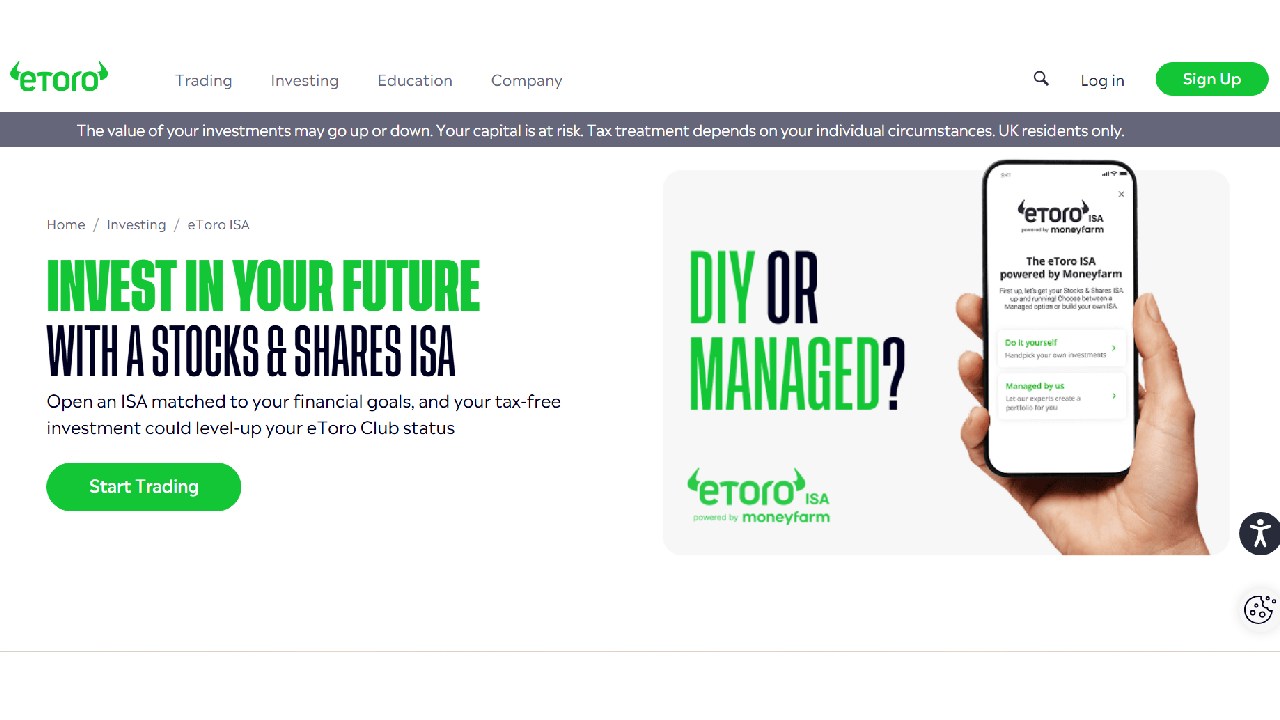
While eToro is primarily known as a social trading platform, it has made stock and shares ISAs available to its UK-based investors through an arrangement with UK wealth-management platform Moneyfarm.
This means that the user’s ISA balance will be displayed within their eToro portfolio and count toward their overall investments, which can raise their eToro club status and unlock perks.
While eToro primarily offers contracts for difference (CFDs) and forex trading, its website also provides a range of investment options, including direct stock and ETF purchases, as well as technical analysis tools for investors.
The partnership with Moneyfarm enables eToro customers to keep and monitor their various investments, including ISAs, under the same roof.
Moneyfarm aims to match customers with professionally managed investment portfolios for its ISAs, designed to spread your risk across various asset classes and geographical locations.
Users can choose from more than 1,000 assets, including UK-listed stocks, ETFs, mutual funds, and bonds with global exposure. You can opt for a fully managed or a DIY ISA that you compile yourself, or a combination of both. A Moneyfarm expert is available via chat, e-mail, phone, and video call when you get stuck.
A downside to that service is that while the ISA fees are transparent, they are somewhat high. That includes a fee of 0.75% on accounts up to £10,000, with a minimum investment requirement of £500. The investment fee drops to 0.70% for accounts with more than £10,000.
Pros
- Responsive customer service
- Good educational resources for beginner investors
- Easy to navigate website and mobile app
Cons
- Having to go through Moneyfarm for a stocks and shares ISA
- Investment choices are limited
- High minimum deposit
Your capital is at risk.
2. Trading 212: Best low-cost stocks and shares ISA
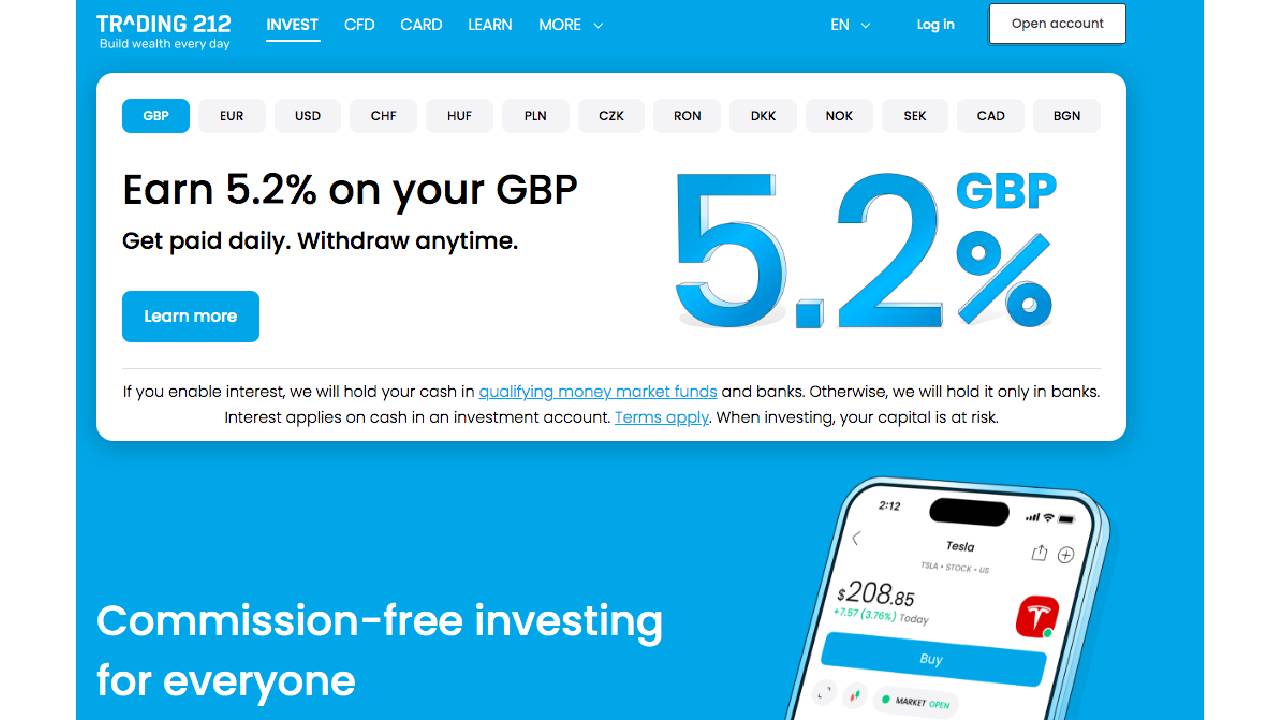
The platform was one of the first, in 2017, to offer zero commission share trading in the UK, and it is now the most-downloaded trading app in the country.
Its ISA doesn’t charge a platform fee, inactivity fee or withdrawal fees either, which explains why the platform has grown so much. Some of the other positives is it allows trading on fractional shares.
Also, it currently pays an annual percentage rate of 4.1% interest on uninvested cash in ISAs. It provides chat and email for customer support.
One of Trading 212’s most unique features is it does share lending, a procedure where investors can transfer their shares to a borrower and get daily interest and collateral in return.
Investors can choose whether they want to participate in share lending. Trading 212 also has an AutoInvest feature which allows you to build a diversified portfolio and customise it.
One downside to the platform is that it doesn’t allow investors to purchase bonds or mutual funds. Additionally, while it offers the opportunity to buy 13,000 stocks and ETFs, it provides access to only a limited number of international markets.
Also, its educational section is limited, with no news feed. It charges a high conversion fee of 0.15% from one currency to another, and on trades that require currency conversion.
Pros
- Share lending program earns money for customers
- No platform fee, inactivity fee or withdrawal fees
- Ability to earn interest on uninvested cash
Cons
- No bonds or mutual funds available
- Limited international markets
- High charges on currency conversions
3. Saxo: Best stocks and shares ISA for easy-to-use platform
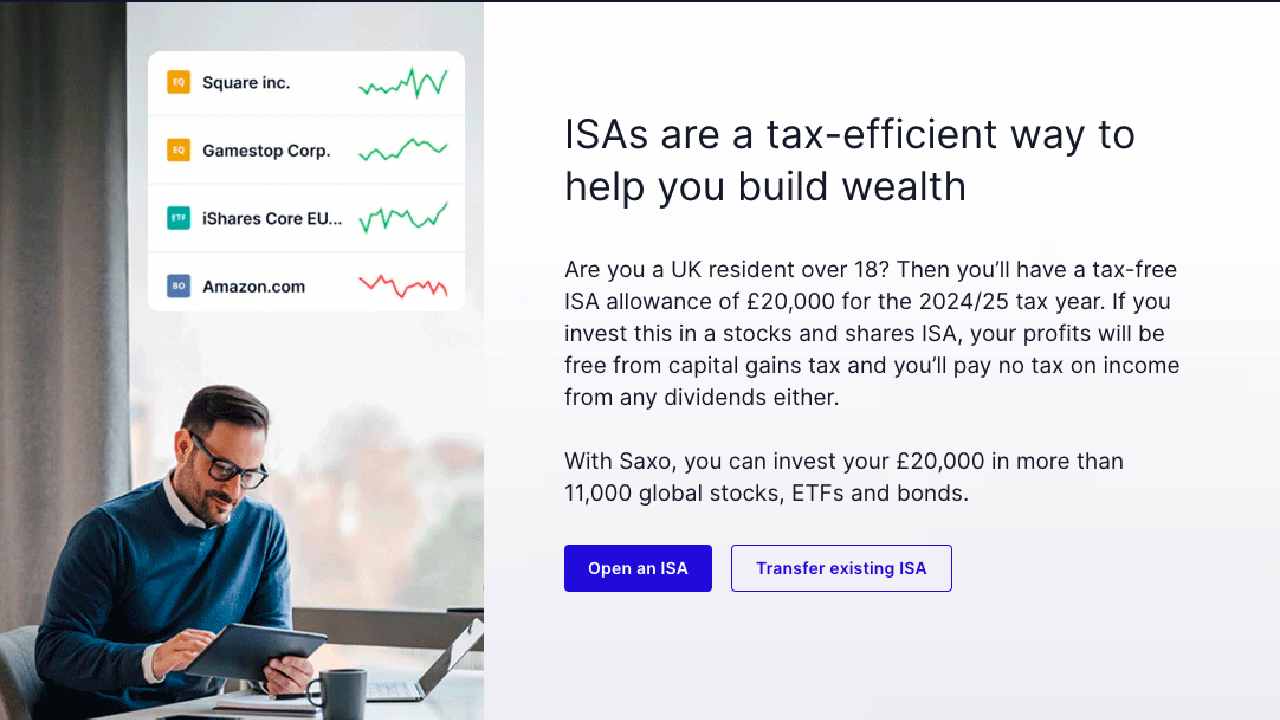
The investment platform gets high marks both for its ease of use, and strong educational offerings, including up-to-date stock news, and customer service (though not of the 24/7 variety).
Saxo says it facilitates more than 260,000 trades a day. It also has a chart function with more than 50 technical indicators and a trading signal tool as well as a demo account to practice your trading.
If you hold stocks, ETFs or bonds in your account, you’ll be charged a custody fee of 0.12% in your ISA. However, you can avoid this fee if you enable Saxo’s stock lending program, where it lends out your shares and splits the profits evenly with you.
Other ISA charges include a share dealing fee between 0.1% and 0.05%. While Saxo has contracts for difference (CFDs), that type of financial instruments aren’t available for ISAs, due to government restrictions.
Saxo doesn’t charge users to transfer an existing ISA to their platform, and it doesn’t mandate an entry or exit fee. It also doesn’t charge an inactivity fee and pays up to 3.91% interest on ISA accounts that have £10,000 or more in uninvested cash.
Pros
- Plenty of technical indicators to help investors
- No charge to transfer an existing ISA to its platform
- Pays interest on accounts with £10,000 or more in uninvested cash
Cons
- Custody fee of 0.12%
- Platform focuses on CFDs, though they aren’t allowed in ISAs
4. Freetrade: Solid low-cost stocks and shares ISA
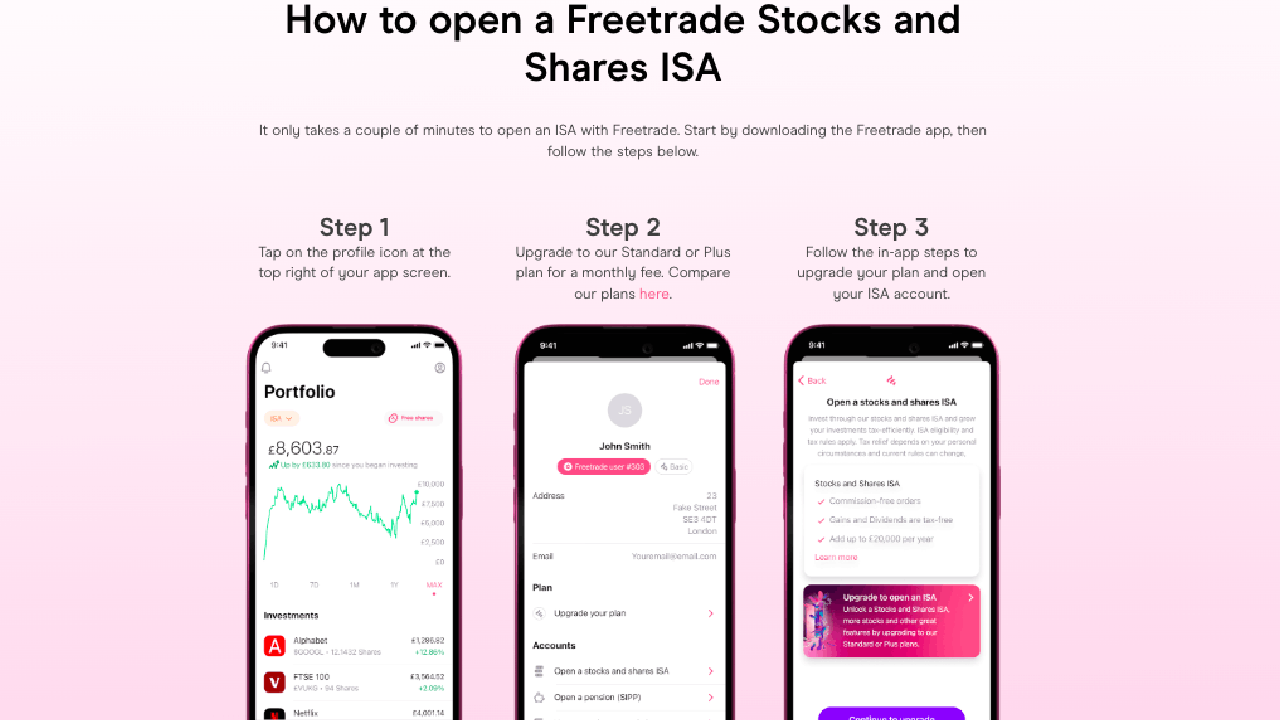
Freetrade is relatively true to its name, one reason why it already has more than 1.5 million customers. Other than a low monthly platform fee, most of the company’s services are free, including the ability to trade with no commissions and no account, inactivity or withdrawal fees.
However, for a platform that seems to be designed for inexperienced investors, it doesn’t provide a lot of educational resources. For instance, it has no community forum where you can discuss stocks and other investments.
Freetrade offers more than 6,200 stocks and ETFs, but no bonds or mutual funds. It has commission-free trading in US shares with an ISA, but you will need either a Freetrade Standard account, which costs £4.99 a month or a Freetrade Plus account for £9.99, to have an ISA with Freetrade.
Another plus is it allows fractional trading on stocks. It’s important to note that there are costs for buying stocks outside the UK, including a 0.59% currency fee on the Freetrade Standard ISA and a 0.39% currency fee on non-UK stocks bought on the Freetrade Plus account.
The company also pays interest on uninvested cash in your account. Currently, it pays 3% on the Freetrade Standard account, up to £2,000 and 5% on the Freetrade Plus account, up to £3,000.
Pros
- True to its name, many of its services are free
- Pays interest on uninvested cash
- Allows fractional trading on stocks
Cons
- Doesn’t offer bonds or mutual funds
- Lack of educational resources
5. Interactive Brokers: Good ISA for the casual investor
The company offers only stocks and shares ISAs, not cash ISAs, and it doesn’t allow trading on margin on its ISAs. The broker offers investors more protection than some UK-based ISAs because its ISAs are held by its US-based parent, Interactive Brokers LLC, which is regulated by the US Securities and Exchange Commission.
Because of this, assets in its ISAs are protected up to $500,000 (including a cash limit of $250,000) in the case of broker bankruptcy, rather than the usual £85,000 coverage available under the UK’s Financial Services Compensation Scheme (FSCS).
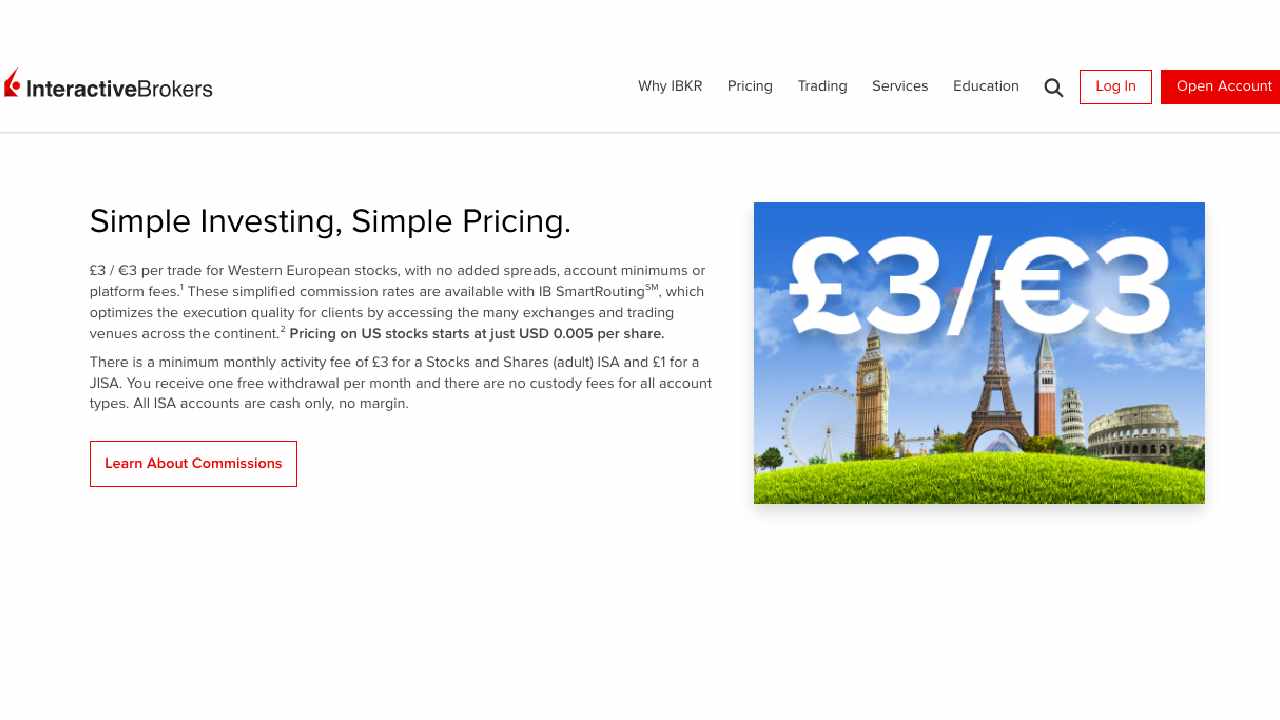
Interactive’s ISAs allow the trading in stocks, including fractional shares, bonds, ETFs and investment funds. Its fees, including its currency conversion fees, are generally low. It charges a commission of £3/€3 for most UK or European stocks. Trading fees for US stocks start at $0.005 per share.
Uninvested cash in its ISAs earns relatively high interest, with a catch. Clients with a net asset value of more than $100,000 earn an annual rate of 4.723% on any cash balances above £8,000 or 4.83% on any cash balances above $10,000.
Interest will not be payable on the first £8,000 or $10,000 (or the equivalent value in other currencies) of uninvested cash balances. Another negative is that the company’s website, while it provides plenty of information, can be difficult to navigate.
Pros
- Good financial protection for funds
- High interest rates for uninvested cash
- Allows fractional trading
Cons
- Website can be tricky to navigate
- Interest rates on uninvested cash only begin at £8,000
6. Hargreaves Lansdown: Best stocks and shares ISA for stability
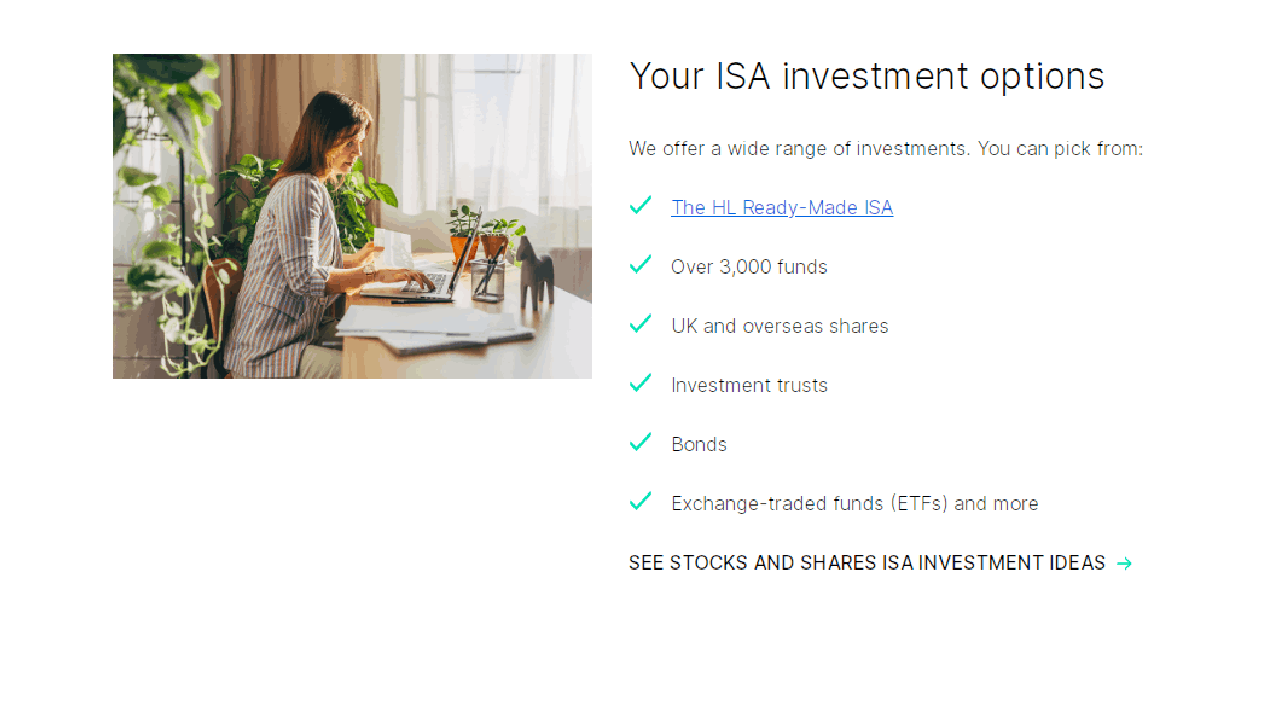
Hargreaves Lansdown holds more funds than any other UK brokerage. The website provides plenty of educational opportunities and is easy to use. It also offers six ready-made ISA portfolios as well as plenty of other investment vehicles, from shares to ETFs to bonds and mutual funds.
You can open an ISA account with the platform for £100 or by setting up a monthly direct debit for £25.
Hargreaves’ website provides plenty of investment tools, and its customer service, which can be reached by email, chat or by telephone, consistently gets high marks.
One concern, though, is Hargreaves Lansdown can be pricey, particularly for beginning investors. For funds, it charges 0.45% annually on accounts with less than £250,000 in holdings. However, this rate drops to 0.25% on accounts that hold between £250,000 and £1 million and then to 0% for accounts with more than £2 million.
For shares, it charges 0.45 annually on accounts with less than £10,000, with a maximum of £3.75 per month. So, for example, if you have £10,000 in funds and £3,000 in shares, your account charge would be £58.50 per year. That’s pricey compared to other platforms.
Pros
- You can open an ISA account with the platform for just £100 or by setting up a monthly direct debit transfer of £25
- Has six ready-made ISA portfolios
- Good customer service, educational offerings
Cons
- Pricey fees for lower-end investors
- Websit can be clunky
- Doesn’t support trading on Asian or African exchanges
7. InvestEngine: Basic ISAs platform is a solid choice for inexperienced investors
The platform has made a mark by being competitive on fees and by being easy to use. It focuses heavily on its more than 600 ETFs, including bond, and commodity ETFs, but does not allow investors to trade in individual stocks.
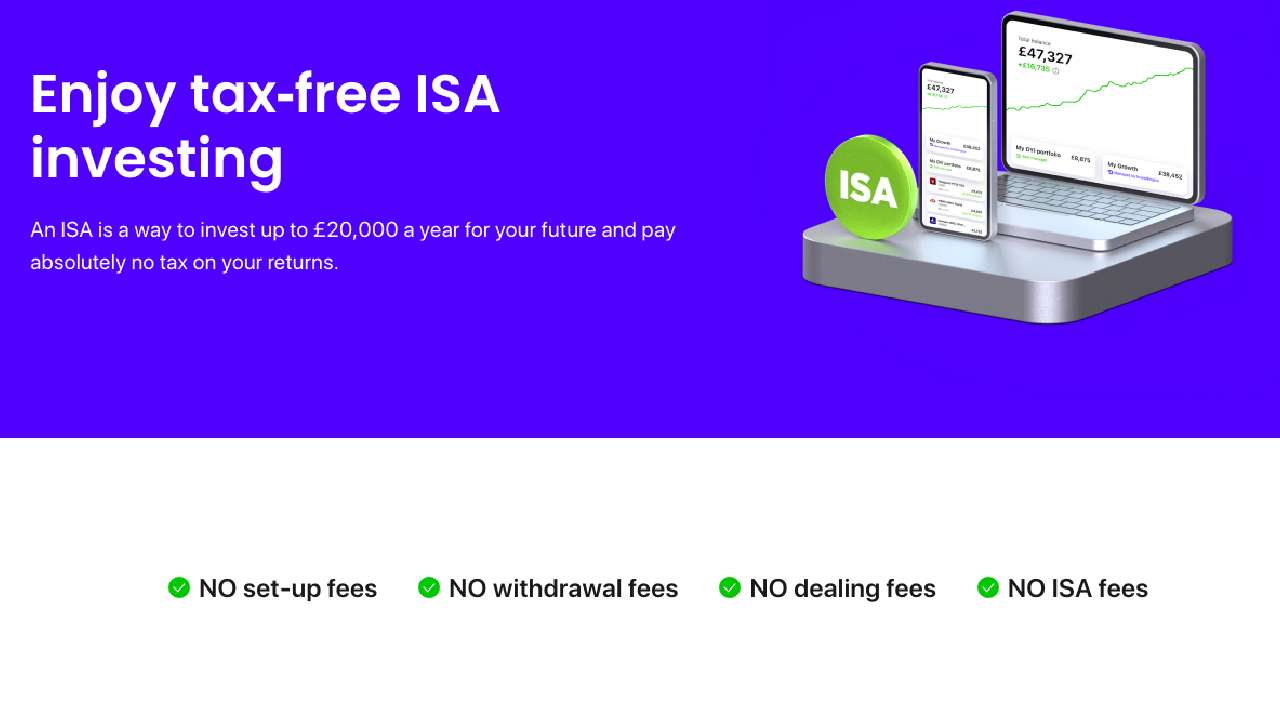
Some of the best features of the platform are no account fees, no inactivity fees, a commission-free DIY portfolio service and no ISA transfer fees. If you invest £100 in an InvestEngine account, it will even give you an extra £50 for signing up.
One cost to consider is the ETFs used by InvestEngine, like most ETFs, usually have charges ranging from 0.07% to 0.30% per year. That can eat into your returns.
The company offers managed portfolios, for which they charge 0.25% of your account balance a year. Its services are automated, which cuts down on costs, but the lack of human interaction can be seen as a negative for customer service or anyone wishing to get individualized investment advice.
While its plethora of ETF offerings does grant exposure to the stock market, InvestEngine would be a frustrating platform for more experienced investors who would prefer to do their own stock selections.
InvestEngine has limited educational features, and the platform doesn’t offer advanced trading instruments or products other than ETFs listed on London Stock Exchange (LSE). That lack of choices, though, may be a good thing for inexperienced investors who might get overwhelmed by a more complex platform.
Pros
- Easy-to-use website
- Generally low fees
- It has a commission-free DIY portfolio service
Cons
- Limited educational resources on platform
- Fewer investment options than many platforms
8. AJ Bell: Has a wide array of investment choices, educational resources
The platform has more than 530,000 customers and offers a wide range of investments within its stocks and shares ISA. It has more than 20,000 investment options, including more than 15,000 shares from the UK, Europe, North America and Asia-Pacific, more than 2,100 funds, more than 400 investment trusts and more than 3,500 ETFs.
AJ Bell’s fees for share trading and buying and selling funds are relatively high, though its percentage-based platform fees are inexpensive for lower-end investors. Account charges for shares are 0.25% of the balance, with a maximum monthly charge of £3.50.
Account charges for shares is 0.25%, but that drops down to 0.10% if you hold £250,000 to £500,000 in funds. It falls to 0% if you hold £500,000 or more in funds. The platform charges £5 for share trading, though that drops down to £3.50 if you have 10 or more share deals the previous month.
It charges £1.50 for fund transaction. It also offers a low-cost Dodl account, which has a lower platform fee but more limited investment options.
AJ Bell offers above-average educational opportunities for investors, with updated stock news, live webinars. As an extra, every AJ Bell investor receives full access to Shares magazine. Customer support also receives strong marks, with live chat, email and phone support available.
Pros
- Good educational resources, including access to Shares magazine
- Good customer support
- Wide choice of investment options
Cons
- Fees for buying and selling funds are high
- Lower-cost Dodl account is limited in scope
9. IG: Best stocks and shares ISA in the UK for frequent traders
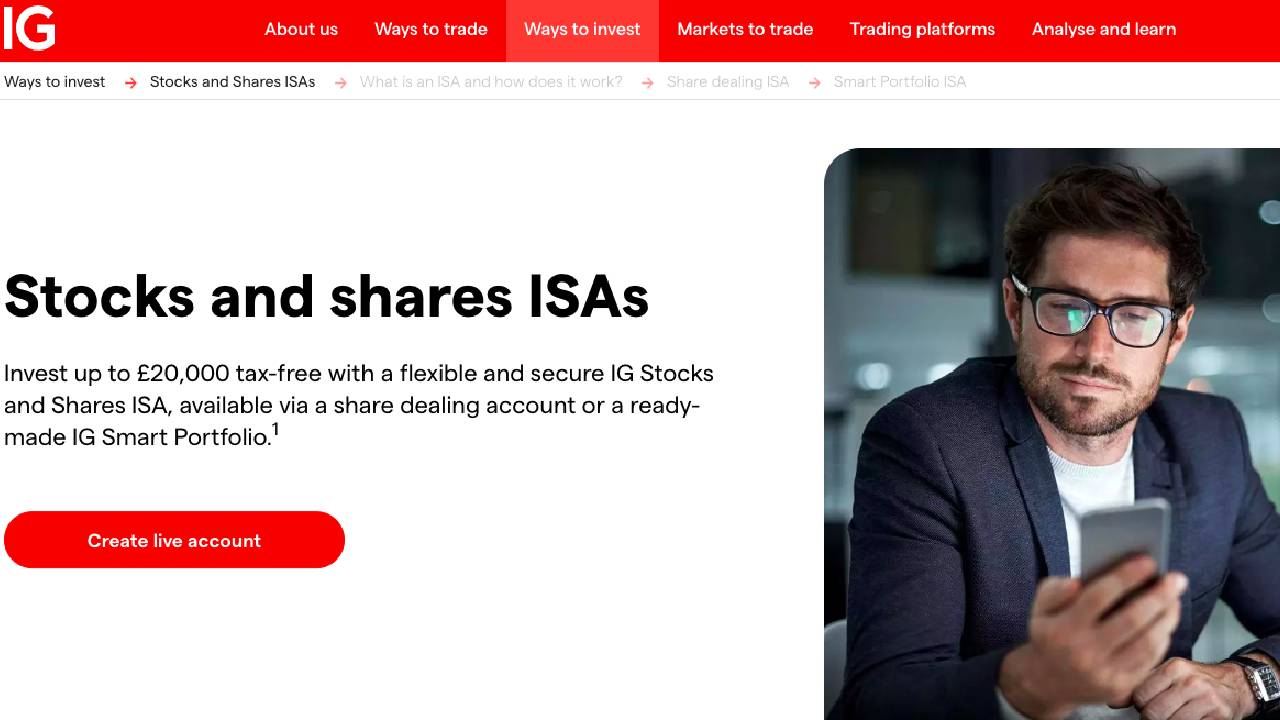
The company offers a large range of potential investments for your ISA, as well as two different investment account types. The first is a share dealing account, which is self-managed and designed for experienced investors while offering low commission costs.
IG also offers a Smart Portfolio ISA, where depending on your risk profile, your investments are managed for you.
One of IG’s best features is its investment academy, which offers £10,000 in virtual money to invest, essentially a way of allowing new investors to practice without financial repercussions. The academy also offers free online courses, webinars and seminars.
It’s a good platform for more frequent traders as regular traders pay £10 for every US trade, but that drops down to free after three trades in a month. On UK trades, it costs £8 a trade, but that drops down to £3 per trade if they trade more than three times per month.
IG offers multiple ways to contact customer support, including by phone, chat or email.
Some of the downsides for IG include that it doesn’t offer trading in fractional shares. Furthermore, it charges a relatively high trading fee of £24 per month for those who make less than three trades a month.
Pros
- Investment academy, which offers free demo money
- Good platform for more frequent traders
- Offers a smart investment portfolio that is managed
Cons
- Trading fee of £24 a month for low volume customers
- No trading of fractional shares
10. Bestinvest: Free financial advice, plenty of options

The platform offers the opportunity to invest in 19 ready-made portfolios, broken down by growth and income levels, level of risk, ESG (environmental, social and governance) criteria and cost.
Its stocks and shares ISA also allows you to invest in 423 ETFs, 255 investment trusts, more than 1,600 funds and more than 1,300 stocks. The fees are mid-range compared to competitors.
Bestinvest is part of Evelyn Partners (once known as Tinley, Smith and Williamson), which has been involved in finance for more than 200 years. Platform fees are as much as 0.2% of an account. Trading in individual shares or ETFs is £4.95 per trade on UK shares and ETFs.
While there’s no trading fee on US stocks, there is a 0.05% charge for the currency conversion. It does pay 4.45% interest on uninvested cash balances in your fund.
Its investment research includes guides on ISAs, pensions and investments, together with live webinars on investing topics. One of Bestinvest’s top features is that you can speak for free to a qualified financial planner. It also offers more personalised investment advice for a flat fee of £295, but the planner won’t make the investments for you.
That means you will still need to use the Bestinvest platform to follow that advice. For £495, the advisers will do a more involved health check of the investments in your account, but you will still have to make the investments yourself. Its customer service scores highly, with phone, email and chat services available six days a week.
Pros
- Access to free investment advice
- Generally good customer service
- Its 19 ready-made portfolios, broken down by growth, level of risk, ESG criteria and cost
Cons
- Stock choices are limited
- Fees are higher than some platforms
An Individual Savings Account (ISA) is a tax-free savings account for UK tax residents. You can deposit savings into your ISA up to an annual allowance, currently set by UK law at £20,000 for the tax year ending April 5, 2026.
ISAs allows you to invest in a variety of assets, including:
- Individual stocks of companies
- Investment funds (collections of stocks or other investments)
- Bonds (loans you make to companies or governments)
What are the different types of stocks and shares ISA?
Stocks and shares ISAs all offer the same tax benefits of sheltering your investments from capital gains tax and income tax. However, there can be some variation depending on the provider you choose:
Account Features: Investment options, fees and minimum investment amounts vary depending on the provider. Different providers may offer different account features, such as investment choices, trading platforms, fees, and minimum investment amounts.
Self-Directed vs Managed: Some Stocks and Shares ISAs allow you to manage your investments yourself (buying and selling individual stocks or funds). Others offer managed options where a fund manager makes investment decisions on your behalf for a fee.
Fund Platforms: Certain providers might be platforms that offer access to a wide range of investment funds. This can be a good option for those who prefer a diversified approach without picking individual stocks.
The biggest advantage of a stocks and shares ISAs is they allow you to grow your wealth, tax-free, avoiding taxes on dividends and capital gains.
The biggest disadvantage of stocks and shares ISAs is the limits they may place on investment choices, as well as the annual contribution cap (£20,000 for the tax year ending April 5, 2026).
Stocks and shares ISAs are best suited for long-term investors — not those looking to make frequent moves or short-term trades. Pairing an ISA with a top-ranked stock portfolio tracker can help you monitor performance and stay organized over the long haul.
Moving stocks into or out of a stocks and shares ISA is handled by your ISA provider.
Transferring In:
- Not all providers accept transfers: While all ISA providers are required to allow transfers out, not all will accept transfers in. Check with your new provider to confirm their policy.
- Full transfer for current year contributions: If you’re transferring investments you contributed during the current tax year, you’ll need to transfer the entire amount to the new ISA. You can then add any remaining allowance to your new ISA.
- Flexibility for previous years: For contributions from prior tax years, you have more freedom. You can transfer all or just a portion of the holdings, which is useful if you’re reallocating investments – for example, into stocks for under $10 or other opportunities.
Transferring Out:
- Relatively straightforward: Generally, transferring ISA holdings out is a simpler process. Your current provider should be able to guide you through the steps.
- Be aware of timelines: Transfers can take some time to complete, so plan ahead to avoid any disruption to your investment strategy.
- Consider tax implications: While ISAs themselves are tax-sheltered, there might be tax implications for transferring certain assets, like employee shares. It’s wise to consult with your ISA provider for clarification.
Methodology: How we made our picks
Not all platforms that provide a stocks and shares ISA in the UK will work for everyone. We focused on platforms that provide easy-to-use ways of investing in stocks and shares ISAs.
The key items we looked for were investing options within the ISA,including the number of stocks and ETFs, educational resources available through the platforms, and costs associated with the ISA, including platform fees, trading fees, inactivity fees, or withdrawal fees.
We also looked at the interest various platforms pay on uninvested cash and whether they offer helpful tools like stock price alerts to keep investors informed in real time.
There are four steps to investing in a stocks and shares ISA in the UK:
- Choose a provider: Research investment platforms that offer stocks and shares ISAs. Consider factors like fees, investment options, and research tools.
- Open an ISA account: Apply online or in person with your chosen provider. You’ll need to be at least 18 years old and a UK resident for tax purposes.
- Fund your ISA: Decide how much to invest initially (up to the limit of £20,000 annually) and set up regular contributions if desired. Minimum investment amounts can vary between providers.
- Choose your investments: Decide what assets to invest in within your ISA. Options include individual company shares, including the top UK stocks, investment funds (collections of stocks or bonds), or ETFs. You may invest in a combination of cash and all of the aforementioned investment options.
Is it worth investing in a stocks and shares ISA?
Do I need to pay tax on stocks and shares ISAs?
Can I lose money on a stocks and shares ISA?
References
- Trading 212’s share lending program
- IG Investment Academy
- Saxo’s stock lending program
- List of Vanguard’s funds
- Freetrade investment options
- Interactive Brokers fees
- Hargreaves Lansdown fees
- InvestEngine ETF choices
- AJ Bell ISA charges and rates
- Bestinvest coaching options
eToro disclaimer:
eToro is a multi-asset platform which offers both investing in stocks and cryptoassets, as well as trading CFDs.
Please note that CFDs are complex instruments and come with a high risk of losing money rapidly due to leverage. 61% of retail investor accounts lose money when trading CFDs with this provider. You should consider whether you understand how CFDs work, and whether you can afford to take the high risk of losing your money.
This communication is intended for information and educational purposes only and should not be considered investment advice or investment recommendation. Past performance is not an indication of future results.
Copy Trading does not amount to investment advice. The value of your investments may go up or down. Your capital is at risk.
Don’t invest unless you’re prepared to lose all the money you invest. This is a high-risk investment and you should not expect to be protected if something goes wrong. Take 2 mins to learn more
eToro USA LLC does not offer CFDs and makes no representation and assumes no liability as to the accuracy or completeness of the content of this publication, which has been prepared by our partner utilizing publicly available non-entity specific information about eToro.