


Novice traders would be well advised to look for a broker with a demo trading account that allows them to hone their trading skills without risking their capital.
A demo account is also a useful tool for seasoned traders to test strategies and tools. In the UK, most online brokers offer a demo account, and in this guide, we’re reviewing 11 of the best.
We’ve looked at how much each platform offers in virtual currency, how long traders can use the demo accounts for, and the scope of financial instruments. Keep reading to find out which brokers offer the best demo trading accounts in the UK:
The UK’s top demo trading accounts ranked
- eToro: The Israeli platform offers a demo account, plus social trading features, copy trading and a large number of financial instruments to trade. This includes cryptocurrencies, stocks, ETFs, and commodities.
- XTB: The Poland-based broker is known for forex and CFD trading but has expanded into real stocks and ETFs. Its demo account allows trading in stocks, indices, commodities, forex, ETFs, and crypto.
- Pepperstone: The Australian broker focuses on CFD trading in forex, commodities, indices and shares, with more than 1,200 trading instruments. It also offers a demo account that mirrors the live trading environment.
- FP Markets: The Australian broker has a demo account and copy trading functions. It offers CFD and forex trading on MetaTrader or cTrader platforms and shares trading on the Iress platform.
- Admiral Markets: The broker, part of the Estonia-based Admirals Group, offers a demo account and live trading on CFDs and actual assets. Its platform includes more than 8,000 financial assets.
- Prime XBT: The Seychelles-based broker has a demo account that’s available on Web, iOS and Android. It offers forex, indices, and a wide range of cryptocurrencies. Holds contests on its demo account.
- Trade Nation: The UK CFD trading and spread betting broker has a demo account with $10,000 in virtual currency. It allows trading on more than 1,000 markets through the TN Trader platform or Meta Trader 4.
- Charles Schwab: The US-based broker calls its demo account “thinkorswim paperMoney.” It features plenty of educational resources to plan and track your trades. Its educational content is a cut above its rivals.
- Trading212: The UK-based broker offers fractional trading, share lending auto-invest options and demo trading. It has a wide selection of investments, including more than 12,000 shares and ETFs.
- CMC Markets: The UK broker, known primarily for forex trading, also offers access to trading on shares, indices, commodities. It offers a demo account.
- Saxo Bank: The Danish broker offers a demo account on its SaxoInvestor platform. It has more than 40,000 CFD instruments, including stocks, bonds, ETFs, mutual funds, as well as forex and cryptocurrencies.
Your capital is at risk.
- Show Full Guide
Reviewing the best brokers for demo accounts in the UK
Let’s take an in-depth look at these top UK brokerages with a demo account. We compare the amount of virtual money on their practice account, and the length of time the demo account is available for.
1. eToro: Best demo account for social trading
Israel-based multi-asset investment platform eToro, is known for its social trading features, such as copy trading, as well as its smart portfolios for hands-off investing.
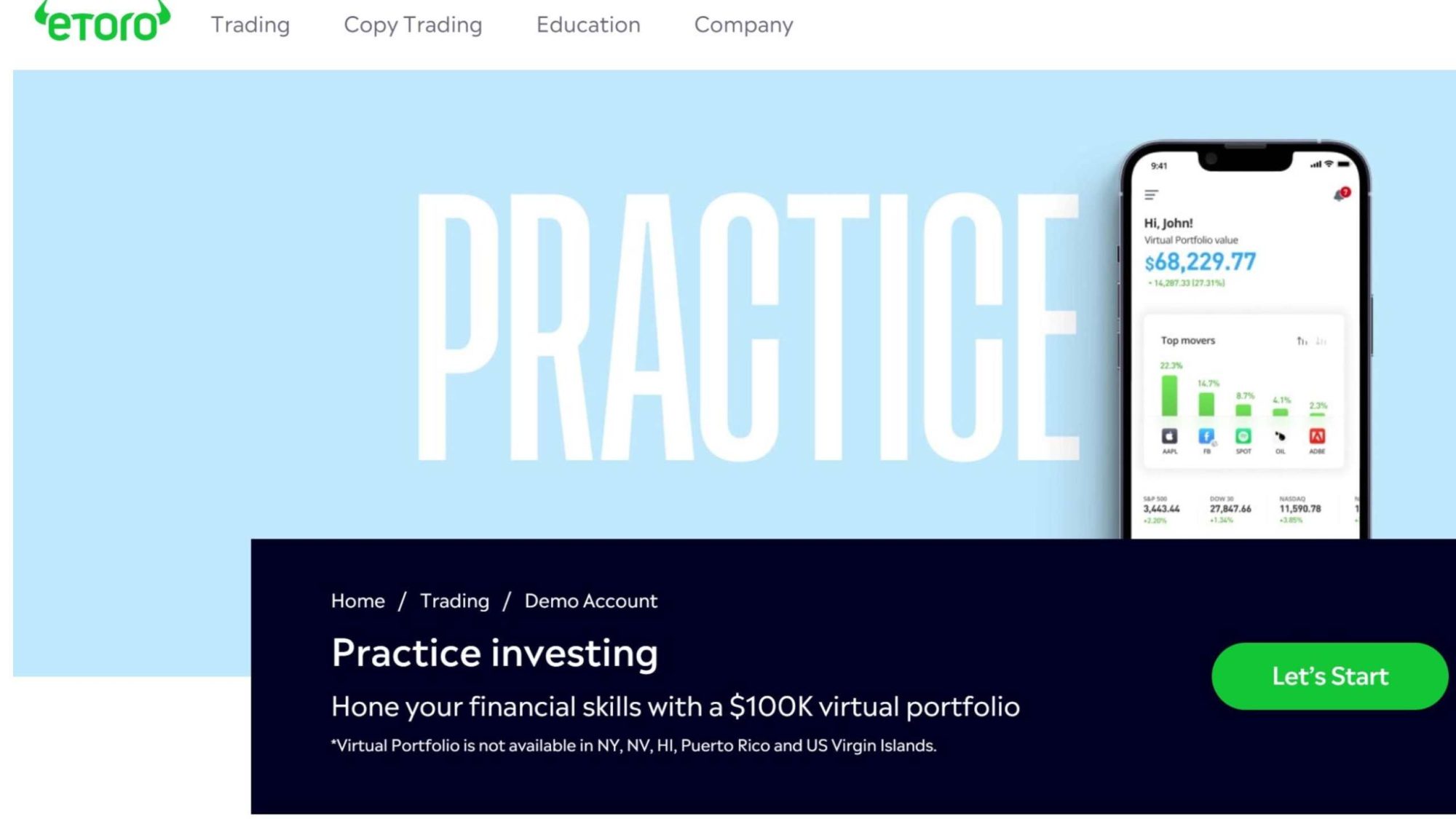
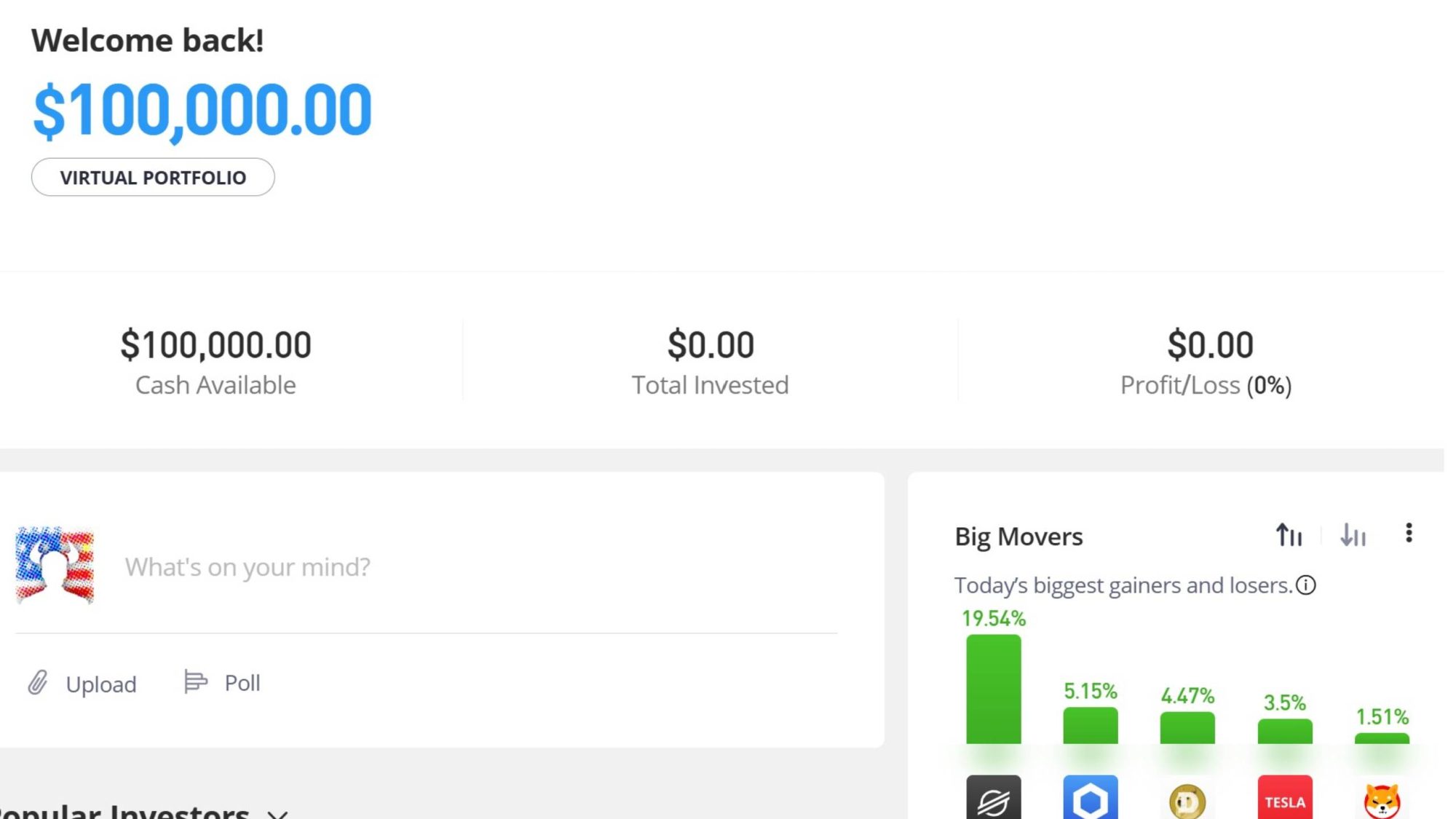
It provides a $100,000 virtual portfolio to experiment with various instruments, including stocks, forex, cryptocurrencies, commodities, and ETFs on its demo trading account. The demo account also allows traders to practise copy trading in a risk-free environment on more than 7,000 financial instruments.
Copy trading allows users to automatically replicate the trades of successful investors on the platform. This is particularly beneficial for those who lack the time or expertise to conduct their own research.
By following experienced traders, users can potentially profit from their strategies. However, copy trading can carry its own risks, so it’s critical that investors do their due diligence on which traders they choose to follow.
One other advantage of eToro is its AI-based prompts that use unconventional data to help traders make choices.
UK users of eToro can trade UK or European assets with no conversion fees and hold cash in pounds, euros or dollars. UK Club members also get an eToro Visa debit card.
For further information on this broker’s other features, check out our detailed review.
| Demo account virtual funds | $100,000 |
| Time limit on demo account | Unlimited |
| Available instruments on demo account | Stocks, cryptocurrencies, commodities, forex pairs, indices, ETFs, and Smart Portfolios |
| FCA regulation | Yes |
Pros
- No time limit on demo account
- Advanced copy trading options with a wide social trading network
- Plenty of options to invest, including more than 6,190 stocks and more than 700 ETFs.
Cons
- Relatively high spreads for some forex pairs
- A $10 monthly fee on accounts that haven’t been logged into for the last 12 months. The fee only applies to funded accounts, not demo accounts.
eToro is a multi-asset investment platform. The value of your investments may go up or down. Your capital is at risk.
2. XTB: Best demo account for trading stocks and ETFs
XTB offers CFD and non-CFD trading in its demo account, a chance for different types of investors to get accustomed to trading with the platform.
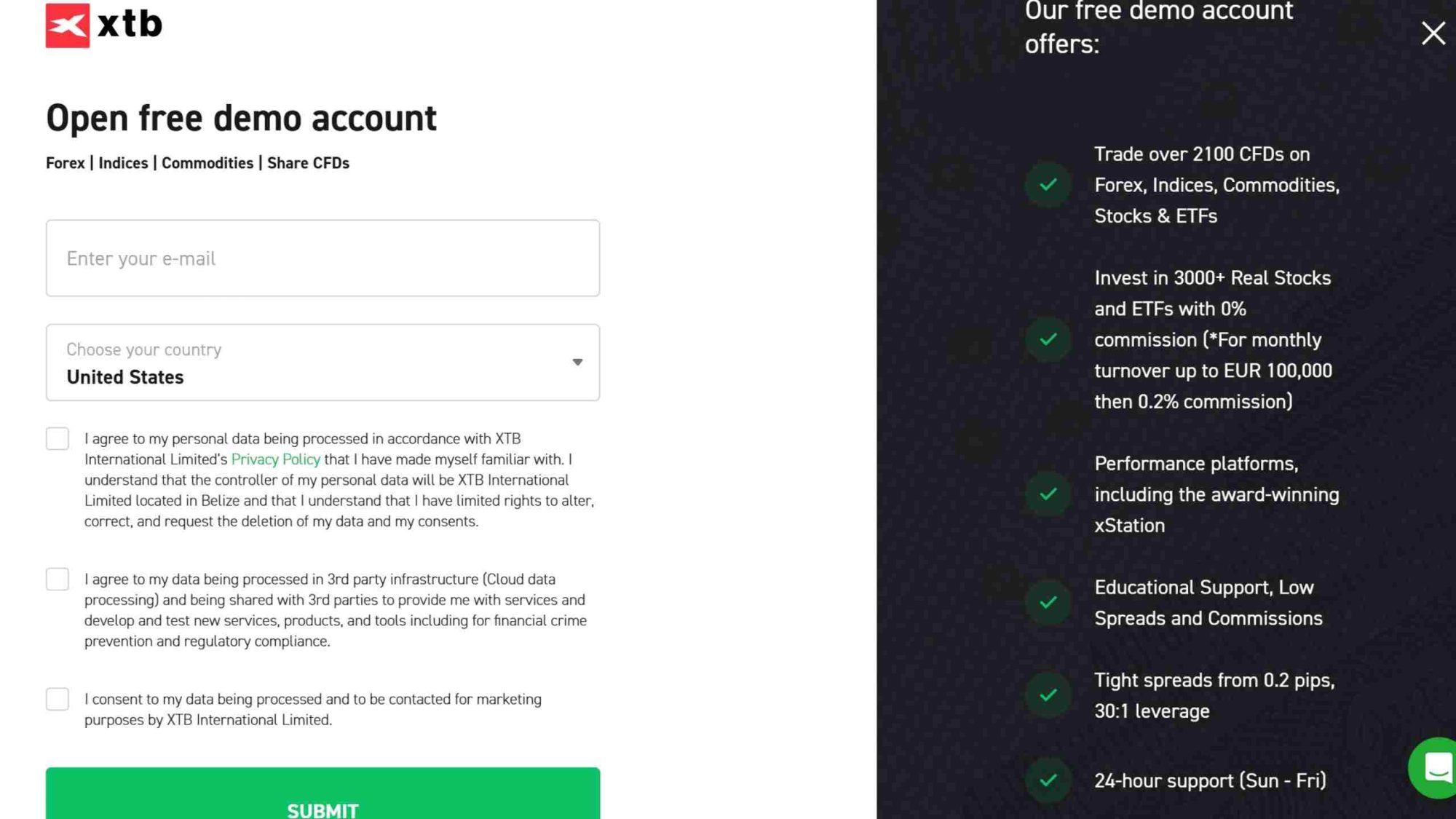
The one downside with XTB’s demo account is it’s limited to only 30 days if you are inactive. That may not be enough time for novice investors to get themselves familiar with trading with the platform. However, you can create a new demo account with your same email address.
It provides the opportunity to trade more than 2,100 CFDs on forex, indices, commodities, stocks and ETFs. For actual investing, more than 3,000 stocks and more than 400 ETFs are available. There’s no trading commission, as long as investors don’t invest more than $100,000. After that, the commission rises to 0.2%.
It also offers automated investing plans that specialise in ETFs, designed for passive investing, a good choice for beginning traders. While it also offers 4.25% interest on uninvested funds in the UK, it penalises those who aren’t active with an inactivity fee of €10 a month. That kicks in after 12 months of inactivity.
Read our XTB review for a closer look at this broker’s offerings.
| Demo account virtual funds | $100,000 |
| Time limit on demo account | 30 days, but it can be extended |
| Available instruments on demo account | Direct trading in stocks, and ETFs, plus CFD trading in shares, commodities, forex, ETFs, and indices |
| FCA regulation | Yes |
Pros
- Good educational support with articles, e-Books and market analysis
- Non-CFD and CFD trading, making it ideal for investors who want to branch out
- Pays a good interest rate on uninvested funds
Cons
- Short window for demo account, not leaving much time to learn the platform
- Commissions might get pricey for active investors
- Inactivity fee of €10 kicks in after 12 months of inactivity on live accounts
75% of retail investor accounts lose money when trading CFDs with this provider.
3. Pepperstone: Best demo account for forex trading
Pepperstone is a well-established global broker known for its competitive pricing, fast execution speeds, and wide range of trading instruments. It’s recognized for its tight spreads, particularly on popular forex pairs.
It offers a demo account that mirrors the live trading environment, allowing new traders to practise their skills without risking their own capital. This demo account is fully featured, providing access to the same platforms, tools, and assets as the live accounts. MT4/MT5 demo accounts expire after 60 days while cTrader/TV demo accounts do not expire.
Pepperstone offers 1,200 financial instruments, including forex pairs, indices, commodities, shares, and cryptocurrencies. This variety caters to traders with different preferences and strategies. Its demo account works on all of its platforms: MT4, MT5, cTrader, and TradingView.
The demo account is only valid for 30 days, unless you have a live, funded account and have requested that Pepperstone set it to prevent expiration.
Our Pepperstone review takes a deeper look at the pros and cons of this broker.
| Demo account virtual funds | $50,000 |
| Time limit on demo account | 30-day time limit |
| Available instruments on demo account | Shares, ETFs, forex, commodities, crypto and indices |
| FCA regulation | Yes |
Pros
- Diverse range of tradable assets allow investors to grow and branch out over time
- High leverage limits that benefit more experienced traders
Cons
- Limited demo account with only $50,000 in virtual funds
- Educational resources are limited, especially for beginners looking for more advanced advice
4. FP Markets: The top demo account for CFD trading
FP Markets makes it easy to access a demo account. Investors can sign up with a Google, Facebook or other email account by filling out a short form and waiting for a verification email and log-in information.
The demo account provides $100,000 of virtual money to begin investing with the MT4 and MT5 platforms, and it doesn’t have a time limit. The charts and prices of securities are listed in real time and FP Markets allows demo traders to access advanced charts.
FP Markets only supports CFD trading, though, which may not be the best type of investments for beginner traders. However, one plus for new investors is it doesn’t require a minimum deposit or charge an inactivity fee.
The Australian broker isn’t overseen by the FCA, which may scare off some UK investors, but it’s governed by the Australian Securities and Investments Commission (ASIC).
Read our FP Markets review for more information on the broker’s services.
| Demo account virtual funds | $100,000 |
| Time limit on demo account | Unlimited |
| Available instruments on demo account | CFD trading in stocks, ETFs commodities, forex, crypto, and indices |
| FCA regulation | No |
Pros
- Good educational resources that include courses, eBooks, podcasts, webinars and tutorials
- It offers low spreads that are great for frequent CFD trading
- Intuitive interface makes it easy to sign up for demo account
Cons
- Only CFD trading is available, no direct share trading
- Higher slippage when trading becomes volatile
5. Admiral Markets: A decent choice of investments, plus fractional trading
Admiral Markets has a free demo account on its MT4 and MT5 platforms with $100,000 in virtual funds. It expires after 30 days, though, unless you open a live account. Once you open a Live account, you can keep your demo account as long as you log in every 30 days.
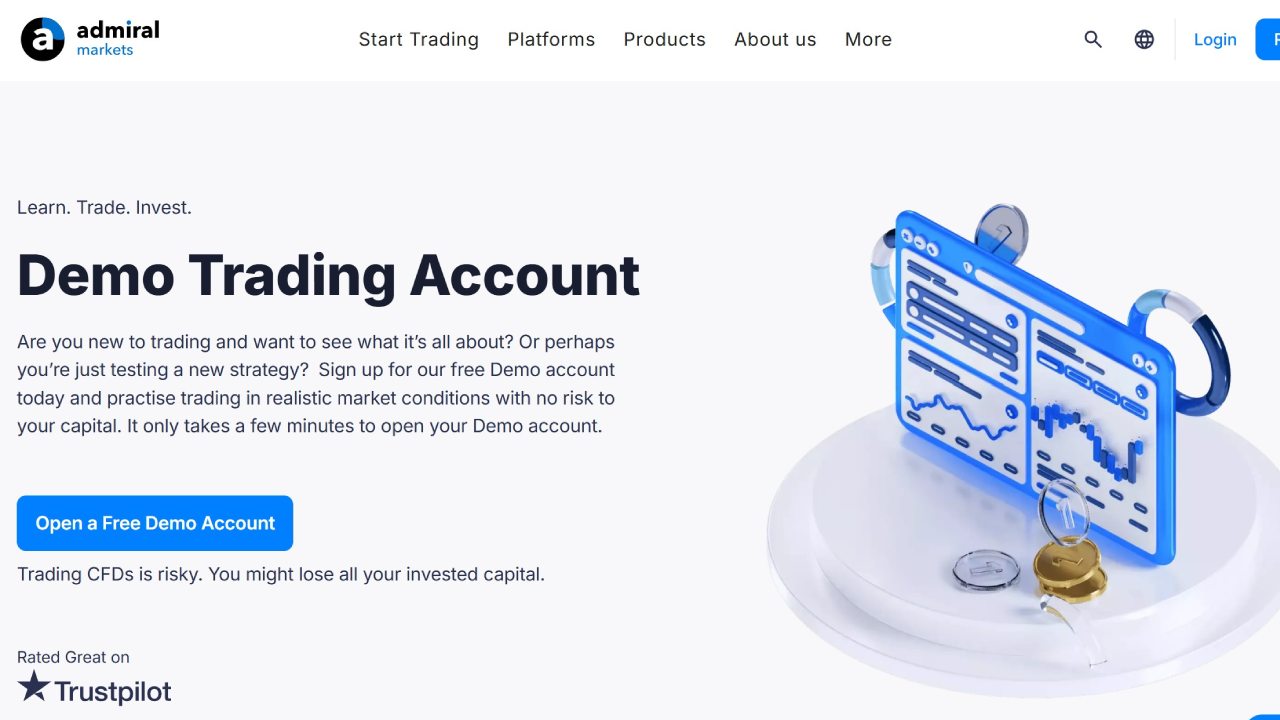
The UK-based broker has good educational resources with eBooks, podcasts, webinars and tutorials. It offers CFD trading on forex, crypto, ETFs, indices, stocks, commodities and bonds and single-share trading on stocks and ETFs.
The broker offers fractional trading, and an auto-investing option. Admiral Markets doesn’t charge a commission on direct share buying and its fees for forex and CFD trading are around average for the industry.
It charges a minimum deposit of $100 and an inactivity fee of €10 after one year of inactivity. It offers more than 8,000 tradable assets.
Read more about this platform in our Admiral Markets review.
| Demo account virtual funds | $100,000 |
| Time limit on demo account | 30 days |
| Available instruments on demo account | CFD trading on forex, crypto, ETFs, indices, stocks, commodities and bonds and single-share trading on stocks and ETFs. |
| FCA regulation | Yes |
Pros
- Good educational resources that include courses, eBooks, podcasts, webinars and tutorials
- Good choice of investment options, including CFD and non-CFD trading
- Fractional trading is available
Cons
- Inactivity fee of €10 a month kicks in after 12 months of inactivity
- Demo account must be extended every 30 days
6. Prime XBT: Making demo trading fun with contests
Seychelles-based PrimeXBT’s demo account offers $10,000 in virtual funds. While that’s a fraction of what some other brokers offer, it enhances the virtual trading experience with weekly contests that give demo traders a chance to win $10,000 in actual currency.
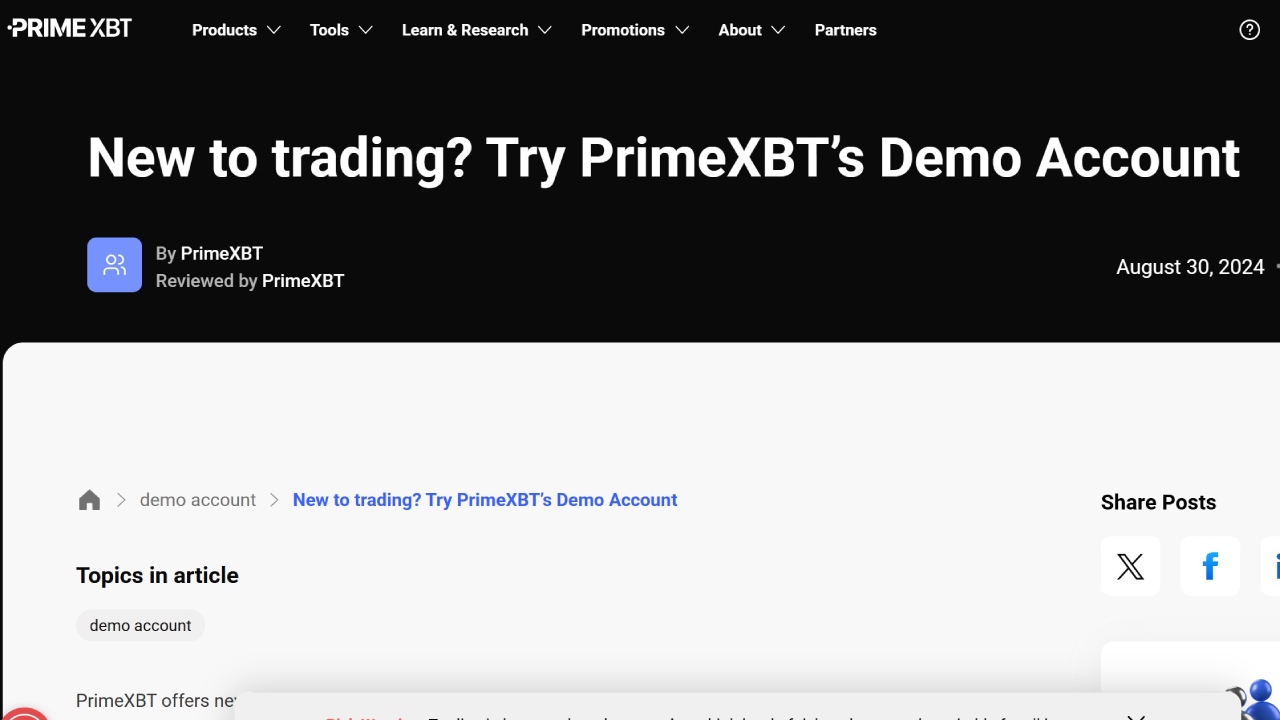
Prime XBT has advanced tools, educational resources, and a client-centric approach. It allows trading in more than 100 financial instruments, including cryptocurrencies, forex pairs, commodities, and major indices such as the S&P 500. It began offering CFD trading on stocks and ETFs this year.
It is still tweaking its approach for virtual trading. The CFD broker has a copy trading application, and its platforms include in-house app PrimeXBT and a desktop version of PrimeXBT, as well as WebTrader and MT5.
Find out more from our comprehensive review of this trading platform.
| Demo account virtual funds | $10,000 |
| Time limit on demo account | Unlimited |
| Available instruments on demo account | CFD trading on crypto, forex, indices, stocks, ETFs and commodities |
| FCA regulation | No |
Pros
- Good choice for crypto or forex traders with no commissions
- Copy trading is available
- Advanced tools and educational resources
Cons
- Limited financial offerings
- Not regulated by the FCA
7: Trade Nation: Demo account with no sign-in requirement
Trade Nation offers a trading simulator that doesn’t even require signing up for Trade Nation. It’s a great way to see if the broker is a good fit for you.
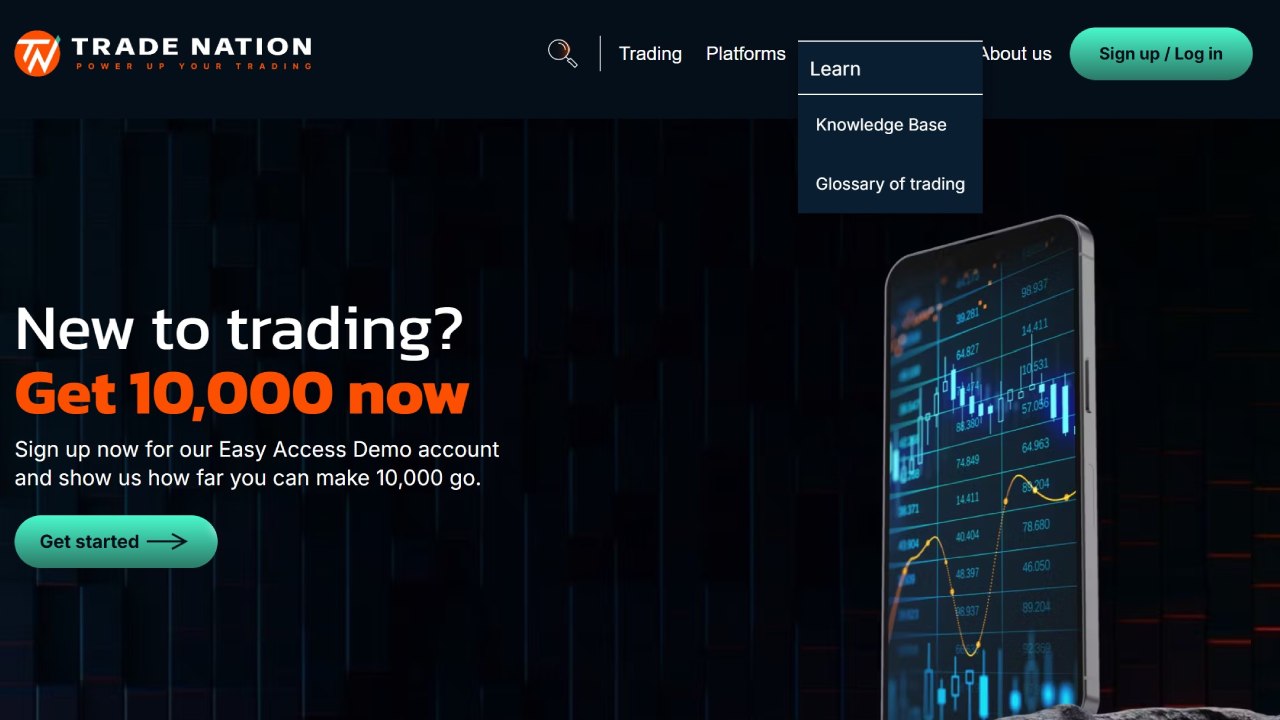
You don’t need to provide personal information to use it. This makes it simple for beginners to explore trading and learn the basics of trading at no risk.
On top of the simulator, it has an actual demo account with no time limit. It includes $10,000 in virtual funds, which does require signing up with TradeNation.
If you sign up for an actual account, there’s no minimum deposit required. It has a no-commission Standard Account, a RAW Account, which charges commissions from $3.50 per lot per side, and a TN Trader Account that has low fixed spreads. On its TradeCopier app, you can find top traders and mimic the trading of successful investors.
Trade Nation’s strengths include a good volume of market-related news, a signal centre, and risk-management tools. It also has charts that are powered by ChartIQ on its web and mobile. Trade Nation’s Insight Hub offers tutorials and market information to help you time your investments.
| Demo account virtual funds | $10,000 |
| Time limit on demo account | Unlimited |
| Available instruments on demo account | CFD trading on forex, indices, equities, and commodities |
| FCA regulation | Yes |
Pros
- Good educational resources that include tutorials, market news and ChartIQ charts
- Copy trading is available
- Free deposits and withdrawals
Cons
- Limited demo account
- Limited customer support
8. Charles Schwab: Best educational supplements for a demo account
The broker has made US markets available to UK traders for more than 30 years and has more than $11 trillion in assets under management. It’s a discount brokerage that doesn’t require a minimum deposit, doesn’t have an inactivity fee and offers fractional trading.
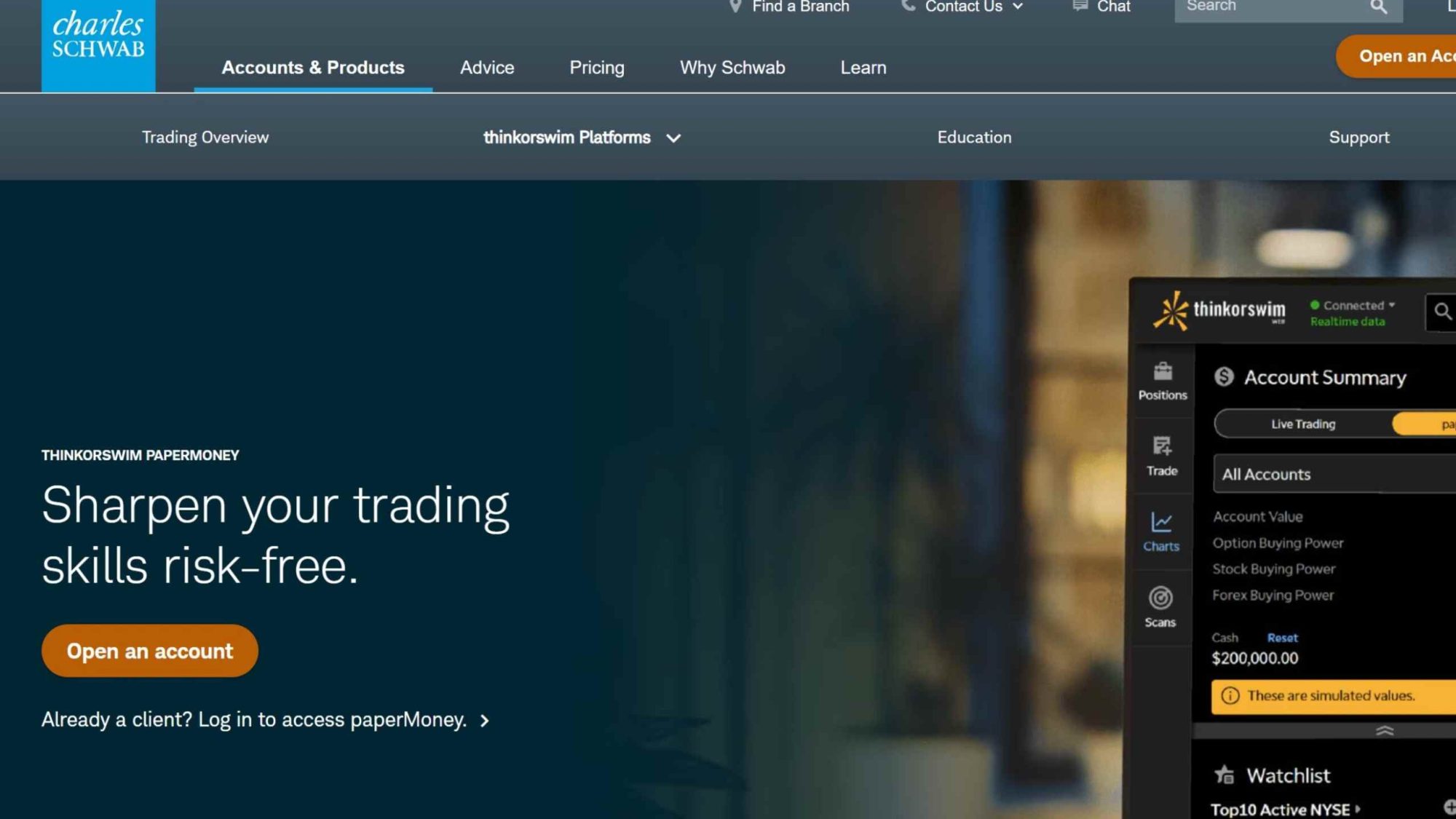
Schwab offers no-fee online stock and ETF trading, with thousands of commission-free OneSource mutual funds available. If you want to trade crypto, Solana ETPs are available, along with spot bitcoin and ether ETPs. UK investors can trade indices and commodities through Charles Schwab using futures and futures options contracts via its thinkorswim platforms
Its paper money platform closely mimics real trading and by offering $100,000 in virtual funds for an unlimited amount of time, investors have plenty of opportunities to learn from their mistakes without paying dearly for them.
One of the best things about Schwab is its wealth of educational resources, which includes a daily market update, podcasts and articles, which are put out by its Schwab Center for Financial Research (SCFR), which gives fact-based opinions, research, and practical guidance.
| Demo account virtual funds | $100,000 |
| Time limit on demo account | Unlimited |
| Available instruments on demo account | Trading available in US shares, ETFs, bonds, mutual funds, crypto, commodities, forex and options |
| FCA regulation | Yes |
Pros
- Commission-free stock, options and ETF trades.
- Five trading platforms with no minimums or fees.
- Good educational resources
Cons
- No indices or commodity trading, except throuth futures
- Low interest rate on uninvested funds
9. Trading 212: Best demo account for auto-investing
Trading 212 has emerged as a popular choice in the UK for both novice and experienced traders. This platform offers a user-friendly interface, commission-free trading, and a diverse range of assets, including stocks, ETFs, and CFDs on stocks, forex, commodities and indices.
It recently added CFD trading on crypto after it acquired a Crypto Asset Services Provider (CASP) license in Cyprus.
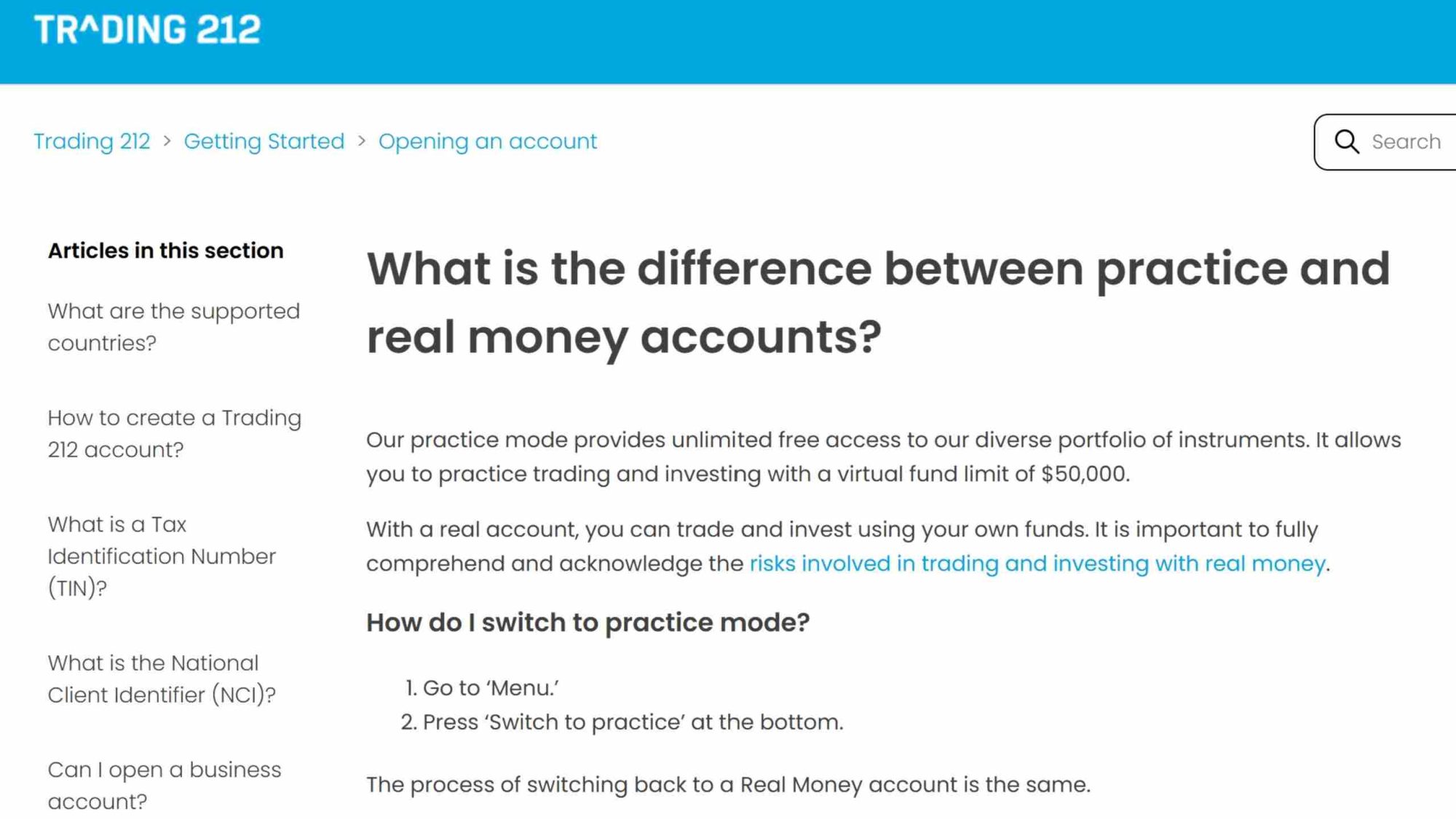
Its demo account is easy to use. You can toggle between actual trading and what Trading 212 calls “practice mode” fairly easily. It only offers $50,000 in virtual currency, but you have no time limits towards using its demo account.
Some of its best features include automated investing options, a stocks and shares ISA and options for investing in fractional shares for as little as £1. It also pays 4.05% currently on uninvested funds in your account in the UK.
It has a good number of investment vehicles with more than 13,000 stocks and ETFs. It also has CFD trading on stocks, indices, forex and commodities. Trading 212 has a share lending feature that allows you to earn interest by lending your shares to other traders. It also doesn’t charge an inactivity fee. Its education section is fairly basic, though.
| Demo account virtual funds | $50,000 |
| Time limit on demo account | Unlimited |
| Available instruments on demo account | Non-CFD and CFD trading in stocks, ETFs, commodities, forex, crypto, and indices |
| FCA regulation | Yes |
Pros
- Offers ISAs, meaning you don’t have to worry about tax on potential returns.
- High interest rate paid on uninvested cash held on the platform, currently 5.17%.
- Allows fractional share trading and has good auto-invest options, which helps benefit beginning traders.
Cons
- Limited number of educational offerings are a negative to novice investors
- No mutual funds or bonds available to trade
10. CMC Markets: Best demo account for advanced charting features
CMC Markets focuses mainly on CFD, forex and spread betting, but through its CMC Invest platform, offers trading in 45,000 real shares and ETFs. It doesn’t provide trading in crypto, except for professional traders, though.
CMC Markets offers several platforms to use for trading, including its highly rated Next Gen web platform, which is available on a demo account as well. The platform supports more than 11,000 tradable assets, including indices, forex, commodities, shares, ETFs and treasuries.
It offers much more than its MetaTrader 4 platform. For example, it has more than 330 forex pairs on its Next Gen platform to only slightly more than 175 forex pairs on MT4.
CMC Markets, in the UK, does not charge a commision but makes it income on the spread when you enter and exit a trade.
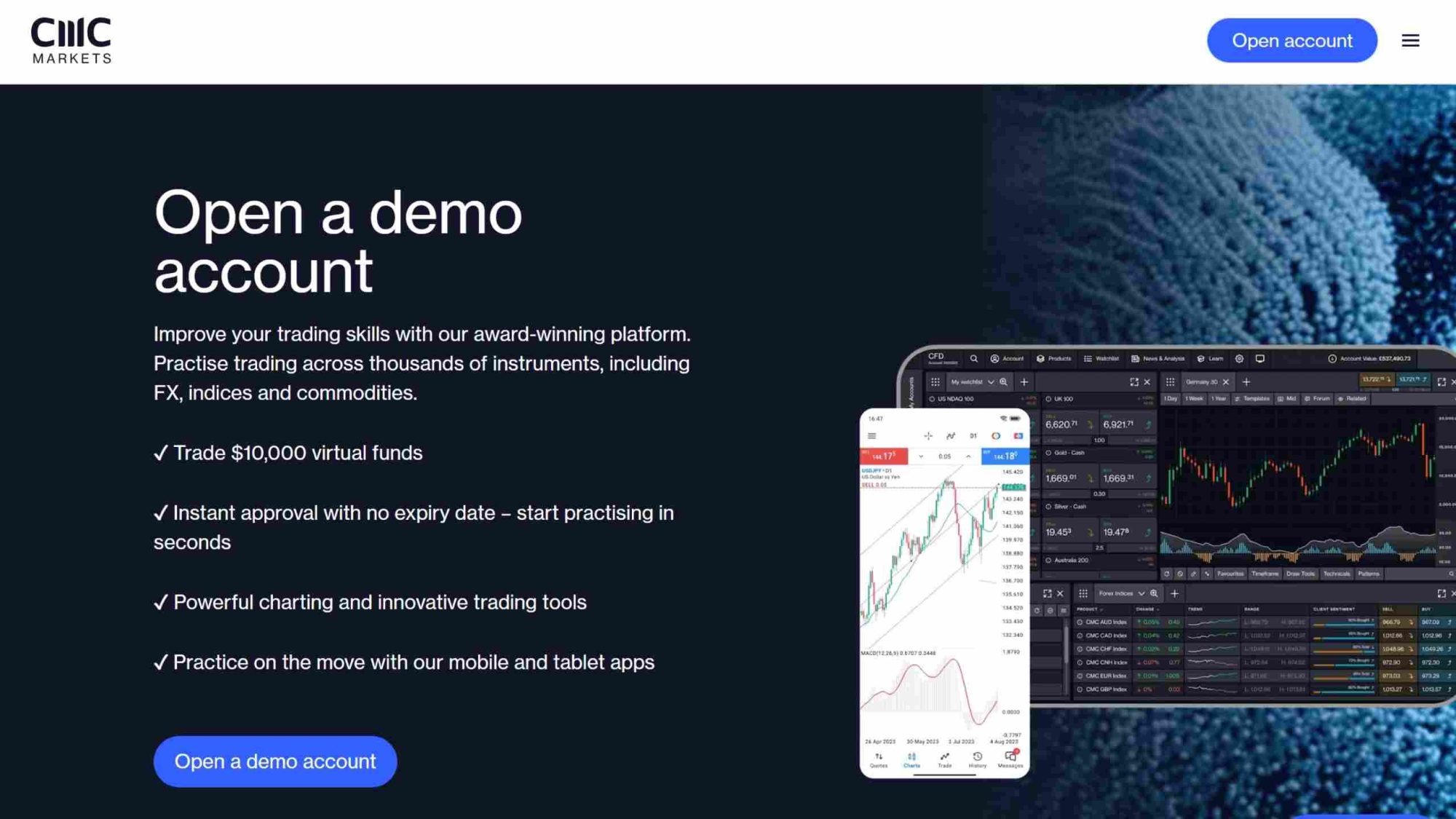
Its demo account only allows $10,000 in virtual currency, but it allows full access to the platform’s product library, charts, watchlists, order tickets, analyst insights and other educational features.
| Demo account virtual funds | $10,000 |
| Time limit on demo account | Unlimited |
| Available instruments on demo account | Direct and CFD trading in stocks, crypto, ETFs; CFDs on commodities, forex, and indices |
| FCA regulation | Yes |
Pros
- Inexpensive forex trading and no-commission trading makes it a good low-cost choice
- Cutting edge trading platform, Next Gen, with above-average choice of tradeable assets
Cons
- High spreads on CFD trades
- Low amount of virtual funds in its demo account may limit trading knowledge for novices
11. Saxo Bank: Best demo account for advanced traders
Saxo Bank is one of the better-known forex brokers with more than 180 currency pairs available, but it has plenty of other tradeable assets, including direct stocks and ETFs, ETNs (Exchange Traded Notes), options, futures, bonds, and mutual funds, as well as CFDs on stocks, indices, forex, commodities, and bonds.
Its web site is designed to be useful for beginners and experienced traders alike.
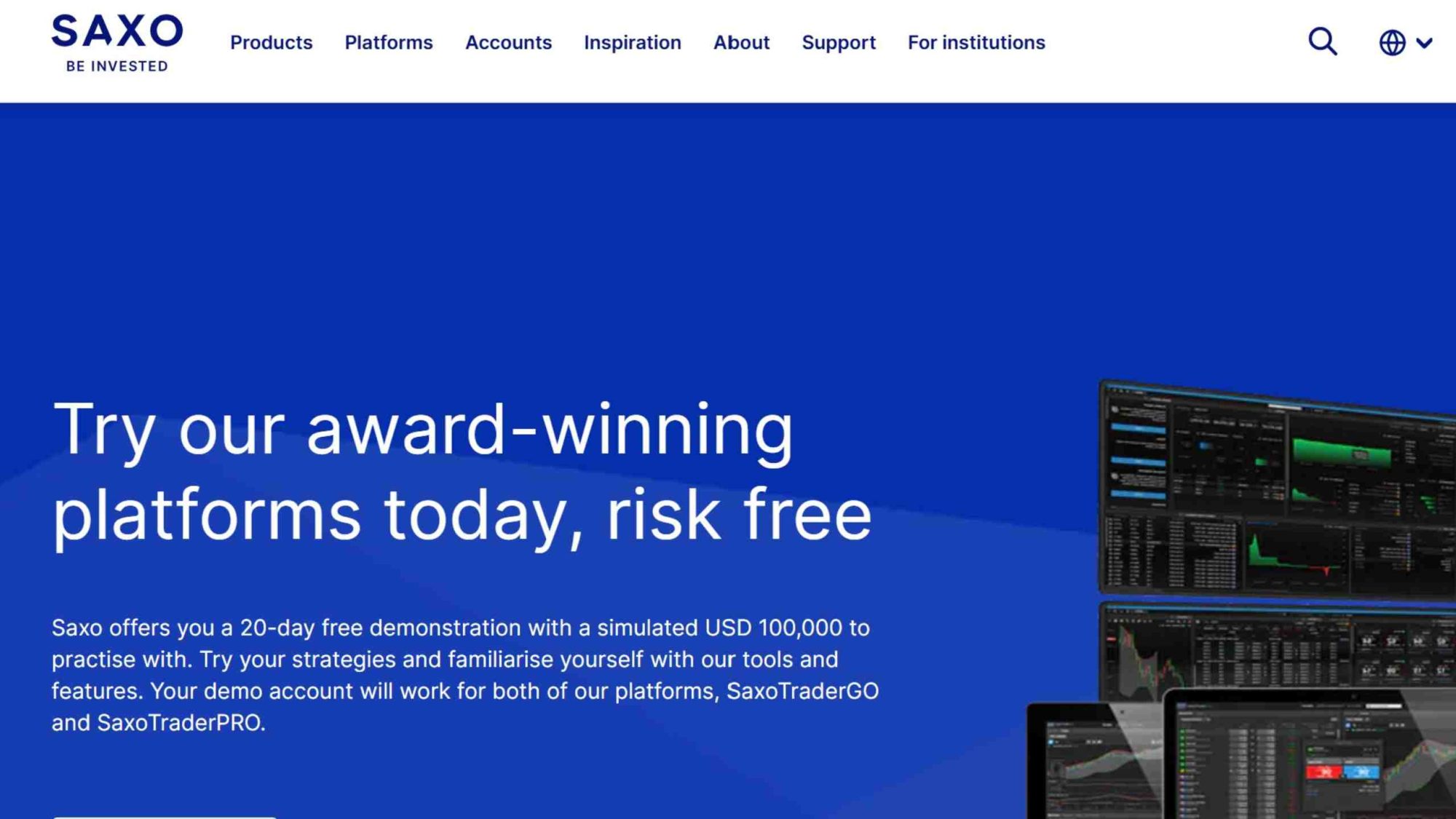
While Saxo’s regular trading offers more than 23,000 stocks and more than 7,000 ETFs, its demo account is more limited than those of other brokers. While it provides $100,000 in virtual funds to practise with, the amount of time a new trader can use the account is only 20 days and it offers around 1,000 stocks, CFDs and forex pairs to practise on. The demo account is compatible with SaxoTraderGO and SaxoTraderPRO accounts.
Some of the positives for Saxo, besides the breadth of its instrument offerings, are it charges no inactivity fee and there’s no minimum investment requirement to open an account.
It does charge commissions on trades, such as $1 on US stocks and €2 on European stocks and also charges a custody fee that begins as low as 0.1% of your fund holdings in its VIP account to as much as 0.12% on stocks held in its Classic account..
| Demo account virtual funds | $100,000 |
| Time limit on demo account | Limited to 20 days |
| Available instruments on demo account | Around 1,000 stocks, CFDs and forex pairs |
| FCA regulation | Yes |
Pros
- Its website has all the bells and whistles that advanced traders like and it’s also easy to operate
- Plenty of tradable assets allow beginning traders to advance
Cons
- Limited demo account, both in terms of time and in tradeable assets
- Commissions charged on many trades can add up
Best UK demo trading platforms compared
Here are the main features of these trading demo account offers broken down:
| Broker | Available Funds | Demo Account Time Period | Investment choices |
|---|---|---|---|
| eToro | $100,000 | Unlimited | More than 4,500 shares and 500 ETFs, CFD trading in crypto, shares, commodities, forex and indices |
| XTB | $100,000 | Four weeks | More than 3,000 real stocks and ETFs, more than 2,100 CFDS on stocks, forex, indices, commodities, and ETFs |
| Pepperstone | $50,000 | 60 days | 1,200 tradeable assets |
| FP Markets | $100,000 | Unlimited | More than 10,000 CFD tradeable instruments in shares, bonds, commodities, indices and metals |
| Admiral Markets | $100,000 | 30 days | More than 8,000 financial instruments in stocks, forex, bonds, crypto, commodities, indices and ETFs |
| PrimeXBT | $10,000 | Unlimited | CFDs on forex, indices and commodities |
| Trade Nation | $10,000 | Unlimited | Forex, indices and commodities CFDs |
| Charles Schwab | $100,000 | Unlimited | More than 70,000 tradeable instruments, but no crypto |
| Trading 212 | $50,000 | Unlimited | More than 7,000 tradeable instruments |
| CMC Markets | $10,000 | Unlimited | More than 12,000 CFD instruments in forex, stocks, indices, commodities, and treasuries. |
| Saxo Bank | $100,000 | 20 days | More than 40,000 tradeable instruments, both CFD and non-CFD. |
What is a trading demo account?
A demo trading account, or trading simulator, (also known as a practice trading or paper trading account) is a risk-free platform that allows investors to practise trading real-world financial instruments using virtual funds.
It replicates the actual trading environment as closely as possible, including real-time market data, order execution, and trading fees. The scope of available assets is determined by your broker and is often similar to what you’d find on the best UK investment apps.
It allows new traders to try their hands at buying and selling financial instruments in a safe way, without the threat of losing their money hanging over their head while they learn how financial markets work, how to use leverage and apply risk management tools. Beginners will gain confidence before moving on to a live account.
It’s not just novice traders that find it useful. It lets experienced traders try out different products, trading tools, like charting features, and test out different strategies they devised. For this reason, preference should be given to brokers that don’t place time limits on using their demo account.
Why use a demo trading account?
To recap what we have covered so far, here are the reasons to use a demo account for trading.
Risk-free learning
Demo accounts let you experiment with trading and learn about financial markets, complex financial instruments and what affects their price without fear of losing real money.
This allows you to make mistakes, analyse your decisions, and learn from them without financial consequences.
Sharpen your skills
Demo trading allows you to identify weaknesses in your market analysis, trading decisions, and overall strategy. It helps you refine your approach before putting real capital on the line.
Brokers also keep developing new trading platforms and adding tools. With a demo account, you can familiarise yourself with new technology in a risk-free way.
Learn to keep your emotions in check
One of the biggest problems for traders of all ilk is taking emotions out of the equation when they’re investing. When you’re investing real money, the prospect of losing capital can hinder decision making.
The advantage of demo accounts is it can help traders make trades without worrying about the results even as they make mistakes until they better understand markets.
Trading financial instruments often triggers a rollercoaster of emotions, which can lead to impulsive decisions that hurt your finances. Using a demo account first allows you to refine your strategy without pressure. You can test some of the ways to invest just £100 a month once you transition to a real money account.
What are the features of a top demo trading account?
Different traders are looking for different features, depending on their trading style and goals, but here are some nice-to-haves for all accounts:
Strong market analysis
The best demo trading accounts, some of which also allow UK traders to learn options trading, provide real-time market data, including price charts, news feeds, and economic calendars, along with advanced trading tools that enable investors to analyze charts for technical indicators and conduct fundamental analysis.
An abundance of funds, trading instruments
The top demo accounts provide $100,000 in virtual currency, enough to get a feel for trading strategies and risk management. The best demo accounts also give traders the ability to trade a wide range of assets, again to help them understand all types of financial trading, including stocks, bonds, CFDs, forex and cryptocurrencies.
Provide a realistic trading environment
Traders often report doing better on their demo trading than their actual trading. To change that trend, the best brokers’ demo accounts simulate real-world market conditions, including slippage, commissions and fees.
Pros & cons of using a demo trading account
Pros
- Risk-free, hands-on learning allows new investors to experience trading without losing money
- Helps build trading confidence as it allows traders to see successful trading strategies
- Allows investors practise making data-driven decisions
Cons
- Many demo accounts don’t reflect real-world trading conditions
- Can drive unrealistic expectations that don’t factor in slippage
The difference between a demo account and a live account
Many investors see success with a demo account but struggle once they switch to live trading. There are good reasons for that because there are substantial differences.
No risk for demo accounts
You’re using house money, essentially, because demo accounts provide virtual money. In actual trading, you’re playing for real money. There are also generally fees associated with live accounts that don’t come into play in most demo accounts.
Emotions vary between the two types of accounts
Demo accounts help take emotions out of play because fear, greed and uncertainty are less of a factor. In real trading, it’s harder to take emotions out of the equation. However, if you can get accustomed to making emotion-free decisions with demo accounts, you may be able to make better judgments once you switch over to live trading.
Market conditions vary between the two
Demo accounts often execute trades at the exact price requested, creating an unrealistic expectation of precision. In real markets, orders are matched with available counterparties. This can lead to slippage, where your order is executed at a less favourable price, especially for less liquid assets.
Demo accounts will not be able to replicate the liquidity of live trading during major news events or when there is big price movement in the markets.
How to choose a demo brokerage account
It’s important to find a demo trading account that aligns with your style of trading and level of experience. If you’re looking to trade real stocks and ETFs, that’s one thing, but if you’re looking to do CFD trading, that’s a completely different type of trading.
Beyond that, there are some basics that most investors should look for in a good demo brokerage account.
Platform features and user interface
- Ease of use: A user-friendly interface can significantly enhance your trading experience.
- Real-time market data: Access to accurate and up-to-date market data is crucial for making informed decisions.
- Charting tools: Advanced charting tools can help you analyse market trends and identify potential trading opportunities.
- Order Types: A variety of order types, such as market orders, limit orders, and stop-loss orders, can help you manage risk and execute trades effectively.
If you’re considering social or automated trading, many of the best copy trading platforms in the UK also offer demo accounts – allowing you to practice copying expert traders before committing real funds.
Instrument selection and resources
Ideally, a broker with a demo account, in their actual accounts, offers a wide range of tradable instruments, including stocks, options, forex, futures, and cryptocurrencies, allows you to explore different trading strategies.
The best brokers have tutorials and webinars and access to other educational resources to help you understand trading techniques.
Realistic demo account
The brokers’ demo accounts should have trading accounts that closely mimic real-world trading conditions, including market volatility, slippage, and fees, including spreads.
Broker reputation and regulation
Ensure that the broker is regulated by a reputable financial authority and that your funds should be protected by robust security measures, in case you want to open a live account at the same broker.
What is the difference between a demo trading account, a paper trading account and a trading simulator?
Essentially, all of these terms refer to the same thing: a platform to practise trading on with fake money. However, paper trading means simulated trading with securities, such as stocks and bonds.
A slight difference may be that a demo trading account is made to help traders get experience trading on a specific platform, and offers the most realistic experience to actual trading at that provider.
A trading simulator is often not linked to a specific brokerage account and lets you set different parameters, such as available funds and leverage levels.
How to open a trading demo account: Step by step
Here are three easy steps on how to open a trading demo account. As an example, we’re using eToro to take you through the process.
Step 1: Open an account
Go to the eToro’s website and familiarise yourself with the platform. To open an account with eToro, you’ll need to provide some personal information, such as a phone number and email address, and verify your identity. To do this, upload a passport or driver’s licence, plus a proof of address (e.g.: a recent utility bill or bank statement).
Step 2: Set up your demo account
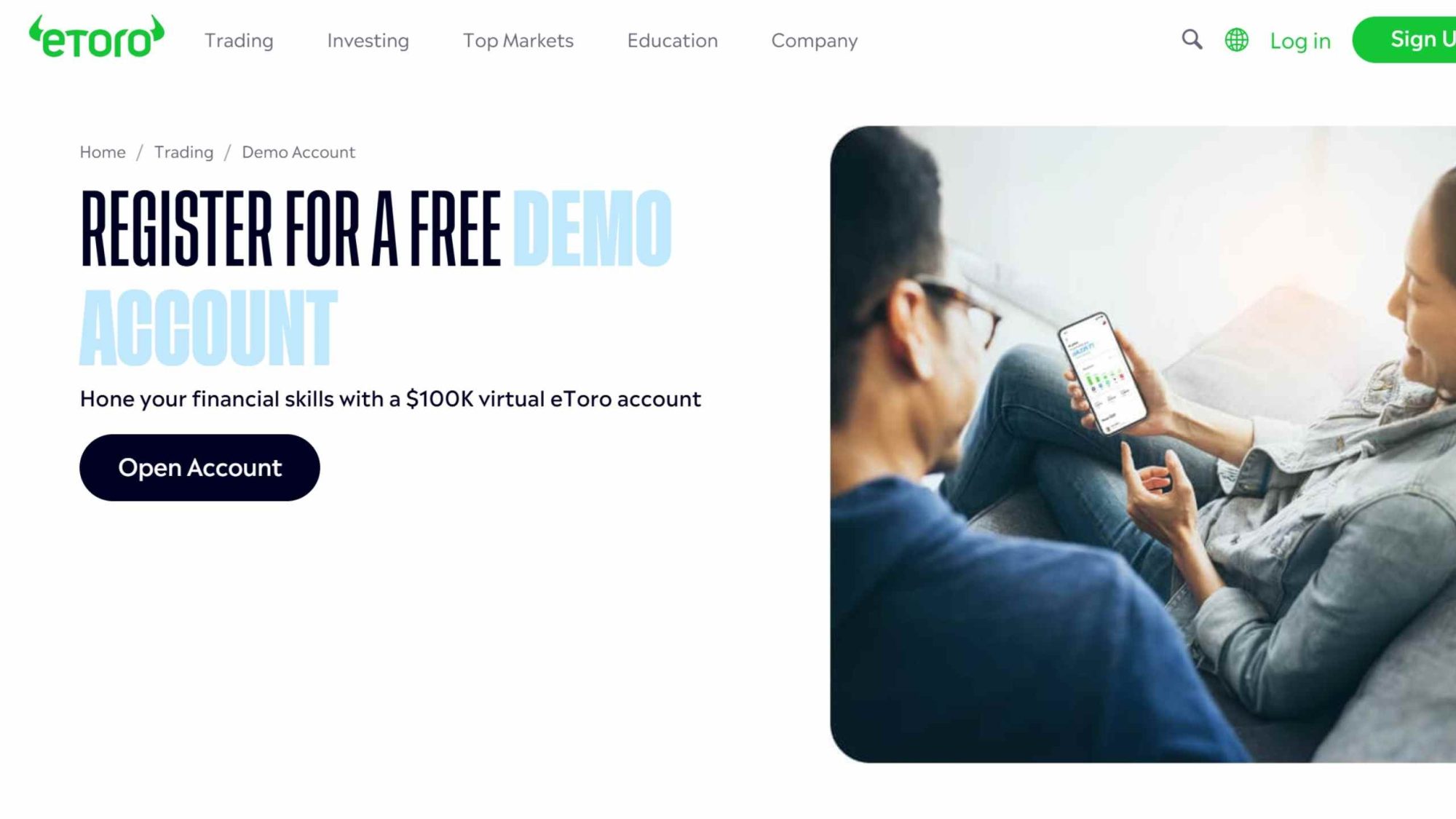
Once the platform is installed, use the login credentials provided in the verification email to access your demo account and apply your settings. The Virtual Portfolio, at the start, will show you having $100,000 in virtual funds to practise with.
If you have a live and a demo account, click Switch to Virtual at the bottom of your account dashboard. Use the Real/Virtual menu to switch between your Real Portfolio and Virtual Portfolio.
Step 3: Practise on your virtual portfolio
The demo account is a chance for you to practise trading with different strategies. Also make sure to keep track of your trades and analyse your results.
When you find areas you need to improve, use the learning resources your broker offers to upgrade your skills, and then practise some more.
Your capital is at risk.
Demo trading account FAQs
What is the best demo trading account in the UK?
Can you make money on a demo account?
Are demo trading accounts accurate?
Which demo trading platforms are best for beginners in the UK?
How long should I demo trade for?
Can I trade with leverage on a demo account?
Can I practise CFD trading and spread betting on a demo account?
References
- Charles Schwab paper money platform
- eToro demo trading account
- XTB investment options
- Trading212 education options
- SaxoBank custody fee
Disclaimers:
eToro is a multi-asset platform which offers both investing in stocks and cryptoassets, as well as trading CFDs.
Please note that CFDs are complex instruments and come with a high risk of losing money rapidly due to leverage. 61% of retail investor accounts lose money when trading CFDs with this provider. You should consider whether you understand how CFDs work, and whether you can afford to take the high risk of losing your money.
This communication is intended for information and educational purposes only and should not be considered investment advice or investment recommendation. Past performance is not an indication of future results.
Copy Trading does not amount to investment advice. The value of your investments may go up or down. Your capital is at risk.
Don’t invest unless you’re prepared to lose all the money you invest. This is a high-risk investment and you should not expect to be protected if something goes wrong. Take 2 mins to learn more
eToro USA LLC does not offer CFDs and makes no representation and assumes no liability as to the accuracy or completeness of the content of this publication, which has been prepared by our partner utilizing publicly available non-entity specific information about eToro.