



Exchange-traded funds (ETFs), investment vehicles that contain a diversified portfolio of stocks, bonds, or a combination of both, have been the fastest-growing investment product in the UK in recent years, according to BlackRock’s Money and People report. The top UK brokers have caught on and offer a vast array of ETFs.
The key to their popularity is that, unlike mutual funds, ETFs trade on stock exchanges, offering greater flexibility and mostly lower fees. The total value of ETFs traded on the London Stock Exchange was £1.27 trillion in December 2024, 30.4% higher than a year earlier, according to a report by data analytics firm LSEG Lipper.
There are ETFs catering to every investment style, risk profile or goal: tech-focused, cautious, sustainable, you name it. UK investors are increasingly aware of their benefits, such as diversification, low fees, and tax efficiency. In this guide, we’re ranking the eight best ETF brokers in the UK.
The top ETF brokers in the UK ranked
An overview of some of the best ETF brokers in the UK:
- eToro: The social trading platform is offering a diverse range of tradeable instruments, including contracts for difference (CFDs) on stocks, forex, cryptocurrencies, ETFs, and shares, for direct investment and through CFDs.
- XTB: The Poland-based broker has been around more than 20 years. It’s one of the largest exchange-listed CFD and forex brokers but has expanded its offerings to actual shares and ETFs.
- Pepperstone: The Melbourne, Australia-based broker’s UK branch specialises in forex, commodities, shares, indices, and ETFs, trading primarily through CFDs. Stocks and ETFs aren’t available directly.
- FP Markets: The Sydney, Australia-based online broker offers ETFs only via CFDs. It also allows CFD trading on forex, stocks, indices, commodities, and cryptocurrencies, with a focus on raw spreads.
- Admiral Markets: The broker, founded in Estonia and present in the UK for 13 years, focuses on forex and CFD trading on various instruments. Meanwhile, it also offers actual stocks and ETFs for investing.
- Trading 212: The UK-based trading platform offers a wide range of instruments, including stocks and ETFs. It has unique features like interest on uninvested funds and ready-made investment pies.
- AJ Bell: This popular UK-based investment platform offers a diverse range of stocks and ETFs at competitive fees and also has comprehensive research tools.
- Interactive Investor: The UK-based investment platform offers a wide range of ETFs at competitive fees and a broad variety of investment account options.
Your capital is at risk. 61% of retail investor accounts lose money when trading CFDs with eToro.
- Show Full Guide
Reviewing the best ETF brokers in the UK
Let’s take a closer look at the features of these UK-based ETF trading platforms to assess their advantages and disadvantages.
1. eToro: Simple-to-use UK ETF broker offering demo and social trading
- Number of ETFs: More than 700
- Min. deposit: Equivalent of $50 in the UK
With 40 million users, eToro is a popular social trading platform that caters to both novice and experienced investors. The broker, which has a significant client base in the UK, offers ETFs both for direct investment and via CFDs, in addition to a multitude of other instruments, including shares, actual and CFDs, indices, forex, cryptocurrencies, and commodities.
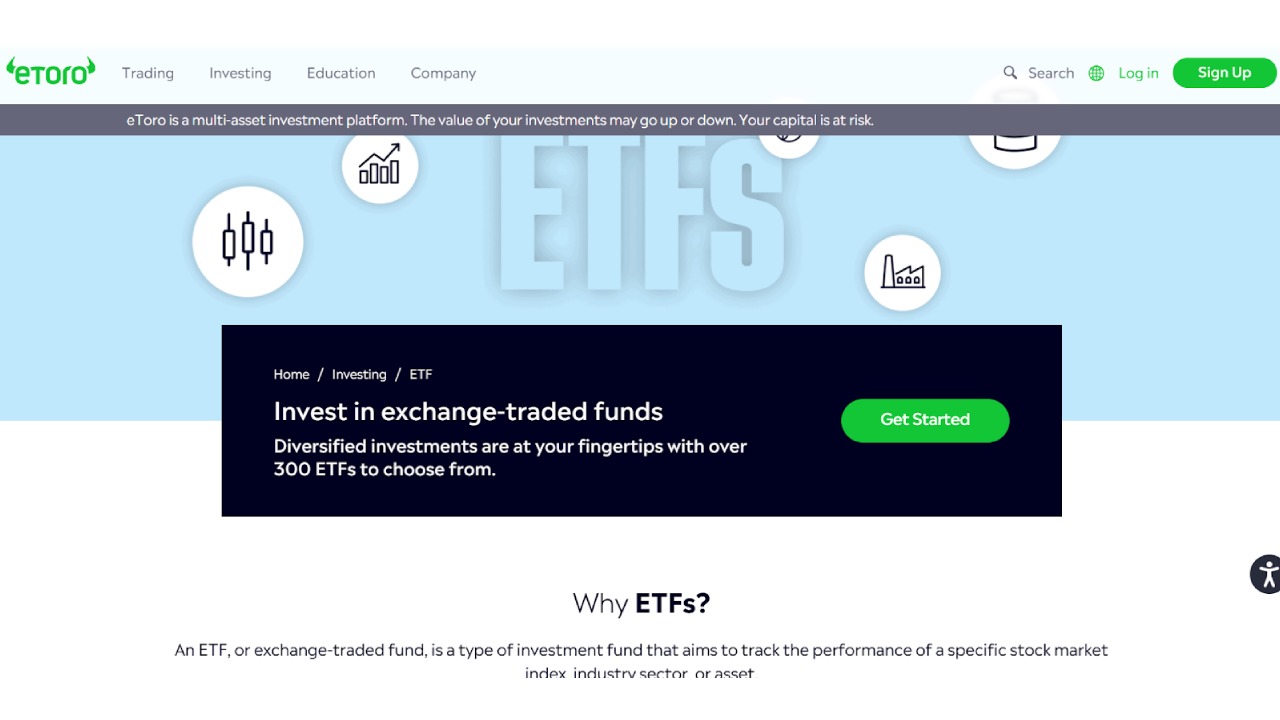
Trading ETFs through CFDs means that traders don’t directly own the underlying assets but rather speculate on their price movements.
eToro’s unique social trading features allow users to follow and copy the trades of successful traders, offering a hands-off approach to investing.
The platform, founded in 2007, has quite a few positives for those attempting to trade ETFs. It doesn’t charge commission to open or close ETF positions, though there will likely be charges from the fund company. For example, to own SPY, the ongoing charges are around 0.095% per year.
Another edge that eToro has is a demo account, allowing newbie investors to get their feet wet, whether they plan to invest in ETFs or any of the company’s other instruments.
eToro also offers investors the ability to own fractional shares of ETFs (or stocks, for that matter) for as little as $10. That means a lower barrier for many younger investors.
Check out our review of eToro, for more information on the broker’s offerings.
Pros
- Copy trading that allows investors to mimic the investments of successful traders on eToro
- Easy-to-use interface that makes it easy to trade or find out information about ETFs and other securities
Cons
- Limited customer service
- Emphasis on crypto and CFDs can be tricky for investors and could mean increased losses for traders
Your capital is at risk. 61% of retail investor accounts lose money when trading CFDs with this provider.
2. XTB: UK broker offering the choice of direct ETF investing and CFD ETF trading
- Number of ETFs: More than 1,800 direct ETFs and 200+ ETF CFDs
- Min. deposit: None
XTB offers both CFD and non-CFD trading in ETFs and allows investors to buy more than 1,800 ETFs with 0% commission when they are investing up to €100,000 in a calendar year. After that, there’s a 0.2% commission, with a minimum of £10, not counting a currency conversion fee of 0.5%.
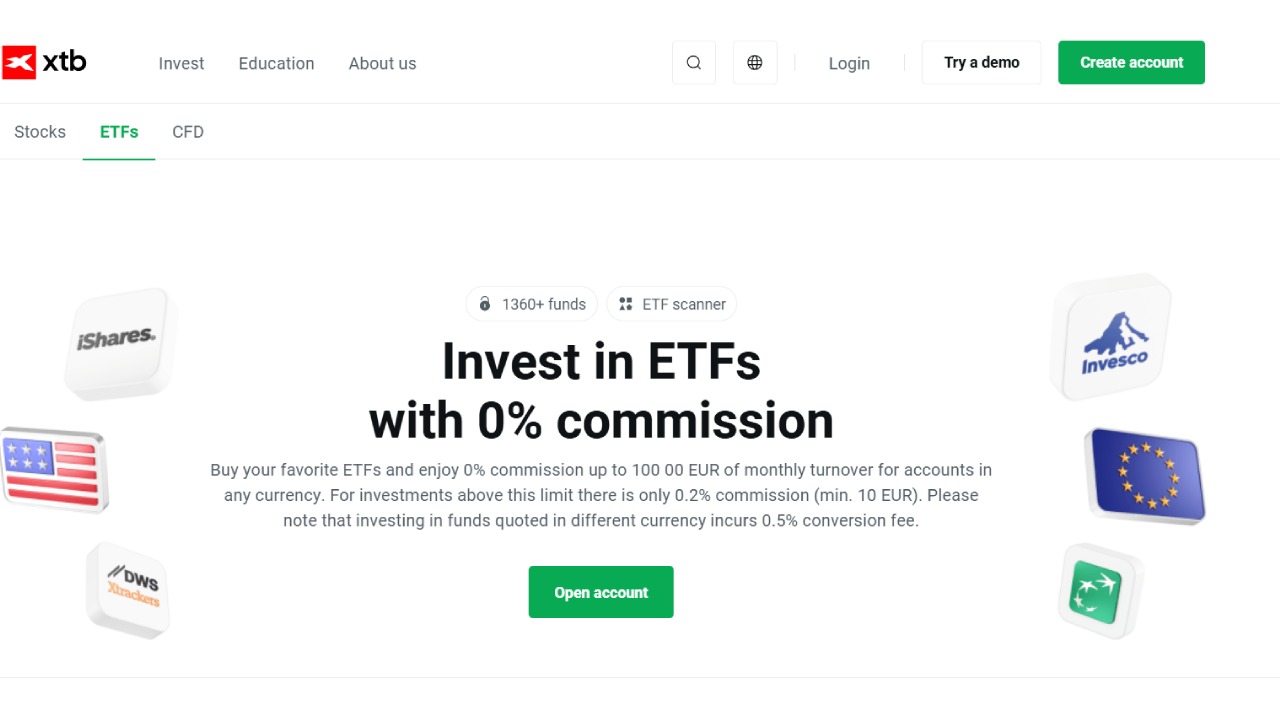
Traders give its trading platform high marks for being user-friendly with tools such as real-time quotes, charts and technical analysis indicators. XTB doesn’t require a minimum deposit, so it’s a good broker for some novice investors.
It also offers leverage on trades, which can amplify traders’ profits and losses. A big plus is that XTB is one of the UK ETF brokers that allows traders to invest in ETFs through fractional trading, lowering the barrier for entry for retail investors.
What’s more, XTB pays interest on uninvested funds in your account and in the UK, the rate is 4.25%, which is paid out monthly within five days of the following month. One downside is the broker charges an inactivity fee of €10 monthly after a year of account inactivity — something to consider when choosing among online stock brokers in the UK.
To find out more, see our XTB review.
Pros
- Commission-free trades, at least for investors who trade less than €100,000 in a month
- Interest paid on uninvested funds at 4.25% in the UK
- Fractional shares available, making it easier for investors to diversify their portfolios
Cons
- Despite an expansion of offerings, the emphasis is on CFD trading
- Inactivity fee kicks in after 12 months, so that may be a downside for long-term investors
72% of retail investor accounts lose money when trading CFDs with this provider.
3. FP Markets: Offers diverse ways to invest in and trade ETFs
- Number of ETFs: More than 300 ETFs
- Min. deposit: Equivalent of AUD $100
FP Markets stands out as a premier online brokerage, offering a diverse suite of account types to accommodate various trading styles. This platform provides access to a wide array of markets, encompassing forex, stocks, ETFs, indices, commodities, and cryptocurrencies.
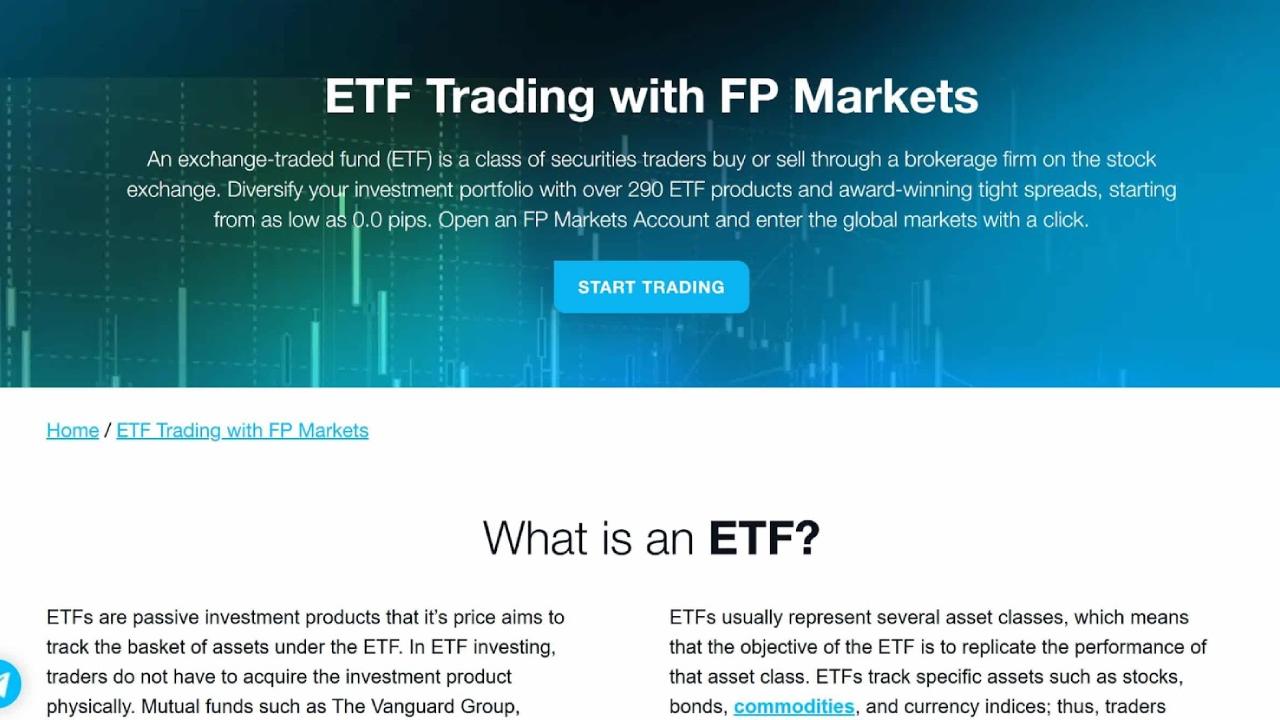
The broker’s emphasis on raw spreads and customizable trading environments has made it a favoured choice for novice and seasoned traders alike.
While, as an ETF broker, FP Markets specialises in CFD trading, it also facilitates direct ETF purchases through the IRESS trading platform (though that requires a minimum deposit of $1,000).
FP Markets also has more than 300 ETF CFDs on the MT4, MT5, cTrader, and TradingView platforms. These platforms provide commission-free trading and highly competitive spreads.
Find out more about FP Markets from our detailed review.
Pros
- Wealth of trading options, with CFD ETFs, plus other trading instruments, including crypto assets
- Demo trading that includes $100,000 in virtual currency with no time limit
- Copy trading is available to see and emulate what other successful traders are doing
Cons
- Not regulated by the FCA, though it is regulated by the Australian Securities and Investment Commission
- Cost of deposit for IRESS account puts it out of reach for some traders
- Relatively small customer base may make it harder to complete some trades
4. Pepperstone: Good ETF broker for experienced UK-based CFD traders; offers ETFs with leverage
- Number of ETFs: More than 100
- Min. deposit: None, though the broker recommends a deposit of at least $200.
Pepperstone is a reputable online broker that specialises in CFD trading. It offers a wide range of assets, including ETFs, as well as forex, commodities, shares, and indices.
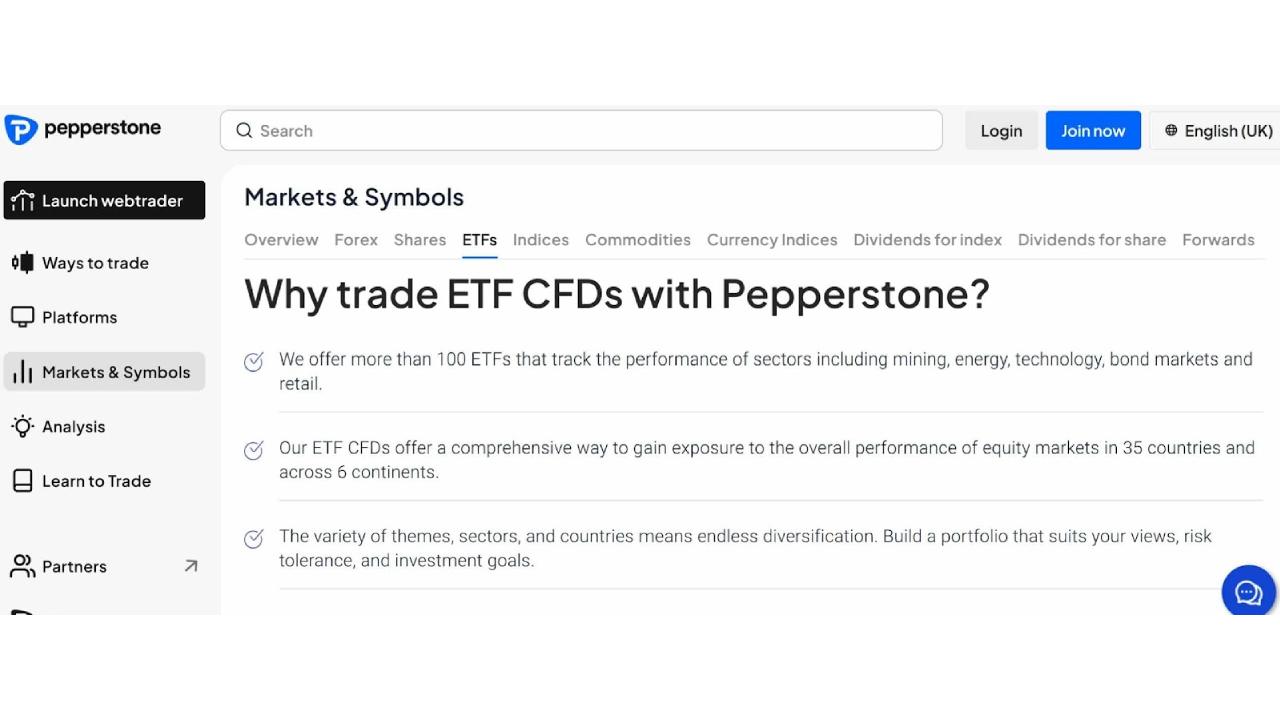
The platform is particularly popular among active traders due to its competitive spreads, fast execution speeds, and advanced trading tools – making it an attractive option for those exploring beginner-friendly UK stocks as part of their portfolio.
On Pepperstone, when trading CFDs, you’re not buying or selling shares of an ETF on a specific exchange. Instead, you’re speculating on the price movement of the underlying ETF.
CFDs allow you to both buy (go long) and sell (go short) without owning the actual ETF shares. If you anticipate a decline in a particular market sector or region, you can short an ETF CFD, just as you would buy one if you expect it to rise in value.
ETF CFDs also offer leverage, a loan from your broker, enabling you to trade with a smaller initial investment compared to traditional investing. This can amplify potential profits but also losses. For this reason, it’s important to remember that CFD trading, because of the high level of risk involved, isn’t for all investors.
While Pepperstone has copy trading and demo accounts, the demo accounts can expire as early as 60 days because of inactivity.
Our Pepperstone review has more information about this broker.
Pros
- Demo trading that offers $50,000 in virtual currency
- Social trading that allows you to replicate successful investors automatically
Cons
- Limited ETF offerings that mean fewer choices for diversifying your portfolio
- Only CFD trading for ETFs could lead to increased losses and don’t endear the app to long-term traders
- Limited period of less than two months for demo accounts if the trader is inactive
5. Admiral Markets: Wide choice of ETF offerings for direct investment and as CFDs
- Number of ETFs: More than 352 ETFs on CFD trading, plus more than 240 ETFs to invest in
- Min. deposit: Equivalent of $100
Admiral Markets offers an above-average amount of ETFs to trade, including many popular US and UK ETFs. It emphasizes CFD trading, but it does offer more than 240 real ETFs to trade, meaning you own the underlying asset. It also allows fractional trading on ETFs, making it easier to start with investing with a lower initial outlay.
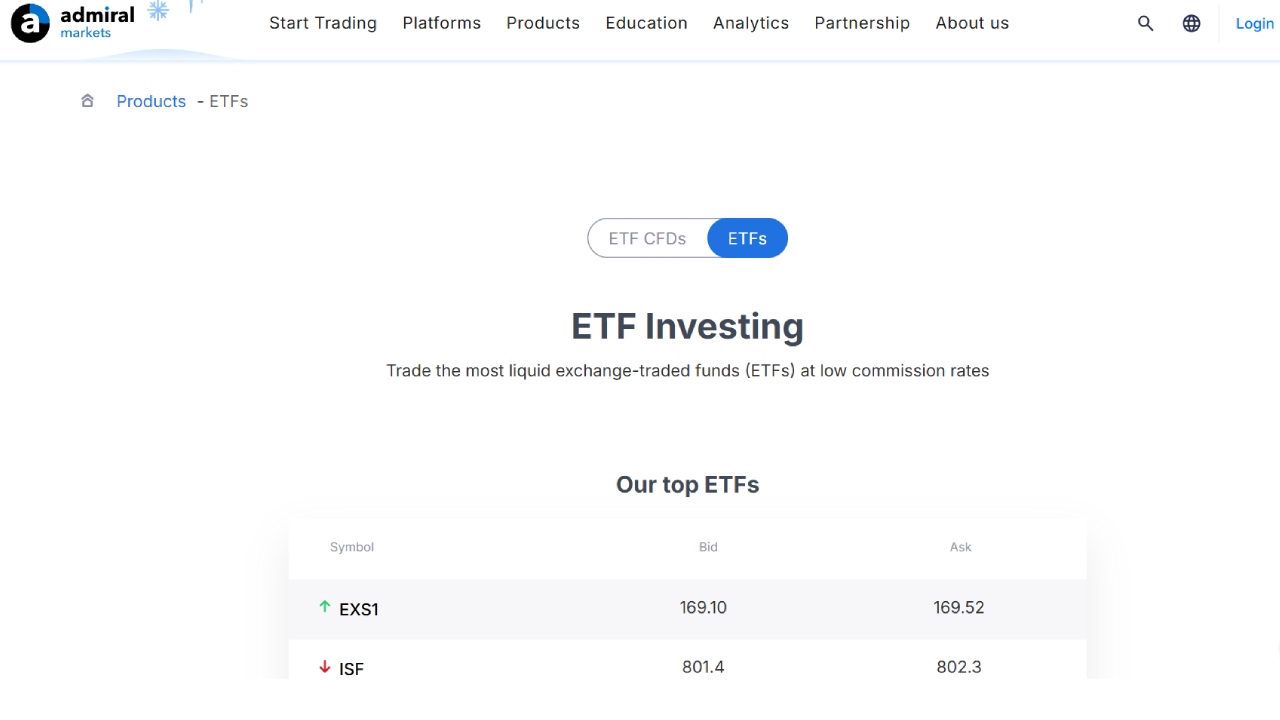
The platform is regulated by various agencies, including the FCA in the UK. One of the best things about Admiral Markets is its array of educational resources, including a glossary of financial terms, 46 articles alone on ETF trading, plus video tutorials.
Admiral Markets has been around for 13 years in the UK, so it is well-established. It also supports MetaTrader 4 and 5 platforms, complete with advanced charting, technical analysis tools, and automated trading options.
Some of the other advantages of trading ETFs on Admiral Markets is it charges only 0.1 % of trade value in commissions on ETF trades and has copy trading. The platform is known for dependable customer service through the phone, email or by live chat.
Some of the negatives for Admiral Markets is an inactivity fee of €10 that kicks in after 24 months of inactivity and a demo account that lasts only a month unless you sign up for a live account.
Read our review of Admiral Markets for more information about this broker’s services.
Pros
- No commission on ETF trades means lower expenses for traders and helps in the long run
- Demo and copy trading accounts with the demo account providing $10,000 in practice money for trading
- Good educational offerings from basic tutorials to more advanced strategies
Cons
- CFD trading is highlighted over trades in real ETFs
- Demo account for limited time period (30 days)
6. Trading 212: ETF broker with plenty of ETF options, trading features
- Number of ETFs: More than 1,800 regular ETFs, plus 28 ETFs available on CFD trading
- Min. deposit: Invest account £1, CFD account £10
The broker, which has more than 4.5 million users, is a user-friendly online trading platform that offers a wide range of investment products, including stocks, ETFs, and other financial instruments and requires only a minimum deposit of £1.
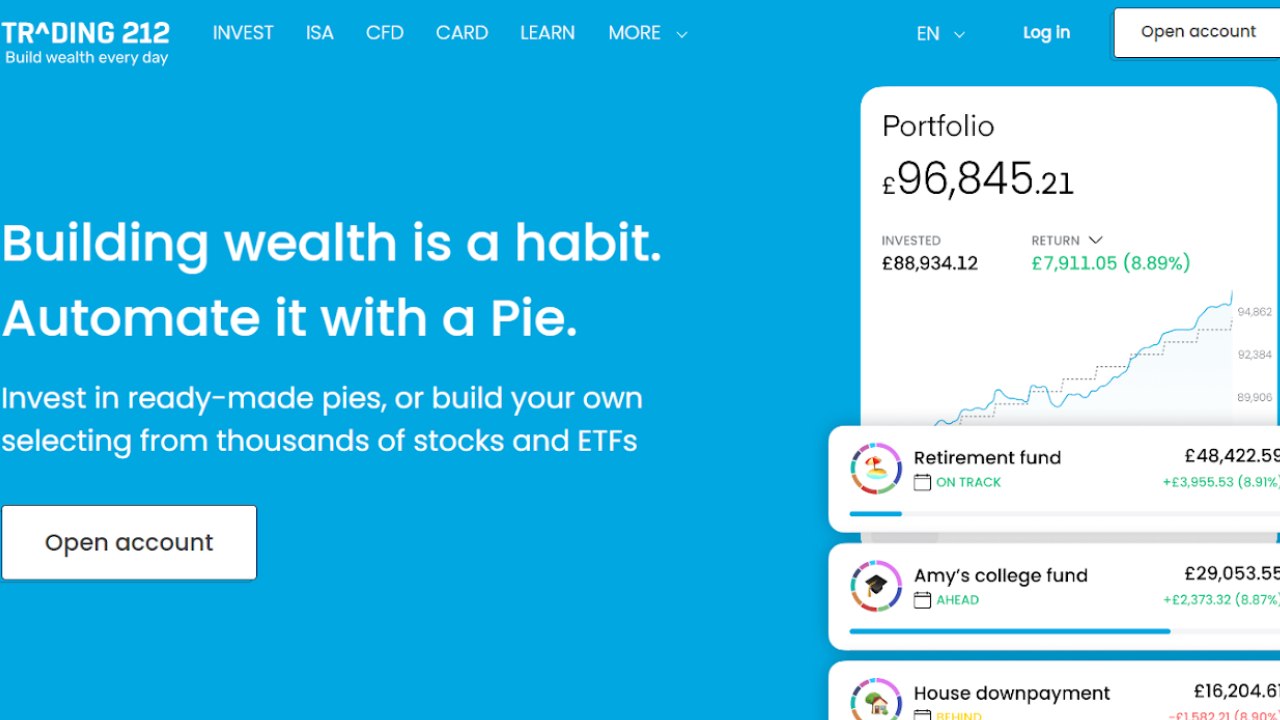
One of its unique features is the ability to earn interest on uninvested funds, which can be a valuable benefit for investors. In the UK, the interest rate is 4.35% AER.
Additionally, Trading 212 offers ready-made investment pies, which can be a convenient way to diversify a portfolio. It also has share lending, allowing you to earn interest on your portfolio by essentially lending out your shares.
The platform offers commission-free purchases of its more than 1,800 ETFs. However, if you buy a non-UK ETF, you’ll end up paying a 0.15% currency conversion fee.
It has an Invest Account for commission-free trading, but it also offers a CFD account. It also offers fractional trading, allowing investors to start investing for as little as £1 and there’s a feature it calls “AutoInvest,” where you can build a diversified portfolio and customise it to fit your needs.
Pros
- Share lending that gives investors a chance to earn funds on shares they already hold with little risk
- Auto-invest feature that can add up over time, making it easier to invest
- Good customer service with email and chat
Cons
- High currency conversion fee of 0.15%
- High forex fees compared to some brokers
7. AJ Bell: Diverse range of ETFs for buy-and-hold investors
- Number of ETFs: More than 3,000
- Min. deposit: None
AJ Bell is a well-established UK-based investment platform that offers ETFs alongside a wide range of other investment products, including shares, funds, investment trusts, bonds and gilts. However, it doesn’t offer forex trading, or CFD trading.
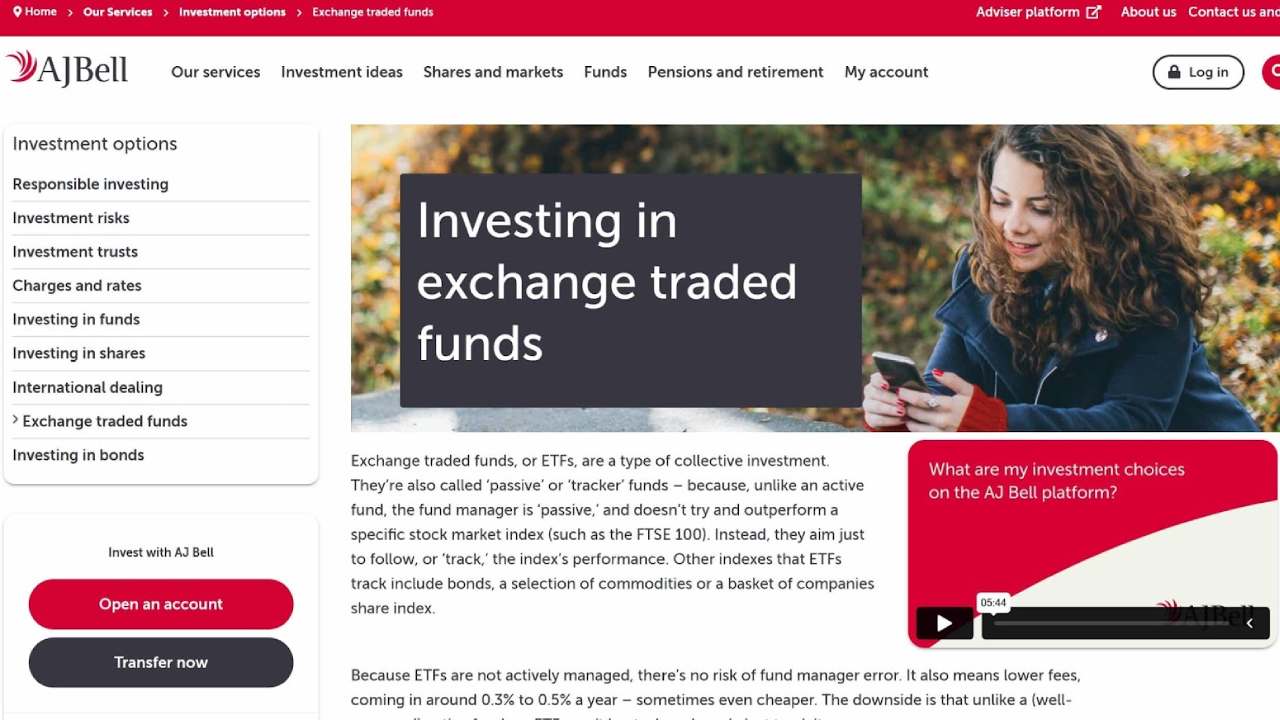
The platform is known for its user-friendly interface, competitive fees, and comprehensive research tools. AJ Bell offers access to a diverse range of ETFs from leading providers, making it a popular choice for investors looking to diversify their portfolios.
The biggest concern about AJ Bell is its fees. Its management fees are 0.25%, which can add up. On top of that its trading fees for shares and ETFs start at £5 a trade, though they drop down to £3.50 per trade if you had 10 or more trades in the prior month.
Its simplified Dodl account has lower management charges at $0.15, no commissions on trades and pays interest of 5.09% AER on uninvested funds in your account. However, its investment selections are more limited.
The platform puts an emphasis on ETFs, including a list of AJ Bell favourite funds and a screener that can be used to sort its ETFs, which is important because it offers more than 3,000 ETFs in the AJ Bell Dealing account.
Pros
- Good selection of ETFs that is better than many competitors
- Demo account with good educational resources
- ETF screener that makes it easier to compare fees, performance
Cons
- High per-trade fees, including £5 per ETF trade to start
- No forex, CFD trading, which makes it more like a traditional broker
8. Interactive Investor: ETF broker best for investors with larger portfolios
- Number of ETFs: More than 1,000
- Min. deposit: None
Interactive Investor is a UK-based investment platform that offers a wide range of investment products, including ETFs. The platform provides a variety of account options, including ISAs and SIPPs, and offers competitive fees. The platform is known for its user-friendly interface, competitive fees, and comprehensive research tools.
The broker offers access to a diverse range of ETFs from leading providers, making it a popular choice for investors looking to diversify their portfolios. It offers more than 40,000 investment options, including more than 1,000 ETFs. To simplify investing, it also provides a Super 60 investments list of its top ETFs and a Top 50 Fund Index.
Interactive doesn’t charge a monthly management fee that’s percentage based, but one with a flat fee, so that’s a good thing for investors with larger portfolios.
Its monthly charges begin at £4.99 with its Investor Essentials plan with US and UK trades costing £3.99. However, if your investments grow beyond £50,000, you will pay £11.99 a month in the Investor plan, which includes one free trade a month with additional trades costing £3.99.
Its Investor plan, at £19.99 a month, delivers four free trades a month with each trade beyond that costing £3.99. However, it has more than 150 commission-free ETFs.
Pros
- Intuitive interface that is simple to navigate
- Pays interest on uninvested funds
- Good research offerings, including a Super 60 list of its top ETFs
Cons
- High monthly fees that can add up for more active traders
- No demo trading account makes investing harder for new traders
These top UK ETF trading platforms compared
In the table below, we have compared the best UK ETF trading platforms by the costs of buying shares of the SPDR S&P 500 ETF Trust (SPY) by State Street Global Advisors, the world’s oldest and most popular ETF, which has more than $400 billion in investments.
| Broker | FCA regulated | Demo trading | Social trading | Minimum deposit | Commission for investing in SPY |
| eToro | Yes | Yes | Yes | Equivalent of $50 | None |
| XTB | Yes | Yes | Yes | None | None on monthly trading below £100,000 |
| FP Markets | No | Yes | Yes | Equivalent of AUD $100 | Commission of $0.02 per share,minimum of $2 per side |
| Pepperstone | Yes | Yes | Yes | None | Commission of $0.02 per share |
| Admirals Markets | Yes | Yes | Yes | Equivalent of $100 | No commission, but typical spread of 0.06% |
| Trading 212 | Yes | Yes | Yes | Invest account £1, CFD account £10 | None |
| AJ Bell | Yes | Yes | No | None | Between £3.50 and £5 per trade |
| Interactive Investor | Yes | No | Yes | None | £3.99 per trade, though it has more than 150 commission-free ETFs |
What is an ETF broker?
An ETF broker is a financial intermediary that allows you to buy and sell exchange-traded funds (ETFs). Just like a stockbroker, an ETF broker provides a platform where you can trade ETFs, research their performance, and manage your investments.
Think of an ETF broker as a bridge between you and the stock market, specifically for ETFs. An ETF broker facilitates the buying and selling process, often offering tools and resources to help you make informed investment decisions. Many UK MetaTrader 5 brokers include ETFs among the wide range of financial instruments they offer.
Choosing the right ETF broker requires careful consideration of several factors. Firstly, trading costs are paramount. While many brokers now offer commission-free trades on ETFs, it’s crucial to investigate other potential fees such as account maintenance, inactivity, order execution, and data fees.
Secondly, the quality of the trading platform and technology is essential. A user-friendly interface with features like real-time quotes, efficient order entry tools, robust charting and analysis capabilities, and a functional mobile app are highly desirable. Access to market research, news, and educational resources can also be valuable for informed decision-making.
Account features like available account types, fractional share trading options, margin trading capabilities (if applicable), and order routing mechanisms should also be considered. Furthermore, reliable customer service with readily available support via phone, email, or chat is crucial.
The broker’s ETF selection is also important. A wide range of ETFs from various issuers provides greater investment flexibility.
Finally, align your broker choice with your investment style. Active traders may need advanced order execution tools and real-time data, while long-term investors may prioritize a simple platform with low fees.
To learn how to invest in ETFs, check out our detailed guide on the topic.
What types of ETFs can you trade online?
The intersection of investor demand and rapid technological advancement has led to an explosion of exchange-traded funds (ETFs), with more than 8,000 options now available globally.
This increased accessibility has democratised investing, enabling traders worldwide to access ETFs in a diverse range of financial markets, sectors, and asset classes at lower costs.
Key Types of ETFs
Equity ETFs:
Equity ETFs invest in a basket of company stocks, or track the performance of a specific stock index. They are a great tool for portfolio diversification as they offer exposure to various sectors, such as technology, healthcare, and finance. You can select one for the stock market sectors you are most excited about.
An example is the Schwab US Dividend Equity ETF (SCHD), which tracks an index of dividend stocks known for the sustainability of their dividend payments.
Sustainable ETFs:
Sustainable ETFs invest along predetermined environmental, social, and governance (ESG) principles into companies that score well on ethical practices and respond to growing global concerns about climate change and social responsibility. You can select one that matches your own environmental or social conscience.
A well-known sustainable ETF is the iShares Global Clean Energy ETF (ICLN). It tracks the S&P Global Clean Energy Index, which includes companies involved in renewable energy, such as solar, wind, and hydro.
Sector and Industry ETFs:
These ETFs focus on specific industries or sectors, such as energy, healthcare, or technology. The advantage is that they allow investors to target particular market segments that fit in with their investment objectives, such as growth or generating.
An example is VanEck Crypto & Blockchain Innovators UCITS ETF (DAPP), which invests in publicly traded blockchain companies worldwide that drive the transformation of finance and other sectors. It’s one of the top performing ETFs this year.
Currency ETFs:
Currency ETFs invest in a particular currency, or a basket of currencies to provide exposure to foreign exchange markets for investors. They can be used to hedge against currency risk or speculate on currency movements.
An example is the Invesco DB US Dollar Index Bullish Fund (UUP). The ETF is designed for investors who want a cost effective and convenient way to track the value of the US dollar against a basket of the six major world currencies – the euro, Japanese yen, British pound, Canadian dollar, Swedish krona and Swiss franc.
Bond ETFs:
As the name suggests, these ETFs invest in fixed-income securities issued by governments and companies. They are sought by investors for diversification and income potential. Bond ETFs can be used to manage interest rate risk and inflation risk of investment portfolios.
An example is the Vanguard Short-Term Corporate Bond ETF (VCSH), which seeks to mimic the performance of a market-weighted corporate bond index with a short-term dollar-weighted average maturity.
Commodity ETFs:
These ETFs invest in commodities like gold, silver, oil, and agricultural products and are popular with investors as they offer inflation hedging. The managers often use futures contracts to gain exposure to the underlying commodity.
Perhaps the most famous one is the SPDR Gold Shares (GLD), the world’s largest gold ETF, which only holds gold bullions and cash.
Inverse ETFs:
Sometimes called short ETFs, these aim to deliver the opposite performance of the underlying index or asset. They are designed to profit when the market declines. Inverse ETFs are considered riskier than standard ETFs and may have greater fees. They are more suitable for short-term trading or hedging strategies.
To find ETFs to suit your investment goals, check out our guide to the top ETFs currently in the market.
What’s the difference between ETFs and mutual funds?
While both ETFs and mutual funds represent “baskets” of individual securities, for example stocks or bonds, there are a number of key differences between the two with respect to the following:
The way they are managed:
ETFs tend to be more passively managed, especially when they track the performance of a specific fund. This results in lower expense ratios. Mutual funds, on the other hand, generally involve more active management, with a portfolio manager or team of professionals selecting and adjusting holdings — an essential consideration for anyone investing £100 monthly.
Where they trade
ETFs are “exchange-traded” and can be bought or sold any time during the trading day at different prices, offering greater flexibility over managing your portfolio. Mutual fund trades are executed once a day, at a single price.
Where to buy them
Also, unlike mutual funds, it’s not possible to buy ETFs directly from the ETF provider, just like it’s not possible to buy shares directly from the companies they represent.
Minimum investment:
Because they trade like stocks, typically, ETFs don’t require a minimum initial investment. They are sold as whole shares. You can buy an ETF for the “market price,” the cost of a share or its multiple, depending on how many you are buying.
How to choose an ETF broker
When selecting an ETF broker in the UK or elsewhere, consider factors like commission and other trading costs, and the specific ETFs they offer. Some UK brokers with MT4 support allow direct ETF ownership, while others offer them as CFDs to trade. Sign up with one that aligns with your investment goals.
You may consider other factors, such as the quality of the trading platform and tools; customer service; and security and reliability.
Fees and costs: Look for platforms with low or no trading commissions, consider the expense ratio of the ETFs offered and be aware of any additional fees, such as account maintenance fees or inactivity fees.
ETF selection: The best platforms offer a wide number and a variety of ETFs, covering different asset classes, regions, and investment strategies.
Trading platform and tools: The platform should be easy to navigate, with clear and intuitive tools as well as providing access to reliable research and analysis tools that can help you make informed investment decisions.
Customer service: The platform should provide timely and helpful customer service, with easy access to customer support through various channels, such as phone, email and chat.
Security and reliability: ETF platforms should have strong encryption and two-factor authentication and should be regulated by the FCA.
Selecting brokers specifically for trading other instruments, for instance CFD brokers, futures brokers, or forex brokers in the UK, would involve a similar process.
ETF trading fees
While ETFs are typically more cost-efficient than mutual fund investing or buying individual stocks, there are a number of different costs involved that investors need to be aware of because these will eat into their returns. For those looking to minimise trading costs, considering UK low spread brokers can be a smart move.
Expense ratio:
Otherwise known as the operating expense ratio (OER), this is the fee incurred while holding the ETF. This is the annual fee charged by the fund company to cover operating costs like management, administrative, custodial, distribution and marketing expenses.
It’s expressed as a percentage of the ETF’s assets under management (AUM). The lowest expense ratios are below 0.10%, however, fees topping 10% are not unheard of. Lower expense ratios generally result in higher long-term returns.
Brokerage fee (Commission):
Other fees are associated with trading the ETFs. Brokerage fees are incurred when buying or selling ETFs through a brokerage firm. While these days many brokers offer commission-free trading on certain ETFs, others charge a fee for each trade. Commissions vary greatly, between 0% and 20%, depending on the trading platform.
Bid-ask spread:
This is the difference between the highest price a buyer is willing to pay (bid price) and the lowest price a seller is willing to accept (ask price). This cost is typically between 0.1% and 0.25%. and it occurs during a purchase or sale transaction. This is how market makers are compensated. A wider spread can drive up the overall cost of buying or selling an ETF.
Implicit costs:
There are less obvious costs that are charged to the fund and impact the ETF’s overall performance. These include transaction costs incurred by the fund manager when adjusting the composition of the ETF, for instance, to better replicate the performance of the benchmark. The frequency of changes made to the portfolio is expressed as a ratio called portfolio turnover and it’s reported by the issuer of the ETF.
How to start trading ETFs in the UK: A 5-step guide
If you decide to get in on the trend and start investing in ETFs, follow the steps we’ve outlined below. We’re using eToro as an example to walk you through the process.
Step 1: Open an account
Before you invest in ETFs, you’ll need to choose a broker that offers ETFs, such as eToro.
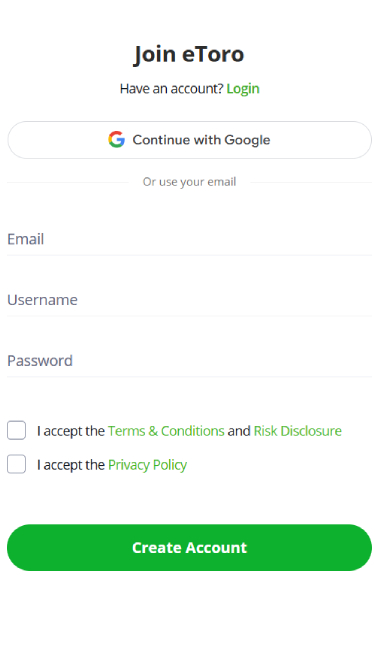
To open an account with eToro, you’ll need to provide some personal information, such as a phone number and email address, and verify your identity. To do this, upload a passport or driver’s license, plus a proof of address (e.g.: a recent utility bill or bank statement).
Step 2: Fund your account
Make a first deposit of $50 after opening your account. This is the minimum amount that you’ll need to start.
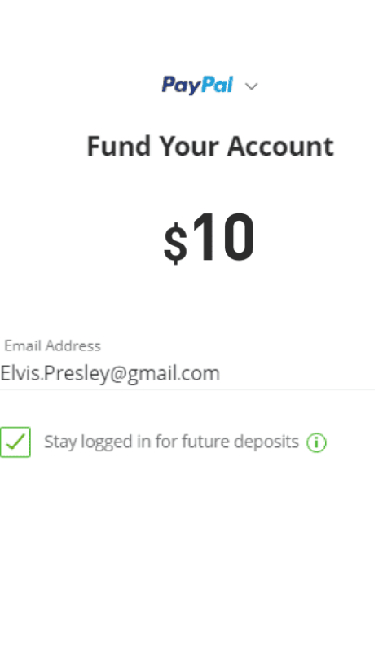
Payment options include debit/credit cards, wire transfer, and e-wallets, including Skrill, PayPal, and Neteller.
Step 3: Search ETFs for your needs
Once your account is funded, you can start researching ETFs. First and foremost, consider your investment goals, risk tolerance, the ETF’s expense ratio and its underlying assets.
Educate yourself about how to choose a suitable ETF. eToro, for instance, offers you explainers and informational articles about ETFs and the investment process.
Some brokers offer ETF screener tools to help you find suitable options. Here’s eToro’s:
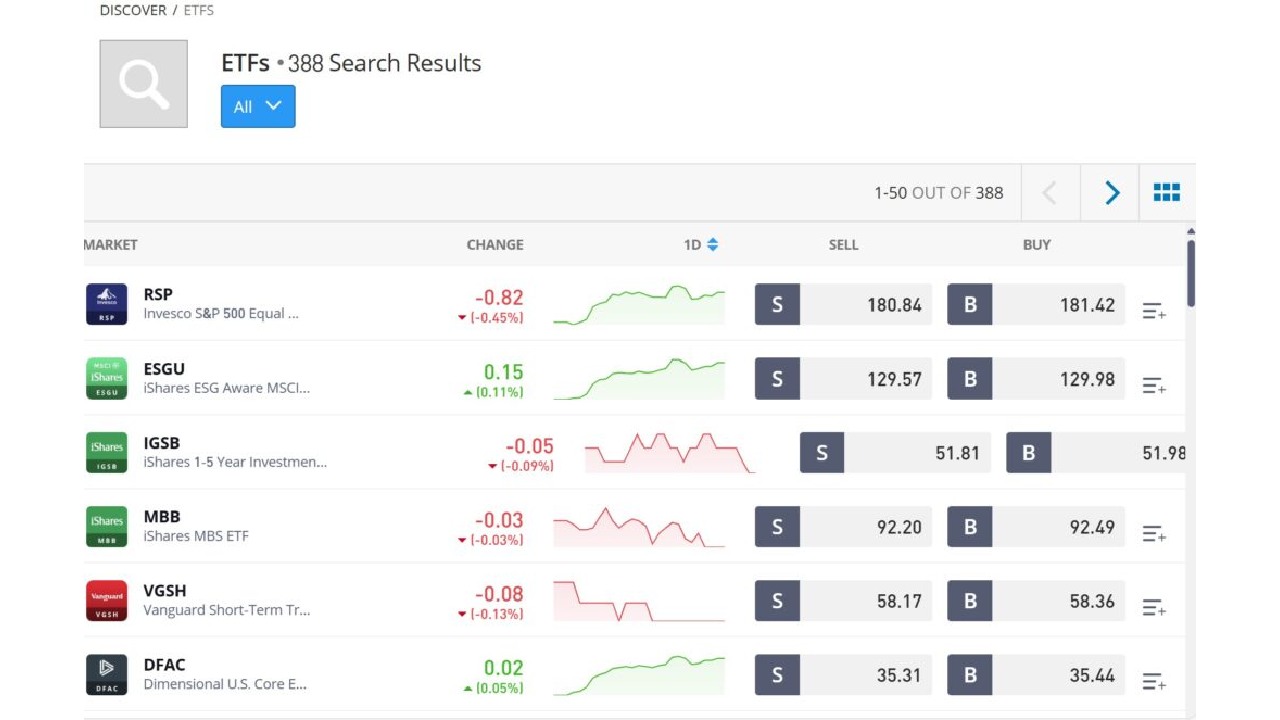
When selecting ETFs, consider factors like diversification, social and environmental impact, dividend policy, and potential tax implications.
Step 4: Purchase your ETFs
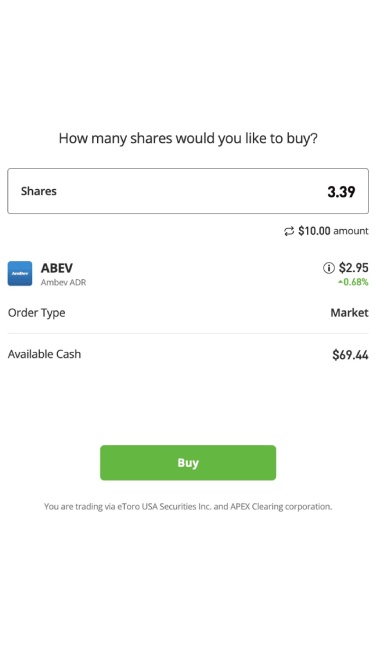
Once you’ve picked your ETF, select it for buying and enter the amount of money you’d like to invest in it. Remember that you can invest in ETFs outright and trade ETF CFDs with many brokers, including eToro.
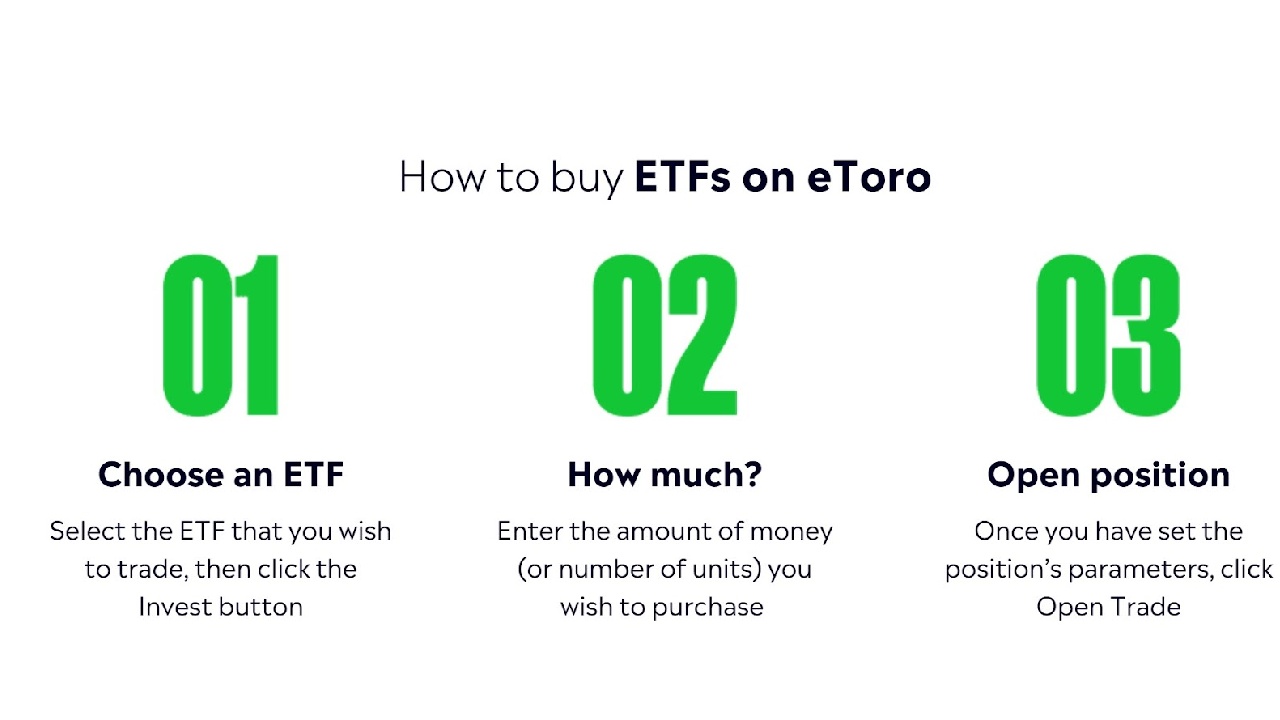
When placing orders, you can choose between market orders, limit orders, and stop orders. Market orders execute at the best available price, limit orders set a maximum purchase price, and stop orders trigger a sale if the price reaches a certain level.
With eToro, you can invest in a fractional share of any ETF for as little as $10. Once you’ve entered the amount, click “Buy.”
Step 5: Monitor and rebalance
After investing, regularly monitor your ETF performance, rebalance your portfolio as needed. Make sure you stay informed about tax implications, costs, and, last but not least, market conditions.

How We Rate Brokers
We manually review the brokers on our list. Below are the key metrics we check before listing online brokers on the website. For further details, you can also take a look at our online brokers rating guide, featured on ValueWalk.