


Investment apps have made investing easier, more accessible and affordable for those in the UK and elsewhere. This has led to a surge in interest in investing, particularly among younger generations.
The key benefit of the apps is that they enable you to manage your investments from anywhere, from a phone or laptop, instead of having to call a broker or visit a broker’s office. The apps generally have lower fees than traditional brokers and sometimes include commission-free trades, while using intuitive features to make investing straightforward.
The best investment apps in the UK, 12 of which we have reviewed here, are helping stimulate more investment, either through better educational offerings or with robo-advisor services that can automatically invest your money based on your risk tolerance.
Best Investment Apps in the UK
- Ideal for beginner investors
- Copy trade successful investors
- Stocks, ETFs, Crypto, Forex, Indices, Commodities

The 12 top UK investment apps ranked
Here’s an overview of the top investment apps in the UK in our assessment, based on multiple factors:
- eToro: The Israel-based multi-asset investment app features thousands of stocks and ETFs, smart portfolios for a less hands-on investment style. It’s known for a strong social aspect, including copy trading.
- Revolut: The London-based neobank and financial technology firm began as an app-only overseas payments service, but now it’s involved with investing and has more than 50 million customers worldwide.
- XTB: The platform is based in Warsaw, Poland, and has been around since 2002. It has more than 500,000 customers and offers nearly 11,000 investment options, including ETFs and more than 6,600 stocks.
- FP Markets: Sydney-based FP Markets has been providing online trading services since 2005. The platform offers contracts for difference (CFDs) trading on stocks, forex, commodities, crypto and indices.
- Saxo: Founded in 1992, the Danish company offers three different trading platforms from the simplified SaxoInvestor, to SaxoTraderGo and SaxoTraderPro. It provides access to more than 50 international markets.
- Interactive Investor: The Leeds, England-based app offers 40,000 investments, individual savings accounts (ISAs) and Self-Invested Personal Pensions (SIPPs). Its flat platform fee is attractive to larger investors.
- Trading 212: The London-based platform focuses on inexpensive investing with more than 13,000 global stocks and ETFs offered. Its app has more than 15 million downloads and includes robo-investing options.
- AJ Bell: Founded in 1995, the Manchester, England-based platform is one of the largest in the UK. It’s also a FTSE 250 company working in the advised and direct-to-consumer (D2C) market segments.
- Moneybox: Founded in 2015, the London-based savings and investment app has a roundup feature. If you spend £2.85 on coffee, the app will round up the purchase to £3, putting the extra 15p into the stock market.
- IG: The platform, based in London, was founded in 1974 and has more than 300,000 clients and offers 19,000 instruments. It’s listed on the London Stock Exchange and is part of the mid-cap FTSE 250 index.
- Freetrade: Founded in 2016 in London and bought this April by IG, the low-cost investment and trading app has more than 1.4 million users. Its pricing plans include no markup on the spread or commission fees.
- Wealthify: The Wales-based robo-advisor platform is owned by Aviva, one of the UK’s largest financial firms. Its ready-made investments connect customers to portfolios that best align with their risk appetites.
Your capital is at risk. Other fees apply.
- Show Full Guide
An in-depth look at the best investment apps UK
Take a more detailed look at why we picked each of the best investment apps in the UK, along with their pros and cons. Explore whether they are suited for your investment priorities:
1. eToro: Best investment app for social trading
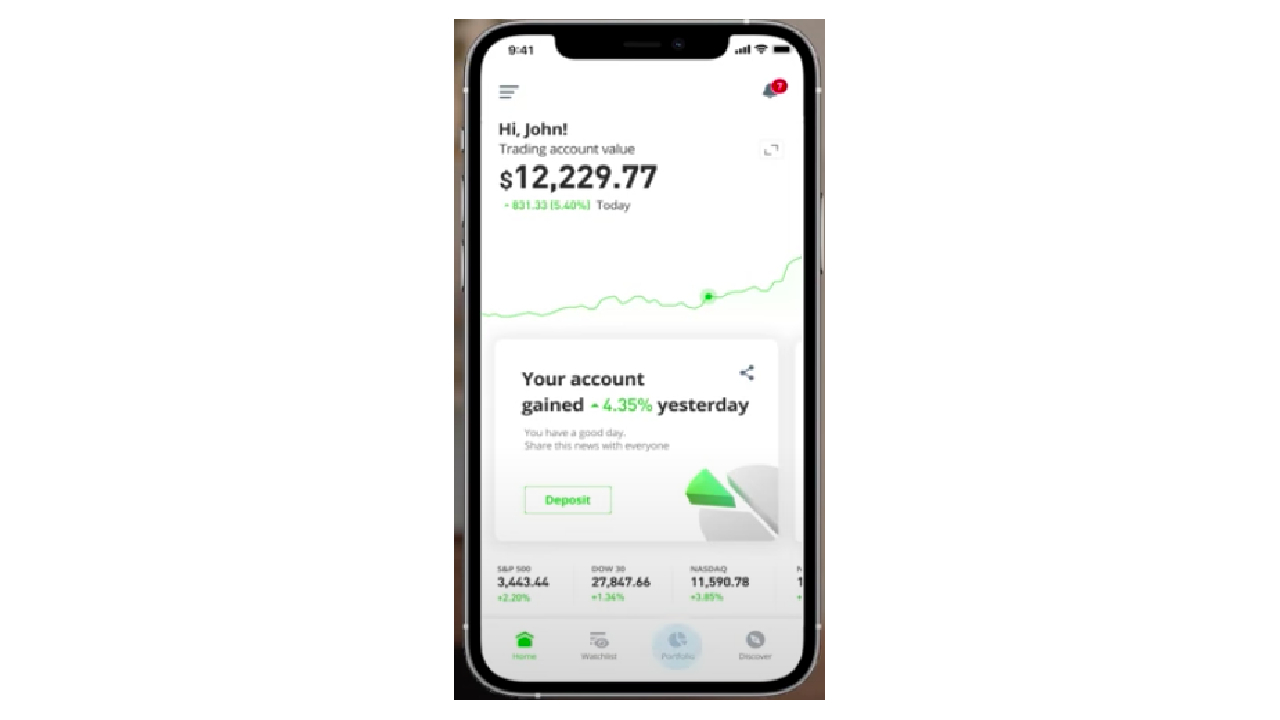
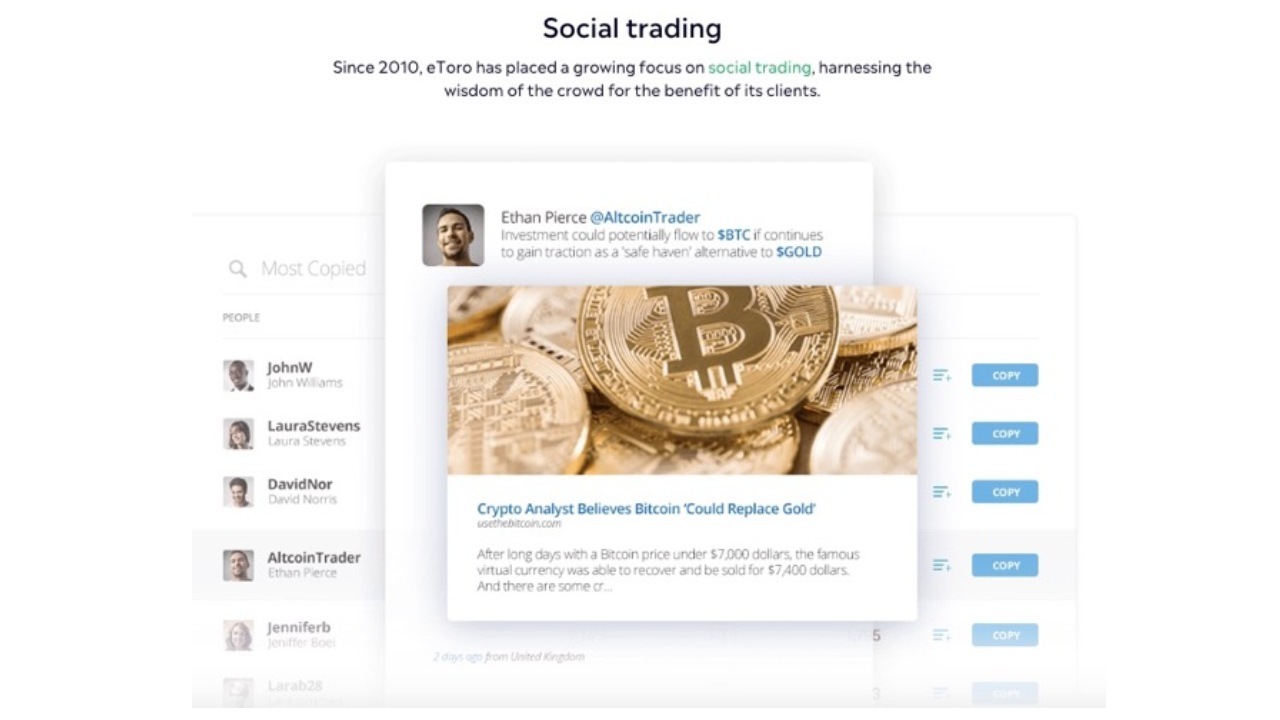
eToro has a user-friendly app, designed with social trading in mind. Users can connect with other investors and traders, exchange ideas, and share experiences, which speeds up the learning process.
It’s a good app for beginner investors because of the depth of its educational content, including beginner videos, news articles, and a demo account with a virtual $100,000 to practise trading with.
One of eToro’s most popular features is the ability to copy the trades of successful investors, which is another form of social trading.
The app offers a wide range of assets to invest in, including more than 3,000 stocks, as well as a range of ETFs. UK investors need to first deposit $50, and the minimum deposit that applies after that drops to $10.
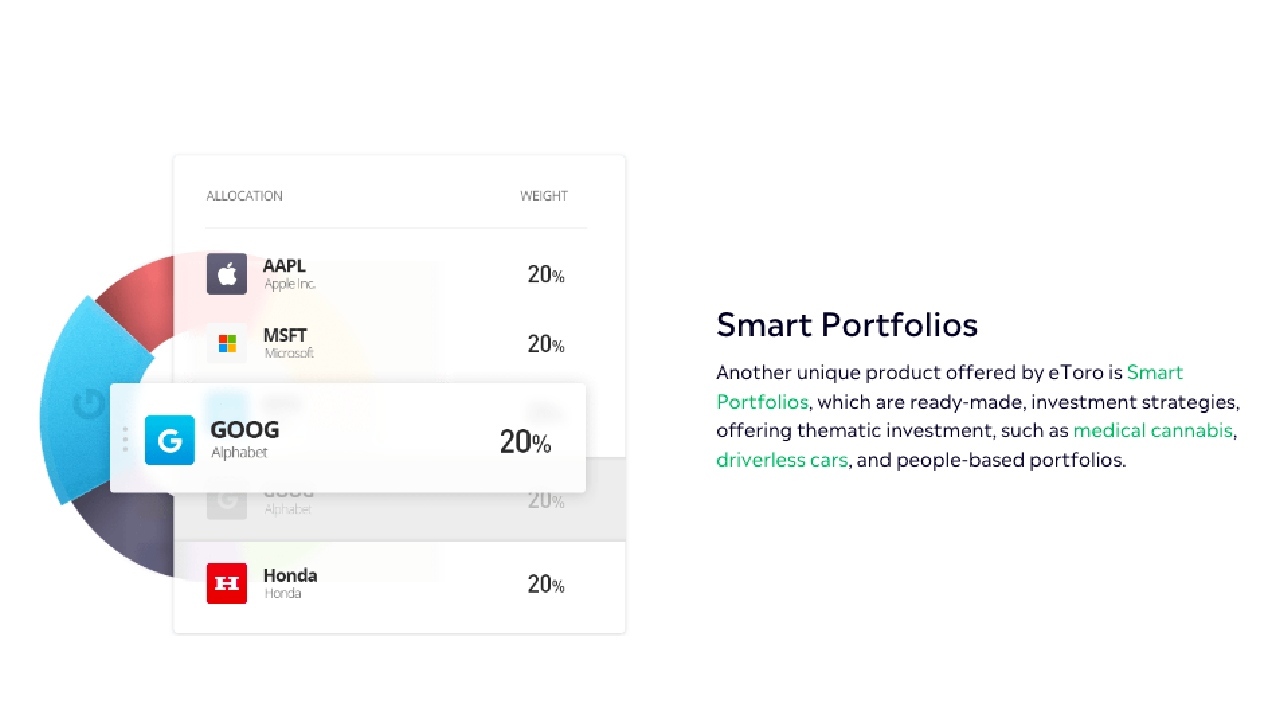
As eToro operates in US dollars, there will be a small currency conversion charge for UK-based investors. The initial deposit for smart portfolios, compiled by eToro analysts, is $500.
eToro’s ETF and stock selection, though, is more limited than that of other apps. eToro has other features, including the ability to buy fractional shares, invest in crypto and CFDs. The fast-growing app has more than 35.5 million users and $9.5 billion in assets under management (AUM.)
Find out more from our comprehensive eToro review.
Pros
- Ability to do copy trades of successful investors
- $100,000 virtual account for practice trading
- More than 30 cryptocurrencies available to trade
Cons
- Limited customer service
- CFDs are high-risk investments
- High charges on the spread and a $5 withdrawal fee
Your capital is at risk. Other fees apply.
2. Revolut: Good app for inexperienced investors
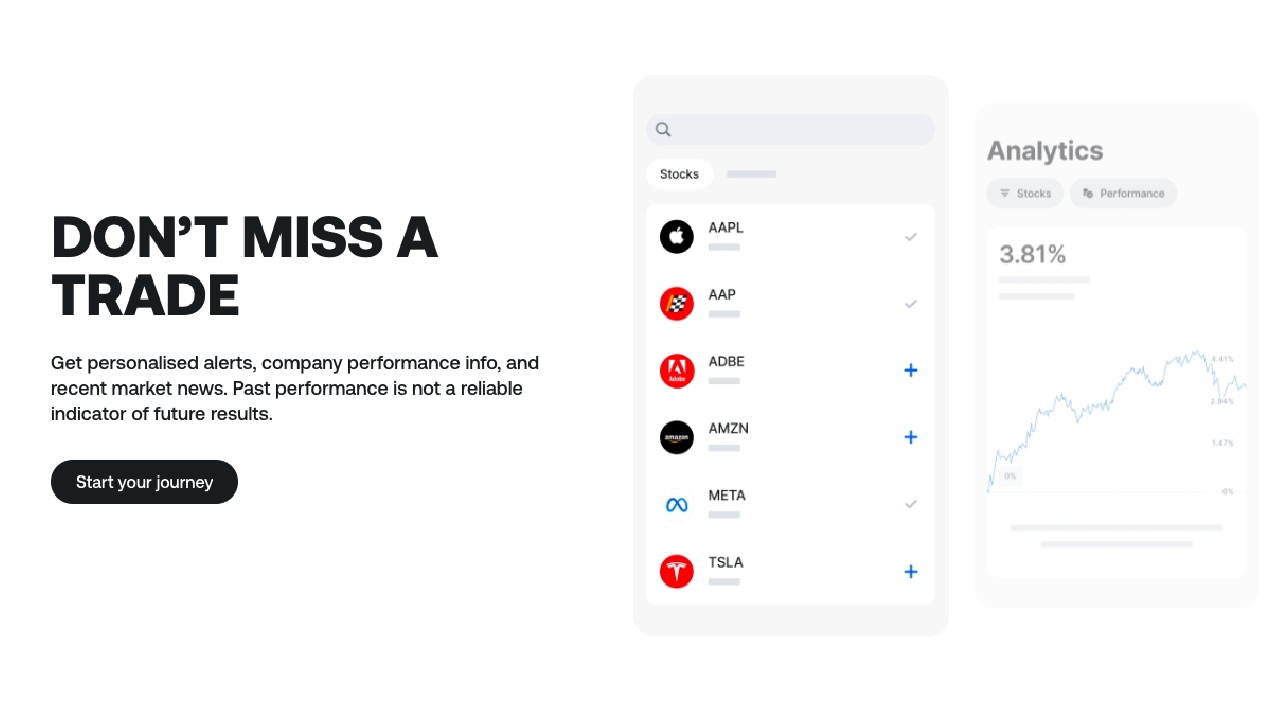
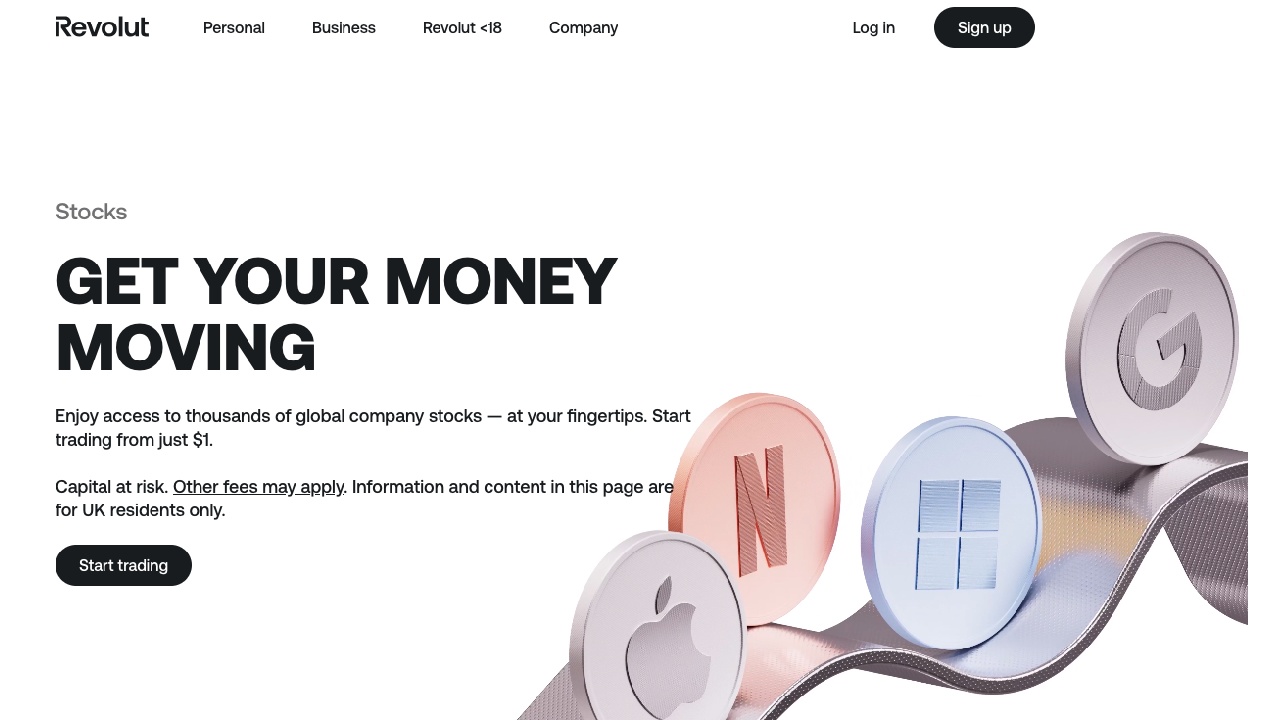
Revolut has more than 50 million users and in 2024, launched a separate platform, Revolut X, exclusively for crypto trading that includes more than 100 tokens.
Its app is intuitive and also enables investors to trade in fractional shares, which makes it popular with investors that are just starting out.
The company allows trading in stocks, cryptocurrencies, and commodities and about 30 ETFs. However, compared to some other apps, its investment options are limited, with no CFDs or commodities or forex.
Its fees are relatively low for beginning investors, and it has a number of plans, from standard to ultra to choose from, depending on an investor’s priorities.
Read our review of this digital banking and investment app, for more information on its features, services and fees.
Pros
- Ability to do trade in fractional shares
- Intuitive app is easy to use
- Low costs on trades
Cons
- Limited customer service
- No mutual funds, bonds or options
- Limited educational resources
3. XTB: Solid app for experienced, active investors
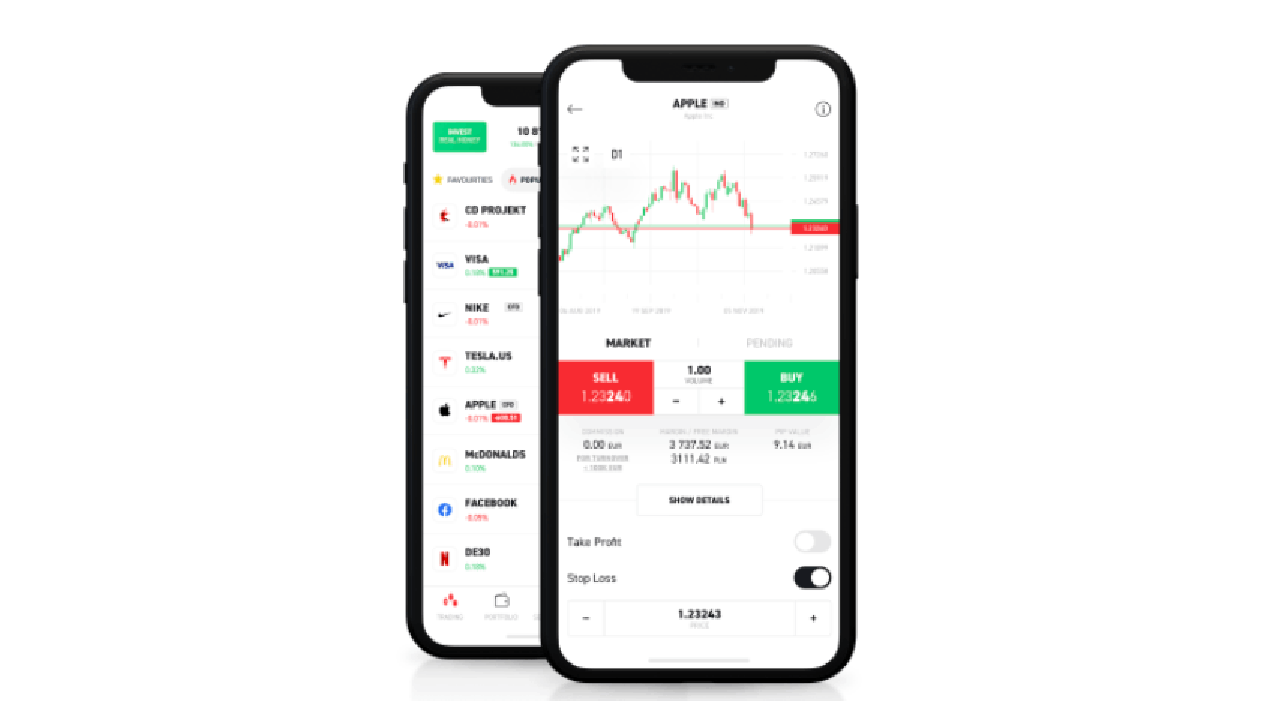
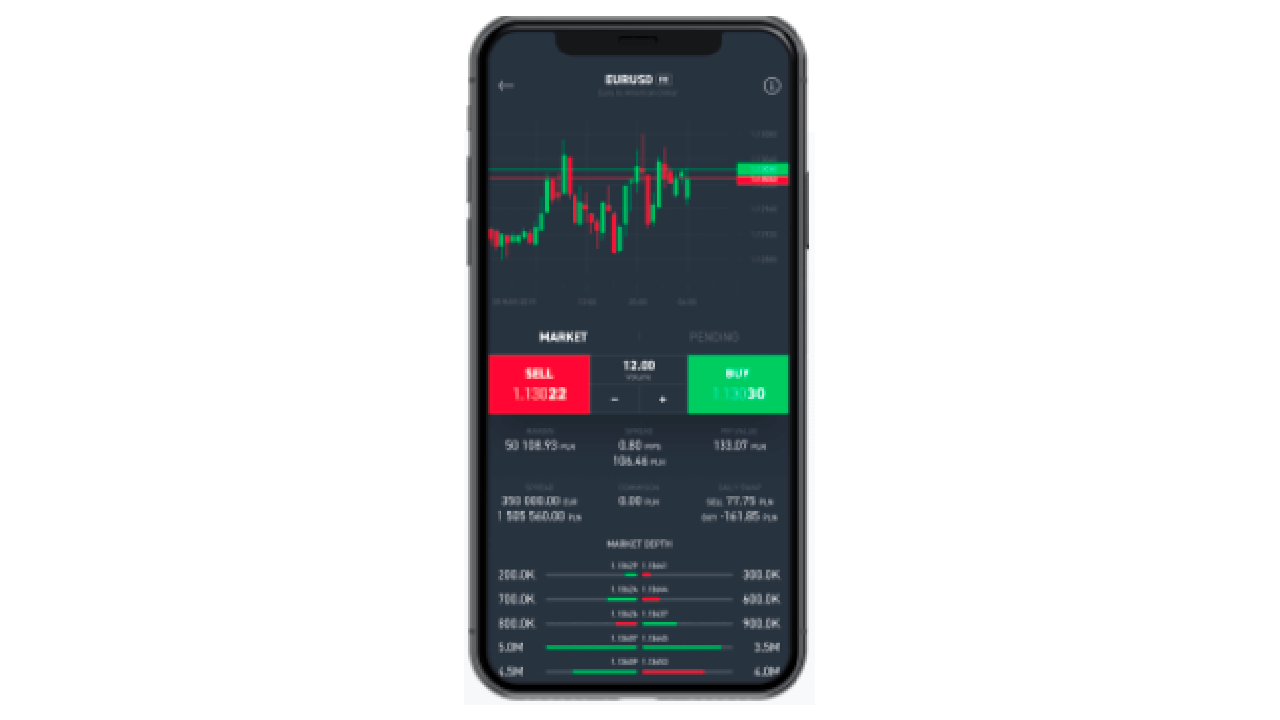
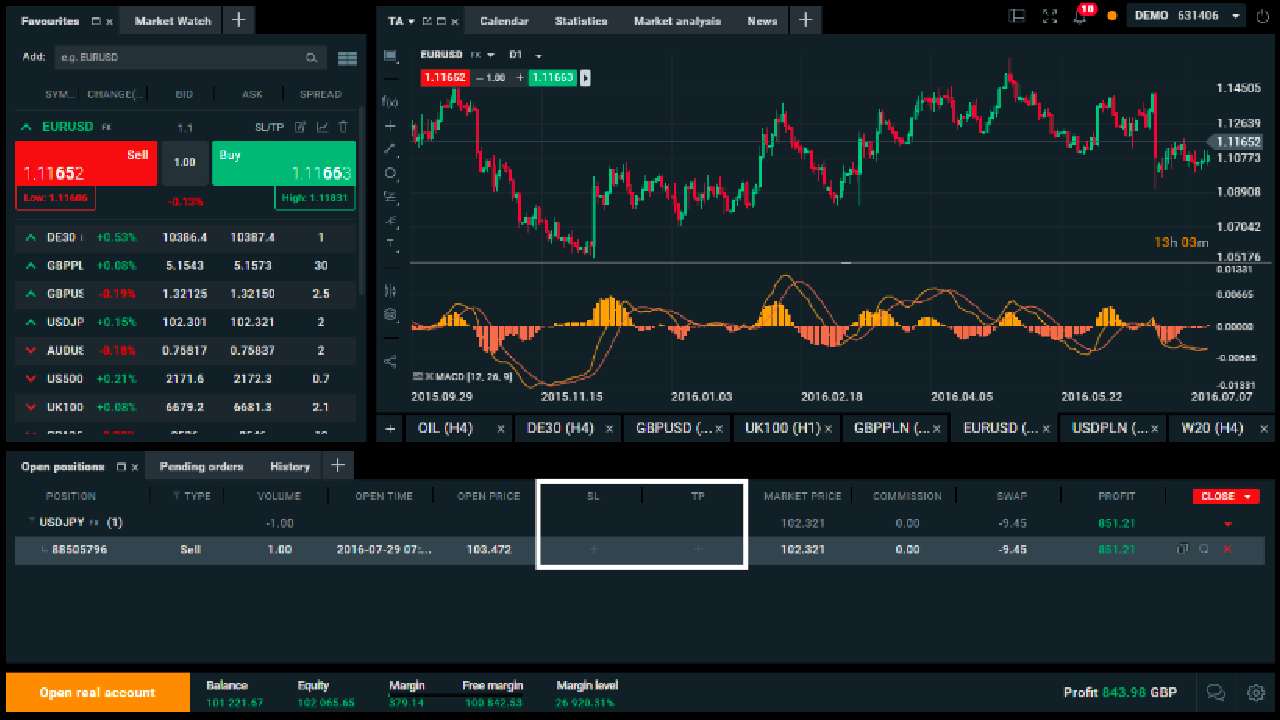
XTB is a hybrid platform that can appeal both to beginners and more experienced investors. Its easy-to-use platform and commission-free trading appeals to both types of investors. It also allows trading in stocks, ETFs, commodities, forex and cryptocurrencies through CFDs.
It also has good customer support and educational resources to appeal to inexperienced investors. Much of its focus, though, is on CFDs, which are risky for beginners. One plus is it allows fractional trading.
It also isn’t a good set-it and forget-it investor as there’s a £10 monthly inactivity fee if there’s no trading for 12 months and no cash deposits within the previous 90 days.
There is no inactivity fee for ISAs, however. Investors who aren’t as active also pay more fees when they do trade.
Our XTB review has more information on the app’s features, pros and cons.
Pros
- Low fee trading
- Good customer support
- Platform is easy to use
Cons
- Not as good for investors who don’t trade frequently
- Limited product range
Disclosure: 75% of retail investor accounts lose money when trading CFDs with this provider.
4. FP Markets: Popular investment app for low-cost trading
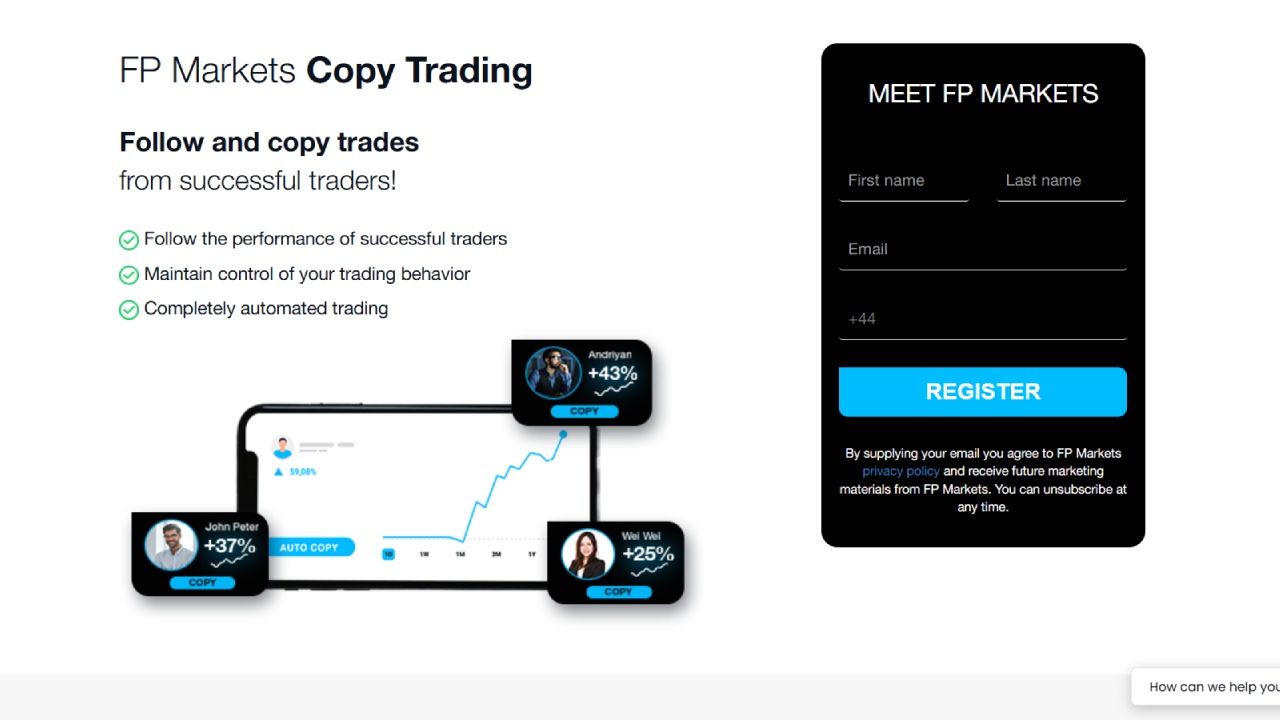

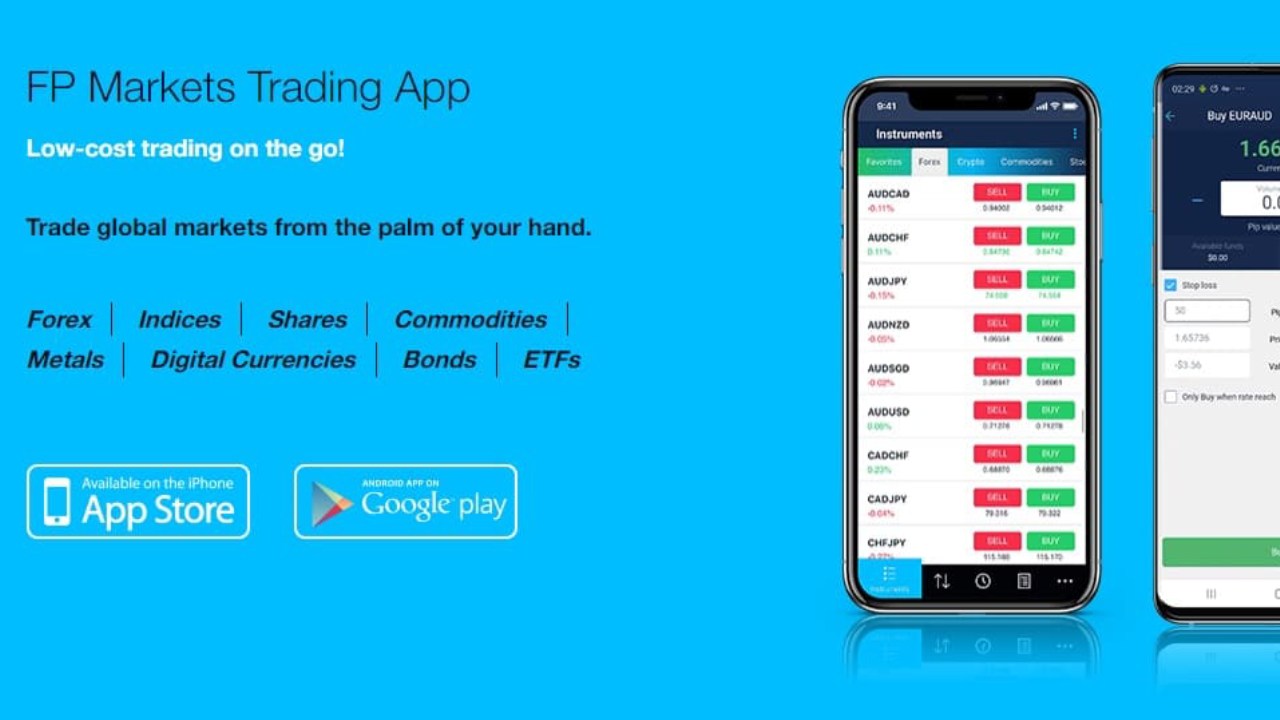
FP Markets is a well-established broker with more than 20 years of experience, offering a top-tier mobile trading experience through its MT5 mobile trader app.
Designed for both beginner and advanced investors, this app provides access to more than 10,000 financial instruments, including CFD trading for forex, futures, crypto, commodities, indices, and shares.
One of the key advantages of the MT5 mobile trader app is its compatibility with both Standard and Raw ECN accounts, allowing traders to select an account type that best suits their investment style. Notably, the Raw ECN account offers ultra-low spreads starting from 0.0 pips.
The FP Markets investment app stands out due to its robust trading features, including real-time market news, an economic calendar, technical indicators, and advanced charting tools. Investors can execute trades with precision, using features like auto open and close positions to better manage their risk and automate their strategies.
The app also ensures seamless account management, allowing deposits and withdrawals via multiple payment options such as PayPal, Skrill, Neteller, and bank transfers, all with no deposit fees.
With an intuitive interface, deep liquidity, and reliable execution speeds, the MT5 Mobile Trader app by FP Markets is a top choice for UK investors.
To learn more about the offerings of this app, see our FP Markets review.
Pros
- Ultra-low spreads as low as 0.0 pips on Raw accounts
- Access auto open/close positions and technical indicators
- No deposit fees with multiple funding options
Cons
- Commission applies on Raw ECN accounts
- Only CFD trading is supported
- IRESS platform has monthly fees unless minimum trade volume is met
5. Saxo Bank: Best investment app for wide choice of accounts
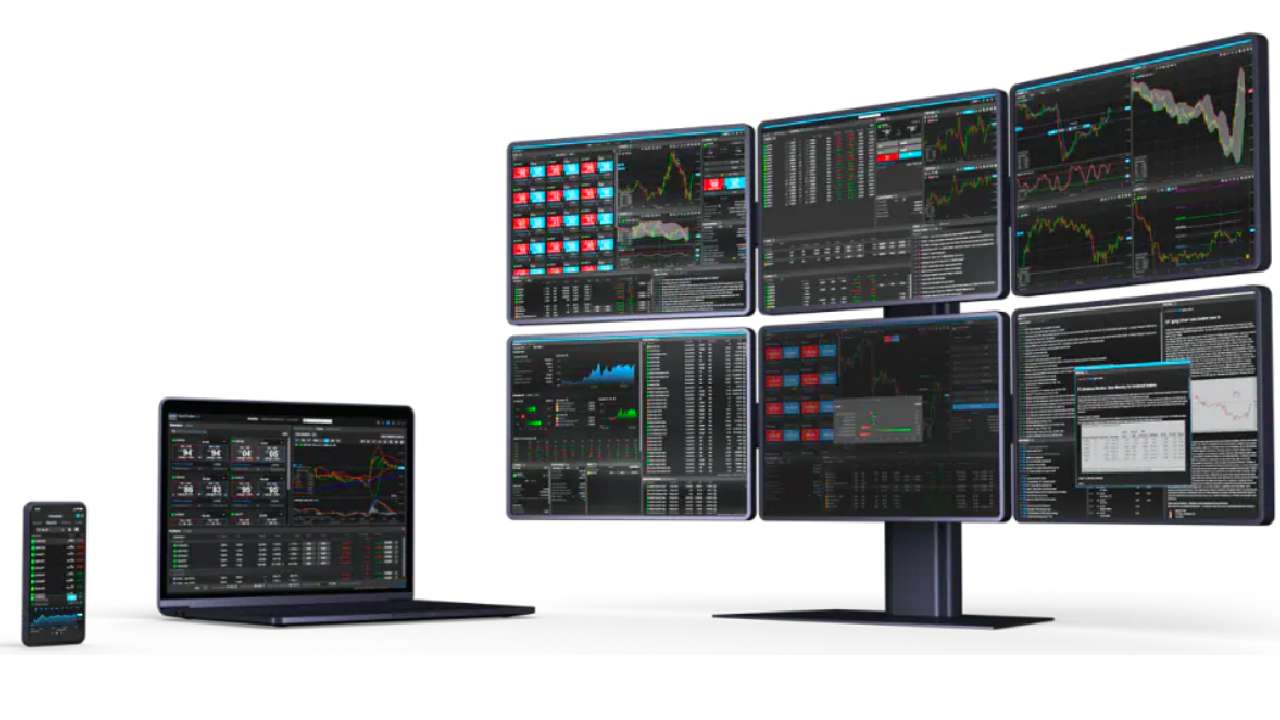
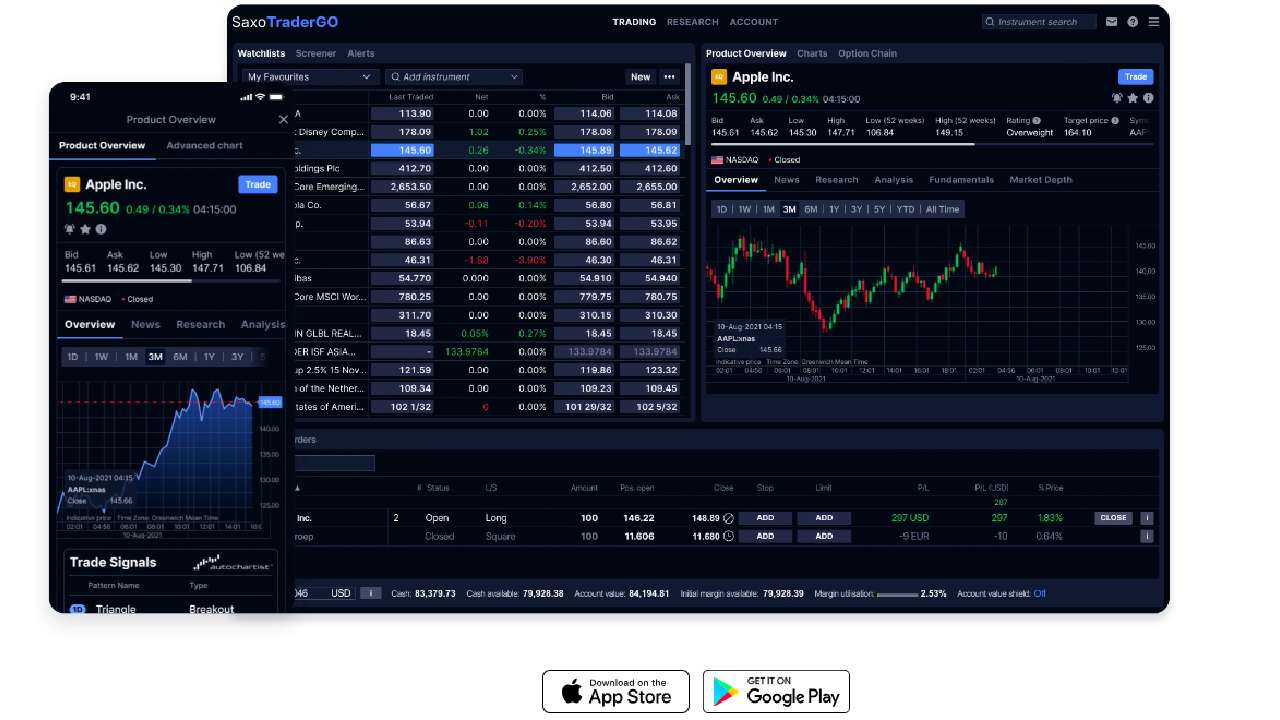
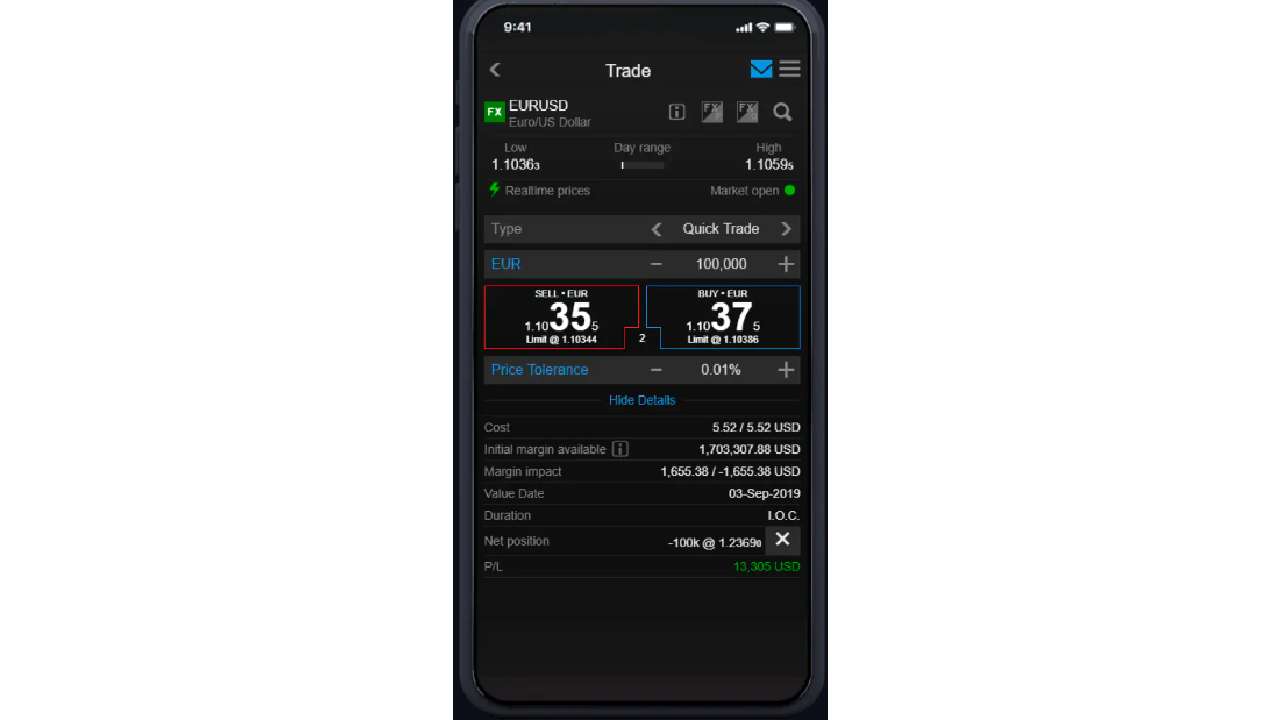
We selected Saxo as the best investment app for its versatile account range that are each tailored to the needs of investors at varying levels of expertise. The Danish company is one of the pioneers in online trading platforms, having launched its investment offering in 1998.
The investment firm, which provides more than 71,000 investment options, including more than 23,000 stocks, has grown to more than 1.2 million customers and has more than €100 billion in assets under management (AUM).
Some of the positive aspects of the app is its scope, with options to trade on more than 50 international markets, allowing trades in stocks, options, mutual funds, bonds, ETFs, commodities, crypto, and forex.
It isn’t the least expensive app in terms of fees, but it’s structured in a way that the more you trade, the less you pay per trade, making it a good choice for more active investors.
Saxo offers three different types of accounts, ranging from the beginner-friendly SaxoInvestor, to the higher level SaxoTraderGo and SaxoTraderPro accounts.
On the negative side, despite its connection to a bank, it doesn’t offer a savings account as part of the investment app and you can’t buy fractional shares yet on the app. It only allows fractional trading crypto pairs and all CFD Indices
Pros
- Plenty of investment options
- Good app for active traders
- Three different account types
Cons
- No trading in fractional shares
- No savings account offering
- Relatively high charges on transactions
6. Interactive Investor: Top investment app for transparency
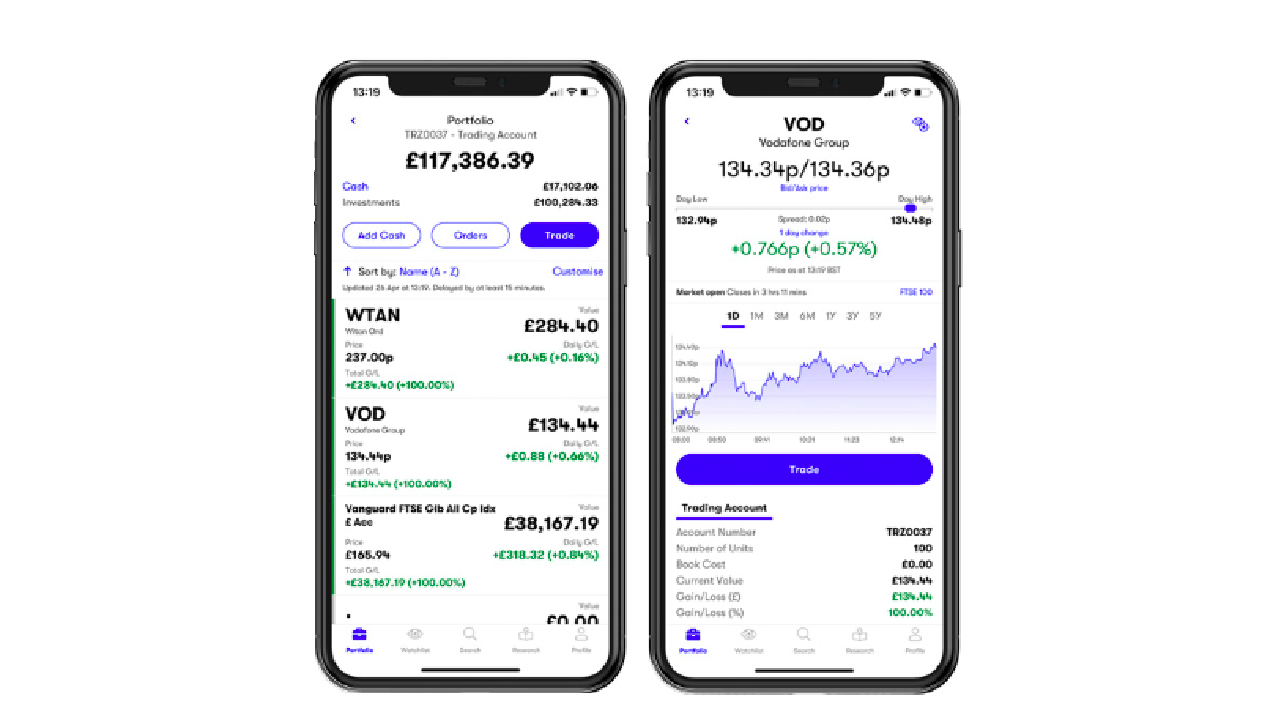

Interactive Investor’s flat fees make it popular with more active investors for the transparency of its pricing. We also liked that it offers more than 40,000 investment options, including more than 3,000 funds and more than 1,000 exchange-traded funds (ETFs), as well as model investment portfolios.
It does not allow trading in fractional shares, or cryptocurrency or foreign exchange, though.
One of the platform’s best features is it pays interest on uninvested cash balances on trading accounts, individual savings accounts (ISAs) and self-invested personal pensions (SIPPs). It also has a consistently updated education and news section to help investors.
While there are few unpleasant fee surprises, paying £4.99 per trade is more expensive than many other apps, though Interactive’s Investor and Super Investor plans give one and two free trades each month, respectively.
Pros
- It pays interest on account balances
- Solid educational and news resources
- Plenty of investment options
Cons
- High cost per trade
- No fractional share trading
- No crypto options
7. Trading 212: Best interest rates for uninvested cash balances
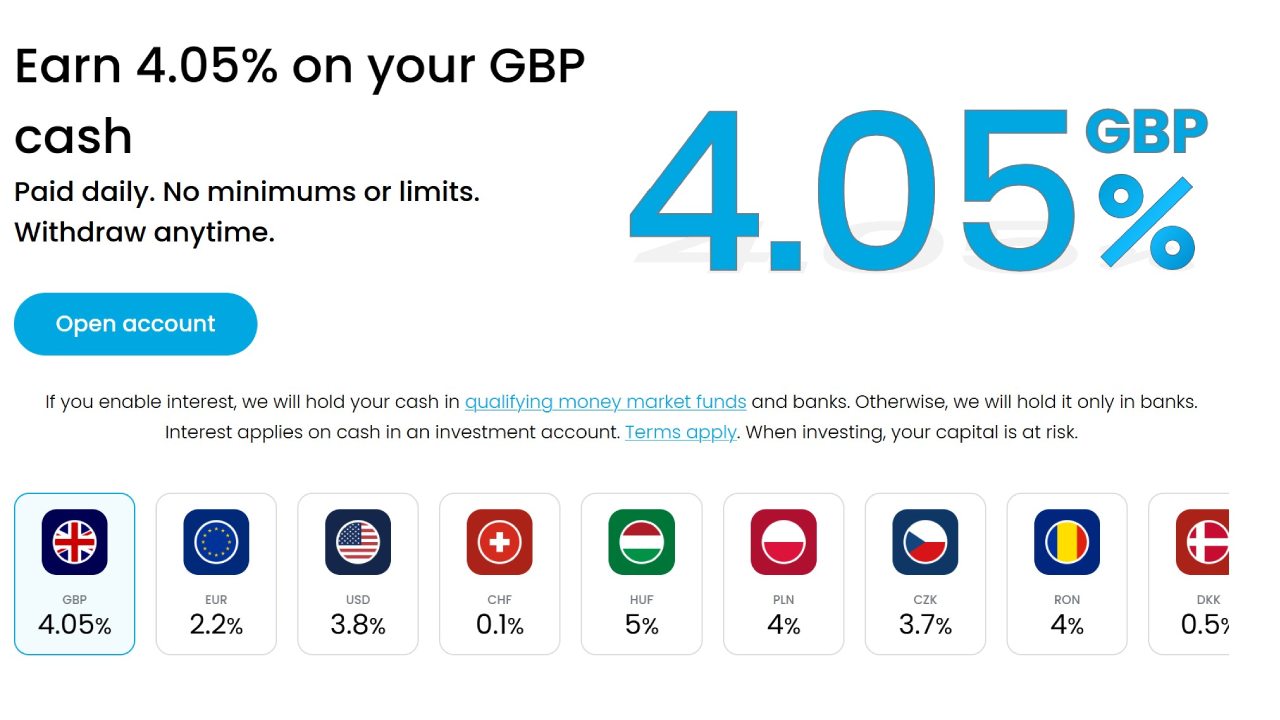
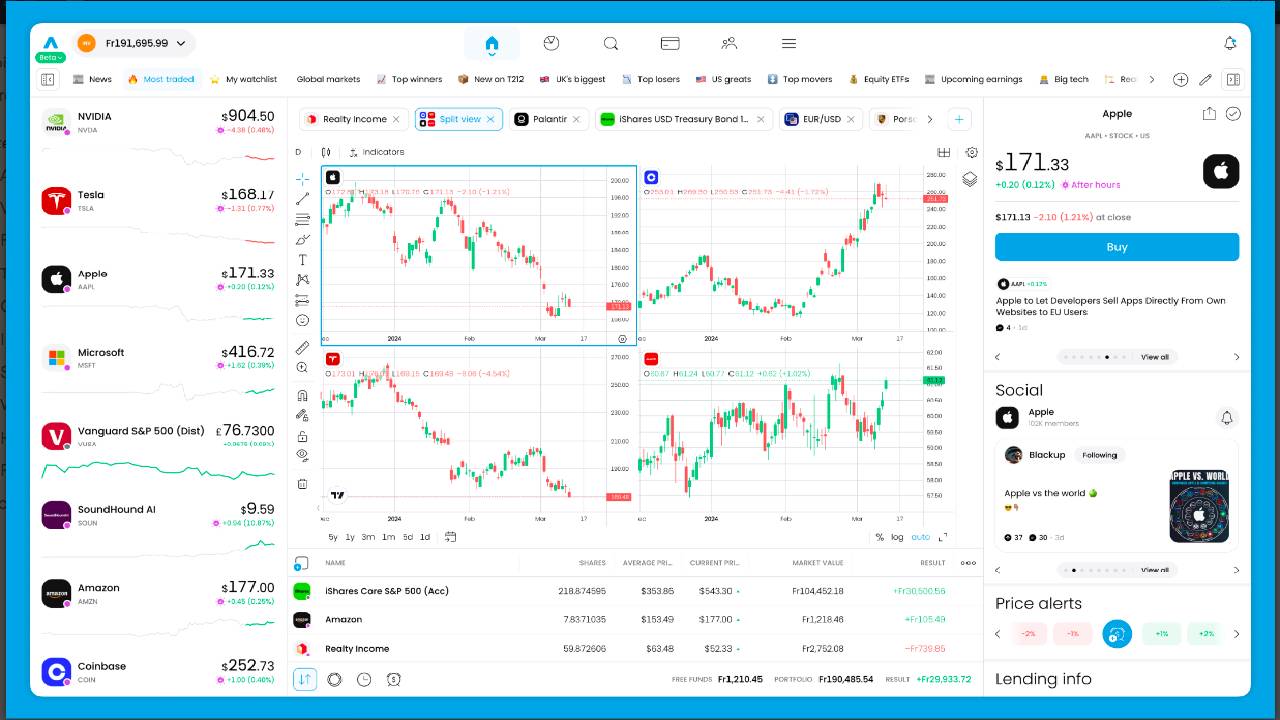
Like Interactive Investor, Trading 212 will pay interest on uninvested cash balances in trading accounts and in the UK, the interest is currently an annual rate of 4.05%. Unlike Interactive Investor, Trading 212 also allows you to earn interest via share lending.
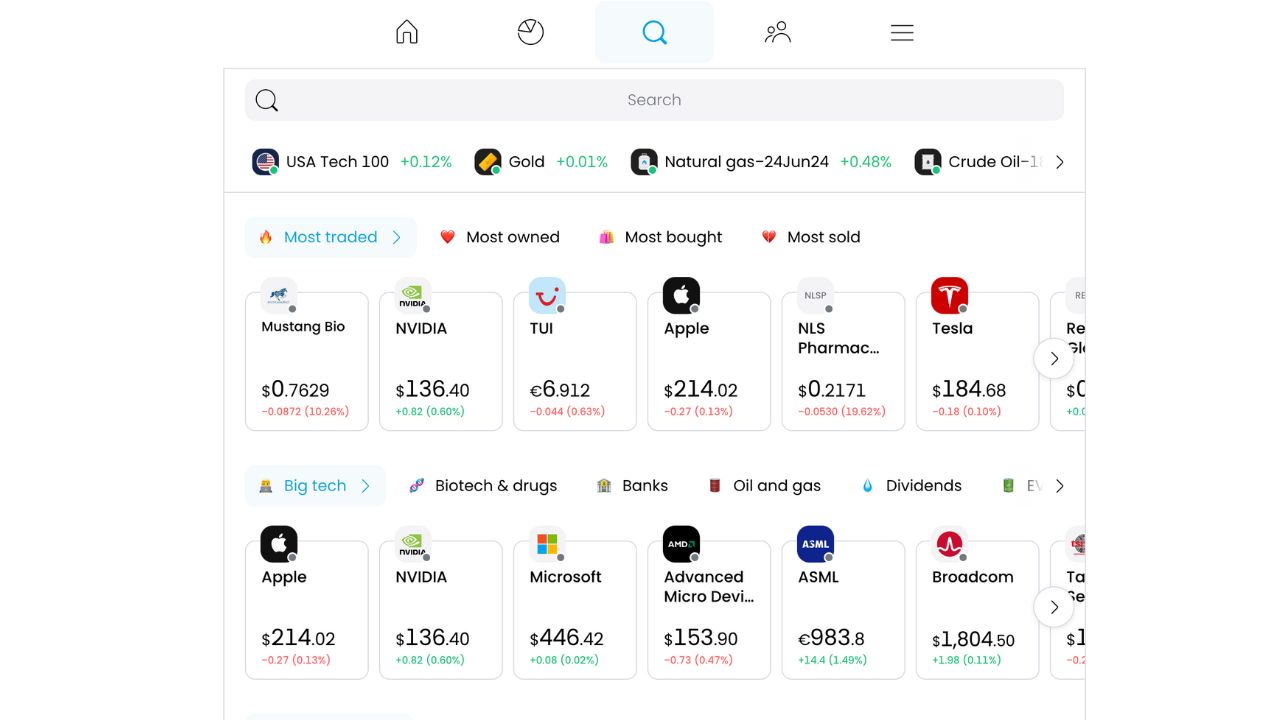
The app includes more than 10,000 investment options in stocks and ETFs and has been downloaded more than 15 million times. It doesn’t offer mutual funds, but unlike some online apps, Trading 212 allows fractional trades on shares.
It has CFD trading on more than 2,500 instruments including more than 150 forex pairs and more than 30 indices. The app also offers robo-investing in ready-made pies depending on your level of risk.
Another key feature is users can get up to €50,000 in virtual currency to practise trading. The app says it has more than £25 billion AUM. It’s a good app for beginner investors because it gets high marks for its intuitiveness and ease-of-use.
On the downside, its education section is very basic and limited, and its fees for forex trading are relatively high.
Pros
- Interest paid on uninvested balances
- App is easy to use
- Plenty of investment options
Cons
- Educational resources are lacking
- High charges on forex trading
- Limited charging features
8. AJ Bell: Best investment app for financial advice
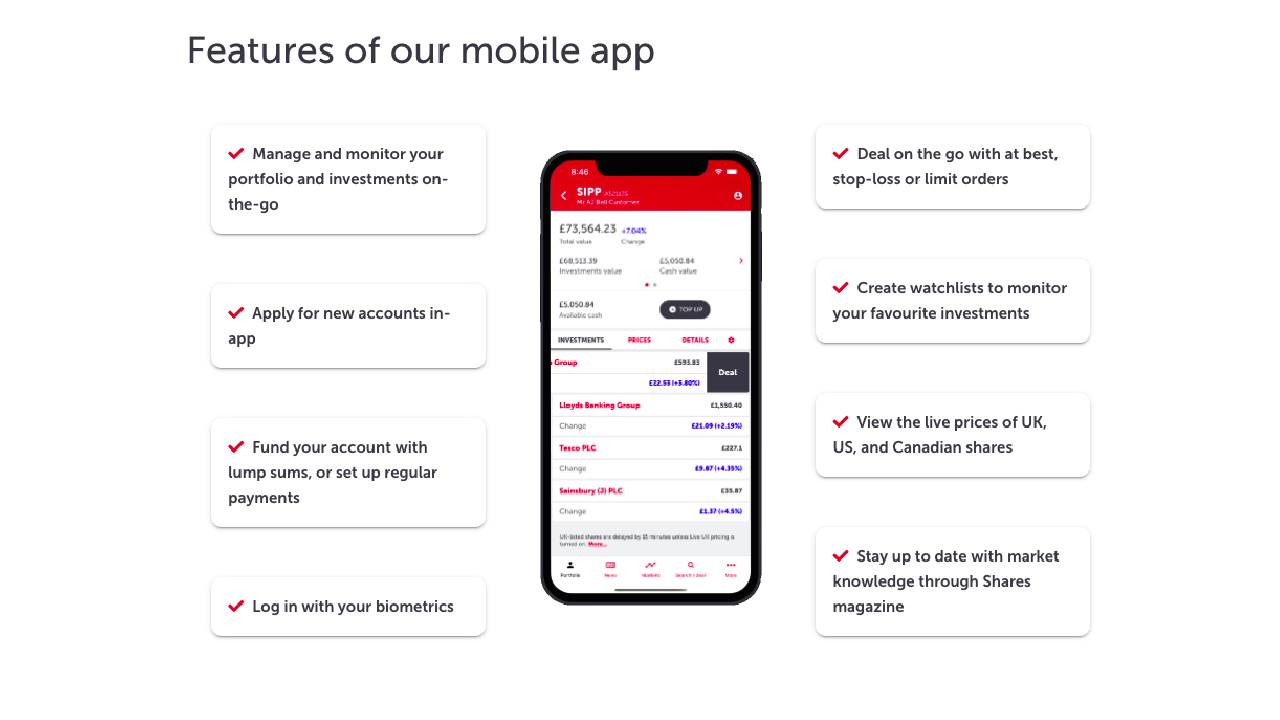
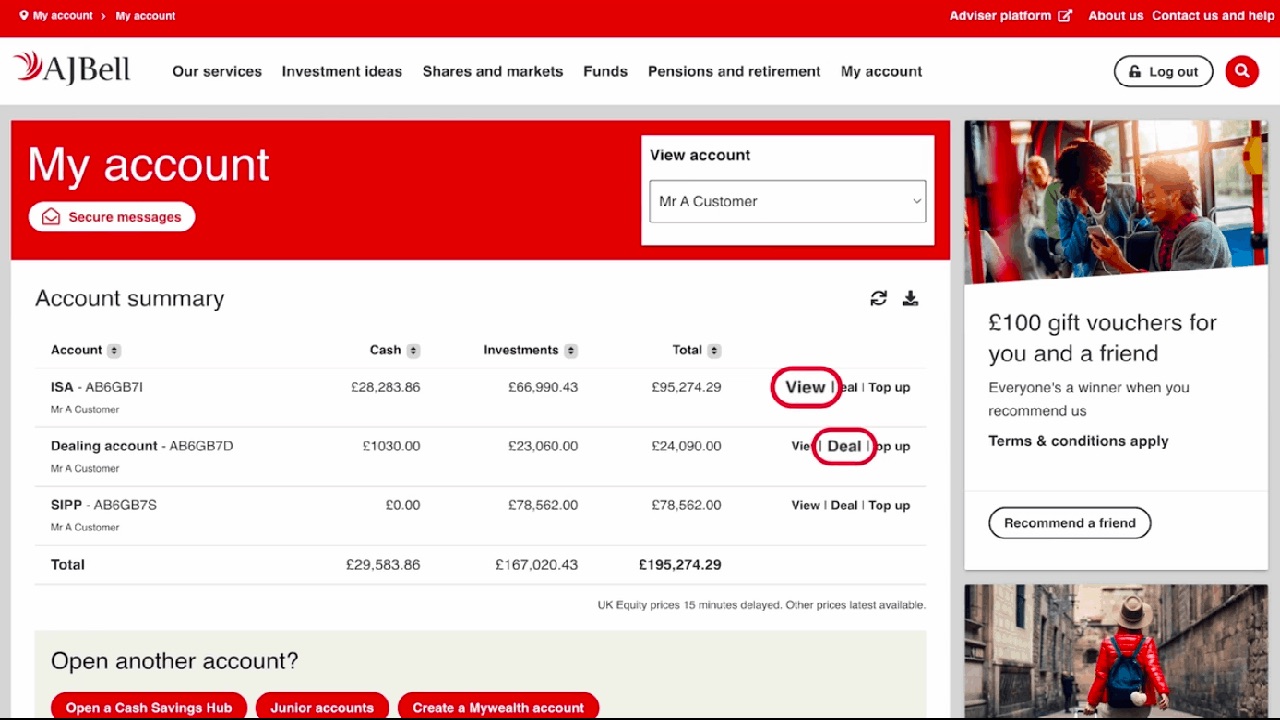
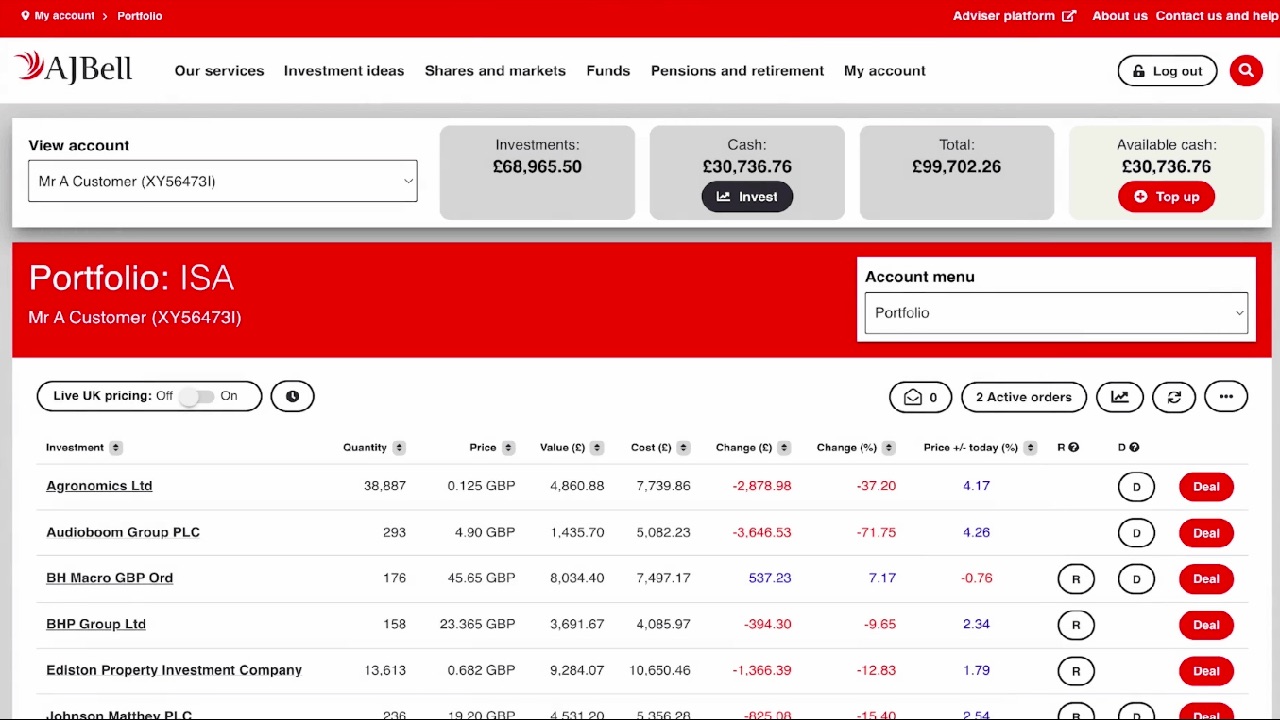
AJ Bell has more than £96 billion in AUM. It also has more than 620,000 customers, nearly three times as many it had just six years ago.
It offers more than 13,000 investment options, including shares, funds, ETFs and investment trusts,
The company is known for its high level of customer service and its array of educational and research options for investors and ready-made portfolio options. It’s ranked high by consumers. It has relatively high trading fees and charges for buying and selling funds.
The investment app may be more suitable for investors with smaller portfolios because of its percentage-based fees. It also has a low-cost Dodl account, with an app-only platform.
It charges a minimum of £1.50 per fund trade and £5 per share trade and its investment options are limited. Its management fee won’t go any higher than 0.25%. The company pays interest on uninvested cash.
Pros
- Dodl account is a low-cost option
- Interest is paid on uninvested balances
- Solid customer service
Cons
- No forex, options, futures or CFD options
- Relatively high trading fees
- Not as suitable for frequent traders
9. Moneybox: Best investment app for beginner investors
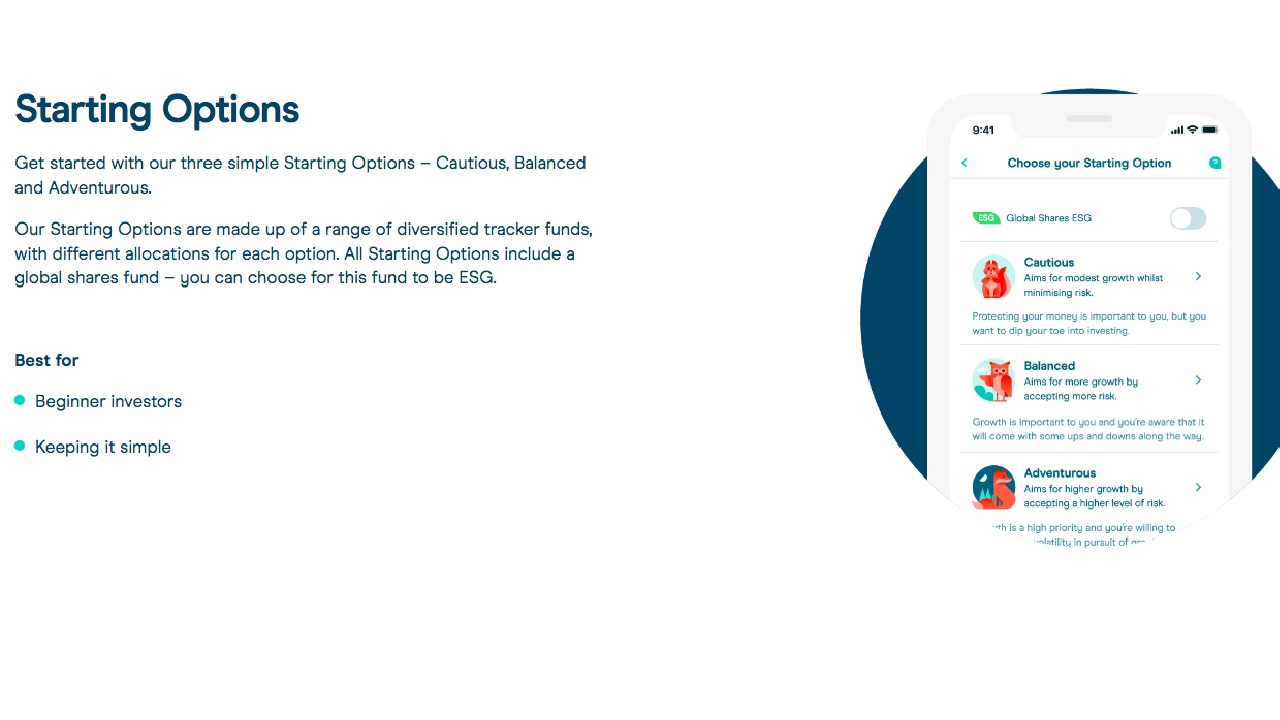
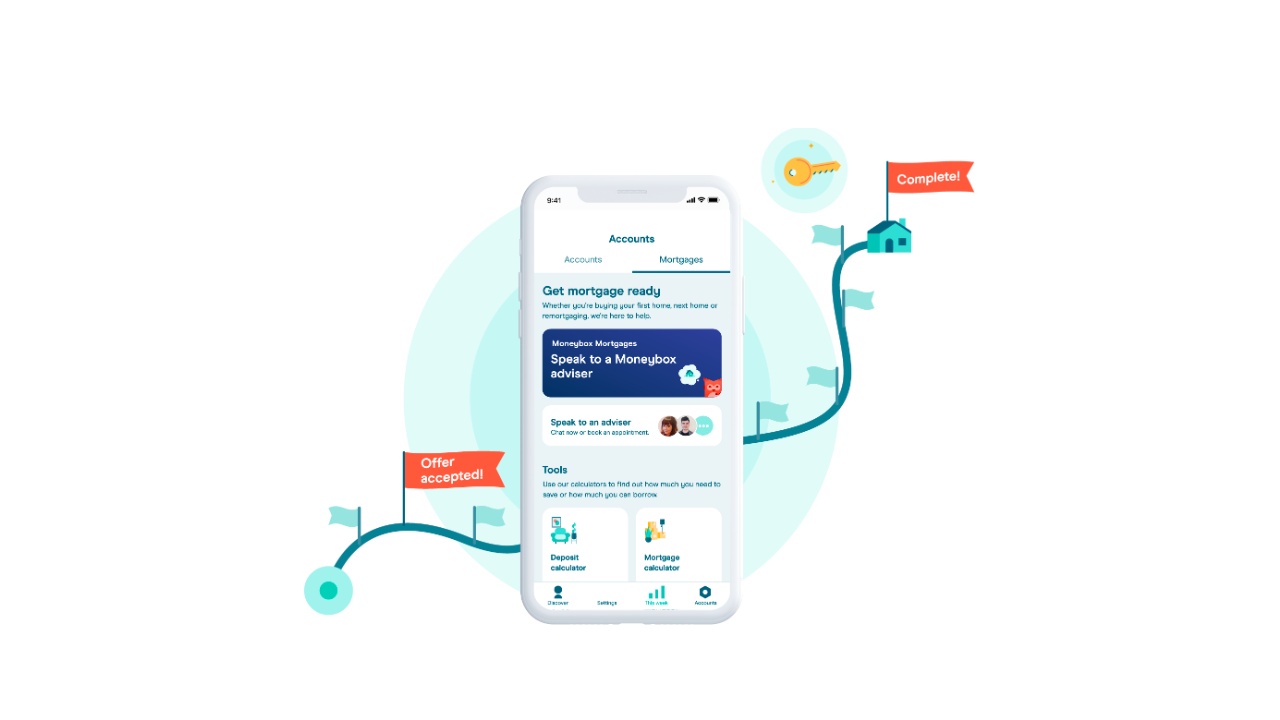
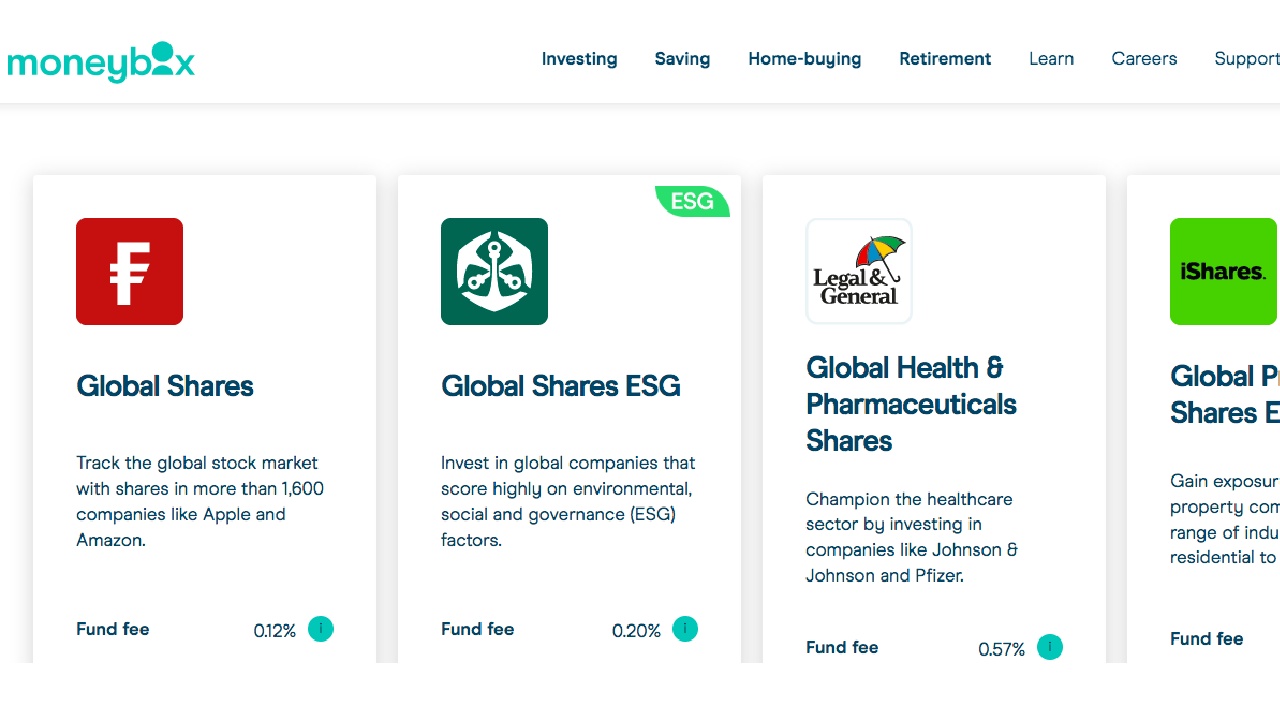
The app is striking a chord with beginning investors and the company has more than 1.3 million customers and more than £16.6 billion in assets under administration.
Moneybox’s 0.45% platform fee isn’t ideal for investors with larger portfolios.
Some of the drawbacks are that the app focuses on stocks, ISAs, but lacks advanced features and research tools that more experienced traders may want. It also provides a smaller range of investments compared to some other platforms.
Moneybox’s platform is made for beginners, thanks to an easy-to-use interface and the ability to do robo-investing, perfect for investors who are not comfortable doing stock picking.
The ability to trade with zero commission and a small £1 monthly subscription fee is a plus.
Pros
- Easy-to-use interface is good for beginners
- Robo-investing option
- Relatively low fees
Cons
- Lacks advanced features
- Platform percentage fee is high for accounts with more money
- Not as suitable for frequent traders
10. IG: Plenty of investment options, technical tools
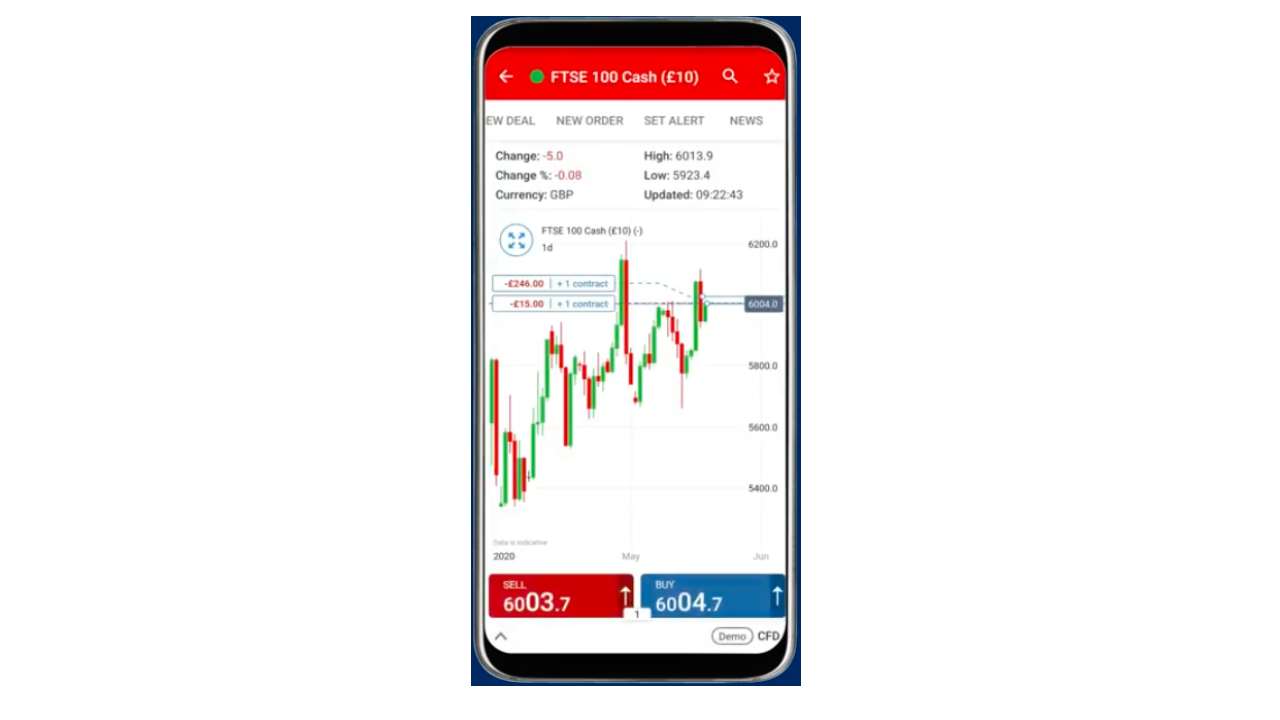
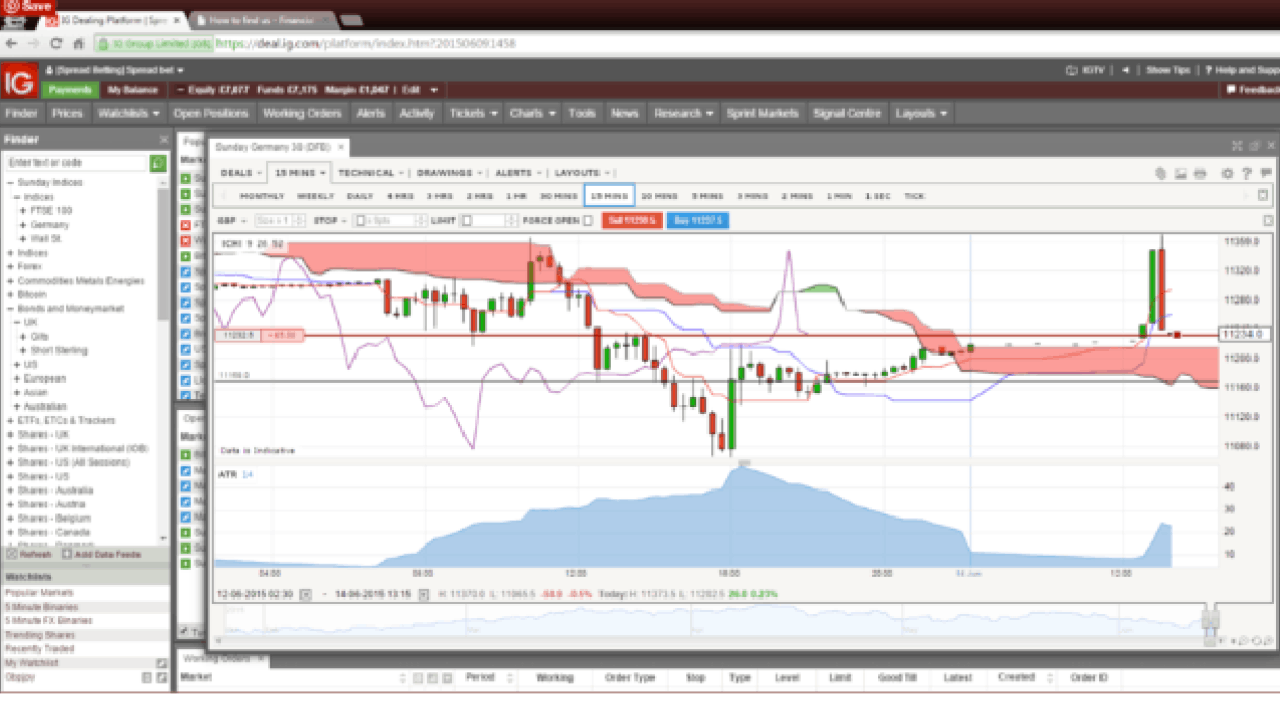
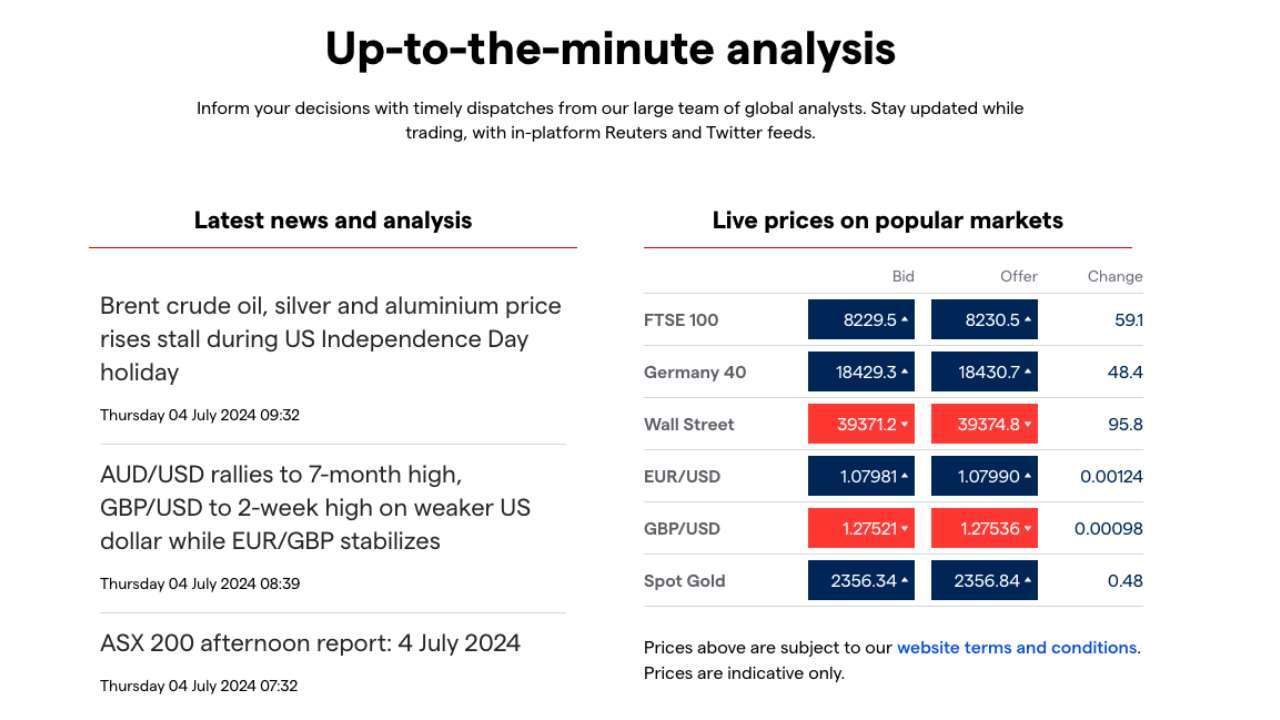
The company has been involved in trading since 1974 and has more than 2 million customers.
It allows investors to trade more than 17,000 financial instruments via CFDs, including more than 80 indices, 35 commodities, 12,000 shares, 5,400 ETFs, and 10 cryptocurrencies.
It’s a good platform for experienced investors, with advanced charting, research and analysis.
IG has commission-free trading on all stocks and ETFs traded within a UK GBP GIA, ISA and SIPP account. It also pays 4% interest on uninvested funds up to £100,000.
Pros
- Good educational resources
- Plenty of investment options
- Solid customer service
Cons
- Can be expensive for frequent traders
- Platform may be too complicated for some investors
11. Freetrade: Investment app with lots of options for intermediate investors
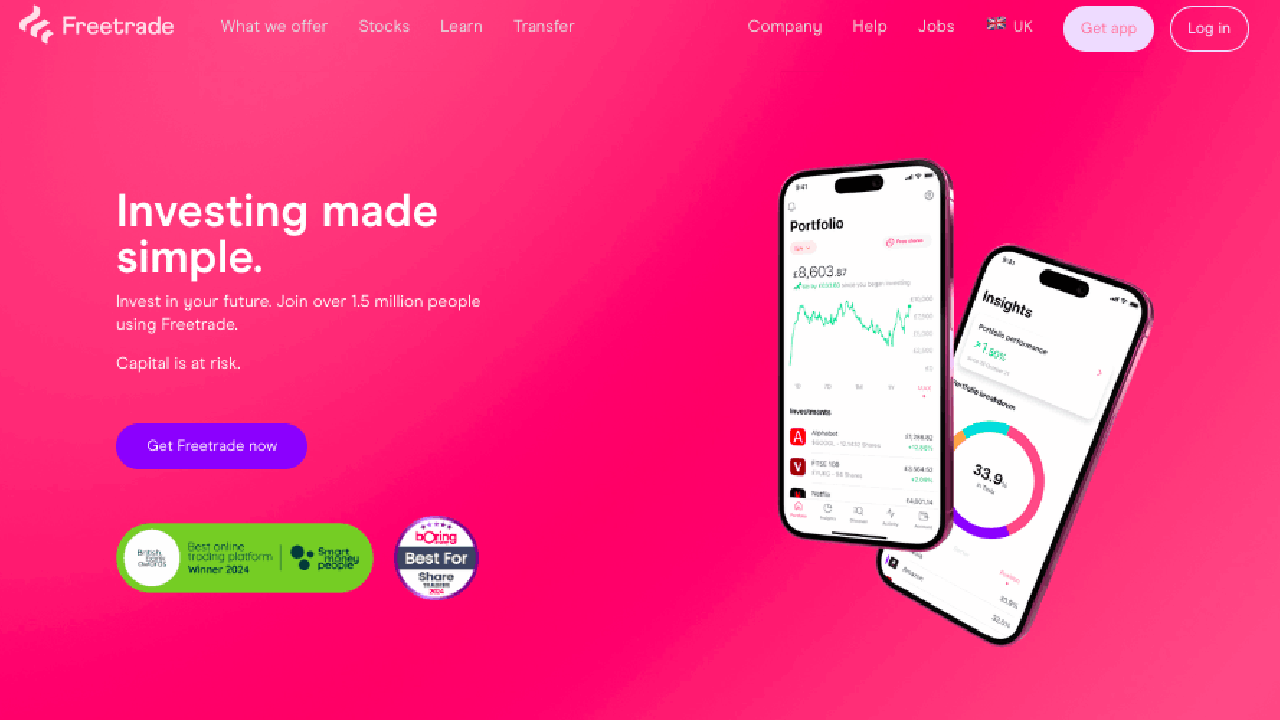
The fast-growing app is a good platform for intermediate investors who are looking for commission-free trading in stocks and ETFs, but not cryptocurrency. Though the company was bought this April by IG, Freetrade continues to operate as a free-standing company.
Freetrade has several different pricing plans on what it calls its freemium setup, ranging from £0 in the basic plan, to the £4.99 a month standard plan and £9.99 a month plus plan, with the latter two offering higher rates on uninvested cash and lower fees on forex trading.
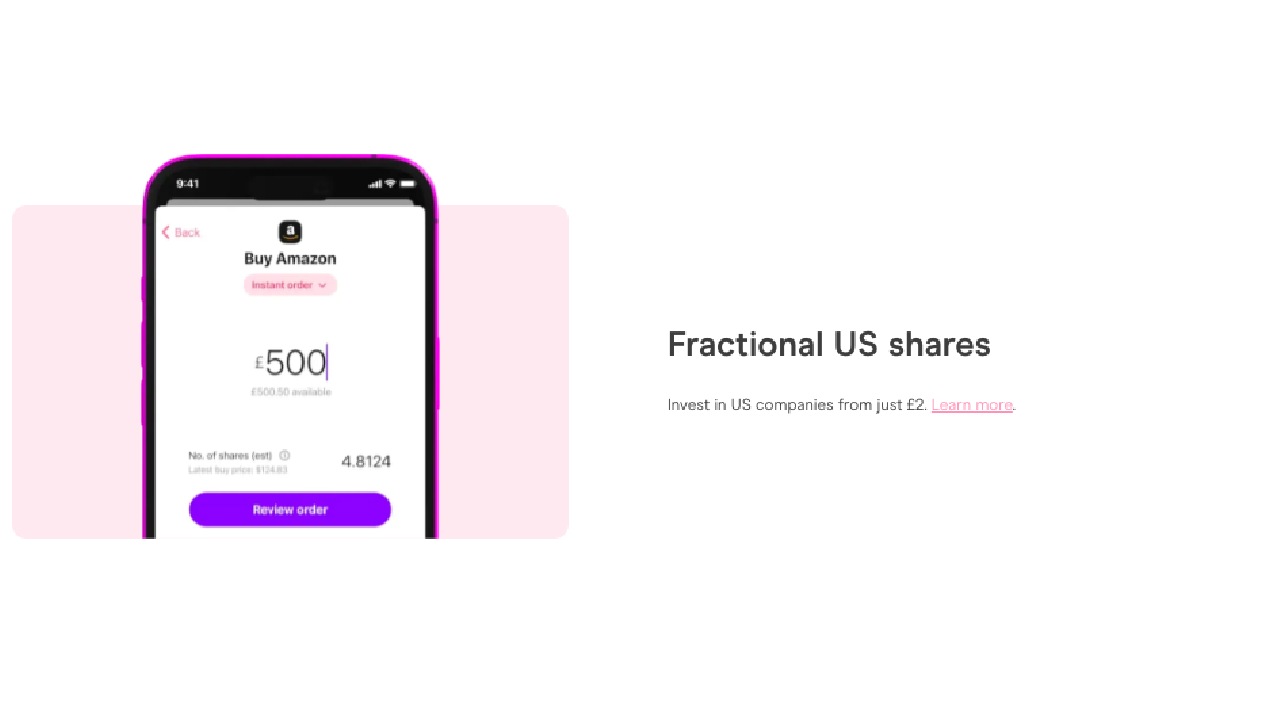
While it offers fractional trading of shares and more than 6,500 stocks, ETFs, mutual funds, forex and gilts, it doesn’t have as many automated features as some other apps.
In addition, there is no robo-investing or another automatic or hands-free investing option, so it may be more difficult to navigate its site for complete beginners than some other apps. It also has limited customer support for the most basic plan.
Pros
- Several different pricing plans
- Good app for intermediate investors
- Commission-free trading across all plans
Cons
- Basic plan has limited customer support
- App is not that intuitive
12. Wealthify: App focuses on keeping investing simple
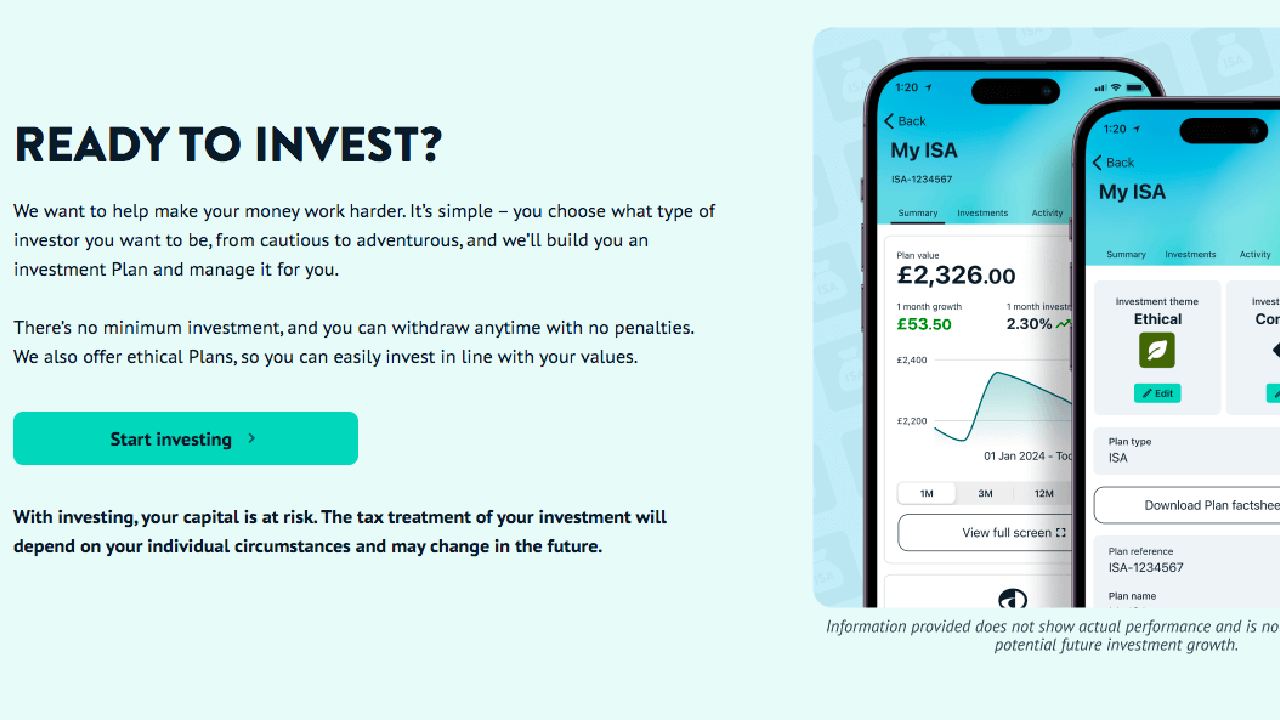

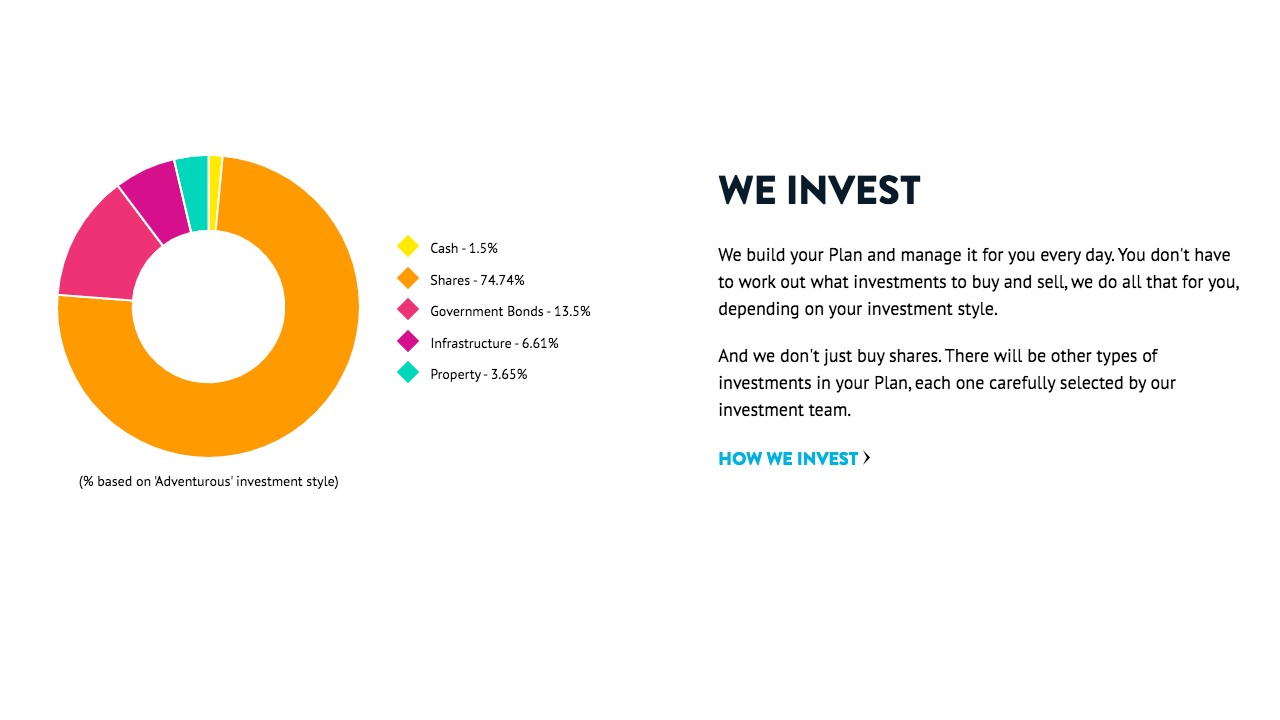
It’s a good platform for set-it and forget-it type investors. It has an artificial intelligence (AI)-powered stock trading bot that allows beginner investors to design a diversified portfolio based on specific risk tolerance levels, from cautious to adventurous.
Since 2020, it has been a wholly-owned subsidiary of the Aviva Group, a leading UK diversified financial services company, with businesses spanning insurance, wealth, and retirement across three core markets of the UK, Ireland, and Canada.
It only costs £1 to begin investing with the app, but it has limited investment options and research and educational resources compared to other platforms.
There are no management fees to new customers for the first 12 months. However, after that, there is an annual fee of 0.6% for managing your investment, which drops to 0.3% on the portion of a Wealthify Personal Pension above £100,000.
Because the fee structure is based on how much is in your holdings, it isn’t as desirable to those with larger portfolios. The platform does get high marks for customer support, with live chat service and telephone support.
Pros
- Good customer support
- Robo-advisor platform is available
- Low-cost entry point
Cons
- Could be expensive for those with larger portfolios
- Limited investment options
The top-rated stock trading apps, at a glance
Here’s a quick overview of these 12 investment apps with a summary of their main features and costs:
| Platform | Minimum investment to start account | Account management fees | Investment fund fees | FSCS protection | Trustpilot reviews |
| eToro | First deposit of $50; $10 thereafter | None, but there is a $10 monthly fee if an account has been inactive for more than 12 months | Stock and ETF investing in the UK is commission free | Yes | 4.2 out of 5 stars (23,542 reviews) |
| Revolut | No minimum | From free to £45 a month. | Each plan has a certain number of commission-free orders; after that, it can be as much as 0.25% of the order amount. | No | 4.1 out of 5 stars (153,773 reviews) |
| XTB | No minimum | None, but there is a €10 monthly fee if an account has been inactive for more than 12 months | Trading fees are built into the spread and vary | Yes | 3.5 out of 5 start (1,100 reviews) |
| FP Markets | $100 | None for standard trading account, $58 a month for Iress Trading | Trading fees are built into the spread and vary | Yes | 4.5 out of 5 stars (3,845 reviews) |
| Saxo | £0 | Custody fee of between 0.15% and 0.9%, depending on the amount in the account | Free for fund trades, but £3 per share trade for UK stocks, $1 for US stocks | Yes | 4.7 out of 5 stars (88,72 reviews) |
| Interactive Investor | £0 | Investor Essentials plan: £4.99 per month Investor plan; £11.99 per month; Super Investor plan: £19.99 per month | Shares and funds £3.99 per trade for US and UK shares, ETFs, bonds and gilts. For other shares, £5.99 or £9.99 | Yes | 4.7 out of 5 stars (24,614 reviews) |
| Trading 212 | £1 | None | None | Yes | 4.6 out of 5 stars (28,669 reviews) |
| AJ Bell | £250 for dealing or ISA accounts | Annual platform fee between 0.10% and 0.25%. | Share trading: £5 drops to £3.50 after 10 or more trades; fund trading: £1.50 | Yes | 4.8 out of 5 stars (4,893 reviews) |
| Moneybox | £100 | £1 monthly subscription fee if you invest at least £5; plus 0.45% fee based on total asset value. | Free | Yes | 4.4 out of 5 stars (4,070 reviews) |
| IG | £0 | Quarterly platform fee of £24 is waived after three trades. | Commission-free trading on all stocks and ETFs traded within a UK GBP GIA, ISA and SIPP account. | Yes | 4.1 out of 5 stars (6,786 reviews) |
| Freetrade | £0 | £0 per month to £9.99 er month | None | Yes | 4.0 out of 5 stars (3,952 reviews) |
| Wealthify | £1 | 0.6% based on your investments | 0.16% to 0.70% | Yes | 4.0 out of 5 stars (2,346 reviews) |
Your capital is at risk. Other fees apply.
How to choose the best trading app
Before you choose a trading app, think about what type of investor you are and how much risk you’re willing to take. If you’re a beginner, you’ll want an app that offers strong educational resources and maybe even a robo-advisor feature.
More experienced investors might focus on per-trade fees, other charges, and whether the app’s investment options align with their goals. Considering these factors is essential, especially if you’re exploring different ways to invest £100 a month and want a platform that matches your strategy.
A few things to consider:
- Risk tolerance: How comfortable are you with market changes?
- Time-frame: Are you a long-term or short-term investor?
- Investment style: Are you a hands-on trader or desire passive income investments?
- Investment types: Are you interested in stocks, bonds, ETFs, mutual funds, or other assets?
What assets can you trade on investment apps?
There are plenty of investment options on investment apps, from stocks and bonds, to crypto, to ETFs, to forex, to CFDs, that are available on investment apps. You have to look at each individual app to determine what investment options they would have. Here are some of the potential options for those exploring UK stocks for beginners:
- Stocks: Users can buy stocks in publicly traded companies, allowing them to have partial ownership.
- Exchange Traded Funds (ETFs): These are collective investment funds that provide exposure to various products.
- Foreign Exchange (Forex): Trade different fiat currencies to benefit from price fluctuations
- Cryptocurrencies: These digital assets can be traded on crypto exchanges. They are becoming more commonplace on popular investment apps.
- Commodities: Economic resources like crude oil, gold, wheat, cattle, natural gas, and sugar.
- Futures: Contracts to buy or sell an asset at a set price on a predetermined date.
How to get started with a UK investment app
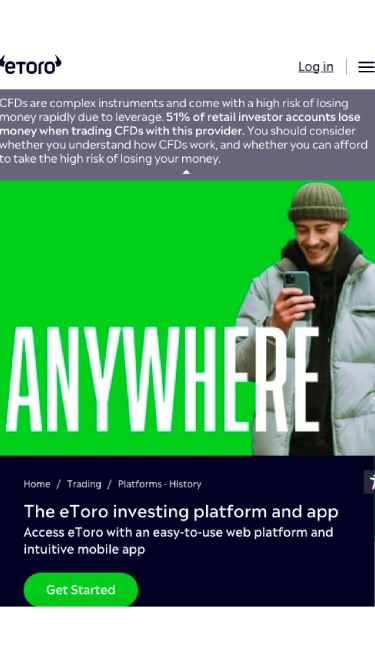
- Visit the website: Each investment app differs. For eToro, for example, you would go to www.etoro.com and click on the “Join Now” or “Trade Now” button.
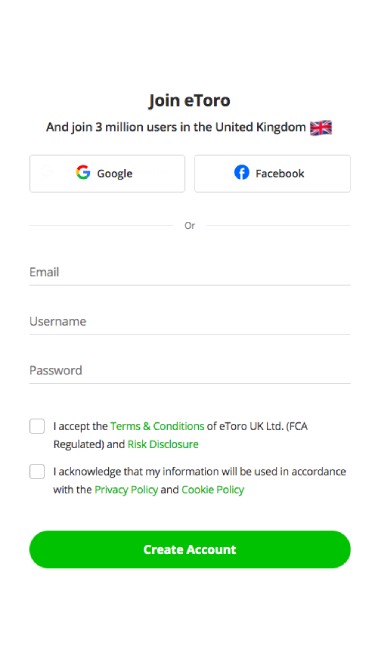
- Provide personal information: Fill in the required details such as your name, email address, and create a password.
- Accept terms and conditions: Read and agree to eToro’s terms and conditions and privacy policy.
- Verify your email: Check your inbox for a verification email and click the confirmation link.
- Complete account verification: You’ll need to verify your identity and address by providing necessary documents. This is a standard procedure to comply with regulatory requirements.
- Fund your account: Once your account is verified, you can deposit funds to start trading.

Your capital is at risk. Other fees apply.
About fees and costs
Investment apps, even the ones that advertise free trading, aren’t really free. They are in business to make money and various fees are a big part of their revenue streams.
Some investment apps make their money indirectly from the spread, the difference between the highest price a buyer is willing to pay for a security (ask price) and the lowest price a seller is willing to accept (bid price).
Other investment apps charge a set rate per trade or vary the rate per trade depending on how frequently an investor trades. There are also sometimes inactivity fees to encourage investors not to just park their investments. Some investment apps charge a set percentage of each person’s portfolio.
Because of the complex nature of fees, it makes sense to thoroughly check out a company’s web site and, if necessary, ask plenty of questions before signing up.

How We Rate Brokers
We manually review the brokers on our list. Below are the key metrics we check before listing online brokers on the website. For further details, you can also take a look at our online brokers rating guide, featured on ValueWalk.
Regulations
Trading conditions
Trading products and platforms
Customer support
Education center
Investment app FAQs
What is an investment trading app?
What is the best investment app for beginners in the UK?
What is the most trusted investment app?
Are investment trading apps worth it?
Are investment trading apps considered safe?
References
- Interactive Investor cash interest rates
- Interactive Investor share tips and education
- Moneybox’s milestone year
- eToro’s demo account setup
- Trading 212 share lending
- Freetrade bought by IG
- Freetrade pricing plan structure
- XTB’s commission-free platform
eToro disclaimer:
eToro is a multi-asset platform which offers both investing in stocks and cryptoassets, as well as trading CFDs.
Please note that CFDs are complex instruments and come with a high risk of losing money rapidly due to leverage. 61% of retail investor accounts lose money when trading CFDs with this provider. You should consider whether you understand how CFDs work, and whether you can afford to take the high risk of losing your money.
This communication is intended for information and educational purposes only and should not be considered investment advice or investment recommendation. Past performance is not an indication of future results.
Copy Trading does not amount to investment advice. The value of your investments may go up or down. Your capital is at risk.
Don’t invest unless you’re prepared to lose all the money you invest. This is a high-risk investment and you should not expect to be protected if something goes wrong. Take 2 mins to learn more
eToro USA LLC does not offer CFDs and makes no representation and assumes no liability as to the accuracy or completeness of the content of this publication, which has been prepared by our partner utilizing publicly available non-entity specific information about eToro.