


The UK boasts a rich landscape of dividend stocks, often favored by value investors seeking steady income alongside capital appreciation. With an average dividend yield of 3.17% on the FTSE 100, it outpaces the S&P 500’s 1.17%.
The best dividend stocks in the UK combine attractive yields with robust financials. We’ve meticulously analysed UK dividend stocks based on factors such as dividend history, balance sheets, and cash positions, curating a list of five top picks for investors seeking reliable income.
Top trading and investing platform
- Ideal for beginner investors
- Copy trade other successful investors
- Access 6,000+ stocks for local and global exposure

Here’s a quick overview of our picks of the high-dividend UK stocks to earn above-average passive income.
- Legal and General: The London based investment firm manages £1.17 trillion in assets. It’s also a big player in corporate pension schemes, plus retirement services and life insurance for individuals.
- OSB Group: The Chatham-based specialist mortgage lender and retail savings company focuses on these segments: Buy to let, residential, complex commercial and semi-commercial development finance.
- Aviva: The London-based insurer has more than 25 million customers. It’s the largest general insurer in the UK and the second-largest general insurer in Canada. Its shares are up more than 42% this year.
- Admiral Group: The Wales-based insurer and financial services company with 11.4 million customers is the leading motor insurer in the UK. Its shares are up 27% this year and it has a dividend yield topping 5%.
- HSBC Holdings: The London-based lender is Europe’s largest bank, with total assets of more than $3.1 trillion. It generates about two-thirds of its profits in Asia, most of it in China.
Your capital is at risk.
- Show Full Guide
An in-depth look at these top UK dividend stocks
Now, let’s take a more detailed look at five well-performing companies that provide a dividend yield of at least 5%. These are some of the best long-term dividend stocks on the London Stock Exchange for income investors.
If you’re looking for dividend stocks outside of the UK, our experts regularly review other markets and suggest stocks for income investors elsewhere.
1. Legal and General: Consistent dividend growth ahead
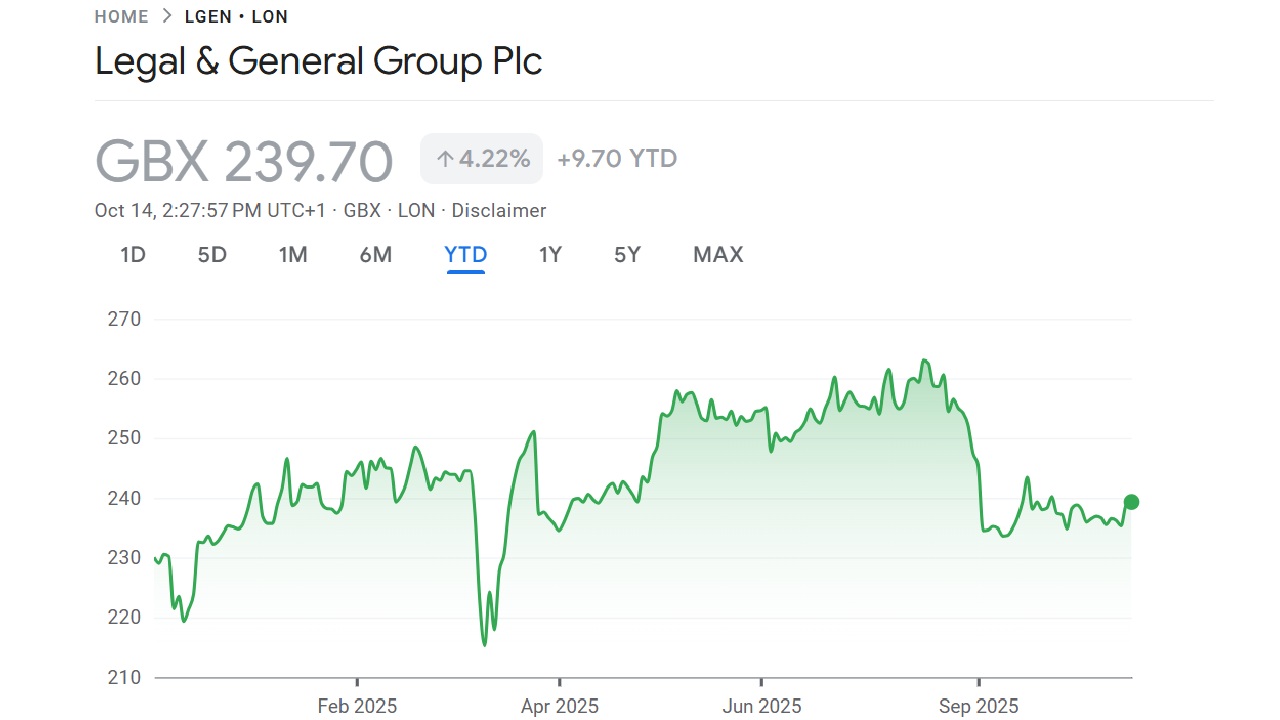
Legal and General (LGEN.L) is the epitome of stability, as it has been around since 1836. It has shown a strong commitment to its dividend, raising it every year since 2010. It now yields more than 9%, second-highest among all FTSE stocks.
Its half-year dividend per share was £0.0612, up 2% in a year. L&G is raising its dividend by 2% this year and next, allowing it to remain on the S&P UK High Yield Dividend Aristocrats Index, which includes stocks that have raised their dividends for seven or more consecutive years.
While this is a reduction from a 5% per year dividend growth of previous years, the firm is undertaking £5 billion of share buybacks by 2027 instead. It repurchased £500 million of its shares by September after £200 million in 2024.
However, the dividend payout ratio is a concern, at around 441%, which is unlikely to be sustainable.
Its stock is up more than 3% this year, and the company has delivered solid first-half results. Core operating profit per share increased 9% from a year earlier to 10.94 pence.
Some of the highlights included the sale of the US protection business to Japan’s Meiji Yasuda, for $2.3 billion in cash and a 5% stake in L&G for the Japanese firm, as CEO António Simões focuses on three core businesses: Asset Management, Institutional Retirement and Retail.
Operating profit in the Institutional Retirement segment rose by double digits. The division has also brought in more than £5 billion in new business, including £3.4 billion of pension buyouts, as more and more companies offload pension liabilities to insurers.
The Retail segment’s customer base grew by 12.4 million in the six-month period, and workplace pension assets have surpassed £100 billion.
Your capital is at risk.
2. OSB Group: Underpriced dividend gem
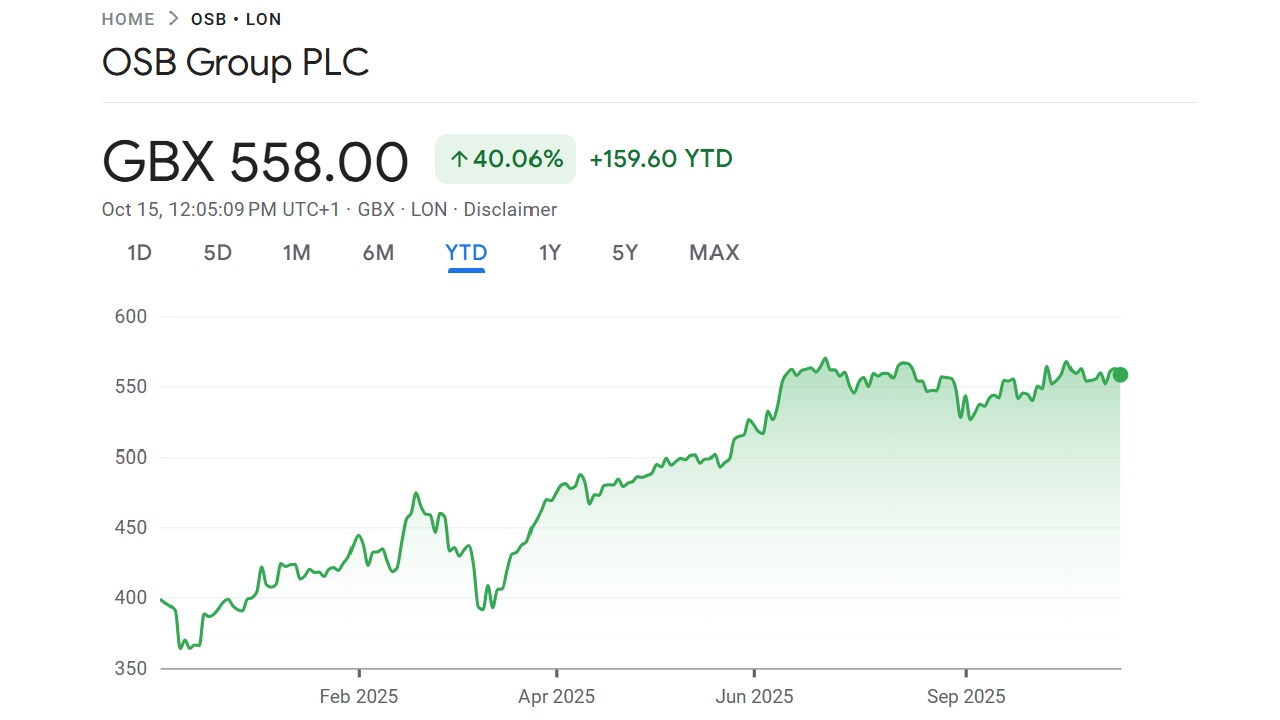
OSB Group (OSB.L) has been around more than 150 years and has two units, One Savings Bank, and Charter Court Financial Services. It provides lending services via its various subsidiaries, including Kent Reliance, Precise Mortgages, InterBay Commercial and Heritable Development Finance.
OSB, as a lender, is considered an alternative to some of the major banks in the UK, especially for people seeking mortgages.
The company has raised its dividend for more than 10 consecutive years and its current yield is more than 6%. It raised its interim dividend by 4.7% year over year to 11.2 pence per share. While the payout ratio increased to 46.2% from 35% a year earlier, the dividend should still be well-covered.
OSB’s board also carried out a £100 million share repurchase programme in the first half, which was partially to blame for the 0.6% erosion in the common equity tier 1 (CET1) ratio, a measure of a bank’s financial strength, compared to a year earlier, to 15.7%.
In the first half, profit before tax declined 20% from a year earlier to £192.3 million, partially due to lower net interest income and a fair value loss on financial instruments. Earnings per share was 37.3 pence down from 44.4 pence a year earlier. Net interest income was 337 million, down 5% year over year.
Net loan book growth was 1.2% as the company said it prioritised diversification. Yet, based on the first half, management reiterated their full-year forecast for low single-digit net loan book growth.
While the shares have gained 40% this year, trading at less than eight times earnings, this high-dividend banking stock still appears a bargain.
Your capital is at risk.
3. Aviva: Growing through acquisitions
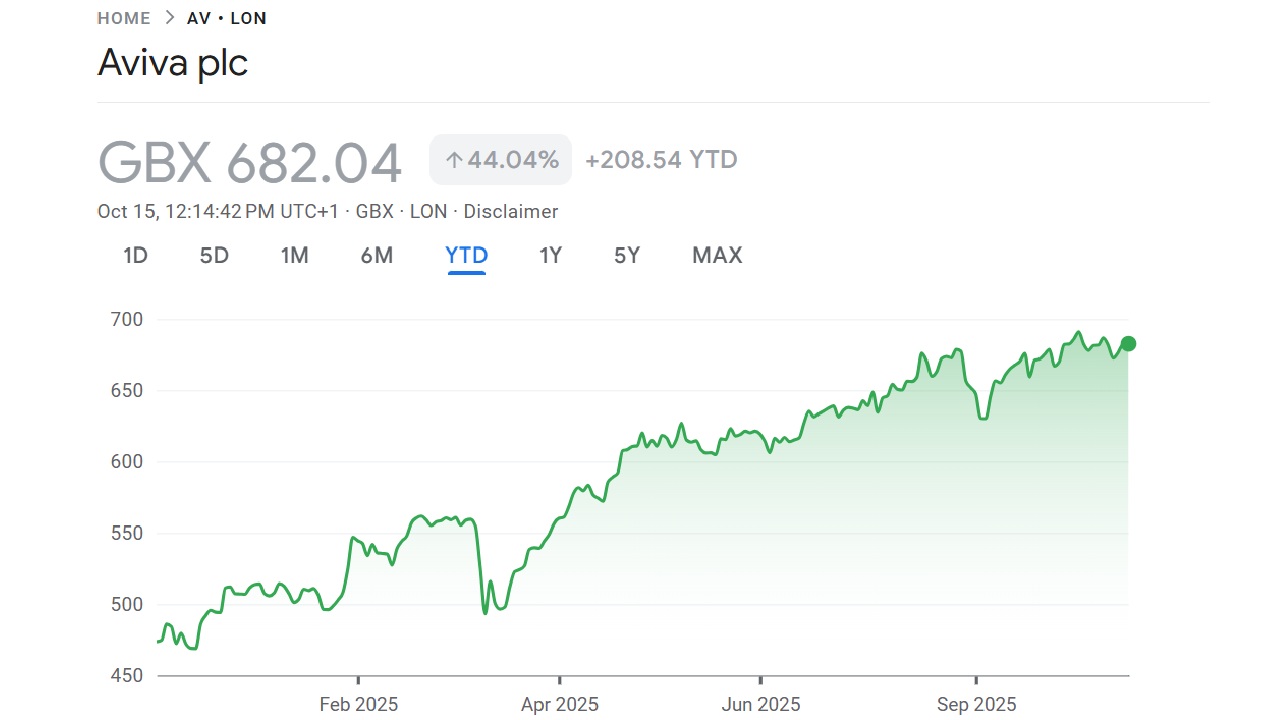
Aviva (AV.L) delivers insurance, wealth and retirement resources. While it has focused its business more on profitable markets, it continues to grow its diversified business through mergers and acquisitions. It has recently completed its £3.4 billion takeover of UK motor insurer Direct Line Insurance Group.
The company is on track for its fifth consecutive year of dividend growth. It issued an interim dividend of 13.1%, an increase of 10% over last year’s interim dividend. The dividend’s future growth looks strong, considering the company’s continued financial growth, even with a relatively high payout ratio of 70.7%.
As for its financials, through the first six months of 2025, Aviva saw operating profit rise 22% year over year to £1.068 billion. General Insurance premiums were £6.29 billion, up 7% over the same period last year.
Health premiums were up 14% year over year, though Protection sales fell 16% from the first half of 2024, due to the consolidation of propositions in the second half, following the acquisition from AIG.
The company has a strong moat in the UK, where it’s the only insurer that can handle a customers’ insurance, wealth and retirement needs under the same roof. The company has more than 25 million customers and total group assets under management of £419 billion.
Your capital is at risk.
4. Admiral Group: Back to focusing on the basics
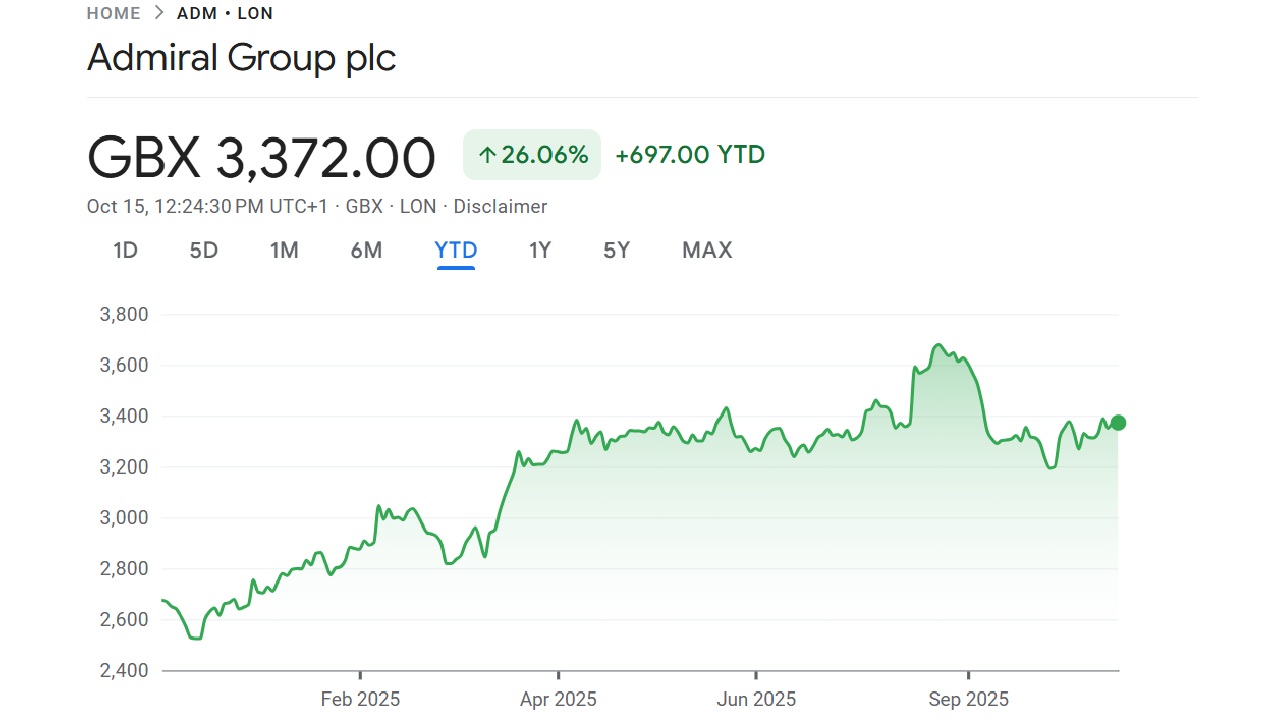
While some UK insurance companies have struggled this year, Admiral Group (ADM.L)appears to be on solid footing, and it showed strong growth in its half-year report. The stock is up more than 26% this year.
On top of that, it has a dividend that yields more than 5%, and the insurer has shown a consistent willingness to raise that dividend.
In August, it announced its interim dividend would grow by 86.4% to £1.15 per share, consisting of 86 pence of normal and 29 pence of special dividend. Even with the increase, the payout ratio is only around 64%, leaving room for future growth.
In the first half, pre-tax profit from continuing operations grew by 69% year over year to £521 million. This growth was driven by the Admiral Motor Insurance, Admiral Money and the UK Household Insurance divisions.
EPS was 132.5 pence, up 72% year over year. It also saw overall customers rising by a million to 11.4 million.
The company is also proceeding with the sale of its US motor insurance business, Elephant, which is likely to conclude in the fourth quarter of 2025.
Your capital is at risk.
5. HSBC Holdings: Finding additional growth in Asia, tightening its belt
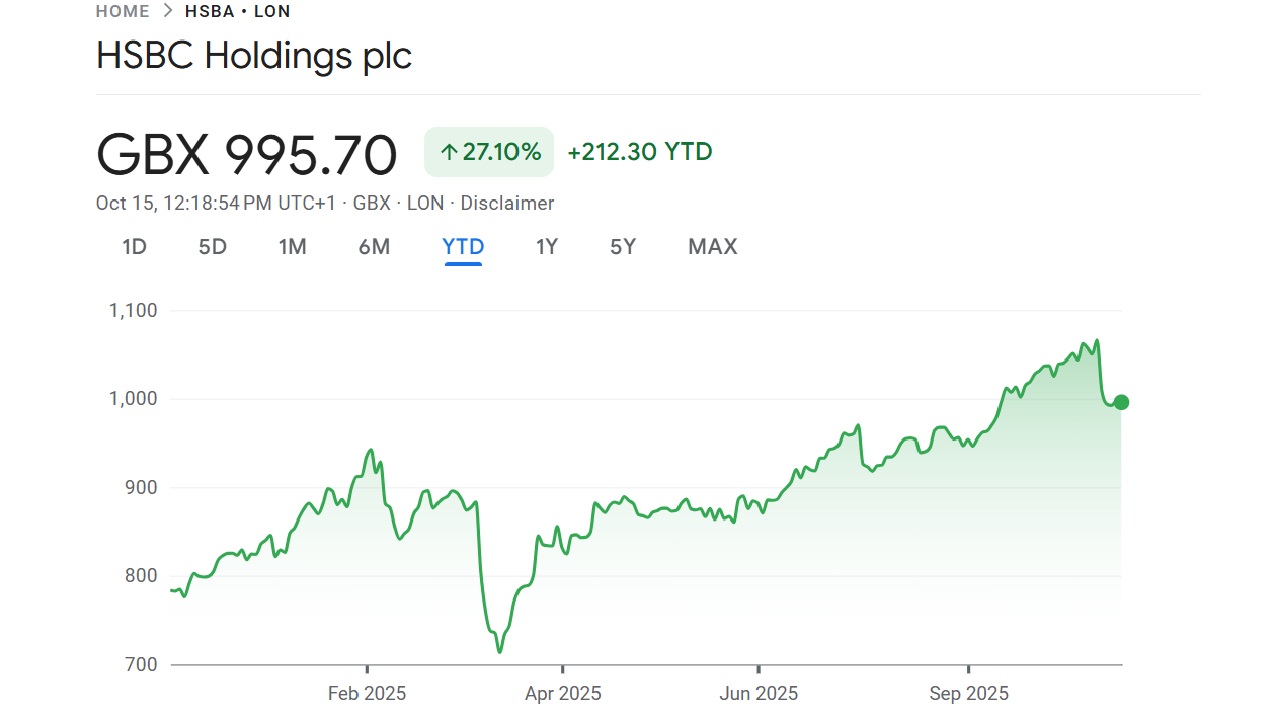
London-based HSBC (HSBA.L) has been in the midst of a major change under new CEO Georges Elhedery, who took the helm last year. The company is focusing more of its efforts in Asia and just announced it plans to buy all the shares it doesn’t already own in its Hong Kong-based unit, Hang Seng Bank, for nearly $14 billion.
HSBC is offering 155 Hong Kong dollars for each share of the Hang Seng Bank, representing a 33% premium. HSBC already holds about 63% of the bank, and the offer price values Hang Seng at $37 billion.
HSBC’s shares are up more than 34% so far this year, though it showed some financial strain in its interim report. After trimming its quarterly dividend this year, the yield is just under 5% with a payout ratio of around 39%.
In the first half, profits before tax fell 26.5%, year over year, to $15.8 billion and revenue dropped to $34.1 billion, down 9% compared with the first half of 2024. Earnings per share fell 14.7%, year over year to $0.65. On the positive side, the company initiated a $3 billion stock buyback programme.
Your capital is at risk.
Comparison of the top-ranked UK dividend stocks
Here’s a summary of the most promising UK dividend stocks to buy at the moment:
| Ticker on LSE | Company | Dividend yield |
|---|---|---|
| LGEN | Legal and General | 9% |
| OSB | OSB Group | 6.08% |
| AV | Aviva | 5.46% |
| ADM | Admiral Group | 5.26% |
| HSBC | HSBC Holdings | 4.93% |
What are dividend stocks?
Dividend stocks are the shares of publicly-listed companies that offer regular dividends to their shareholders. These companies are consistently profitable with a track record of several years or even decades of distributing a part of their earnings to shareholders. They are also committed to paying dividends in the foreseeable future.
Dividends are usually paid quarterly, but can be given monthly, every six months or yearly. They are either paid out in cash or are reinvested in additional stock.
Common shareholders of dividend-paying companies are eligible to receive a distribution as long as they own the stock prior to the cutoff date.
Dividend stocks are sometimes called income stocks. A well-established market such as the UK tends to draw investors who are more conservative, with a larger base of older investors who are looking for regular income from their investments.
Key dividend terminology
Dividend Yield
The dividend yield is a percentage. It’s the total annual dividend divided by the company’s current share price, e.g., 2.5%. It is a tool to evaluate a stock’s return on investment. However, it’s wise to be cautious as high dividend yields can sometimes signal underlying financial distress that pushes the share price down.
Payout Ratio
A key indicator for dividend stocks is their payout ratio.. The payout ratio shows how much a company pays shareholders in dividends as a percentage of its net income. The higher the payout ratio, the bigger the risk that the dividend may become unsustainable.
Record date and Payment date
When management declares a dividend, they announce the dividend amount per share, the record date – the one by which an investor must own a stock to get the dividend, and a payment date of the dividend. That is typically a month later than the record date.
Ex-dividend date
The ex-dividend date is the day as of which buyers of a stock will no longer be entitled to receive the declared dividend. The stock as of this date will trade “ex-dividend” (without its dividend). Before trading opens on this day, the exchange deducts the declared dividend from share price.
Dividend Aristocrats and Dividend Kings
Companies that have a long history of increasing their dividend gain status among income-oriented investors. Dividend Aristocrats are companies that increase their dividend payout for at least 25 consecutive years.
Dividend Kings are those that increase their dividend payout for 50 or more consecutive years.
There are a few more things to bear in mind regarding dividend stocks:
Not all companies pay out dividends. Many growth-oriented companies prefer to reinvest most of their profit into their business.
There are two ways to pay dividends. Companies pay their dividends in cash or in additional shares of a company’s stocks. Many European stocks, including in the UK, deliver two dividends a year, an interim dividend and a year-end dividend.
Some stocks, particularly those that trade on international exchanges, pay out a dividend on a quarterly basis.
Dividends are not guaranteed. Once a company generates profits through its operations, it usually gets approval from its board of directors whether to distribute a portion of its profits as dividends. Remember that dividends are not guaranteed and can be reduced or eliminated at any time.
Tax rules in the UK on dividend stocks
The UK government’s recent budget announcement didn’t alter the existing tax rules on dividends. Here’s a breakdown:
- ISA Allowance: Dividends within the £20,000 annual ISA allowance remain tax-free. This allowance is frozen until April 2030.
- Dividend Allowance: Outside of ISAs, you can earn up to £500 in dividends in the current tax year (ending April 2026) before paying any tax.
- Dividend Tax Rates: Any dividends exceeding the £500 allowance are subject to income tax. The rates vary depending on your tax bracket:
- Basic-rate taxpayers: 8.75%
- Higher-rate taxpayers: 33.75%
- Additional-rate taxpayers: 39.35%
- Capital Gains Tax (CGT): While not directly impacting dividend income, the CGT rates are 18% for basic tax payers and 24% for higher and additional rate tax payers. This could affect investors who sell equities outside of ISA allowances.
Pros and cons of dividend investing
There are advantages and disadvantages to investing in UK dividend stocks.
Some of the pros of buying UK dividend stocks:
Regular Income: This is a major attraction, particularly in the UK, where the investment culture highly values dividends. They can ensure you get regular payouts, which can be crucial for retirees or those needing a steady income stream.
Focus on stable companies: Dividend-paying companies in the UK are often large-cap stocks. These established businesses have a long track record of profitability, providing stability and lower risk compared to stocks that either don’t provide a dividend.
Compounding is important: If you reinvest your dividends, you can benefit from compounding growth. As your dividends grow, so do the dividends you earn on those reinvested amounts.
There are tax advantages: In the UK, you get a tax-free allowance on the first £500 of dividend income each year. This reduces your tax burden on a portion of your dividends. In addition, dividends are taxed at lower rates than income from your salary, unless you are in the highest tax bracket.
Some of the cons of UK dividend shares:
Reduced growth potential: Dividend-paying companies often prioritise returning profits to shareholders through dividends rather than reinvesting heavily for future growth. This can limit their capital appreciation compared to high-growth stocks.
Reduced diversification: The top dividend paying stocks in the UK tend to be connected to banks, insurance, and utilities. An overemphasis on higher dividend stocks could reduce an investor’s portfolio diversity, potentially leading to a greater risk.
High yields may mask issues: A high dividend yield can be tempting, but it’s not the only factor. Companies may prioritise maintaining high dividends even if it’s unsustainable or a sign of underlying financial issues.
Dividend cuts are possible: Dividends aren’t guaranteed. Even established companies can cut dividends if they face financial difficulties. This can negatively impact your income stream and potentially the stock price.
Comparing dividend ETFs vs. dividend stocks
Dividend ETFs and dividend stocks share the common goal of generating income and are influenced by overall market risks. However, the specific choices made by investors can lead to variations in yield, risk, and performance between these two investment options.
A dividend ETF is a type of exchange-traded fund that focuses on investing in companies that regularly pay dividends. These ETFs often track indices such as the S&P 500 Dividend Aristocrats or the Dow Jones Select Dividend Index, which consist of companies with a history of consistent dividend payments and increases.
Dividend ETFs offer benefits such as easy trading, diversification, low fees, and tax efficiency. They provide investors with a diversified portfolio of dividend-paying companies, leading to a steady stream of income.
A dividend stock is a stock issued by a company that regularly distributes a portion of its profits to shareholders in the form of dividends. These are often by well-established, financially stable companies with a history of dividend payments.
Investing in dividend stocks can provide both regular income and the potential for long-term capital appreciation. They are popular with income-seeking investors and those with a conservative investment approach due to their generally lower volatility compared to growth stocks.
Which one is better?
The performance comparison between dividend ETFs and individual stocks depends on factors like the specific stocks within the ETF, its investment strategy, and prevailing market conditions. While an individual dividend stock might outperform a basket of dividend stocks, it also carries the risk of underperformance.
Dividend ETFs offer diversification, which can help mitigate risk and provide a reliable income stream. However, they may not offer the same potential for rapid growth as individual stocks.
Examples of the top dividend ETFs for UK investors
iShares UK Dividend UCITS ETF (IUKD): The fund is up more than 15% so far this year and pays a quarterly dividend. It focuses on some of the highest-paying stocks in the UK, including utilities, consumer goods and financial services companies.
It owns shares in 51 UK companies, as it seeks to track the performance of the FTSE UK Dividend+ Index, which consists of 50 stocks with leading dividend yields. Its expense ratio is 0.40% and it has a yield of 5.26%.
L&G Quality Equity Dividends ESG Exclusions UK UCITS ETF (LDUK): This ETF is up more than 10% this year and should benefit from recent interest-rate cuts. It has 44 holdings and attempts to track the FTSE All Share ex IT ex CW ex TC ex REITS Dividend Growth with Quality Net Tax Index.
The index includes REITS with positive dividend growth. The expense ratio on the passively managed fund is 0.25% and it has a yield of 5.06%.
Vanguard FTSE 100 UCITS ETF (VUKG): The fund is up more than 19% this year and has a yield of 3.19%. This ETF tracks the FTSE 100 index, physically holding the 100 largest companies listed on the London Stock Exchange.
The ETF currently has 103 holdings. It provides a broad mix of industrials, health care, financials and consumer staples exposure. It has a low expense ratio of 0.09%.
How to pick the best dividend stocks
We were on the hunt for best UK stocks to buy now with above-average dividend yields that, based on a company’s consistent cash flows, were sustainable. The five dividend stocks we chose are all large companies with steady growth potential to make sure their dividends are safe.
We apply some general principles in our stock selection, whether we are looking for the best UK hydrogen stocks or the best UK penny stocks for investors.
You can learn more about our stock picking methodology below:

How We Rate Stocks
We review each stock that is selected. Below are the key metrics we check before listing stocks on the website. For further details, you can also take a look at our stocks rating guide, featured on ValueWalk.
Balance sheet
Potential Growth
Competitiveness
Liquidity
UK dividend stock FAQs
How to invest in UK dividend stocks?
Why are dividend stocks popular?
Do I need to pay tax on dividend stocks in the UK?
Which UK stocks pay the highest dividends?
What stocks pay a 10% yield
What is the safest dividend stock?
What is the best dividend stock of all time?
Are dividends guaranteed?
References
- Average dividend yield of the FTSE 100
- Average dividend yield of the S&P 500
- Legal and General dividend policy and history
- Legal and General first-half results
- OSB Group interim results, first half 2025
- Aviva dividend data
- Aviva first-half results
- Aviva completes purchase of Direct Line
- Admiral Group first-half report
- HSBC planned buyout of Hang Seng Bank
- HSBC Holdings first-half report
Disclaimer:
eToro is a multi-asset platform which offers both investing in stocks and cryptoassets, as well as trading CFDs.
Please note that CFDs are complex instruments and come with a high risk of losing money rapidly due to leverage. 51% of retail investor accounts lose money when trading CFDs with this provider. You should consider whether you understand how CFDs work, and whether you can afford to take the high risk of losing your money.
This communication is intended for information and educational purposes only and should not be considered investment advice or investment recommendation. Past performance is not an indication of future results.
Copy Trading does not amount to investment advice. The value of your investments may go up or down. Your capital is at risk.
Don’t invest unless you’re prepared to lose all the money you invest. This is a high-risk investment and you should not expect to be protected if something goes wrong. Take 2 mins to learn more
eToro USA LLC does not offer CFDs and makes no representation and assumes no liability as to the accuracy or completeness of the content of this publication, which has been prepared by our partner utilizing publicly available non-entity specific information about eToro.