


With gambling providing a source of income for many Canadians, from lotteries and casino games to sports betting and online gambling, it’s important to understand how to calculate gambling winnings tax in Canada.
As a general rule, any money you make from gambling is not deemed to be taxable. However, other factors may come into play depending on your specific circumstances and the nature of the activity.
Let’s explore when you may need to pay gambling winnings tax in Canada and how the gambling tax rates vary across provinces.
Is gambling taxed in Canada?
Because gambling is recognised as a form of entertainment based on luck rather than skill, the Canada Revenue Agency (CRA) generally doesn’t require you to pay tax on any earnings. Since the income is often unpredictable and usually modest, the authorities don’t see a need to impose a gambling tax in Canada on recreational players.
Wins of pure chance, for example, on an online slot machine, are referred to as a ‘windfall’. As this income hasn’t been earned from a business, employment, or investment, it falls outside taxable income categories.
However, some regular or professional gamblers may still need to pay a casino winnings tax in Canada if their gambling activities are conducted in a business-like manner – i.e., they bet systematically with skill and organization on a recurring basis.
There isn’t a predetermined minimum earnings that automatically qualifies you as a professional gambler. The CRA instead looks for your intention, for example, if you rely on gambling as a significant source of income or use practiced methods that demonstrate skill rather than relying on pure chance.
The CRA chapter that deals specifically with gambling requirements is referred to as Income Tax Folio S3-F9-C1. This explains the conditions under which a specific type of gambling winnings should be included in the calculation of taxable income.
Are casino winnings taxable in Canada?
The games in land-based and online casinos in Canada are generally seen as pure games of chance. For example, the outcome of slot games relies on a random number generator (RNG), and winnings are structured around a fixed house edge. This is how casinos make money in the long run.
Based on this assessment, taxes on casino winnings in Canada aren’t generally imposed because their games don’t allow you to apply a consistent level of skill to achieve steady, long-term profits.
The exception is if casino winnings are deemed to come from professional gamblers, as per the guidelines stated above.
Is sports betting taxable in Canada?
Canada sports betting taxes aren’t imposed on casual punters; however, this changes in relation to professional gamblers who place large bets and follow a structured strategy to generate consistent income. This isn’t something possible with casino games of chance. At this point, the CRA may consider you to be operating a gambling business.
One indication is if you conduct a high frequency of bets and maintain detailed records of your results. If a regular profit is made, comparable to an average Canadian’s regular income, then winnings may no longer be considered tax-free windfalls.
No definitive earnings figure classifies someone as a professional sports gambler for tax purposes. For example, a casual punter could win $50,000 on a lucky parlay bet and owe nothing in taxes. In contrast, a dedicated gambler who earns roughly the same through systematic strategies and full-time effort could be required to pay.
Are poker winnings taxable in Canada?
Poker is viewed as a skill-based game, where players compete against one another rather than relying on random algorithms as at Canadian online casinos. Therefore, if you earn a regular source of income from competitive tournaments, it’s likely you will be liable to pay tax on any winnings.
So, a high-profile player like Daniel Negreanu would be subject to income tax on his poker earnings throughout the year. He plays regularly with the clear goal of making a profit, approaches the game with strategic planning similar to a business, and has secured multiple sponsorship deals related to poker.
However, the specific ruling surrounding lesser-known poker players will be determined on a case-by-case basis. No set threshold automatically qualifies you – it’s more about how you approach the game.
For example, even a $1 million tournament prize would be considered a tax-exempt ‘windfall’ if won by a recreational player. In contrast, a dedicated professional earning just $60,000 would be required to declare their winnings if they compete week in, week out.
Are lottery winnings taxed in Canada?
Canadians do not have to pay any taxes on a personal lottery win. They are considered to be a windfall, meaning you will receive the full amount without tax deductions being due. So, if you scoop a multi-million dollar jackpot on Lotto Max, the prize is all yours to keep!
The CRA confirms that even lower sweepstakes or non-cash prizes won’t be subject to a lottery winning tax in Canada. However, if you’re part of a syndicate that functions like a business, it’s wise to seek professional advice about potential tax obligations. Also, keep in mind that future investments made with your lottery wins, no matter how small, will then be subject to the relevant tax rules.
When are gambling winnings taxable in Canada?
As noted, you may have to pay a tax on Canada gambling winnings in certain circumstances – notably when it moves away from being a casual pursuit for leisure opposed to a business-like operation with a clear goal for profit.
For example, if you register a company in Canada with the sole purpose of conducting gambling activities – and only use company expenses to place bets or enter poker tournaments, for example – then any winnings will be liable as taxable business income.
The CRA defines a set range of criteria to determine if gambling constitutes a business. These include:
Regularity of Gambling Activities
If you gamble on a frequent basis, this may push you into the business category, as opposed to it being a casual venture.
Level of Organisation
If you keep meticulous records of every bet and manage your outgoings with accounting software, these points toward taxable income.
Use of Strategy
If you rely on online analysis tools to improve your chances (rather than pure luck) or use a baccarat strategy, this could indicate a business-like sign.
Clear Goals To Earn Consistent Profit
Everyone who gambles hopes to make a profit, but if your goal is to make it your primary source of income, this may fall under the CRA guidelines.
Evidence of Business-like Behaviour
Signs such as using bankroll management strategies, gambling software, or detailed spreadsheets may indicate that you are attempting to develop a gambling business.
Tax reporting obligations for professional gamblers
If you fall under the category of a professional gambler, you are also classified as a self-employed individual by the Canada Revenue Agency. Therefore, you must use Form T2125 – Statement of Business or Professional Activities in order to report your gambling income and calculate your taxes owed.
The records you need to keep throughout the tax year include:
- The date, location, and time period of each gambling session.
- The type of game chosen, i.e., casino slots or high-stakes sports wagering.
- Amount wagered, plus a profit and loss tracker.
- A list of expenses, with receipts/invoices.
- Canada Pension Plan (CPP) contributions (if applicable).
One other aspect to consider is that certain expenses can be offset against your gambling income if you’re classified as a professional gambler. This means you may be able to deduct some of the following legitimate business-related costs, including:
- Tournament buy-ins, notably in relation to poker.
- Travel and accommodation costs.
- Internet and office expenses.
- Software, tools, or subscriptions.
- Coaching or training fees.
Gambling tax in Canada by province
How much you need to pay in tax depends on your total taxable income for the year, along with your territory of residence. For example, taxes on gambling winnings in Ontario will look different for those based in a different province.
Remember, if you’re considered a professional gambler or if you earn interest on your gambling winnings, you’ll be required to pay both provincial and federal taxes on that income. So first, here is a table based on the tax rate on interest paid from gambling winnings.
| Province/Territory | Lower Tax Rate | Higher Tax Rate |
| Alberta | 10% under $151,234 | 15% over $362,961 |
| British Columbia | 5.06% under $49,279 | 20.5% over $259,829 |
| Manitoba | 10.8% under $47,564 | 17.4% over $101,200 |
| New Brunswick | 9.4% under $51,306 | 19.5% over $190,060 |
| Newfoundland & Labrador | 8.7% under $44,192 | 21.8% over $1,128,858 |
| Northwest Territories | 5.9% under $51,964 | 14.05% over $168,967 |
| Nova Scotia | 8.79% under $30,507 | 21% over $154,650 |
| Nunavut | 4% under $54,707 | 11.5% over $177,881 |
| Ontario | 5.05% under $52,886 | 13.16% over $220,000 |
| Prince Edward Island | 9.5% under $32,328 | 19% over $140,000 |
| Quebec | 14% under $51,780 | 25.75% over $126,000 |
| Saskatchewan | 10.5% under $52,463 | 14.5% over $152,750 |
| Yukon | 6.4% under $57,375 | 15% over $500,000 |
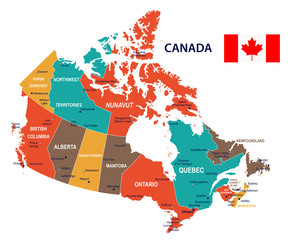
In addition, here is a table showing the combined top personal income tax rates (federal + provincial) for both the lowest and highest bands. These are applicable to professional gamblers who report their gambling winnings tax in Canada as business income.
| Province / Territory | Lowest Tax Rate | Income Range for Lowest Rate | Highest Tax Rate | Income Range for Highest Rate |
| Alberta | 25% | Up to ~$55,867 | 48% | Over ~$246,752 |
| British Columbia | 20% | Up to ~$47,937 | 53.5% | Over ~$181,232 |
| Manitoba | 25% | Up to ~$47,000 | 50% | Over ~$100,000 |
| New Brunswick | 20.3% | Up to ~$44,000 | 53.3% | Over ~$150,000 |
| Newfoundland & Labrador | 23% | Up to ~$39,000 | 48.3% | Over ~$225,000 |
| Northwest Territories | 15.9% | Up to ~$44,000 | 41.4% | Over ~$144,000 |
| Nova Scotia | 21.3% | Up to ~$30,590 | 54% | Over ~$150,000 |
| Nunavut | 15% | Up to ~$44,000 | 44.5% | Over ~$135,000 |
| Ontario | 20% | Up to ~$51,446 | 53.53% | Over ~$220,000 |
| Prince Edward Island | 20.4% | Up to ~$32,000 | 49.8% | Over ~$150,000 |
| Quebec | 27% | Up to ~$51,780 | 53.3% | Over ~$126,000 |
| Saskatchewan | 25% | Up to ~$47,500 | 48% | Over ~$150,000 |
| Yukon | 15% | Up to ~$47,000 | 48% | Over ~$175,000 |
Naturally, the majority of gamblers who pay tax in Canada won’t reach the top marginal rate, which is around 50% across most provinces. This means that if your gambling income exceeds the highest threshold, you could be paying about half of your winnings to the government in taxes.
Important resource on gambling taxation in Canada
- www.canada.ca. Income Tax Folio S3-F9-C1
- www.canada.ca. Expenses section of Form T2125
- www.irs.gov. Tax Treaty Documents
- www.sdlccorp.com. Tax Implications of Gambling Winnings