


DeFi Coins sit at the center of a large and growing part of crypto, and as more of us look for ways to lend, borrow, and earn yield straight from a wallet on our phone, we need clear pointers on which names to study instead of chasing every new token. With money sitting in DeFi apps surging to close to $200B by early October 2025, its clear serious capital is moving into DeFi, so picking a focused set of stronger projects matters more for your risk and for the role crypto plays in your long-term plans.

 ETH
ETH- USDT
 Debit
Debit


- ETH
- BNB
- USDT
- +2


- ETH
- BNB
- USDT
- +1

- ETH
- USDT
- Debit

- ETH
- USDT
- SOL
- +1

Top DeFi coins to consider in 2025
This guide gives you a focused shortlist of DeFi coins and projects that helps you cut through the noise and think more strategically about where your money goes. Instead of chasing every new token, you can use this list to concentrate on assets that already power trading, lending, savings, and other on-chain services.
- Synthetix (SNX): Derivatives protocol enabling synthetic assets and perps collateralized by SNX.
- Balancer (BAL): Programmable AMM and index-like liquidity pools for multi-asset, yield-bearing portfolios.
- Save (SAVE): Solana-native lending protocol offering permissionless borrowing, yield-generating deposits.
- Canton (CC): Institutional-grade privacy-enabled L1 for tokenized real-world assets and TradFi DeFi.
- SushiSwap (SUSHI): Community-driven multichain DEX and AMM with liquidity mining and staking.
- Curve Finance (CRV): Stablecoin-focused DEX/AMM with deep, low-slippage liquidity and boosted yields.
- Beefy (BIFI): Multichain yield optimizer auto-compounding vault strategies across DeFi ecosystems.
- Infrared Finance: Berachain-native liquid staking and management hub powering Proof-of-Liquidity yields.
Reviewing the Best DeFi coins in 2025
DeFi coins cover many roles, from powering trading apps to backing lending and savings tools, so you can build a full on-chain toolkit from a small set of tokens. Ethereum still acts as the main base layer for a lot of DeFi activity, and chains like Solana and BNB Chain compete by giving you quicker confirmation times and cheaper fees for similar apps. That mix of older and newer networks means you can choose where you want to sit between long security history and raw speed when you pick your coins.
1. Synthetix: Democratizing Derivatives with Synthetic Assets
Synthetix is redefining decentralized finance (DeFi) with its deep liquidity and synthetic asset offerings. With one of the highest development activities, Synthetix lets users trade assets without owning them. This means you can gain exposure to stocks, commodities, or even fiat currencies, all on-chain. The platform supports decentralized derivatives trading, enabling lower fees and deeper liquidity. With over $290 million in market cap, it’s a major player in DeFi. Its unique staking system also rewards SNX holders with a share of transaction fees, adding another layer of passive income potential.
What is Synthetix?
Synthetix lets you use crypto to track the price of assets like dollars, Bitcoin, or gold without holding them, through tokens called Synths. These Synths follow live prices with smart contracts and data feeds, so your balance moves as the underlying asset moves.
And that gives you a simple way to test different markets from one wallet instead of opening extra accounts. The protocol runs on Ethereum and Optimism, and apps like Kwenta, Lyra, and Polynomial plug into its liquidity for trading and options. But when you stake SNX you back this shared pool, mint new Synths, and earn a share of fees, so you shift from just using DeFi to helping power it.
Why Synthetix?
Synthetix is gearing up for Perps V2, bringing low-fee, on-chain futures trading. It’s also working on Synthetix V3, aiming for a fully permissionless derivatives protocol.
The SNX token remains central to the ecosystem, with its value tied to staking and platform usage. As the DeFi space evolves, Synthetix stands out as a go-to platform for synthetic assets and decentralized trading.
Pros
- Supports staking with passive income rewards
- No intermediaries, fully decentralized trading
- Uses oracles for accurate price tracking
- Low trading fees on Optimism and Ethereum
Cons:
- Complex for beginners to fully understand
- Limited real-world asset options compared to traditional markets
2. Balancer: A flexible DeFi liquidity protocol
Balancer is one of the most flexible automated market makers (AMMs) in DeFi. Unlike other AMMs that rely on fixed pool structures, Balancer allows developers to create custom liquidity pools with unique designs. This adaptability has made it a core liquidity hub for protocols like Gyroscope, CoW Swap, and Xave. With a market cap of $92 million, Balancer has established itself as a major player in the space. Its standout feature is the Vault architecture, which optimizes gas fees and security by consolidating all liquidity pools into a single contract. This setup makes Balancer more efficient than traditional AMMs, benefiting both liquidity providers and traders.
What is Balancer?
Balancer is a decentralized exchange (DEX) that lets users trade cryptocurrencies while earning fees from liquidity pools. Think of it like an index fund for crypto, where users deposit assets into pools, and Balancer automatically adjusts the pool’s composition to maintain balance. Each Balancer pool can hold up to eight tokens, giving users more flexibility than Uniswap or Curve. When prices change, the protocol automatically rebalances pools, selling assets that have increased in value and buying those that have dropped—without charging extra fees.
This self-balancing mechanism makes it attractive for passive investors. There are three main types of pools: Public pools – open to anyone, ideal for users looking to earn fees on popular trading pairs; Private pools – controlled by a single user, allowing them to manage assets and adjust fees; Smart pools – Programmable pools with dynamic weights and automated strategies. Balancer also introduced Liquidity Bootstrapping Pools (LBPs), which help new projects launch their tokens fairly by gradually adjusting token weights over time. This prevents price manipulation by bots and whales.
Why Balancer?
The BAL token serves as Balancer’s governance asset, allowing holders to vote on upgrades and earn rewards. Following the veBAL model, users can lock BAL tokens to gain voting power and boosted yields. Balancer also has a fixed supply cap of 94 million BAL, ensuring long-term scarcity making it one of our favorite cryptos to buy.
The protocol continues to evolve with MEV-resistant pools, boosted pools for higher yields, and expanding multi-chain support beyond Ethereum. As DeFi matures, Balancer’s ability to customize liquidity solutions positions it as a go-to platform for both traders and developers.
Pros
- Balancer Vault architecture lowers gas fees significantly
- BAL token holders earn governance rights and rewards
- Integrated with major DeFi protocols for deep liquidity
- Boosted pools offer higher yield farming opportunities
Cons:
- Requires deep liquidity for optimal efficiency
- Complex pool structures may confuse casual users
- Gas fees still apply on Ethereum transactions
3. Save (Formerly Solend): Solana’s decentralized lending powerhouse
Save (formerly Solend) stands out as one of the most advanced lending protocols on the Solana blockchain. It uses an algorithmic interest rate model, meaning rates adjust automatically based on supply and demand. This creates a fair, efficient lending and borrowing environment. With a history of raising $6.5 million from major investors like Polychain Capital, Dragonfly Ventures, and Coinbase Ventures, Save has solid financial backing and a strong foundation in DeFi.

What is Save?
Save is a decentralized lending and borrowing platform that allows users to earn interest on crypto assets or take out loans using their holdings as collateral. It works without banks or intermediaries, making finance more accessible. Since it runs on Solana, it benefits from low fees and fast transactions, making it a great choice for cost-conscious users.
A key feature is permissionless pools, which allow anyone to create custom lending markets. This flexibility means even new or niche tokens can be used for lending. The platform also integrates with Switchboard v2, a decentralized oracle network that brings real-world data into smart contracts. This ensures accurate pricing for collateral and loans.
Why Save?
Solend’s rebrand to Save introduced new products: $SUSD – a decentralized stablecoin that lets you store value without relying on traditional banks; $saveSOL – a liquid staking token that lets you stake SOL while keeping access to your funds; and dumpy.fun – A platform for shorting memecoins, giving traders a way to bet against hype-driven tokens.
By broadening its offerings, Save is positioning itself as more than just a lending platform. Whether you’re into lending, staking, or trading, it’s building tools to make DeFi more accessible. The SLND token continues to power the platform, allowing users to participate in governance and earn rewards. With Solana’s ecosystem growing, Save is positioned as one of the most efficient and flexible lending platforms in DeFi. If you’re looking for a fast, low-cost way to earn yield or take out a loan, Save is worth considering.
Pros
- Solana-based transactions are cost-efficient
- Permissionless markets – Anyone can create lending pools
- Collateralized loans so borrow without selling assets
- Developer-friendly, open-source and easy to integrate
Cons:
- No fiat support – crypto-only transactions
- Interest rate volatility because dynamic rates can be unpredictable
4. Canton: Institutional DeFi network with privacy
Canton (CC) is the native utility token of the Canton Network, a privacy-focused layer 1 that lets banks, fintechs, and DeFi users move real-world assets on-chain in a way that fits existing regulations. The network already handles around $280B in daily repo trades for more than 400 institutions, including Goldman Sachs, BNP Paribas, HSBC, and Bank of America. Canton Coin manages network fees through a burn-and-mint equilibrium model with no premine or presale, so participants earn tokens by running infrastructure or building applications rather than buying into an early allocation.
What is Canton?
At its core, Canton Network acts as a public permissioned blockchain that lets separate financial systems sync assets and data across a shared Global Synchronizer while still keeping sensitive transaction details private. Each participant such as a bank or trading venue runs its own node and Daml smart contracts, so it keeps control of who can see or change any given contract while still taking part in atomic cross application transactions. This design helps Canton carry familiar workflows like securities settlement, repo trades and syndicated loans onto chain while meeting regulatory rules around privacy and auditability.
And you already see this in production as platforms such as Broadridge, Tradeweb and Euroclear use Canton to handle tokenized collateral and US Treasuries at scale. Canton Coin serves as the utility token for the Global Synchronizer, so institutions and apps pay network fees in CC and contributors earn CC in return for the capacity and services they provide. Fees are priced in US dollars but settled in CC, and the protocol burns those fee tokens while minting new ones on a fixed curve, which ties supply growth directly to real network usage.
Why Canton?
You can ask yourself whether your DeFi portfolio only tracks trading activity or whether you also want exposure to tokenized real-world assets and the institutional infrastructure that moves them, and Canton sits squarely in that second camp. The combination of trillions in tokenized assets, hundreds of billions in daily repo volume and participation from major banks shows that this project already supports real financial flows, not only speculative on chain experiments.
If you care about how crypto links to bonds, money market funds and other traditional instruments, you can treat Canton as a central position in that theme and track metrics like CC burned, validator growth and new institutional pilots rather than only watching short term price moves. And when you look across DeFi coins for 2025, Canton offers a mix of privacy, regulatory focus and utility based rewards so you can decide whether you want part of your capital tied to infrastructure that large institutions already use to move value on chain
Pros
- Built for regulated finance and tokenized real world assets
- Backed by major banks, market operators and tech firms
- Strong privacy tools keep transaction details visible
- Fair launch tokenomics without pre mine or presale
Cons:
- Focus on regulated finance means retail DeFi users may feel like second priority
- Permissioned, privacy heavy design limit open experimentation
- Regulatory shifts around tokenized assets could slow growth
5. SushiSwap: Multi-chain DeFi powerhouse
SushiSwap gives you one DeFi exchange that already runs across more than forty blockchains, so you do not need to learn a new app every time you move to a new network. Through SushiXSwap you can move value from one chain to another in a single flow, without first visiting a separate bridge or wrapping your coins. The routing engine checks many liquidity sources and paths to aim for a route that balances price and speed for your trade. Liquidity providers can also stake their pool tokens in farms and other programs, which adds extra yield on top of the standard swap fees if you are willing to keep your capital in the system for longer.
What is SushiSwap?
SushiSwap is a DeFi exchange where you trade tokens against shared liquidity pools rather than a central order book. Other users deposit token pairs into these pools and earn a slice of each trade, so they act as liquidity providers without running a professional trading desk. The protocol started on Ethereum and still follows its standards, and over time the team and community deployed Sushi on many EVM chains and several newer networks so you can access it from most major ecosystems.
SushiXSwap then adds a cross-chain layer that moves value between supported chains while the Route Processor searches across multiple pools and aggregators to put your swap together. For you this means you can stay inside one interface, choose the tokens and chains you care about, and let the routing tools handle the complex parts in the background. If you prefer to earn yield instead of trading all day, you can stake SUSHI in SushiBar to receive xSUSHI that tracks fee income, or stake LP positions in yield farms when those rewards fit your risk level and time frame. That setup lets you pick your role in the system: active trader, liquidity provider, long-term staker, or some mix that matches your own plan.
Why SushiSwap?
You look at SushiSwap when you want one DeFi venue that follows you across many chains and rewards you for taking an active role in how liquidity flows. Sushi DAO and Jared Grey received an SEC subpoena in 2023 and the DAO created a legal defense fund, and public statements show that they have been cooperating with the regulator.
Courts in the United States have dismissed class actions tied to Uniswap and the SEC recently closed at least one Uniswap investigation without enforcement, which many DeFi users see as a small sign that courts may treat protocol developers and traders differently from token issuers. What you can observe today is an active, community-run protocol that keeps pushing multi-chain routing and fee-sharing models, so the real question for you is whether you want exposure to that style of DeFi in your portfolio.
Pros
- Supports over 40 blockchain networks
- Cross-chain swaps via SushiXSwap feature
- Governance is fully community-driven
- Multiple liquidity provider incentives
Cons:
- Early founder controversy hurt reputation
- Security risks from smart contract exploits
- Price volatility of SUSHI token
6. Curve Finance: Best DeFi option for Stablecoin swaps
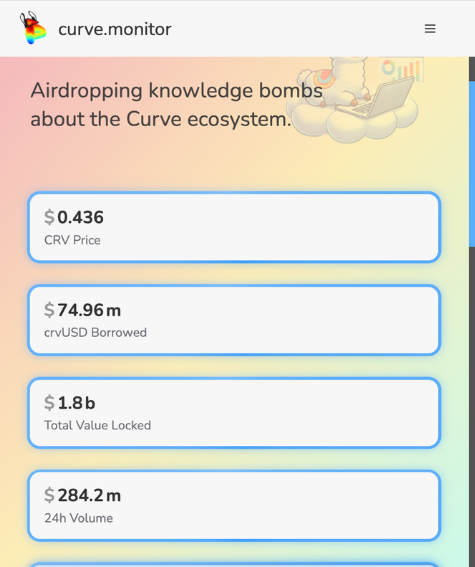
Curve Finance is a DeFi protocol where you trade stablecoins and similar tokens with low price impact, and its CRV token gives you a way to own a piece of that system. At the time of writing CRV trades around 0.64 dollars with roughly 1.43 billion tokens in circulation and a market cap just under 1 billion dollars, while Curve itself holds around 2.4 billion dollars locked in its smart contracts. For your 2025 portfolio this means you can use Curve both as a practical place to move stablecoins and as an investment in one of the larger and more established DeFi platforms focused on dollar-pegged assets.
What is Curve Finance?
Curve Finance is a decentralized exchange that specializes in trading stablecoins and other tokens that tend to track the same price, using an automated market maker instead of a traditional order book. You swap through liquidity pools, which are shared pots of funds provided by users, and Curve’s pricing formula keeps trades between these closely priced assets cheap with low slippage and trading fees that often sit in the 0.01 to 0.04 percent range. And because everything runs on Ethereum and several other blockchains through smart contracts, you keep control of your wallet while you trade rather than handing coins to a centralized exchange.
Curve is steered by the CRV token, which you can lock to receive a token called veCRV that boosts your rewards and gives you voting power over how incentives are distributed across its pools. Liquidity providers earn a share of trading fees from the pools they support, and users who lock CRV into veCRV currently receive 50 percent of the protocol’s trading fees on top of that. Over the last few years Curve has also grown beyond simple swaps with products such as its crvUSD dollar stablecoin, interest-bearing savings for crvUSD, and lending markets that all feed back into the same liquidity and governance flywheel.
Why Curve Finance?
Curve earns a place on a 2025 DeFi coin list because it sits very close to the center of stablecoin liquidity, with around $2.4B in TVL and more than $30B in volume has moved through its pools. When you hold and lock CRV you share half of the protocol’s trading fees, gain a direct vote on where new rewards go, and position yourself to benefit if newer products such as crvUSD and Yield Basis continue to pull more trading and borrowing into the ecosystem.
And if you already park a lot of your capital in stablecoins, owning some CRV lets you tilt part of your portfolio toward the infrastructure that helps those stablecoins move, rather than leaving everything in assets that only mirror the dollar making it one of the best utility tokens to buy into.
Pros
- Low fees for traders
- High liquidity for stablecoins
- Supports multiple blockchain networks
- CRV token rewards for liquidity providers
- Automated trading through AMM model
Cons:
- Mainly limited to stablecoins
- Complex interface for beginners
- Impermanent loss still exists
7. Beefy: Maximizing crypto rewards with automation
Beefy Finance (BIFI) is a decentralized multichain DeFi yield optimizer that lets you earn auto compounded returns on your crypto across more than twenty blockchains such as BNB Chain, Ethereum, Polygon, Arbitrum and Base. The BIFI token has a fixed supply of 80,000 coins, trades around 114 dollars with a circulating market cap near 9 million dollars in late 2025, and sits on top of a protocol that various data providers show with TVL in the low hundreds of millions of dollars. So when you look at Beefy Finance you are not just picking a DeFi coin, you are looking at a live yield platform with users, vaults and fee revenue that flows back into its ecosystem.

What is Beefy Finance?
Beefy Finance is a decentralized yield optimizer where you deposit tokens into smart contract vaults, and the system keeps harvesting and reinvesting rewards for you automatically. When you add assets you receive interest bearing “mooTokens” that track your share of the vault plus the yield it has already produced. And because Beefy runs on many chains at once, you can use one interface for LP tokens, staking positions and stablecoin strategies across several networks without learning a new app each time.
Under the hood, Beefy vaults follow pre-built strategies that route your deposited tokens into liquidity pools, lending markets, or staking contracts that the community has encoded into smart contracts. The protocol then takes a small performance fee each time it harvests rewards and shares a slice of that revenue with BIFI holders who stake in the governance pool, so your token position links directly to protocol fees.
Why Beefy Finance?
We place Beefy Finance on a 2025 DeFi coin list because it lets you own a capped supply revenue sharing token that sits on top of a working yield aggregator rather than a purely story driven coin. Data shows that Beefy still carries hundreds of millions of dollars in TVL across chains, operates on many networks, and keeps an active roadmap, so you tie your 2025 portfolio pick to a protocol with current usage and ongoing development.
When you think about your own DeFi plan, you can treat Beefy as the piece that handles auto-compounding yield strategies at scale while you focus your time on deciding which chains and sectors you even want exposure to in the first place.
Pros
- No lock-in—withdraw funds anytime
- Auto-compounding increases long-term earnings
- Secure, permissionless, and non-custodial system
- Reduces transaction fees through optimization
Cons:
- Market fluctuations affect earnings potential
- Limited $BIFI supply may cause price volatility
- Not fully beginner-friendly despite automation
8. Infrared Finance: ‘The’ leading protocol on Berachain
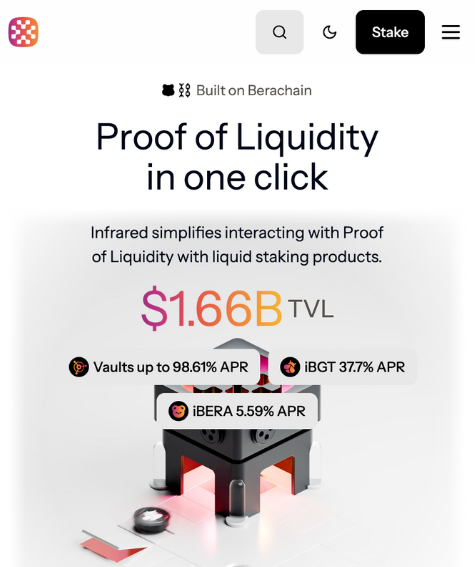
Infrared BGT (iBGT) is the liquid staking coin from Infrared Finance on Berachain that gives you tradable exposure to staked BGT and the chain’s Proof of Liquidity system. And public reports say Infrared’s protocol has attracted backers such as YZi Labs (formerly Binance Labs) and Framework Ventures, with total fundraising near 18.75 million dollars and a June 2025 peak above $3B in total value locked, around 60 percent of all Berachain DeFi liquidity flowing through it. For a 2025 DeFi portfolio, iBGT gives you a straightforward way to hold a piece of that staking and governance flow instead of just sitting on raw BERA.
What is Infrared Finance?
Infrared Finance is a liquid staking and liquidity management protocol built for Berachain’s Proof of Liquidity model. You deposit PoL assets or LP tokens into Infrared vaults and the protocol stakes them in Berachain’s PoL system, captures BGT rewards and mints liquid staking tokens such as iBGT and iBERA back to your wallet. Those liquid tokens track your share of the underlying positions while staying usable in DEX pools, lending markets and other Berachain DeFi apps, so your capital keeps working instead of sitting idle in a staking contract.
But from a user view, the main building blocks are PoL vaults that aggregate LPs, the iBGT wrapper that turns non transferable BGT into a liquid asset, the iBERA liquid staked BERA and an on chain points program that rewards you for staking and providing liquidity over time. And because Berachain DEXs, money markets and yield platforms already use iBGT and iBERA in their own pools and strategies, Infrared ends up as the place where much of the chain’s staking power and DeFi liquidity passes through first.
Why Infrared Finance?
If you believe Berachain’s Proof of Liquidity design will keep attracting projects and users, then holding Infrared coins such as iBGT and iBERA lets you tap into that growth through the protocol that already channels a large share of BGT staking and DeFi liquidity.
You can use those tokens to earn staking yield, enter structured strategies on apps such as Pendle, accumulate Infrared Points that public articles say will convert into a native token, and track protocol TVL and fee data on sites such as DeFiLlama to see whether that thesis still makes sense for you. When we look at DeFi coins for 2025, Infrared gives you a coin that also plugs you into Berachain’s main staking and governance hub, so you gain exposure to the broader PoL theme in a single, very liquid position.
Pros
- Allows staked assets to remain usable
- Supports broader DeFi integrations
- Enables new earning opportunities
- Increases liquidity across the network
- Backed by strong investor funding
Cons:
- Limited to Berachain ecosystem only
- Complexity for absolute beginners
- Requires holding BGT or BERA
What are DeFi coins?
DeFi coins are cryptocurrencies that power decentralized finance (DeFi) platforms. Unlike regular money or even Bitcoin, these coins let you do things like lending, borrowing, trading, and earning interest—without needing a bank or middleman.
Think of them as digital tokens that help run DeFi apps. Some let you vote on platform changes, others pay rewards to users, and some act as fuel for transactions.
For example, Ethereum (ETH) is the most well-known DeFi coin because many DeFi apps run on the Ethereum blockchain. Uniswap (UNI) lets you trade crypto without a central exchange, and Aave (AAVE) helps users borrow and lend crypto instantly.
Why do these coins matter? They put financial control back into your hands. While traditional banks set the rules in centralized finance, DeFi and its coins much like popular shitcoins in the meme space let users become active participants in shaping the system.
DeFi coins vs. Traditional cryptos: Key differences
| Governance | Often community-governed via DAOs | Typically controlled by core teams or foundations |
| Use cases | Lending, staking, yield farming, liquidity provision | Payments, remittances, investments, speculation |
| Value drivers | Utility within DeFi ecosystems | Market demand, adoption, and scarcity |
| Earning potential | Users can earn via staking, liquidity mining, etc. | Earnings depend on price appreciation or mining |
| Regulation | Faces evolving regulations due to financial functions | Generally categorized as commodities or securities |
What are DeFi Tokens used for?
Decentralized finance (DeFi) coins power different parts of the DeFi ecosystem. They let you trade, earn, borrow, and invest without needing banks or middlemen. Below is how they’re used:
Staking and earning rewards
Many DeFi platforms let you stake tokens, meaning you lock them up in exchange for rewards. The longer you stake, the more you earn. Ethereum (ETH) is a good example—stakers on Ethereum’s network earn yields for helping secure transactions. In some cases, rewards can range from 5% to 10% APY (annual percentage yield), depending on the network.
Lending and borrowing
Found in the best DeFi 2.0 tokens, these coins let you lend out your crypto or borrow against it. With Aave (AAVE), for example, you can deposit tokens and earn interest while borrowers use them as loans. Unlike banks, you don’t need a credit check—you just provide crypto as collateral. Some DeFi loans offer rates as low as 2-3%, while traditional banks charge much higher.
‘Trade’ without a middleman
With DeFi, you can trade tokens directly with other people without an exchange controlling the process. Uniswap (UNI) and PancakeSwap (CAKE) are great examples. They use liquidity pools, where users deposit tokens to allow instant trades. By doing this, traders avoid high fees and restrictions seen on centralized exchanges.
Yield farming & liquidity providing
Yield farming lets you earn extra rewards by moving tokens between different DeFi platforms to get the best rates. Liquidity providers deposit tokens into pools to keep markets running and get a share of the trading fees. For example, Curve Finance (CRV) pays rewards to users who add stablecoins like USDC and DAI to its pools. Some farms offer returns over 50% APY, though risks vary.
Governance and voting rights
Holding certain DeFi tokens gives you a say in how a project is run. This is called governance. If you own COMP (Compound) or MKR (Maker), for example, you can vote on important changes—like adjusting interest rates or adding new features. The more tokens you hold, the bigger your vote. This makes DeFi more community-driven than traditional finance.
So, as you can see, DeFi coins have real use cases. Whether that be to earn passive income, trade freely, or have a say in crypto projects, they give you new ways to control your money.
What drives the value of DeFi cryptocurrencies?
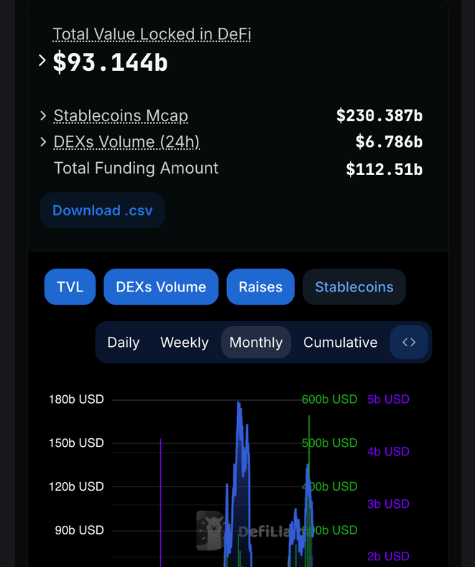
DeFi tokens often draw their strength from real use rather than pure hype. The app behind the token gives people a reason to hold and spend it for fees, rewards, or voting. When more people trade, lend, or stake through a protocol, demand for its token can rise because users need it for governance, staking, or to unlock features. Uniswap is one clear case, as its open token swaps during the 2020 “DeFi summer” pushed weekly trading volume into the billions of dollars and helped UNI become a central governance token.
As traders and liquidity providers used Uniswap more, UNI gained a role in steering protocol upgrades and controlling incentives, so active users had a direct reason to hold it. Aave tells a related story, with its lending pools and flash loans attracting people who wanted to borrow and repay within a single transaction, using the app as a core tool rather than a one-off experiment. That activity gives AAVE a clear purpose, since holders guide how the markets work through governance votes, and you can join those decisions once you decide the protocol fits your own strategy.
Stablecoins add another layer to this picture, because they sit at the center of many DeFi trades and help people in high inflation countries keep savings in a more stable unit. MakerDAO links its MKR token to the health of DAI, since governance and risk decisions aim to keep DAI close to one dollar and manage the collateral that backs it. In places such as Argentina or Venezuela, some users choose DAI as a store of value, and that real demand for the stablecoin supports ongoing interest in Maker’s governance token.
Curve Finance shows how rewards can pull in users, as CRV tokens go to people who supply stablecoins to its pools and take part in yield farming strategies built on top of those pools. At the same time, DeFi teams are tokenizing real world assets such as bonds or property income, and that shift needs platforms that can handle both onchain trading and links back to legal ownership. Large funds and traditional finance firms are starting to explore these structures, which brings more capital and attention, and you can decide how much of your portfolio you want to tie to that bridge between crypto and real world assets.
Our best Defi coins, compared
| Project | Token | Max. Supply | Chain | TVL | Launched |
| Synthetix | $SNX | 339.88M | Solana | 194M | 2017 |
| Balancer | $BAL | 67.64M | Ethereum | 500m – 700M | 2020 |
| Save | $SLND | 100M | Solana | 100M | 2021 |
| Canton | $CC | ∞ | Own Blockchain | 1B | 2023 |
| SushiSwap | $SUSHI | 281.67M | Ethereum | 350M – 500M | 2020 |
| Curve Finance | $CRV | 2.23B | Ethereum | 2B | 2020 |
| Beefy | $BIFI | 80K | Ethereum | 10M | 2020 |
| Infrared Finance | TBA | – | Berachain | >50M | 2022 |
Summary on the best DeFi coins
In this guide, we bring together eight DeFi coins for 2025 that cover swapping, liquidity, savings, and core on-chain services in a simple, focused way so your portfolio has a clear structure. And by looking at Synthetix, Balancer, Save, SushiSwap, Curve Finance, Beedy Finance, Infrared Finance, and Canton, you get exposure to different ways people already trade, pool, and grow crypto value on-chain. These projects help you see how DeFi is moving from early experiments toward tools you and I might use more often for everyday payments, trading, and saving as more people explore the industry.
Out of everything in the list, Canton stands out as a favorite because it focuses on privacy and regulated finance while still linking to DeFi activity, and Coinbase is offering KYC-verified liquidity pools for DeFi swaps and trades to give both everyday users and larger firms a more controlled way to trade on-chain. But together, Canton’s focus on privacy and compliance and Coinbase’s KYC pools show you how parts of DeFi are starting to welcome larger financial players while still letting you keep control of your own wallet and coins.
FAQs
Which DeFi coins have the most developer activity?
How do DeFi coins compare to traditional finance assets?
What’s the best DeFi coin for earning yield?
Do DeFi coins work across multiple blockchains?
How do DeFi stablecoins differ from traditional stablecoins?
How do governance tokens in DeFi work?
Which DeFi cryptos offer the highest yield?
Are DeFi cryptocurrencies the best to invest?
References
- Beefy Finance ecosystem overview | Beefy Docs
- What is Curve Finance, and How to Use it? | BitDegree
- SushiSwap (SUSHI): A Community-Centric Evolution of Uniswap | Cryptopedia by Gemini
- What is Balancer? (BAL) | Kraken resources
- What is Synthetix? (SNX) | Kraken resources
- Berachain liquid staking protocol Infrared raises $14 million in Series A token round | The Block
- Tornado Cash Sanctions Lifted by U.S. Treasury in Major DeFi Victory | TheTradable
- Coinbase Introduces KYC-Verified Liquidity Pools for DeFi Swaps and Trades | Decrypt