


Our analysts review the top tech stocks to buy right now. Check out these leading stock listings to learn which are shaking up the sector in 2026.
Although we’ve moved through the Digital Age into what some now call the AI Age, the tech sector’s dominance in the stock market has not changed. Over the past 10 years, the Nasdaq 100 has returned 17.8% per year on average, easily beating the S&P 500, which has returned 10.9%.
Given that we are moving deeper into the Digital Age and the rise of artificial intelligence (AI) technologies, the tech sector as a whole should remain dominant. In our view, these 10 stocks are the best tech stocks available right now.
Editor’s note: Our expert team of analysts employs a precise methodology when choosing stocks. To learn more about our process, see our detailed methodology. Price data is provided by Trading View and is updated daily.
Top trading and investing platform
- Ideal for beginner investors
- Copy trade other successful investors
- Access 6,000+ stocks for local and global exposure

Best technology stocks to invest in
The list was composed in 2024. The YTD includes the returns made on stocks since and are expected to maintain their status in 2026.
| Ticker | Company | Performance (YTD) | Invest Now |
| NASDAQ:MSFT | Microsoft | October 2024: -7.47% November 2025: +15.18% | Invest with eToro |
| NASDAQ:AMZN | Amazon | October 2024: -15.29% November 2025: +4.45% | Invest with eToro |
| NASAQ:NVDA | NVIDIA | October 2024: -23.05% November 2025: +34.23% | Invest with eToro |
| NASDAQ:AAPL | Apple | October 2024: -14.55% November 2025: +10.83% | Invest with eToro |
| NASDAQ:META | Meta Platforms | October 2024: -11.03% November 2025: +8.22% | Invest with eToro |
| NASDAQ:GOOG | Alphabet | October 2024: -15.3% November 2025: +68.18% | Invest with eToro |
| NASDAQ:AVGO | Broadcom | October 2024: -18.89% November 2025: +71.38% | Invest with eToro |
| NYSE:V | Visa | October 2024: +6.78% November 2025: +6.17% | Invest with eToro |
| NYSE:TSM | Taiwan Semiconductor | October 2024: -18.55% November 2025: +43.84 | Invest with eToro |
| NASDAQ: PANW | Palo Alto Networks | October 2024: -2.6% November 2025: +2.55% | Invest with eToro |
1. Microsoft
Microsoft (NASDAQ:MSFT) has expertly made the transition to its second generation under CEO Satya Nadella, and it may be an even stronger company now than it was in the past. In the last few years, Microsoft surpassed Apple as the largest company in the world by market cap
It has also successfully transitioned from software and personal computing to a leader in cloud computing and AI. Over the past 10 years, Microsoft stock has posted an average annualized return of 26.8%, earning a position among the best-performing “Magnificent Seven” stocks.
With its leadership in intelligent cloud computing, the company has gained market share versus Amazon and is well-positioned to continue to grow as it has been a key leader in the AI arms race.
Your capital is at risk
2. Amazon
As one of the world’s largest e-commerce retailers, Amazon (NASDAQ:AMZN) is typically considered a retail stock, but at its heart, it is a technology stock. The company’s groundbreaking technologies have made it one of the first hugely successful online retailers and a leader in cloud computing through its Amazon Web Services (AWS) business.
While Microsoft has made gains in the cloud and Alphabet is ramping up its cloud technology, Amazon still holds about one-third of the market.
Over the past 10 years, Amazon stock has performed even better than Microsoft with a 28.7% average annualized return, and as a market leader in two of its businesses, Amazon should dominate in both sectors for years to come.
Your capital is at risk
3. NVIDIA
No large-cap stock has been a better performer in recent years than NVIDIA (NASDAQ:NVDA). The semiconductor company specializes in AI-enabled graphics processing units (GPUs) that can handle complex tasks faster than chips from its competitors.
NVIDIA’s chips are used in cars, computers, gaming systems, and other devices, but its primary revenue growth driver has been data centers, where its clients include Microsoft, Amazon, Alphabet, Meta and others.
Analysts estimate that NVIDIA controls 98% of the GPU market for data centers, where massive amounts of data are processed.
The chipmaker’s returns have been astounding. Last year the stock skyrocketed 239%, and this year, it is already up 86%.
Over the past 10 years, NVIDIA has generated an average annualized return of 70.1%, and as we are just scratching the surface of AI, it should remain a major player for a long time.
Your capital is at risk
4. Apple
Apple (NASDAQ:AAPL) has lagged its Magnificent Seven counterparts in recent years as iPhone sales have slowed, but the second-largest company in the world is not one to sleep in.
Apple stock is only up 3% year to date and has returned just 9.2% over the past 12 months. However, it is trading at a relatively low valuation, so this is a good time to buy or add shares.
The iPhone maker has always been able to adapt and thrive, and it is about to introduce its latest operating system, iOS 18, in June. iOS 18 is said to be Apple’s biggest update in years, incorporating generative AI into its technology.
Even with its recent hiccup, Apple stock has still posted an average annualized return of 24.4% over the past 10 years.
Your capital is at risk
5. Meta Platforms
Of course, Meta Platforms (NASDAQ:META) changed its name from Facebook a few years ago to reflect the next chapter in its development, the Metaverse, through its virtual-reality business called Reality Labs.
At present, Reality Labs represents only a small fraction of the overall revenue, as the business has been slow to grow. However, Meta continues to invest in Reality Labs, seeing it as the future of the entire company.
For now, Meta Platforms remains the dominant presence in social media, owning Facebook, Instagram, WhatsApp and Messenger — four of the seven largest social-media sites — and Threads, which is growing rapidly.
Meta has also undergone major expense reductions to invest in its future revenue and earnings growth. Meta stock has posted a 10-year average annualized return of 23%.
Your capital is at risk
6. Alphabet
Alphabet (NASDAQ:GOOG) is another tech behemoth, owning Google search and YouTube. The company’s cash cows are Google, the number-one search provider, and the video and streaming platform YouTube.
In fact, Google Services generates almost 90% of its revenue. However, Alphabet also has a growing cloud-computing business, occupying third place with an 11% market share behind Amazon and Microsoft.
The company has also invested heavily in AI and is confident that its new Gemini AI platform, which will be implemented across its various offerings, will challenge the leaders in the AI space and drive its future growth.
Alphabet stock has had an average annualized return of 21.1% over the past 10 years.
Your capital is at risk
7. Broadcom
Broadcom (NASDAQ:AVGO) is another semiconductor company fueled by its AI chips. The company makes chips mainly for wireless connectivity, so it is also poised to benefit from the 5G wireless boom.
Broadcom also makes switches and routers for data centers, so it should be in position to ride that wave as more and more data centers are being built to account for the rise in AI computing.
Last year, the chipmaker acquired VMWare, which produces virtualization software that allows computers to run more efficiently. CEO Hock Tan called the acquisition transformational, as it will diversify and boost Broadcom’s revenue.
Broadcom stock has a 10-year annualized return of 35.3% and is a candidate for a stock split.
Your capital is at risk
8. Visa
Of course, Visa (NYSE:V) is widely known as a leading credit and payment-processing company, but it is also driven by technology as its network is what powers payments. Visa has what is called a competitive moat, meaning that it has an advantage so strong that it is difficult to pierce.
Visa and Mastercard form a duopoly as the only two major credit-card providers of their kind, while their competitors have closed-loop systems, meaning they are lenders, issuers and processors.
Visa is simply a processor, so it has low overhead and lower risk, and it generates huge profit margins. Visa also performs well in all market cycles and should continue to outperform as the world moves increasingly cash-less.
Visa stock has a 10-year average annualized return of 18.1%.
Your capital is at risk
9. Taiwan Semiconductor
Taiwan Semiconductor (NYSE:TSM) is different from other semiconductor stocks in that it is the leading foundry, or chip manufacturer. That means it doesn’t design the chips; rather, it manufactures them on a massive scale for clients like Apple, Advanced Micro Devices, and Broadcom, among others.
Taiwan Semiconductor is ramping up its production for in-demand AI chips, and while that investment could slow growth in the near term, the company should see significant long-term returns as the leading foundry in the world focused on AI chips.
Taiwan Semiconductor stock has a 22.2% 10-year average annualized return.
Your capital is at risk
10. Palo Alto Networks
Palo Alto Networks (NASDAQ:PANW) is the leading provider of cybersecurity solutions for businesses, and its services will be in greater and greater demand as cyber crimes and attacks are expected to increase in the years ahead.
This is a competitive space, but Palo Alto Networks has the advantage of being an established, trusted brand in a business that is sticky, meaning it is complex, costly and challenging to change providers. As an efficient, established player, Palo Alto has solid margins and lots of operating cash flow, which it is investing in its proprietary generative-AI cybersecurity solution, Precision AI.
Palo Alto Networks has a 10-year average annualized return of 31.4%.
Your capital is at risk
Different types of technology stocks
These 10 stocks represent a fairly broad range of technology stocks. However, they are just a fraction of the tech universe that encompasses a broad range of industries. In the list above alone, we have companies that specialize in semiconductors, hardware, software, social media, cybersecurity and financials.
The Global Industry Classification Standard (GICS) is a methodology developed by MSCI and Standard & Poor’s that assigns companies to a sector based on their businesses. The GICS Information Technology sector includes three broad categories:
- Software & Services. This includes IT consulting and services, data processing, internet services and infrastructure, application software, and systems software
- Technology Hardware & Equipment. This includes communications equipment; technology hardware, storage, and peripherals; electronic equipment and instruments; electronic components; electronic manufacturing services; and technology distributors
- Semiconductors & Semiconductor Equipment. This includes equipment that runs on the electronic properties of a semiconductor material, such as silicon or germanium.
However, technology companies can also be found in the Communication Services sector, which encompasses telecommunications, wireless, and media companies, among others.
The sector also includes stocks like Alphabet and Meta Platforms. These stocks have traditionally been considered technology stocks and still rely heavily on technology.
Beyond that, technology stocks may be found in Consumer Discretionary, where Amazon has been classified, and Financial, which encompasses fintechs like Visa. Thus, when looking for technology stocks, including these other sectors helps to broaden the lens.
The pros and cons of tech stocks
As mentioned, technology stocks have driven the markets over the past 30 years, producing the best returns of any sector. In this Digital Age, which is becoming the AI Age, they will continue to be at the forefront of innovation and growth.
That said, technology is among the most volatile of sectors with wilder short-term swings. In other words, while tech stocks enjoy higher highs, they often see lower lows than other sectors when the market is down.
Generally speaking, technology stocks react more negatively to rising interest rates, inflation, and economic slowdowns, as these issues can make it harder for them to invest and grow. They may also be subject to disruptive new technologies that render them less competitive or regulations that make growth more difficult.
Investors exploring what are stocks should be mindful of the risks in addition to the rewards and invest cautiously, making technology stocks just a fraction of a diversified portfolio.
Choosing the 10 best technology stocks
There may be high-flyers in the technology sector, and new companies may emerge with groundbreaking technologies that disrupt the industry. However, these 10 technology stocks have not only stood the test of time but also have strong catalysts that make them the best long-term performers on stock exchanges.
We take into account several factors before selecting the best picks for investors – and some of these overlap with identifying web3 stocks to buy, as the future of tech is increasingly tied to decentralization, blockchain, and next-gen digital infrastructure. Learn more about our methodology below.

How We Rate Stocks
We review each stock that is selected. Below are the key metrics we check before listing stocks on the website. For further details, you can also take a look at our stocks rating guide, featured on ValueWalk.
Balance sheet
Potential Growth
Competitiveness
Liquidity
Get expert tech market insights and signals on Benzinga Pro
The fast-paced technology sector requires traders to examine real-time data to stay ahead. With Benzinga Pro, users can access a live newsfeed, actionable insights, and expert analysis on the Nasdaq and other industries.
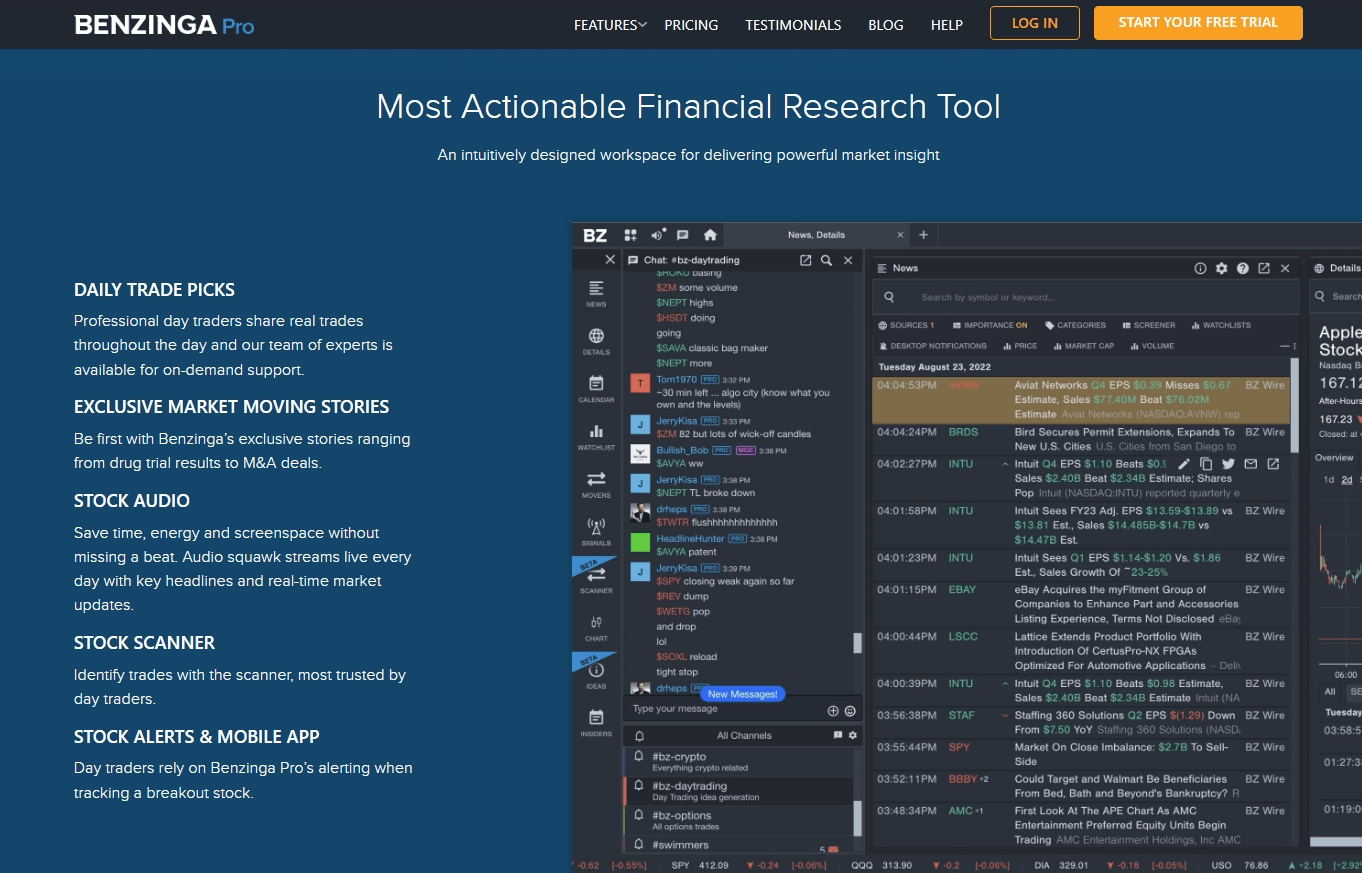
The robust stock signal platform gives investors a competitive edge in identifying high-potential trades, supported by expert market commentary from leading analysts. Benzinga Pro’s real-time, customizable newsfeed allows users to filter updates based on specific stocks and industries, including trending sectors like blockchain stocks – ensuring that your trading strategy stays aligned with relevant market movements.
One unique feature that Benzinga Pro offers is its live audio squawk. Here, a real-time audio feed delivers breaking news and market developments for those who need to stay updated without looking at their screens.
Benzinga Pro is the only platform available for retail investors that provides the fastest trading news trusted by day traders. It’s also a valuable tool for investors looking for opportunities in the best stocks under $10. Explore the trading signal software with the 14-day free trial for a risk-free assessment of the platform’s powerful market tools.
References
- Disaster Tax Relief Bill Clears House, Moves to Senate
- Succession: Is the Jamie Dimon Era at JPMorgan Chase Nearing its End?
Disclaimers and legal information:
eToro USA LLC and eToro USA Securities Inc.; Investing involves risk, including loss of principal; Not a recommendation. Cryptocurrency is offered by eToro USA LLC (“the MSB”) (NMLS: 1769299) and is not FDIC or SIPC insured. Investing involves risk, and content is provided for educational purposes only, does not imply a recommendation, and is not a guarantee of future performance. [Youtube channel] is not an affiliate and may be compensated if you access certain products or services offered by the MSB. Please note that the only cryptos available for US users are Bitcoin, Ethereum, and Bitcoin Cash.
ValueWalk is compensated if you access certain of the products or services offered by eToro USA LLC and/or eToro USA Securities Inc. Any testimonials contained in this communication may not be representative of the experience of other eToro customers and such testimonials are not guarantees of future performance or success.