


A crypto cold storage wallet is essential for the maximum security of your digital assets compared to a browser extension wallet. Cold wallets employ different security measures than hot wallets, which some may favor.
Below is our comprehensive list of the best cold wallets in the cryptocurrency space, each offering unique features tailored to different needs.
Trezor Model One Review
- Supports 1,800+ cryptocurrencies, including top coins.
- Offers PIN protection and offline private key storage.
- Budget-friendly, perfect for beginners.

The best cold wallets for cold storage
Explore the best crypto cold storage wallets available in 2025. Each is designed to offer maximum security and unique features for diverse needs.
- Trezor Model One – A secure, entry-level hardware wallet with a straightforward interface, ideal for beginners in crypto cold storage.
- Trezor Model T – Advanced with a full-color touchscreen, the Trezor Model T combines ease of use with top-notch security for multiple cryptocurrencies.
- Cypherock X1 – This unique storage wallet uses Shamir Secret Sharing to split private keys across four cards, elevating crypto asset security.
- Ledger Stax – A premium Bluetooth-enabled wallet featuring wireless charging and a customizable display, perfect for those seeking convenience.
- ELLIPAL Titan 2.0 – Completely air-gapped with QR verification, this wallet is built for security, immune to online attacks.
- Blockstream Jade – Focused on Bitcoin, this wallet uses air-gapped technology for offline transactions and maximum asset protection.
- ColdCard Mk4 – Known for its top-level security, ColdCard Mk4 is a Bitcoin-only wallet with air-gap support for the highest offline protection.
- BitBox02 – A compact cold wallet offering USB-C compatibility, suitable for users prioritizing ease of use in cold storage wallets.
- SafePal S1 – Affordable and secure, this wallet supports over 10,000 cryptocurrencies and enables air-gapped signing for increased security.
- Keystone – Biometric security with fingerprint access and a robust design, Keystone offers advanced security features for serious crypto investors
How we choose the best cold wallets
The key considerations for identifying the best cold storage wallets for crypto cold storage were advanced security features, ease of use, compatibility with various cryptocurrencies, and cost-effectiveness.
Each physical device featured on our list is equipped with high-level security measures to keep the private keys offline. It also offers a suite of functionalities that suit both beginner and advanced users in storing and managing cryptocurrency.
A closer look at the best cold storage wallets in 2025
Here is a closer look at the top five cold storage wallets, with full details of the unique features that each has to offer.
1. Trezor Model One – The best entry-level wallet for beginners
Since its launch in 2013, the Trezor Model One wallet has had an excellent track record as a trusted hardware wallet for crypto storage.
This PIN-protected device helps secure private keys, reducing vulnerability to online attacks. It also supports over 1,800 cryptocurrencies, including Bitcoin, Ethereum, and Litecoin.
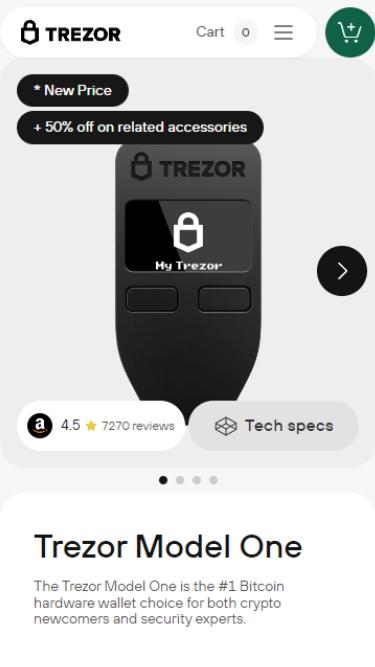
The interface is super basic, with just two physical buttons instead of a touchscreen. Despite this, transactions and a range of other actions are easily completed.
This hardware cold wallet is also compact, utilizing secure elements for additional security. Backup and recovery are possible through a recovery seed. Model One is perfect for users who want maximum security in an easy-to-use package without advanced features.
Trezor has recently released a new hardware wallet, Trezor Safe 7, that comes with protection against quantum computing threats. The new cold wallet is now available for order on Trezor’s official website.
Latest updates about Trezor Model One
Trezor Model One hasn’t received any new firmware updates since May 2025. The last release, version 1.13.1, focused on general improvements and bug fixes, but there have been no new features or changes since July.
Pros and cons of Trezor Model One
Pros
- Supports over 1,800 cryptocurrencies, including major coins
- PIN code protection and offline storage for private keys
- Affordable, making it ideal for beginners
- Provides backup and recovery with a secure recovery seed
Cons:
- Lacks a touchscreen for easier navigation
- Limited support for decentralized apps
2. Trezor Model T – The best for enhanced usability
The Trezor Model T is a high-end cryptocurrency wallet that merges usability and security. Its 240×240-pixel color touchscreen makes interactions more intuitive.
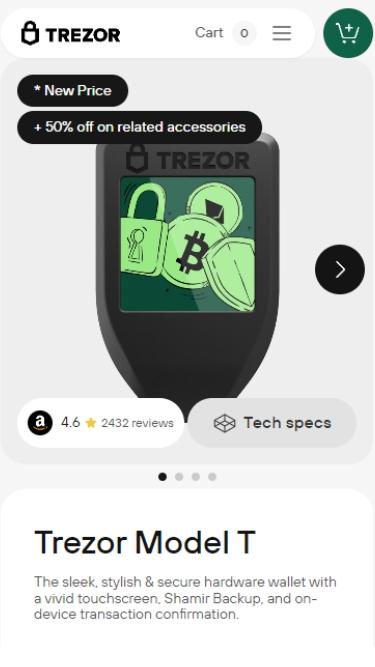
This wallet is a rare breed of cold storage solutions that offer ease of setup and integration into Trezor Suite, an all-inclusive portfolio management platform. For that reason, it supports upwards of 1,000 different digital assets.
Unlike many cold storage wallets, the Trezor Model T incorporates the added protection of a passphrase, providing an additional layer of private key security.
This feature, combined with advanced dApp support and integrations with major platforms, makes Model T a great fit for crypto enthusiasts and serious investors who need maximum security and functionality.
Latest updates about Trezor Model T
Trezor Model T received a fresh firmware update in,2025 with version 2.9.0. This update included performance improvements and enhanced overall device stability.
Around the same time, the Trezor Suite app also rolled out a July update, adding full support for Stellar (XLM) and Solana address validation, making it easier for users to manage even more assets securely.
Pros and Cons of Trezor Model T
Pros
- User-friendly touchscreen simplifies navigation
- Supports over 1,000 cryptocurrencies, including major coins and tokens
- Advanced passphrase protection for added security
- Seamless integration with Trezor Suite for easy management
Cons:
- Higher price point compared to entry-level models
- Bulkier than some other cold storage wallets
3. Cypherock – The best cold wallet for maximum security
The Cypherock X1 uses four microSD cards, each containing a fragment of the private key, ensuring that there is no single point of failure.
Shamir’s Secret Sharing technology enables every card to hold parts of the private keys, which can be stored in different locations, thus achieving enhanced physical security.
In case one of the cards gets lost, that is no hassle since users can use the remaining three to access their funds, thus minimizing risks during recovery when compared to a standard cold storage wallet.
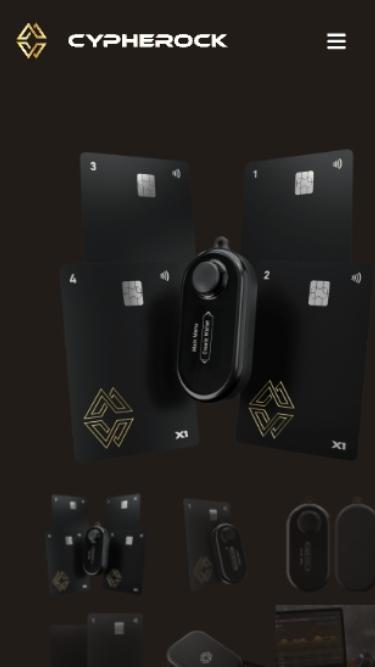
It can also support more than 10,000 digital assets across multiple blockchains, giving flexibility to varied cryptocurrency portfolios. The wallet itself is PIN-protected, meaning that even if one card is compromised, it is unusable without access to the remaining cards and the PIN.
Cypherock is a flawless cold storage wallet for advanced users seeking crypto cold storage above and beyond ordinary security features. However, reliance on desktop applications and somewhat high prices might reduce accessibility for some users.
Latest updates about Cypherock
Cypherock has been very active with updates lately. The update v0.6.768 carried out on 2nd July added Tron support, improved Bitcoin transaction handling, and introduced a delete-wallet confirmation step.
Another update followed on 16th July with some behind-the-scenes fixes, and the most recent one came on 5th September (v0.6.2816). This update added support for Stellar (XLM) and made transactions more transparent by letting users see exactly what they are approving before signing.
Pros and cons of Cypherock X1
Pros
- Shamir Secret Sharing technology for secure key distribution
- No need for a single recovery phase, reducing theft risks
- Supports over 10,000 cryptocurrencies, making it highly versatile
- Multi-layer security via PIN and card-based key fragments
Cons:
- Higher price point compared to entry-level wallets
- Primarily compatible with desktop apps, lacking mobile support
4. Ledger Stax – The best premium cold wallet with Bluetooth.
Ledger Stax is a high-end cold wallet that perfectly blends innovation and security. It is feature-filled and has an OLED touchscreen that makes it very easy to operate. Wireless charging further simplifies the user experience, as one doesn’t have to go through the hassle of charging this device for a transaction.
The Ledger Stax also connects with the Ledger Live application via Bluetooth, allowing users to track and manage their digital assets without using physical connections like USB drives. The Ledger Stax itself supports more than 5,000 cryptocurrencies, providing great compatibility for tokens and coins in general.
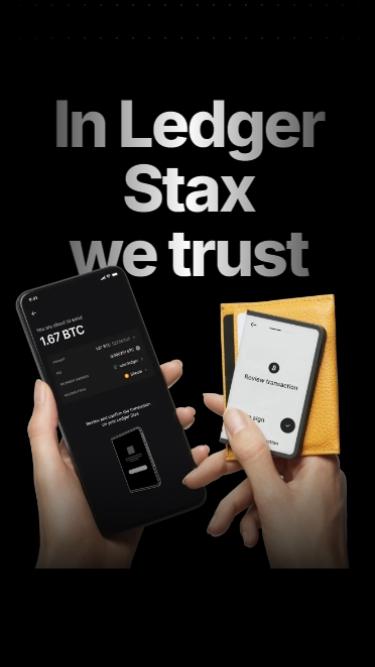
Security-wise, the Stax has been fitted with an ANSSI-certified secure element chip for maximum protection of private keys against cyber threats. It also allows seamless integration with dApps, thus enabling users to access decentralized applications right from their wallets.
Although a bit more expensive and somewhat bulkier than the most basic wallets, Ledger Stax is one of the better options for users wanting new features and increased ease of use from a cold wallet.
Latest updates about Ledger Stax
Ledger Stax received a notable firmware update on July 24, 2025 with OS version 1.8.0. This release tightened security by requiring a PIN when removing Bluetooth pairings and introduced helpful warnings for users who disable the auto-lock feature.
These tweaks give users an extra layer of protection while keeping convenience intact.
Pros and cons of Ledger Stax
Pros
- Bluetooth connectivity for wireless asset management
- OLED touchscreen for user-friendly navigation
- Supports over 5,000 cryptocurrencies and dApps
- Secure element certified by ANSSI for top-tier security
Cons:
- Premium pricing compared to standard models
- Larger in size, which may affect portability
5. ELLIPAL Titan 2.0– The best cold wallet for air-gapped security
ELLIPAL Titan 2.0 is a bit different from other cold wallets, as it is air-gapped and fully disconnected from Wi-Fi, Bluetooth, and USB connections. Instead, it uses QR codes for the safe signing of transactions, with private keys staying offline and out of the reach of any potential hacker.
This wallet also features a waterproof and dustproof design and a hard metal casing that withstands tough conditions. This makes it suitable for users seeking resilient and long-lasting storage of their digital assets.
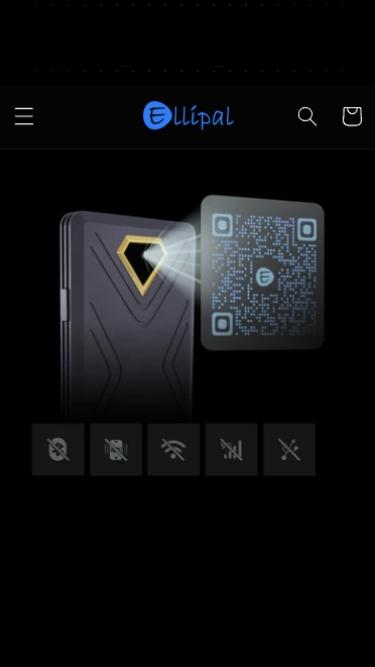
More than 10,000 cryptocurrencies are supported, making it a flexible means of maintaining diversified portfolios. Moreover, its large 4-inch touchscreen allows for smooth navigation and asset monitoring, and it supports staking and dApps on some select cryptocurrencies.
ELLIPAL Titan 2.0 is a surefire option for those who want the utmost security in form and substance: physically resilient and a secure vault of cold wallet keys. However, this setup might not be as slick as other hardware wallets, as it is larger and depends on QR code verification.
Latest updates about ELLIPAL Titan 2.0
ELLIPAL Titan 2.0 rolled out firmware version 4.8.0 in July 2025. This update made transactions even safer by adding extra checks to prevent tampering and improving how smart contract details are displayed.
It also made the amount and fees clearer on-screen and fixed an issue with how XDC (the XDC Network’s cryptocurrency) addresses were shown.
Pros and cons of ELLIPAL Titan 2.0
Pros
- Supports staking and dApps on select cryptocurrencies
- Rugged, waterproof, and dustproof construction
- Large, easy-to-use 4-inch touchscreen
- Compatible with over 10,000 cryptocurrencies
Cons:
- Bulkier than some other cold wallets
- QR code-based verification may be time-consuming
What is a cold wallet?
A cold wallet is an offline crypto storage device that entirely secures one’s private keys offline. This reduces exposure to online risks, such as hacking and phishing. Thus, it is suitable for long-term digital asset storage, especially among users who plan to keep larger sums of cryptocurrencies.
Cold wallets are a preferred choice for those prioritizing maximum security over frequent access.
How do cold crypto wallets work?
In most cases, cold wallets operate on the principle of keeping private keys offline within a hardware device.
Users send money by connecting their cold wallet to a computer or mobile device and signing transactions through the device when they occur, without exposing their private keys to the online world.
The wallet’s PIN and other security features ensure that only authorized users can access funds, keeping them safe from possible online attacks.
Pros and cons of cold wallets
Cold wallets, or solutions for cold storage, boast advanced security features that are ideal for significant crypto holdings. Yet, their specific construction and offline status have not only considerable advantages but also some critical drawbacks in practice.
Here’s a closer look at the pros and cons of using a cold wallet.
Pros
- High security for digital assets: Cold wallets keep keys offline, blocking hacks and phishing. This offline setup provides strong protection for storing larger crypto holdings safely.
- Perfect for long-term storage: Cold wallets suit investors holding assets for months or years. Offline protection shields funds from sudden risks, ensuring secure long-term storage.
- Complete control over private keys: With self-custody, you control your funds, not the exchange. Owning private keys gives full independence and stronger protection than online wallets.
- Advanced security features and backups: Cold wallets add PINs, secure chips, and encryption. Backup tools like recovery phrases or Shamir Sharing ensure lost devices don’t mean lost crypto.
Cons:
- Less suitable for frequent transactions: Cold wallets require device connections for transfers. That slows trading activity, making them less convenient for users needing daily access.
- Higher upfront cost: Hardware wallets cost $50-$300, unlike free hot wallets. For small investors, this could feel like a barrier, however, this level of security justifies the expense.
- Steeper learning curve: Setup requires handling PINs, recovery phrases, and security steps. Beginners may find it intimidating, but a proper setup ensures maximum safety.
- Physical risks remain: Devices can be lost, damaged, or stolen. Backups and safe storage are critical to prevent permanent loss of crypto access.
Owning multiple cold wallets strategy
Some individuals will be content with just one wallet. However, especially for large crypto holders, multiple wallets should be considered.
1. Wear and tear
Having your cold wallet, such as Trezor for example, chewed by your dog or unemotionally damaged can be devastating. Owning an additional cold wallet (Trezor in this case) that is used for cloning the original hardware device allows you to quickly access your funds without the need to order a new device.
2. Travel
If you plan to use cryptocurrencies during your vacation, carrying your main wallet with you can be a risk. What happens if you lose the wallet, or even worse, it is stolen from you?
Having an additional wallet that can be used during travels will not jeopardize all of your crypto holdings.
3. Your business
If you accept cryptocurrencies for your business, you may want to consider having a dedicated wallet for the company, much like a bank account. Accounting will be easier to manage and a cold wallet has additional security layers.
Conclusion
Cold wallets remain the most secure option for long-term storage of digital assets. Having reviewed a variety of the top choices in this space, Trezor stands out for its excellent price and strong security features.
However, advanced users might prefer the feature-rich Ledger Stax, which adds conveniences like touchscreens and Bluetooth, in addition to broader compatibility with different assets.
Merging one of these hardware wallets with hot wallets will provide the perfect balance of accessibility and security.

How We Rate Cryptocurrency Wallets
We manually review the cryptocurrency wallets on our list. Below are the key metrics we check before cryptocurrency wallets on the website. For further details, you can also take a look at our crypto wallets rating guide, featured on ValueWalk.