

Our Polymarket guide focuses on the core mechanics, markets, odds, fees, KYC requirements, supported regions, and risk, so you know exactly what you’re using. Prediction markets became extremely popular, and with the return to the United States, their popularity has increased.
In October 2025, the NHL announced a deal with Polymarket, making them the official prediction markets of the NHL. This means Polymarket has access to NHL data, logos, and the right to use NHL logos.
What is Polymarket?
Polymarket is a decentralized prediction market where users are allowed to bet on real-world events using crypto.
Instead of gambling on chance, users can speculate on the outcomes of various events. Political races, presidential elections, news, economic indicators, pop culture events, sports, tech developments, and more—even which country will Pope Leo visit first.
Every market presents a binary question (yes/no), and users buy shares based on their predictions of what will happen.
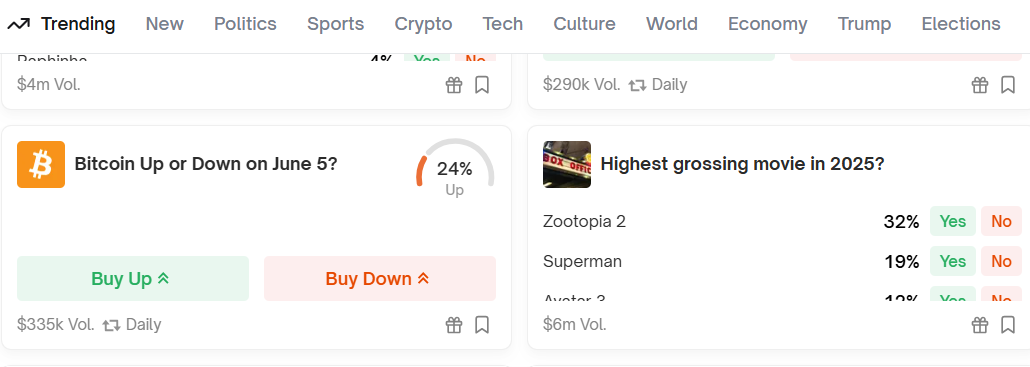
These shares act like stock in an outcome, with the price reflecting the market’s collective belief. Being public and running on blockchain means Polymarket is not controlled by one company or government.
You’re not just betting for fun. You’re part of a system that turns public opinion into real-time predictions. If you think you know something others don’t, or you just want to test your gut, this is where it happens.
Unlike traditional platforms, Polymarket doesn’t act as the house. There’s no central party setting odds or taking bets – this peer-to-peer setup makes it more of an information market than a casino.
Users trade directly with each other through the power of smart contracts, whose prices adjust according to supply and demand.
What countries can use Polymarket?
Polymarket is available in many jurisdictions, but several countries restrict access. Belgium has blacklisted the site and asked ISPs to block it; Singapore’s Gambling Regulatory Authority told local ISPs to block access; France’s regulator has examined Polymarket, and the platform has geo-blocked French users; Taiwan enforces election-betting bans and has blocked usage.
Outside those markets, availability typically depends on local laws and licensing requirements. In early September 2025, U.S. trading reopened after the CFTC cleared Polymarket’s return, supported by its $112 million acquisition of QCEX and a staff no-action letter covering certain obligations. In August 2025, Donald Trump Jr. joined the advisory board alongside a strategic investment from 1789 Capital.
Always confirm your country’s rules before trading; enforcement and permitted markets can change quickly. This followed a three-year hiatus for American users under scrutiny.
Polymarket uses USDC
Polymarket uses USDC (USDC). It is pegged to the U.S. dollar and one of the best sablecoins options to power the platform to avoid crypto volatility. Trades occur on-chain, primarily on Polygon and Solana, resulting in low fees and fast settlement. Market outcomes are verified by independent oracles, ensuring fair, tamper-proof resolutions.
Whether you’re curious about an election, betting on a GDP report, or even the Super Bowl, Polymarket turns speculation into a transparent, crypto-native trading experience. In short, it’s a public, blockchain-based betting market for facts and outcomes.
How does Polymarket work?
Polymarket runs on the idea that collective betting can forecast real-world events with surprising accuracy. Users don’t place traditional bets. They buy and sell shares in outcomes, with prices acting as odds.
Predictions market
Polymarket creates a financial incentive to be right. Each question forms a binary market where users trade shares based on their predictions of what will happen, with options of “Yes” or “No.”
The more likely an outcome, the more expensive the share. As events unfold and new information emerges, prices shift to reflect crowd sentiment. This dynamic keeps the market alive until the question resolves.
Polymarket predictions examples
Below are some of the latest prediction markets created on Polymarket at the time of this writing:
- Will Elon Musk unfollow Donald Trump before July?
- Largest company end of July?
- Federal employee charged as a result of DOGE investigation?
These markets display real-time probabilities as users contribute funds.
Polymarket odds
The users set the odds. Share prices range from $0.01 to $1.00 and update constantly as traders enter or exit. If a “Yes” share trades at $0.66, it implies a 66% chance that the outcome will happen. Prices move in response to trades, creating a live signal of public expectation.
These odds often shift quickly, especially when breaking news changes the landscape.
Buying and selling shares
When you buy a share, you’re not betting against the house; you’re trading against other users. If you believe an outcome is undervalued, you buy shares.
If your opinion changes or the price rises, you can sell your shares to lock in profit or cut losses. Trades settle instantly, and your portfolio balance updates in real time.
If your position wins and you hold until resolution, you receive $1 per share.
Polymarket outcome verifications
Once an event resolves, Polymarket verifies the outcome using third-party data oracles (like UMA). These oracles check public sources, finalize results on-chain, and trigger payouts automatically. There’s no central judge. The blockchain enforces the resolution.
Liquidity providers
Behind every trade is someone making markets possible, the liquidity providers. These users add USDC to markets so others can trade without huge price swings. In return, they earn a cut of trading fees and benefit from volume.
It’s a passive role with active importance. Liquidity ensures smooth pricing, faster trades, and healthy odds — without it, markets would stall or become volatile.
How to start using Polymarket?
Using Polymarket doesn’t require deep crypto knowledge, but there are a few steps to follow before placing your first trade. The platform is web-based and optimized for both desktop and mobile. Users connect their crypto wallet, fund their account with stablecoins, and begin buying shares in markets they’re interested in.
There’s no need for traditional sign-ups or personal details. Everything runs through your wallet. It’s fast, lightweight, and fully decentralized.
Setting up a Polymarket account
To get started:
- Install a crypto wallet: Most users choose MetaMask or any other crypto wallet that Polymarket accepts.
- Add the correct network: Polymarket runs on Polygon and Solana. You’ll need to add the corresponding network to your wallet.
- Connect the wallet: Visit Polymarket.com and click “Connect Wallet” at the top right.
- Approve the connection: Your wallet will ask you to authorize the connection to the site.
- All set: Once connected, you can browse, fund, and interact with markets.
Depositing funds via exchanges and wallets
Before trading, you’ll need to deposit USDC on the right blockchain. You can buy USDC on cryptocurrency exchanges.
Ensure that you withdraw it to the Polygon or Solana version of USDC, not Ethereum, to avoid high gas fees or incompatible tokens.
From there, send the USDC to your connected wallet (MetaMask for Polygon, Phantom for Solana). Once it’s in your wallet, Polymarket will automatically detect the funds and allow you to start trading.
The process takes just a few minutes if you’re already familiar with crypto transfers.
Understanding the Polymarket interface
The Polymarket interface is clean, intuitive, and designed to help you find markets quickly.
Categories like Politics, Crypto, and Sports help narrow future events based on your interests.
Each market shows a question, current probabilities, and a short timeframe until resolution. You can click on any market to see historical pricing, trading volume, and a breakdown of “Yes” vs. “No” sentiment.
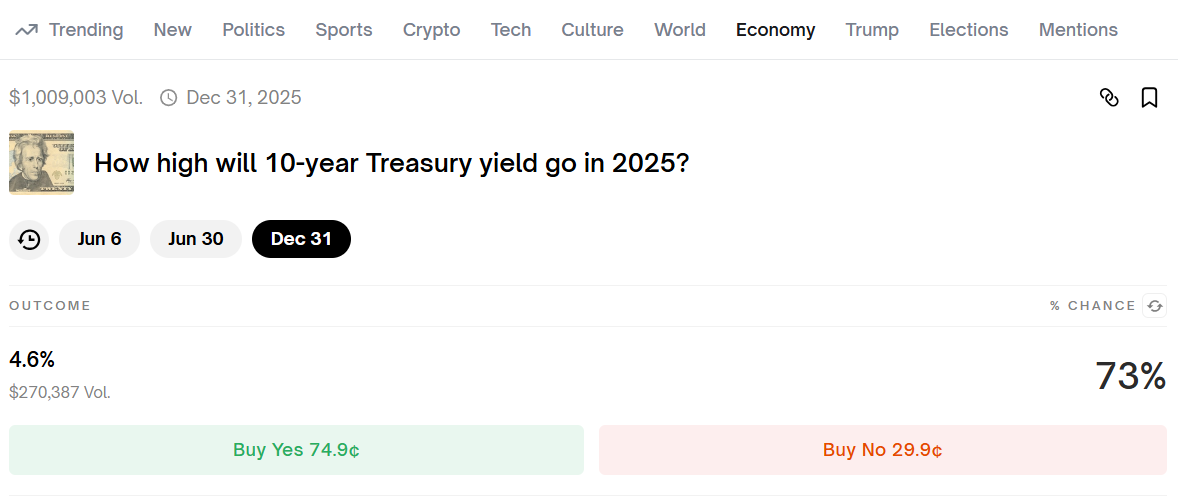
Buying shares is as simple as entering an amount and choosing your position. Your portfolio updates in real time, showing gains, losses, and potential payouts.
And if you change your mind, you can sell your shares at the current market rate anytime before the market resolves.
Trading on Polymarket
Once your wallet is connected and funded, you’re ready to start trading. Every action — from placing a bet to cashing out — happens directly on-chain with just a few clicks.
Here’s how to steer the full trading experience, from entering a market to withdrawing your winnings.
Placing bets on events
To place a bet on Polymarket a few things need to happen:
Pick a market
Browse the homepage or filter by category such as Politics, Tech, or sportsbooks. Each market represents a real-world event with possible outcomes. Click on any market to explore its current odds, activity, and trading volume.
Review the question
Before placing a trade, read the market question carefully. Check the resolution date to know when the outcome will be decided. This helps ensure you’re betting on the right event and clearly understand how it ends.
Select your position
Choose the side you believe is most likely — typically “Yes” or “No.” The odds for each position change based on trader demand. Once selected, you’re essentially buying shares in the outcome you expect to happen.
Enter the amount
Decide how much USDC to stake based on your conviction and risk tolerance. The share price reflects market sentiment and determines your potential return. You’ll see a preview of expected returns before confirming the trade.
Trade confirmation
When you’re ready, confirm the trade directly in your connected wallet. Your USDC is exchanged for shares tied to the selected outcome. Once complete, your position is locked in and starts tracking market changes.
Track position
For bettors, you can view and monitor your open positions in the “Portfolio” tab. It shows live updates on your share values, market shifts, and estimated returns. If the outcome resolves in your favor, you can claim winnings.
Understanding the market odds
The share prices on Polymarket represent probabilities, ranging from 0% to 100%. Let’s break it down:
- Each share trades between $0 and $1.00 — this reflects the market’s perceived probability.
- A $0.72 “Yes” share means the crowd thinks there’s a 72% chance the event will happen.
- Lower-priced shares, such as those priced at $0.10 (which translates into a 10% probability), have a higher potential reward, but as the probability of the outcome occurring increases, the risk of a loss also increases.
- Prices shift as new traders enter and news breaks, so the market is constantly adjusting.
- You can sell before resolution if the market moves in your favor. This lets you lock in profits early without waiting for the event to end.
Polymarket trade example
Let’s use $100, for example, in a Polymarket prediction. ‘No’ is priced at $0.89, indicating a high probability of the outcome. ‘Yes’ is priced at $0.14, which is a low probability for the end result.
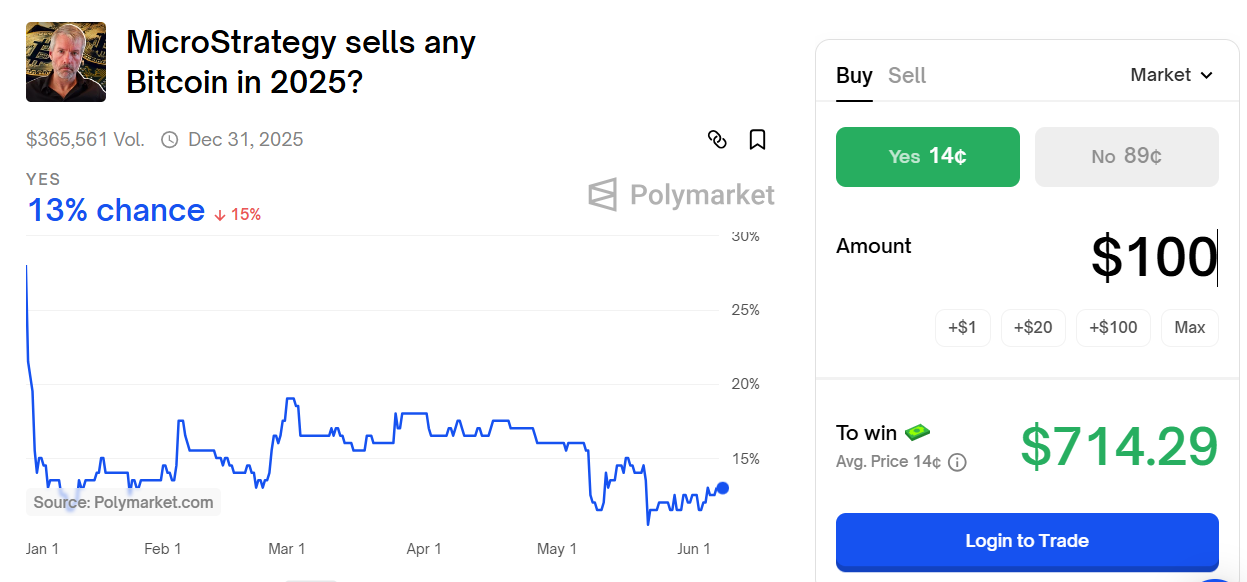
Buying ‘Yes’ shares for $100 means each share is worth $0.14. I will own approximately 714 ‘Yes’ shares. If this is indeed the outcome, I will expect to receive $714.
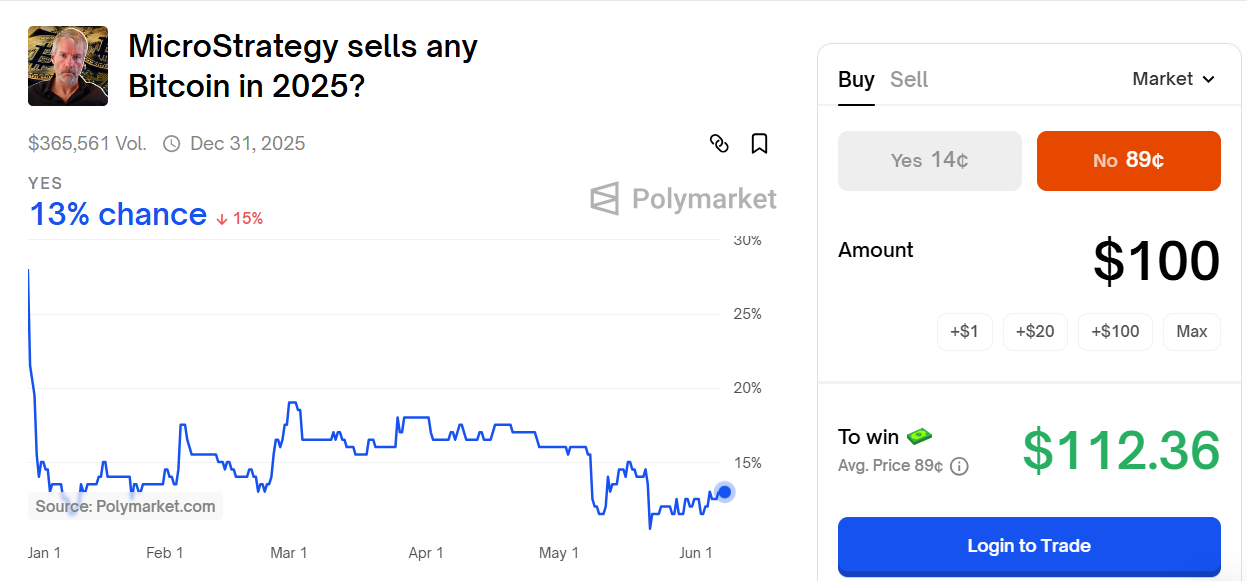
Buying ‘No’ shares for $100 means each share is worth $0.89. I will own approximately 112 shares. If this is the outcome, I will earn $112.
Polymarket order book
After the shares are bought, there is no need to wait for the outcome. The shares can be sold in the market, which is the order book. As the probabilities shift, so will the value of each share.
Traders on Polymarket can buy a share at a low probability, let’s say $0.14 and sell it in the market for $0.40 should the probability increase for a profit.
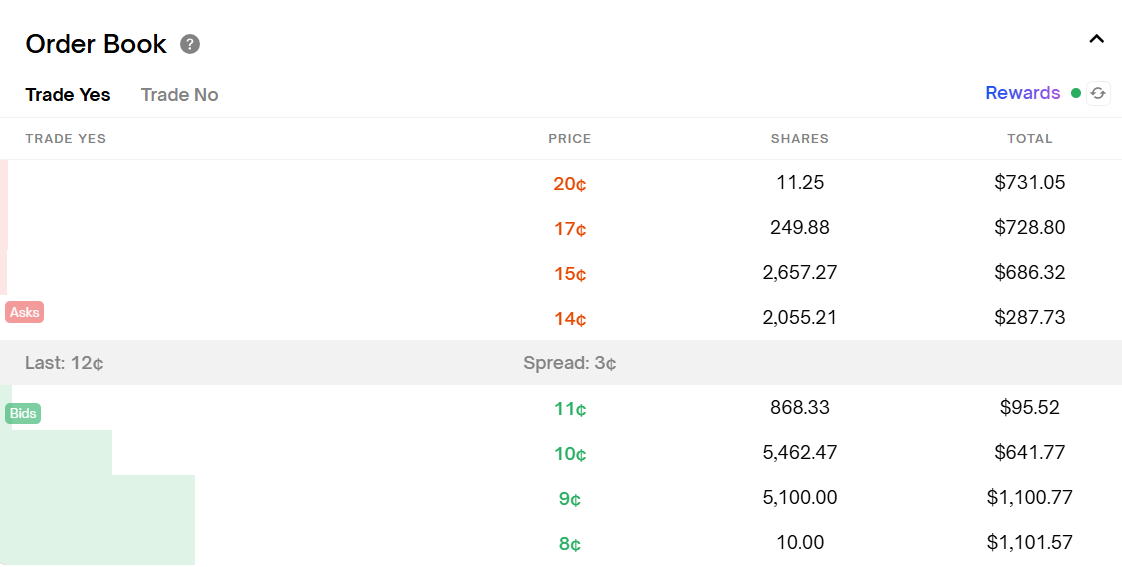
The order book for ‘MicroStrategy sells any Bitcoin in 2025’ is not as active as other predictions as it is relatively new. It also has lower volumes.
If you are new to Polymarket, consider focusing on prediction markets with high trading volumes.
Withdrawing winnings
When you don’t lose, and your prediction is correct, you can claim your profits with a few simple steps:
- Go to your portfolio and locate the resolved position marked as “Won.”
- Click “Redeem” your winning shares will convert to USDC at a 1:1 ratio.
- Approve the transaction in your wallet to receive the funds.
- Withdraw USDC to your exchange or convert it into another asset as needed.
How does Polymarket earn money?
Polymarket generates revenue through trading fees on every share bought or sold.
These fees typically range from 1% to 2%. They are split between liquidity providers and the protocol, helping fund operations and keep markets active.
Since Polymarket doesn’t take positions or set odds, its wager profits come entirely from facilitating trades, not from the outcomes. This model scales with usage.
The more people trade, the more liquidity circulates, reinforcing a feedback loop that benefits both users and the protocol.
Is your money safe on Polymarket?
Your funds stay in your wallet until you choose to trade. Once you place a trade, assets move into smart contracts. not Polymarket’s custody, because the platform doesn’t directly hold or control user deposits.
That said, risks still exist: smart contract bugs, wallet hacks, and occasional flaws in oracle resolutions. In one instance, a governance exploit allowed a user to manipulate the outcome of a small market, revealing that resolutions can sometimes be forced without true consensus.
It’s safer than trusting a centralized bookie, but not entirely risk-free. Always double-check networks, review wallet approvals carefully, and ensure you interact with the official Polymarket site to protect yourself.
Polymarket orders, fees, and rewards
Polymarket offers two types of orders: market orders and limit orders. Whereby market orders execute immediately at the best available price, ideal for quick trades, while limit orders let you set the price you’re willing to pay or accept, and the trade only executes if the market matches it, which gives users more control, especially in volatile or illiquid markets.
Notice the fee structure, which ranges from 1% to 2% rewards both liquidity providers, who supply USDC to markets. Liquidity providers play a role by ensuring smooth price discovery and execution. Users earn a share of trading fees based on the volume they support, making it a passive way to earn from market activity.
Summary
Polymarket has around 250,000 active users per month. It is restricted in several regions, including the United States since 2022, and possibly Thailand. Even though it is a decentralized market, countries are demanding to hold a gambling license.
Polymarket is hoping President Trump will shift its tone towards the platform. Despite the restrictions, it remains the top blockchain-based predictions marketplace.
FAQs
How to withdraw from Polymarket?
What currencies are accepted on Polymarket?
Is Polymarket safe?
Is Polymarket regulated?
Does Polymarket have customer support?
What are the trade limits on Polymarket?
How accurate is polymarket?
What wallets does Polymarket support?
References
US criminal, civil authorities probing Polymarket, source says | Reuters
Bettors Lose Millions Predicting the New Pope as Polymarket Edge Fizzles Out | CoinDesk
FBI raids home of Polymarket CEO | Al Jazeera
How 1% of Polymarket Bettors Are Boosting Trump’s Odds | Bloomberg
Was the Polymarket Trump whale smart or lucky? | Financial Times