



Futures are popular with traders who want low margin requirements and short-selling tools. If you want to trade futures, you’ll need a suitable broker that supports your preferred asset class and delivery terms.
This guide reveals the 10 best futures brokers for 2026. We rank the leading futures platforms for supported markets, contract fees, user-friendliness, account minimums, margin requirements, and more.
Top 10 online futures trading platforms ranked
Here’s a list of the 10 best futures brokers for 2026:
- AvaFutures by AvaTrade: The dedicated futures platform of Dublin-based AvaTrade provides access to CME/Eurex futures contracts on indices, metals, energy markets, forex, interest rates and cryptocurrencies.
- Interactive Brokers: The US-based global brokerage supports futures from over 30 global exchanges. Available futures markets include stocks, indices, cryptocurrencies, bonds, interest rates, and commodities.
- NinjaTrader: The platform offers three futures trading plans to suit all budgets. NinjaTrader has a futures-specific trading dashboard for desktops, mobiles, and browsers.
- tastytrade: Popular futures broker supporting small, micro, and standard contracts. There is no minimum account balance. It supports interest rates, currency, index, and commodities futures markets.
- E*TRADE: The unit of Morgan Stanley is a great choice for trading futures contracts via a tax-efficient IRA. It covers crypto, interest rate, commodities, and indices futures. It offers futures online or via its native app.
- TradeStation: Trade over 600 futures contracts and futures options from US and international exchanges. It has low margin requirements of 10%, allowing traders to amplify their futures positions 10 times.
- Optimus Futures: A discount broker offering low-cost futures trading. It rewards high-volume traders with lower commissions. Futures can be traded 24 hours per day and real-time pricing streams are free.
- Tickmill: This futures trading platform specializes in contracts for difference (CFDs). It supports seven futures exchanges, including the CME, NYMEX, and ICE Europe. There’s a minimum deposit of $1,000.
- Saxo Bank: Access over 320 futures markets from 25 global exchanges. It supports currencies, interest rates, metals, energies, and more. Platform features include Level 2 order books and real-time pricing.
- Charles Schwab: One of the most advanced futures trading platforms, thinkorswim, is available to Charles Schwab clients. Features include premium technical indicators, asset scanners, and market insights.
Best online futures brokers reviewed
Continue reading to choose the best futures broker for your specific needs. We’ll now review the top futures platforms for retail clients in 2026.
1. AvaFutures: Specialist futures platform backed by multi-regulated broker AvaTrade
AvaFutures is a dedicated online futures trading platform powered by the Dublin-based global broker AvaTrade. It offers direct market access (DMA) to global derivatives exchanges, such as the CME Group in Chicago and Eurex, Europe’s largest futures and options exchange based in Eschborn, Germany, near Frankfurt.
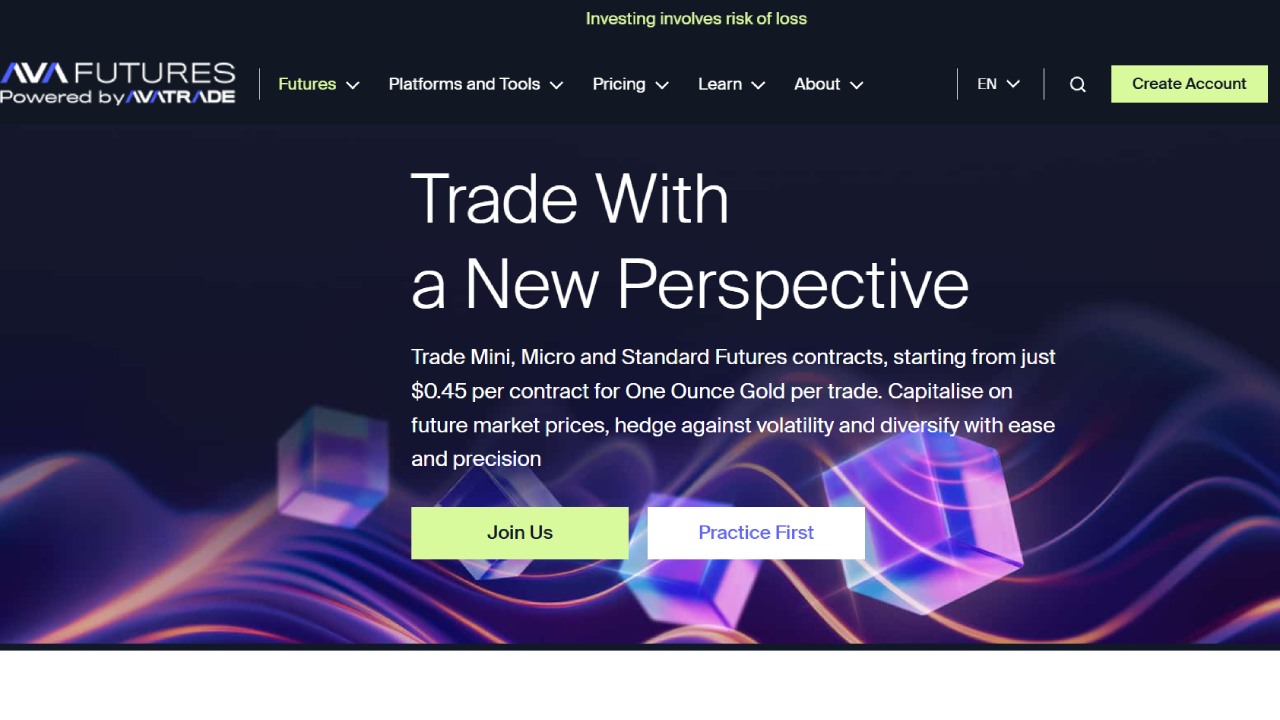
The broker provides futures contracts in a number of markets, including indices, forex, commodities, such as metals, energy markets and agricultural produce, as well as cryptocurrencies. AvaFutures is a beginner-friendly choice for a futures trading platform with relatively low fees and transparent trading conditions.
This specialist platform leverages AvaTrade’s experience in offering robust trading tools through the feature-rich MetaTrader 5 (MT5) platform, the CQG trader, or integration with TradingView.
All platforms feature customizable interfaces, a plethora of charting and analysis tools and the option to automate trades with the help of programmable trading bots, known as Expert Advisors. Level-2 data on the platforms, which enables deeper analysis, comes at no extra cost.
There is an initial deposit of $100 (or €100 for euro-based accounts) to get started. However, there are no inactivity, deposit, or withdrawal fees. In terms of futures pricing, the broker charges $1.75 per Standard and E-mini contract, and $0.75 for a Micro contract, while one-ounce Gold contracts cost $0.45. AvaFutures runs a promotion for beginning traders, offering 100 commission-free trades for 90 days from the initial deposit.
| Range of Futures Market | Indices, metals, energy and agricultural commodities, forex, interest rates and cryptocurrencies |
| Pricing System | Gold on CME $0.45; Micro, E-mini, Standard contracts on the CME and Eurex $0.75-$1.75 |
| Account Types | A single, flexible trading account |
| Trading Platforms | MetaTrader 5, CQG, TradingView |
| Account Minimum | $100 (or €100 for EUR accounts) |
| Standout Feature | Customizable trading interface on MT5, TradingView and CQG, with access to Expert Advisors to automate your trades |
| Our Rating | 5/5 |
Pros
- Supports about a hundred futures instruments from the CME and Eurex
- Assets include stock indices, metals, energies, interest rates and cryptocurrencies
- Futures trading fees of between $0.45 and $1.75 per contract
- Backed by AvaTrade, which is regulated in 10 jurisdictions
Cons:
- Lack of biometric login (fingerprint or face ID)
- Fewer drawing tools than some competitors
2. Interactive Brokers: Versatile, low-fee broker to trade futures online
Interactive Brokers supports various futures products, including interest rates, bonds, stocks, and indices, energy futures, precious metals, and agricultural products from more than 30 global exchanges. What’s more, you can trade some of the best cryptocurrencies via futures, such as Bitcoin and Ethereum.
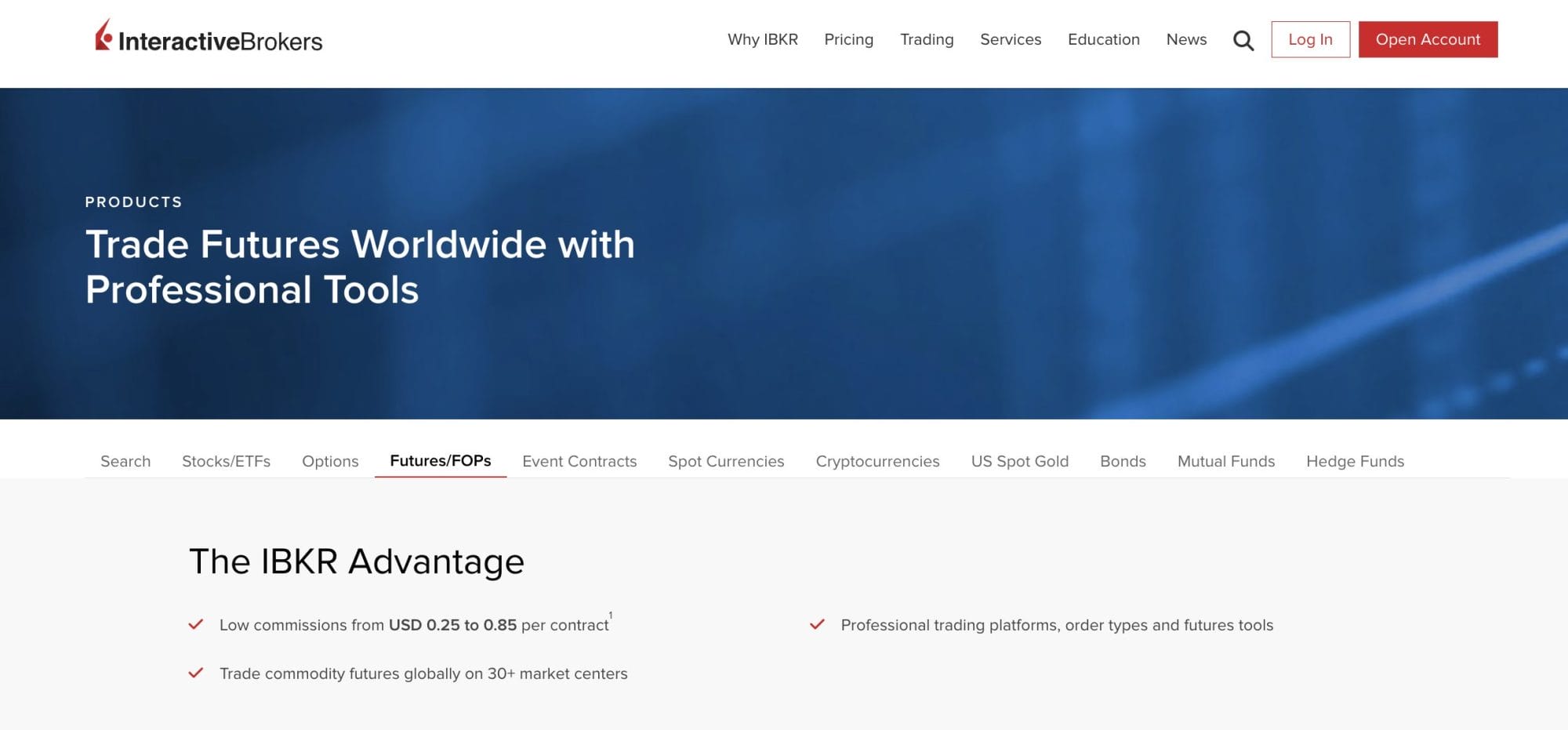
The broker has relatively low fees. Those on a fixed account will pay $0.85 per traded contract. On tiered accounts, commissions depend on the monthly trading volume. For instance, those trading over 20,000 contracts pay just $0.25 per contract.
Interactive Brokers also covers exchange, regulatory, and overnight position fees. Furthermore, it doesn’t have an account maintenance fee or a minimum account balance requirement.
We also like the broker’s professional trading tools. For instance, its native platform, Trader Workstation (TWS,) supports over 100 order types, powerful charting tools, and technical indicators. It also offers real-time futures data, alerts, and watchlists and supports multiple futures trading strategies, including ‘Buy-Write’, ‘Collar’. and ‘Delta-Neutral’.
Its demo account enables you to trade futures risk-free, as you’ll be using virtual funds. It also supports backtesting facilities. This means you can test new futures strategies based on historical market data.
| Range of Futures Market | Stocks, indices, commodities, currencies, cryptocurrencies, bonds, interest rates |
| Pricing System | $0.85 per contract (fixed). Between $0.25-$0.85 per contract (tiered). |
| Account Types | Fixed and tiered accounts |
| Trading Platforms | Trader Workstation (proprietary) for desktops, browsers, and mobiles |
| Account Minimum | No account minimum |
| Standout Feature | Professional futures trading platform with premium analysis tools |
| Our Rating | 4.5/5 |
Pros
- Supports hundreds of futures contracts from 30 global exchanges
- Assets include stocks, bonds, indices, and commodities
- Futures contract fees of between $0.25 and $0.85
- No account minimum
- Professional futures trading tools
Cons:
- Minimum monthly trade of 20,000 contracts to get the lowest commission
- New account onboarding can be slow
3. NinjaTrader: Specialist futures broker with no account minimums and transparent fees
NinjaTrader is a specialist futures broker that appeals to casual and experienced traders alike. There is no minimum account requirement, and futures trading fees are transparent.
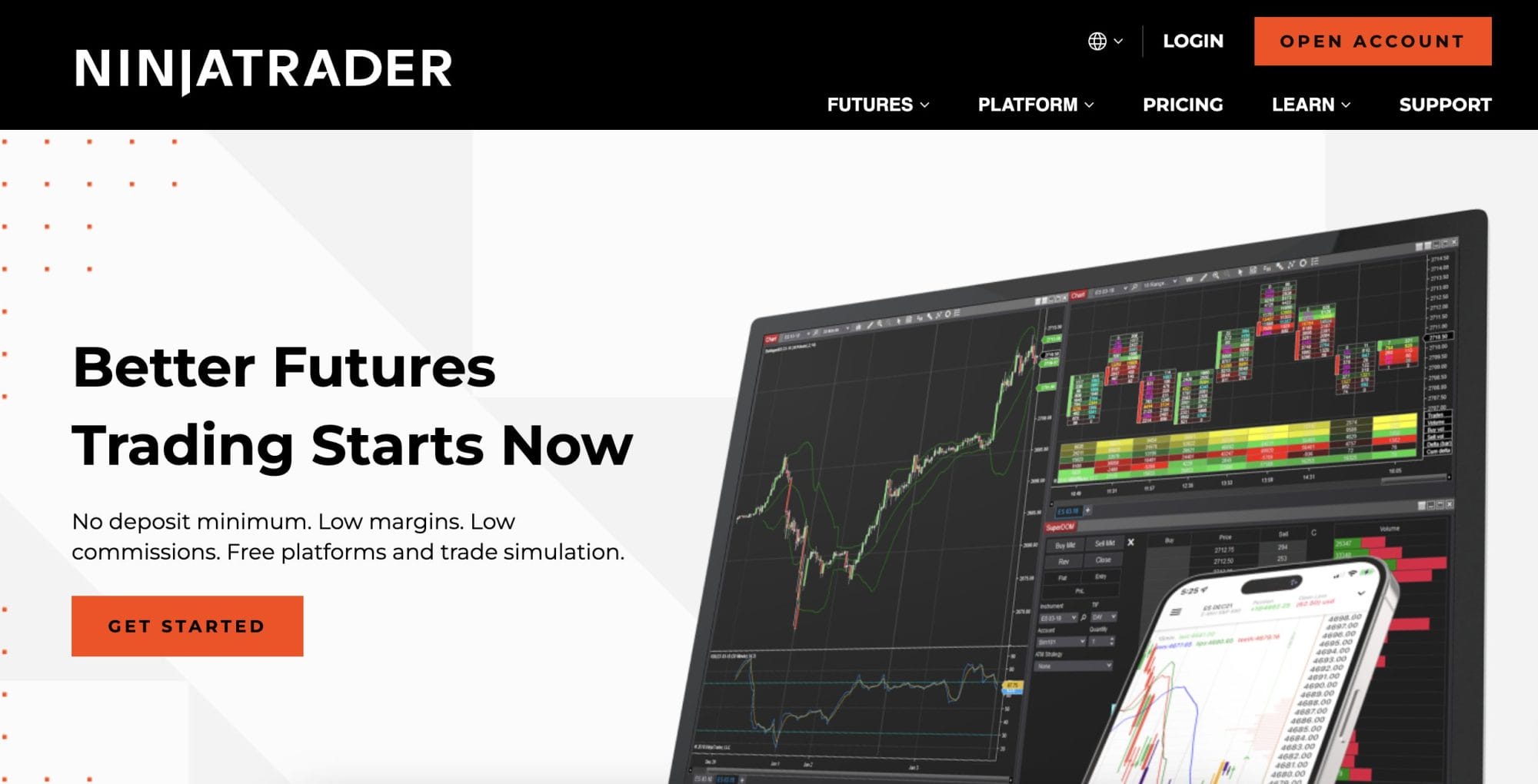
There are three account types to choose from. The Free plan comes with no monthly fees, and micro futures cost $0.39 per side, while standard futures cost $1.29 per contract, per side. The Monthly plan reduces micro and standard fees to $0.29 and $0.99, respectively. However, this also comes with a $99 monthly fee.
Then there’s the Lifetime plan, which requires a one-time payment of $1,499. This offers micro and standard futures fees of just $0.09 and $0.59 per side.
NinjaTrader is also one of the top futures brokers for low margin requirements. Micro e-mini futures covering the Dow Jones, Russell 2000, and S&P 500 require just $50 to use leverage. That said, crude oil, gold, and natural gas futures require at least $1,000 in margin.
NinjaTrader’s native trading platform is specifically designed for futures trading. Available as desktop software, a mobile app, and via web browsers, it comes equipped with useful tools, including advanced charting with over 100 technical indicators, as well as real-time quotes and market depth. You can also access order flow data to see where the ‘Smart Money’ goes.
| Range of Futures Market | Indices, commodities, currencies, cryptocurrencies, bonds, interest rates |
| Pricing System | Free plan: No monthly fee, micro ($0.39), standard ($1.29). Monthly plan: $99 monthly fee, micro ($0.29), standard ($0.99). Lifetime plan: $1,499 one-time fee, micro ($0.09), standard ($0.59). |
| Account Types | As above |
| Trading Platforms | Proprietary futures trading platform for desktops, browsers, and mobiles |
| Account Minimum | No account minimum |
| Standout Feature | Specialist futures broker with three pricing plans to choose from |
| Our Rating | 4.5/5 |
Pros
- Trade micro e-mini and standard futures contracts
- Assets include indices, commodities, and interest rates
- Also one of the best crypto futures trading platforms
- Transparent pricing to suit all budgets
- No minimum deposit to get started
- Minimum margin requirements start from $50
Cons:
- Doesn’t support individual stock futures
- The lowest commissions require a one-time payment of $1,499
4. tastytrade: Top-rated futures trading app supporting multiple asset classes
tastytrade is a top futures broker for mobile trading. It offers a native mobile app for iOS and Android that comes with full functionality. This means you can buy and sell futures contracts no matter where you’re based.
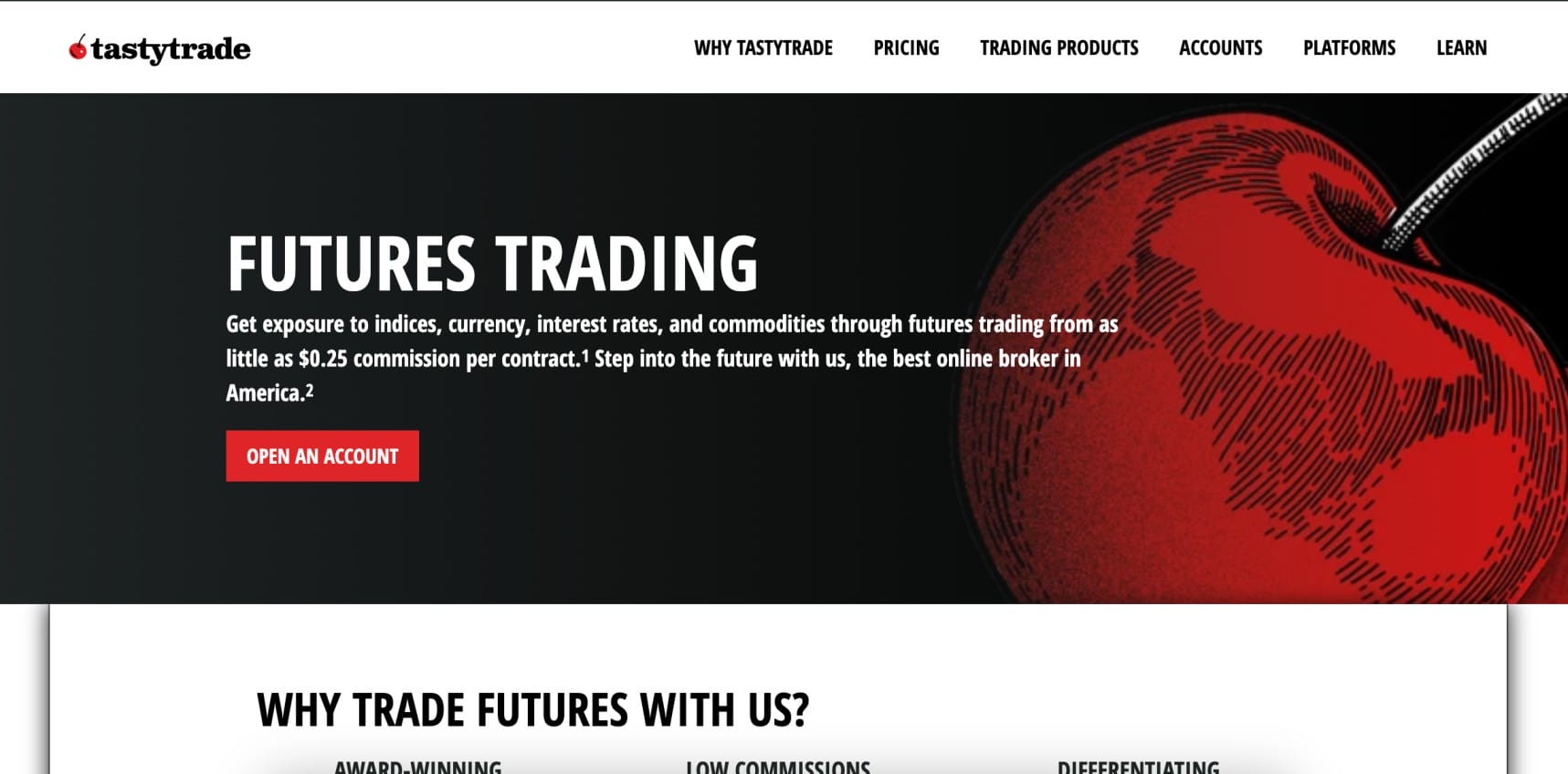
The futures platform also offers proprietary desktop software for Windows, Mac, and Linux. All device types connect to the same account.
The broker supports a wide range of futures instruments. This includes US Treasuries between 2 and 30 years, plus indices like the Dow Jones, S&P 500, and Russell 2000. You can also trade currency futures, including euros, pounds, and yen.
The platform also offers futures on some of the best cryptocurrencies to trade, including Bitcoin and Ethereum. Energy futures, metals, and agricultural futures are also available.
In terms of pricing, tastytrade charges $1 per contract on standard futures. Micro futures cost less at $0.75 per side. The broker charges commissions when opening and closing a futures position. In addition to futures, tastytrade also supports stocks, ETFs, and options.
| Range of Futures Market | Stock indices, commodities, including metals, energy markets, agricultural commodities and livestock, currencies, cryptocurrencies, and interest rates |
| Pricing System | Fees per contract, per side: Standard $1, Micro $0.75 |
| Account Types | Only ‘The Works’ accounts support futures trading |
| Trading Platforms | Proprietary futures trading platform for desktops, browsers, and mobiles |
| Account Minimum | No account minimum |
| Standout Feature | Top-rated futures trading app for iOS and Android |
| Our Rating | 4/5 |
Pros
- Best futures trading platform for mobile users
- Native iOS/Android app supports ‘drag and drop’ analysis
- Small futures contracts can be traded from $0.25 per side
- No minimum account requirements
- Markets include commodities, indices, currencies, and cryptocurrencies
- Also offers desktop software for Windows, Mac, and Linux
Cons:
- Isn’t transparent on margin requirements
- Doesn’t offer discounted fees for high-volume traders
5. E*TRADE: Trade futures contracts via a retirement account
Owned by Morgan Stanley, one of the top three investment banks in the world, E*TRADE is a good choice as a futures broker for tax-efficient trading. This popular broker enables users to trade futures via an Individual Retirement Account (IRA). As per IRA limits for 2026, you can stash away up to $7,500 a year in tax-free annual contributions.
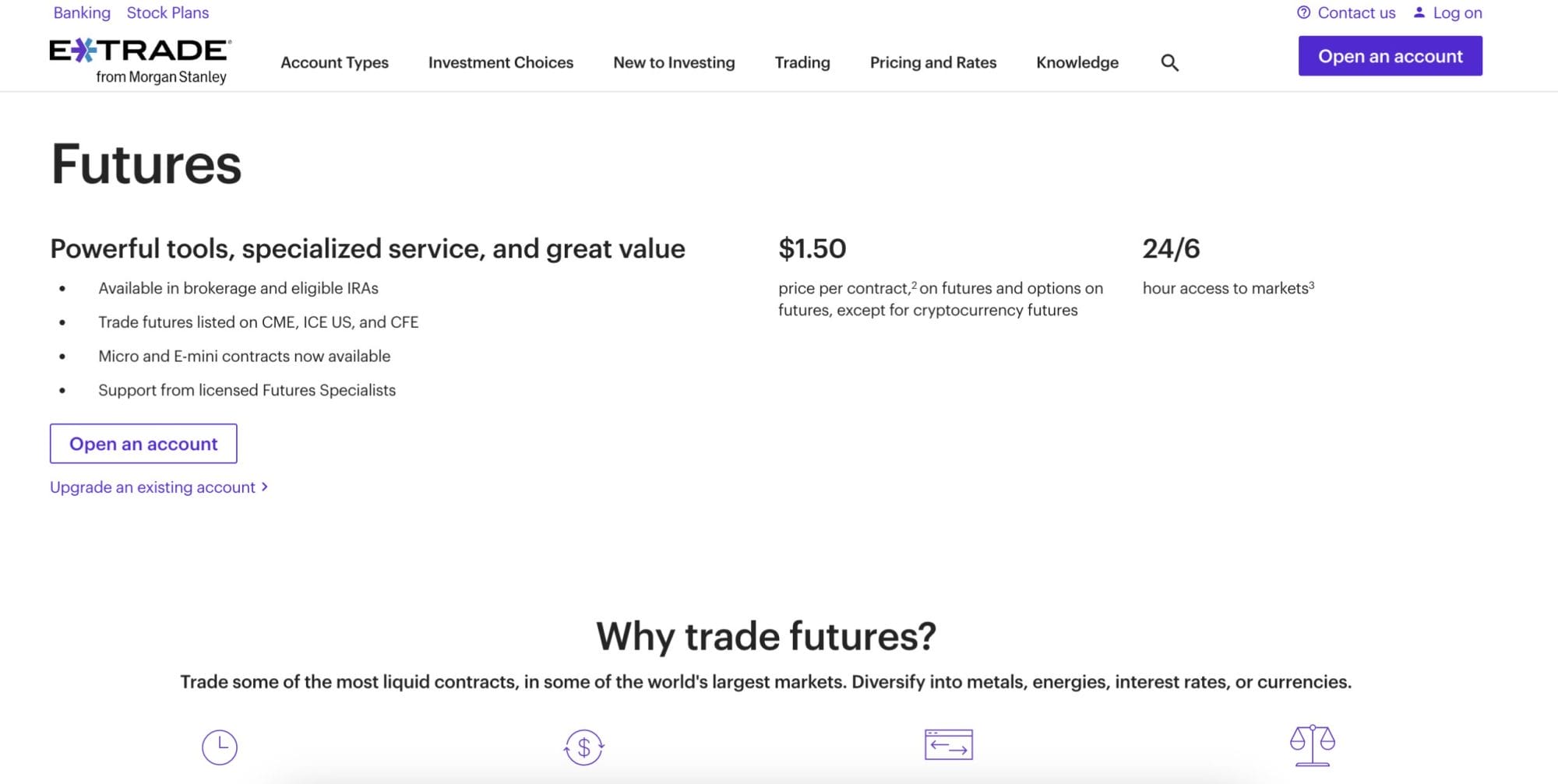
E*TRADE supports futures from various exchanges, including the CME, CFE, and ICE US. This covers both micro and e-mini contracts as the broker caters for all budgets. What’s more, futures can be traded 24/6 and there are no pattern day trading (PDT) rules.
This means you can apply leverage without needing a $25,000 margin balance if you trade multiple times a day. Supported assets include US and foreign indices, interest rates, and cryptocurrencies.
It also supports commodities futures, including metals, grains, energy contracts, and livestock. E*TRADE is also a great option for trading currency futures. This includes US, Australian, Canadian, and New Zealand dollars, as well as pounds, euros, and yen.
One of the main drawbacks of E*TRADE is fees. You’ll pay a flat rate of $1.50 per futures contract. However, this rises to $2.50 when trading cryptocurrency futures.
| Range of Futures Market | Indices, commodities, currencies, cryptocurrencies, interest rates |
| Pricing System | $1.50 per contract on all assets apart from cryptocurrencies, which cost $2.50 |
| Account Types | Standard and IRA accounts permit futures trading |
| Trading Platforms | Proprietary futures trading platform for browsers and mobiles |
| Account Minimum | No account minimum |
| Standout Feature | Trade futures via an IRA for tax-efficiency |
| Our Rating | 4/5 |
Pros
- Trade futures tax-efficiently via an IRA
- Huge selection of commodities futures
- Also supports indices, cryptocurrencies, currencies, and interest rates
- Solid iOS and Android mobile app with full functionality
- Provides FDIC-insured bank accounts via Morgan Stanley
- No minimum deposit requirements
Cons:
- Doesn’t offer desktop software
- Cryptocurrency futures cost $2.50 per contract
6. TradeStation: Trade 350+ futures markets with low margin requirements of 10%
TradeStation is a beginner-friendly broker that supports futures, options, stocks, and many other asset classes. The futures segment lists more than 350 tradable instruments. Not only from US exchanges, but also from overseas bourses.
This includes ICE Europe, which covers financials and commodities futures. Domestic exchanges include the CME, NYMEX, and MGEX.
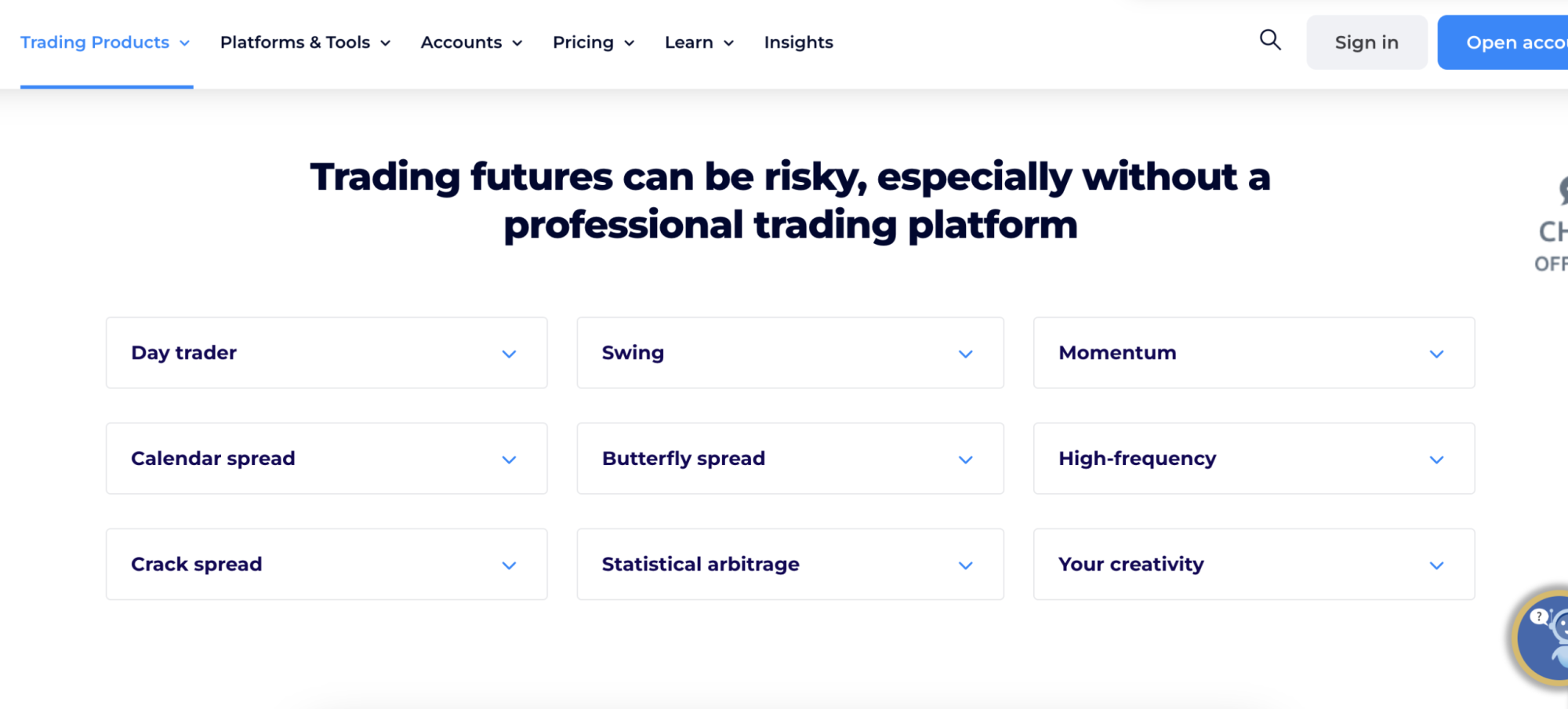
TradeStation offers a native futures platform equipped with professional trading tools. It helps traders develop advanced strategies, including ‘Statistical Arbitrage’, ‘Crack Spread’, and ‘Butterfly Spread’.
Additional platform features include advanced charting, backtesting tools, and high-speed order execution. Support devices include desktops, mobiles, and web browsers.
Standard futures contracts carry a price tag of $1.75 per side. Micro-futures cost just $0.50 per side. TradeStation has low margin requirements of 10%, meaning a $1,000 position can be amplified to $10,000.
| Range of Futures Market | Indices, commodities, currencies, cryptocurrencies, interest rates |
| Pricing System | Fees per contract, per side: Standard $1.50, Micro $0.50 |
| Account Types | Individual, IRA, and Entity accounts permit futures trading |
| Trading Platforms | Proprietary futures trading platform for desktops, browsers and mobiles |
| Account Minimum | No account minimum |
| Standout Feature | More than 600 futures with fees starting from $0.50 per side on the micro contracts, and $1.75 on the Standard contracts |
| Our Rating | 4/5 |
Pros
- Supports over 600 futures markers from the US and overseas
- Micro futures can be traded from $0.50 per contract
- Low margin requirements of 10%
- Advanced trading tools include custom charts and backtesting
- Native desktop software and mobile apps for iOS and Android
- Lots of free educational tools to help beginners
Cons:
- Live chat isn’t available 24/7
- Advertised fees do not include exchange or execution charges
Comparing the top futures brokers
Now, let’s take a look at a summary of the best futures brokers for {cur_year} in the table below:
| Futures Broker | Range of Futures Market | Pricing System | Account Types | Trading Platforms | Account Minimum | Standout Feature | Our Rating |
| AvaFutures by AvaTrade | Indices, metals, energy and agricultural commodities, forex, interest rates and cryptocurrencies | Gold on CME $0.45; Micro, E-mini, Standard contracts on the CME and Eurex $0.75-$1.75 | |||||
| Interactive Brokers | Stocks, indices, commodities, currencies, cryptocurrencies, bonds, interest rates | $0.85 per contract (fixed). Between $0.25-$0.85 per contract (tiered). | Fixed and Tiered accounts | Proprietary futures trading platform for desktops, browsers, and mobiles | None | Professional futures trading platform with premium analysis tools | 5/5 |
| NinjaTrader | Indices, commodities, currencies, cryptocurrencies, bonds, interest rates | Free plan: No monthly fee, micro ($0.39), standard ($1.29). Monthly plan: $99 monthly fee, micro ($0.29), standard ($0.99). Lifetime plan: $1,499 one-time fee, micro ($0.09), standard ($0.59). | See pricing system | Proprietary futures trading platform for desktops, browsers, and mobiles | None | Specialist futures broker with three pricing plans to choose from | 4.5/5 |
| tastytrade | Indices, commodities, currencies, cryptocurrencies, interest rates | Fees per contract, per side: Standard $1, Micro $0.75 | Only ‘The Works’ accounts support futures trading | Proprietary futures trading platform for desktops, browsers, and mobiles | None | Top-rated futures trading app for iOS and Android | 4/5 |
| E*TRADE | Indices, commodities, currencies, cryptocurrencies, interest rates | $1.50 per contract on all assets apart from cryptocurrencies, which cost $2.50 | Standard and IRA accounts permit futures trading | Proprietary futures trading platform for browsers and mobiles | None | One of the best platforms for futures trading via IRA accounts | 4/5 |
| TradeStation | Indices, commodities, currencies, cryptocurrencies, interest rates | Fees per contract, per side: Standard $1.50, Micro $0.50 | Individual, IRA, and Entity accounts permit futures trading | Proprietary futures trading platform for desktops, browsers and mobiles | None | More than 600 futures with fees starting from $0.50 per contract | 4/5 |
| Optimus Futures | Indices, commodities, currencies, cryptocurrencies, bonds, interest rates | Contract fees start from: Standard $0.75 and Micro $0.25. Discounts available for higher volumes. | Standard, IRA, and Broker-assisted | Proprietary futures trading platform for desktops | $500 | High-volume futures traders pay just $0.05 on micro contracts | 3.5/5 |
| Tickmill | CFD futures for Indices, commodities, currencies, cryptocurrencies, bonds, interest rates | Fees per contract, per side: Standard $1.30, Micro $0.85 | Futures account (UK), CFD account | Proprietary futures trading platform for desktops and mobiles. Also supports MT5. | $1,000 | Offers CFD futures without physical delivery | 3.5/5 |
| Saxo Bank | Indices, commodities, currencies, interest rates | Futures commissions from $1 per contract on the VIP account (depends on the account tier and trading instrument) | Classic, Platinum, VIP (determines fees and features) | SaxoTraderGO (Browsers and mobiles), SaxoTraderPRO (desktops) | None (all plans) | Over 320 futures markets with various account plans | 3/5 |
| Charles Schwab | Stock indices, commodities (agricultural, energy, metals, soft commodities), currencies, cryptocurrencies, and interest rates | $2.25 per contract, per side | Standard, Individual and joint accounts; IRA accounts | Proprietary futures trading platform for desktops, browsers, and mobiles | None | One of the most advanced futures platforms with high-level tools | 3/5 |
How do futures work?
In a nutshell, futures are financial derivatives that enable you to speculate on the future price of an asset. Some of the key advantages include low-margin requirements and the ability to go long or short. Futures offer access to many asset classes, including indices, commodities, bonds, and currencies.
The futures market is a lot more complex than buying and selling individual stocks. You’ll be trading leveraged financial derivatives that are often settled in the underlying asset. For this reason, it’s important to understand how futures trading works before joining a broker.
Let’s explore the fundamentals.
Strike price and expiry date
All futures contracts come with a strike price and an expiry date. The strike price is the benchmark set by the markets. The expiry date is when the futures contracts are settled.
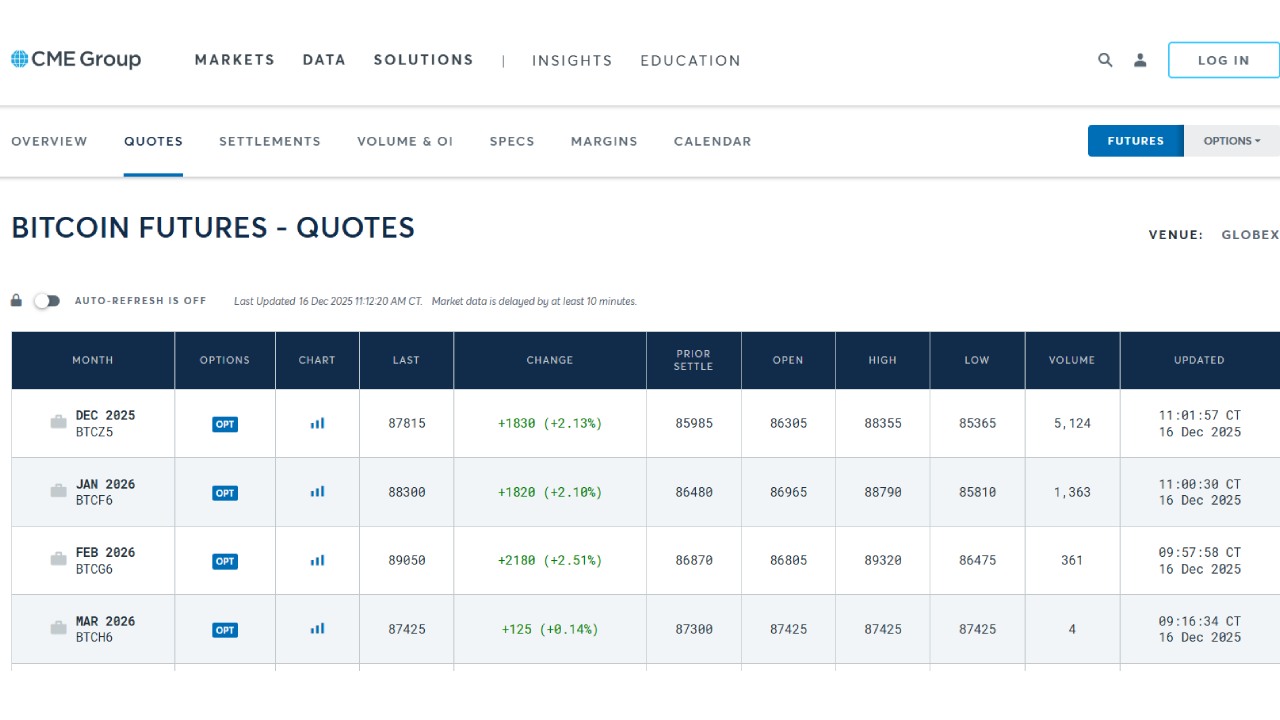
As a trader, you need to determine whether the futures will expire above or below the strike price.
- For instance, the price of Bitcoin futures with a March 2026 expiry is currently $87,425.
- If you believe Bitcoin will be worth more than $87,425 on or before the expiry date, you’d purchase long futures.
- Conversely, you should buy short futures if you believe the Bitcoin price will fall.
Depending on your chosen broker, you might have access to various delivery dates. This could be anything from one to 12 months.
Margin requirements
The top online brokers in 2026 typically offer low-margin requirements, allowing traders to control large positions with relatively small capital outlays. This feature is especially beneficial when trading futures contracts, as it enhances leverage potential.
- For instance, suppose you’re trading USD currency futures.
- We’ll say one futures contract is valued at one lot, or $100,000.
- If the broker requires a 3% margin, this means you only need to have $3,000 in your margin account.
- Therefore, you’ve just amplified your position by over 33 times.
Minimum margin requirements will vary depending on the futures market, account type, and other metrics. This should be displayed by the broker when setting up an order.
How much money do I need to trade futures online?
Although futures brokers are aimed at experienced traders, many providers don’t have a minimum account balance. This means you can deposit any amount of your choosing.
However, you also need to consider the total futures contract value and the minimum margin requirement. For instance, if the contract is worth $1,000 and the minimum margin is 20%, you’ll need to trade at least $200.
Delivery and settlement
One of the most important factors in futures trading is how contracts are settled on delivery. Put simply, ‘delivery’ refers to the date that the futures contract expires.
On delivery, some futures contracts will be physically settled. This means those holding the futures contracts on expiry need to take delivery of the underlying asset. You likely don’t want to receive a container of oil barrels, wheat, or natural gas. But this will be a legal requirement if you’re holding physically settled futures on delivery.
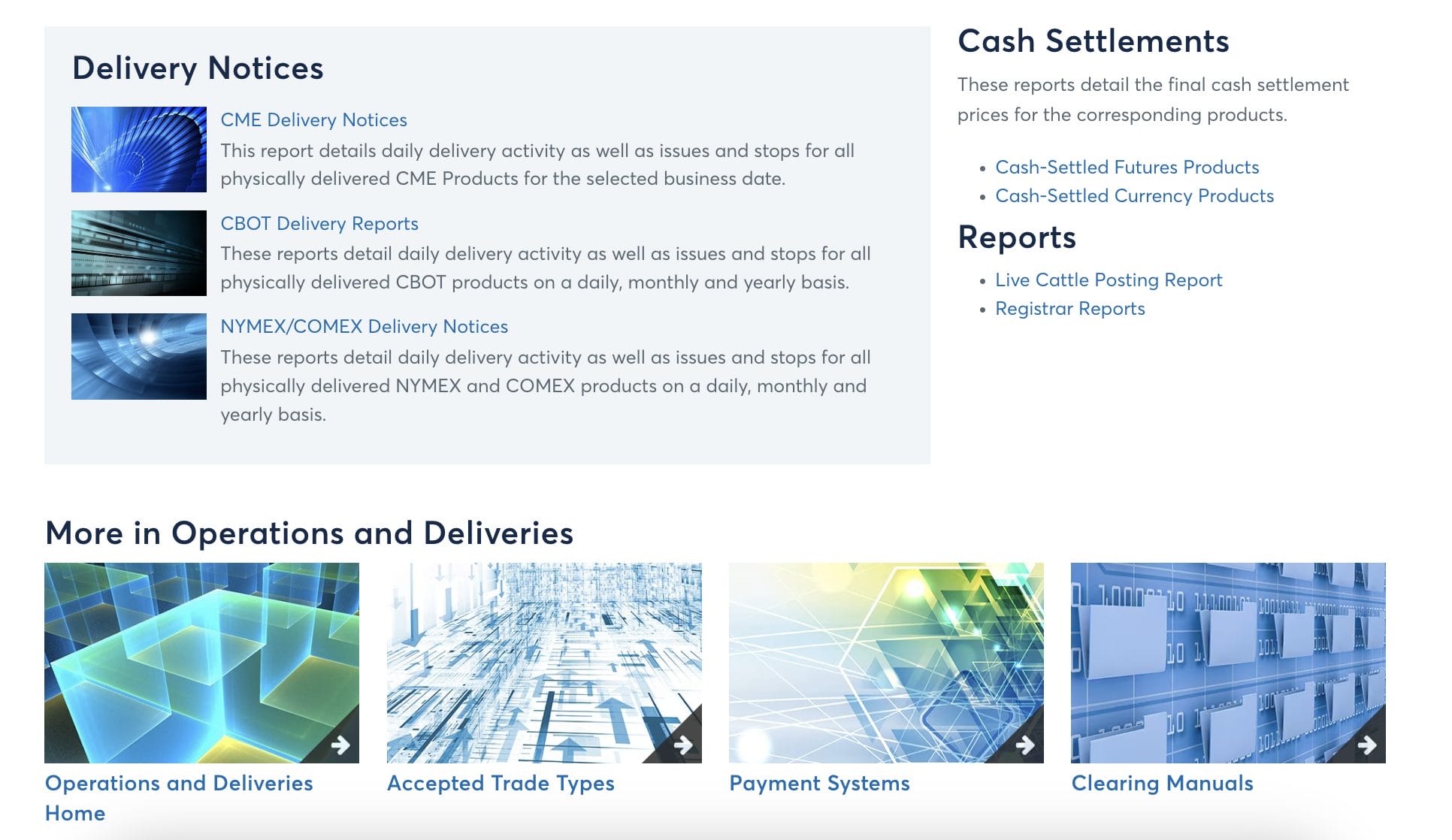
Therefore, beginners should opt for futures that settle in cash. This means the futures are settled in the respective currency, whether that’s US dollars or euros.
How to pick the right futures trading platform
The following are the most important brokerage metrics for futures traders to consider when researching futures trading brokers:
Regulation and safety:
The vast majority of futures trades are conducted on US exchanges, such as the CME and NYMEX. Therefore, if your chosen futures broker operates in the US or offers futures to US clients, it should be regulated by the Commodity Futures Trading Commission (CFTC).
As per CFTC rules, futures brokers must keep client money separate from their own. This is crucial, as futures accounts aren’t protected by the SIPC.
Type of futures contracts:
Many different types of futures contracts can be traded online; so you’ll need to explore what each broker supports.
Micro and mini futures are aimed at retail clients, as they permit smaller trade minimums. Standard futures are more suitable for professional traders with larger cash balances.
Contract settlement:
Another important factor is how the broker settles futures contracts on delivery. If the futures are settled in the underlying asset, this means you’ll need to take physical delivery.
This can be problematic when trading commodities like oil and natural gas. Cash-settled futures are more favorable, as they are settled in the respective currency.
Range of futures markets:
This often includes indices like the Dow Jones and S&P 500, hard commodities (such as crude oil, gold, silver, copper) or soft commodities (such as wheat, cotton, coffee, corn), currencies e.g.: Euro FX, a EUR/USD futures contract, and interest rates (such as the Eurodollar or Fed funds futures).
An increasing number of brokers also offer cryptocurrency futures, although this typically only includes Bitcoin and Ethereum.
Futures trading fees:
Fees will vary from one futures broker to the next. You’ll want to choose a broker with low fees for each contract traded. This will be charged ‘per side’, meaning when opening and closing futures positions. Fees can depend on the underlying asset and the type of contract (e.g. standard or micro). Considering futures trade on margin, you’ll also need to check financing rates.
Non-trading fees:
Futures brokers often charge non-trading fees. This can include deposits and withdrawals. Rarely do futures brokers charge fees to open an account. However, some do charge monthly fees depending on the required functionality.
Trading platforms and tools:
The best futures brokers offer a proprietary trading platform for desktops, mobiles, and web browsers. This should come with suitable futures trading tools, such as real-time contract quotes, advanced charting, and technical indicators.
Backtesting and simulated trading (demo trading platforms) are also important, as this will enable you to perfect your futures strategy.
Account types:
Some futures brokers offer multiple account types. For instance, you can often trade futures via a Roth or traditional IRA, which offers tax benefits. Each account type can come with various minimums, fees, and available tools.
Margin requirement:
One of the main benefits of trading futures is that they often come with low margin requirements. This is often just 10% of the total contract value.
This means a $10,000 futures position would require a margin of $1,000. However, margin requirements are not only determined by the futures broker but the respective exchange and asset.
Minimum deposit:
Many futures brokers allow traders to deposit any amount when getting started. However, others have high minimums of $1,000 or more. Make sure the minimum deposit requirement aligns with your budget.
Mobile trading:
It’s best to choose a futures broker that offers a mobile app. The app should support your smartphone’s operating system and offer a good user experience. This will enable you to open and close futures positions when you’re away from your desktop device.
Payment methods:
Consider what payment method you want to use when funding a futures trading account. US-based brokers generally support ACH and domestic wires. International brokers often accept debit/credit cards and e-wallets.
Customer service:
Although customer support won’t be able to suggest which futures to trade, they can help with general account queries. For instance, support related to payments, margin requirements, and verification. Check what hours the support team works and which contact methods are available.
Make sure to check out our guide on the best day trading platforms, as some of them also support a wide range of futures.
Our methodology for testing futures brokers
We created a comprehensive and impartial methodology when creating futures brokers ratings for this guide. We considered many variables and weighted them based on their importance.
For example, we prioritized safety and security, including suitable regulation and licensing. For instance, we focused on futures brokers that are regulated by the CFTC and members of the NFA.
These metrics were verified based on the provided licensing/membership numbers. In addition, our methodology ranked futures brokers based on their available markets. For instance, whether futures contracts are physically or cash-settled.
We also assessed the type of contract, such as standard, micro, or mini. Our aim was to ensure that the brokers we examined cater for traders of all budgets across our selections.
We examined supported markets. We prefer futures market brokers that offer a wide range of assets, such as currencies, commodities, indices, cryptocurrencies, and interest rates.
Margin requirements and account minimums also formed part of our methodology. We also examined trading platforms and tools, ensuring that traders can make smart and informed decisions. At a minimum, we expect a proprietary trading platform that supports desktop, mobile, and browser-based access.
Analysis tools should include advanced charting, technical indicators, backtesting, and simulated trading (demo account). We also expect fast execution speeds and custom order types.
These metrics enabled us to rank the best futures brokers currently active in the market. However, we encourage you to do your independent research to ensure you choose the right online brokerage account for your needs.
Conclusion
In summary, we ranked some of the top platforms for trading real (i.e. exchange traded) futures contracts.
AvaFutures stands out for offering access to about a hundred futures contracts, including commodities, indices, forex pairs, interest rates, and cryptocurrencies. Trading fees start at just $0.45 per trade on the one-ounce Gold contract on the CME. There’s a choice of three futures trading platforms, including MT5.
Other highly rated choices include NinjaTrader, tastytrade, and E*Trade. As always, be sure to fully understand the risks involved in futures trading before you begin.
While our focus was on brokers with actual futures contracts that trade derivatives exchanges, our guide will help you find CFD brokers that offer access to futures in the form of CFDs.
FAQs
How do I trade futures online?
Which is the best futures trading platform?
How do I choose a good futures broker?
How much money do I need to trade futures?
Which futures broker has the lowest spreads?
How do I know if a futures broker is regulated?
References
- https://edition.cnn.com/2023/11/02/investing/irs-401k-ira-new-contribution-limits/index.html
- https://www.cmegroup.com/markets/cryptocurrencies/bitcoin/bitcoin.quotes.html#venue=globex
- https://www.cmegroup.com/clearing/operations-and-deliveries/deliveries.html
- https://www.cftc.gov/IndustryOversight/Intermediaries/FCMs/fcmsegregationfunds.html
- https://www.sipc.org/for-investors/investor-faqs
- https://www.nfa.futures.org/registration-membership/membership-and-directories.html