


With Ethereum remaining one of the most traded digital assets, finding a trusted exchange is more important than ever.
After testing a wide range of crypto exchanges, I focused on the things that actually impact users.
In this guide, I break down the best Ethereum exchanges available right now based on real performance, usability, and security.
The best Ethereum trading platforms in 2025
Below is my top-six list of Ethereum trading platforms, with a brief summary of each platform’s capabilities and features.
- Kraken: My top choice Kraken has comparatively high levels of security. I observed relatively low Bitcoin withdrawal fees and quick and helpful customer service. The exchange has sophisticated features, including margin trading.
- Weex: Weex provides a simple and easy-to-use platform with active ETH markets. It also keeps a 1,000 BTC on-chain protection fund and publishes reserve updates
- Coinbase: Popular exchange Coinbase offers more than 100 cryptocurrencies for trading. Again, reassuringly, it has a simple user interface and a low account minimum. It enables you to earn rewards while learning about cryptocurrency.
- eToro: eToro offers more than 5,000 assets, reassuringly low fees in a transparent fee structure, ready-made smart portfolios, and, crucially, intuitive and easy-to-use platforms
- OKX: Crypto traders appreciate OKX’s diverse system of structured products catering to traders with a variety of risk appetites
- Binance: Binance supports many of the most commonly traded cryptocurrencies and provides a crypto wallet for traders to store their electronic funds.
- Uphold: Leading Ethereum exchange with simple tools for beginners and 100% reserve model on user assets.
After discovering the best options for buying Ethereum, let’s take a closer look at each of them.
1. Kraken: A sophisticated and safe Ethereum exchange
When I put Kraken to the test, I could see why it still ranks as one of the best crypto exchanges available in 2025. From top-tier security to a clean interface and low trading costs, the platform does a lot right for both beginners and experienced traders.
The exchange includes spot trading, margin trading with up to 5x leverage, and futures contracts with up to 50x leverage through Kraken Pro. It also supports staking for Ethereum and other assets, with services now available again to users in most U.S. states.
While Kraken doesn’t offer a native wallet, it supports cold wallet integrations through trusted brands like Ledger and Trezor, which I personally prefer for long-term digital assets storage.
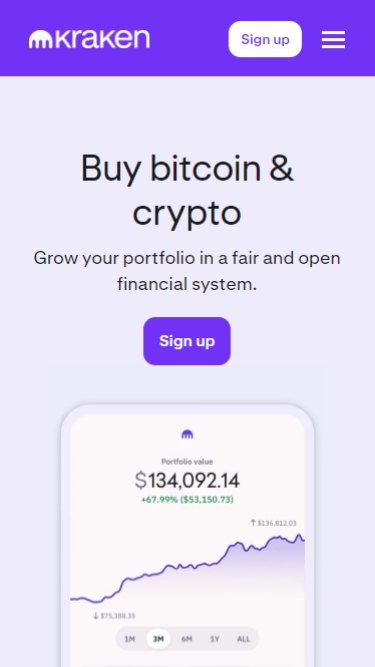
The platform is rich in educational tools, helping users understand Ethereum and how to trade crypto confidently. It also provides clear breakdowns of trading pairs and order types, including limit orders and stop orders, which are essential if you’re active in crypto markets.
Kraken’s fee structure follows a maker-taker model. At the entry level, maker fees are 0.25% and taker fees are 0.40%, though these decrease with higher trading volume, making it more cost-effective as you scale up. The app also works smoothly on both iOS and Android, and I found mobile trading to be just as reliable as desktop.
The site itself is easy to navigate and performs well, even with multiple trades running. I also appreciate that crypto holdings are protected with a strong mix of 2FA, cold storage, and regular audits.
| Ethereum spot and futures trading | Yes |
| ETH exchange fees | 0.16% maker / 0.26% taker on Kraken Pro |
| Buying ETH with a credit card (fee) | ≈5% |
Pros
- Offers margin trading and crypto futures through Kraken Pro
- Advanced tools and order types for experienced crypto traders
- Transparent and scalable fee structure
Cons:
- No proprietary wallet
- Higher maker-taker fees unless you increase volume
2. Weex: Fast‑growing exchange with a strong protection fund
Weex puts a lot of emphasis on protecting user funds. The exchange maintains a 1,000 BTC protection fund that is visible on-chain, and it publishes regular updates on its reserves so users can check that assets are properly backed. I found this useful, especially if you value platforms that are more open about how they handle customer balances.
When I tested Weex, I also noticed how easy it is to navigate the platform. The layout is clean, order placement is quick, and switching between spot trading and ETH futures takes only one click. It is easy to see why the platform has been expanding, since everything is set up in a way that feels familiar even if you are new to trading.
ETH markets on Weex are stable and active, and trades execute without delays. Some of the smaller trading pairs still need more activity, but the main ETH pairs have enough liquidity for both small and larger orders. You can also choose between isolated and cross margin when trading futures, which gives you more control over your risk.
| Ethereum spot and futures trading | Yes |
| ETH exchange fees | ≈0.1% |
| Buying ETH with a credit card (fee) | N/A |
Pros
- Rapidly growing exchange serving millions worldwide
- Public protection fund and regular proof‑of‑reserves updates bolster trust
- Spot and futures markets for ETH with competitive fees and up to 400× leverage
Cons:
- Credit card purchases are not available; only bank transfers and crypto deposits
- Liquidity on certain minor ETH pairs can be thinner compared with established exchanges
| If you want to know more about this platform, don’t miss our Weex review. |
3. Coinbase: Easy to use, with low minimums and a native debit card
For beginners, I found Coinbase to be a good place to start investing in Ethereum in 2025. After trying it out again, I understood how it became the largest U.S. crypto exchange by trading volume, now with more than 108 million users in over 100 countries.
I liked its core feature, which is the ability to buy, sell, and trade over 240 digital assets. While Coinbase’s trading costs can be higher than some competitors, the overall experience still makes it one of the most popular platforms for crypto investing.
I was encouraged to find that Coinbase Card is still available. It lets users spend their crypto at any merchant that accepts Visa and offers up to 4% back in crypto rewards on purchases.
Coinbase has one of the lowest entry points among the best crypto exchanges, allowing users to start with as little as $1. Its Coinbase Earn feature also remains a nice touch, rewarding users with small amounts of crypto for watching videos and answering questions.
While Coinbase is a strong option, users looking for broader trading opportunities can explore Non-Coinbase exchanges. That said, Coinbase still provides a range of trading platforms: the main site is beginner-friendly, while Coinbase Advanced Trade offers more sophisticated tools like limit orders and variable maker/taker fees. There’s also Coinbase One, a subscription option with no-fee trading up to a set monthly limit.
| Ethereum spot and futures trading | Spot only |
| ETH exchange fees | 0.0%–0.4% maker / 0.05%–0.60% taker on Advanced Trade. |
| Buying ETH with a credit card (fee) | 3.99% |
Pros
- No fees for local bank transfers
- High-quality proprietary wallet
- One of the lowest minimum balance requirements among top exchanges
Cons:
- Higher taker fees when buying with card or PayPal
- 35% commission on staking rewards
According to my analysis, eToro is the next best crypto exchange for Ethereum in 2025. It is worth considering for both new and experienced traders.
In addition to finding it one of the best Ethereum exchanges for beginners, I also appreciated the simplicity with which eToro enables users to buy and sell a selection of assets, including a growing list of digital assets.
The eToro exchange is a multi-asset investment platform that allows users to invest in crypto trading, ETFs, and stocks from one place. It also offers various extra functions.
Note that U.S. customers are currently limited to Bitcoin, Ethereum, and Bitcoin Cash due to regulatory changes.
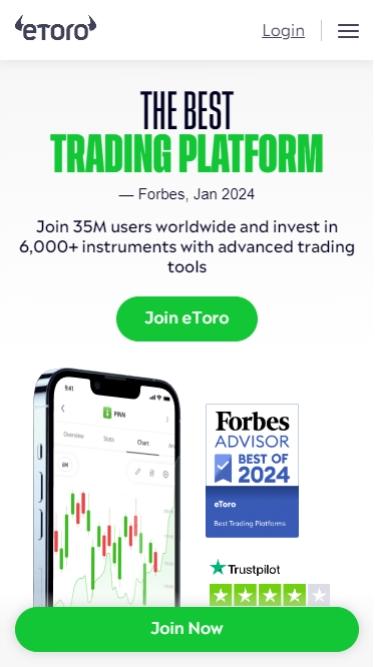
Depending on how active you plan to be, eToro could also be a good starting point for Ethereum investors, not least because they won’t be charged fees on stock and ETF trades.
Instead, the platform earns income from flat trading costs such as a $5 withdrawal fee, inactivity charges, and crypto trading fees.
As well as offering built-in educational resources, eToro includes a community newsfeed and social features where users can share strategies or follow others.
You can also move your ETH to the eToro Money wallet and withdraw it on-chain if you prefer managing your own cryptocurrencies.
Its CopyTrader tool even lets you copy the trades of top-performing investors automatically, and that’s something I found genuinely helpful for learning from more advanced trading strategies.
| Ethereum spot and futures trading | Spot trading only |
| ETH exchange fees | 1% |
| Buying ETH with a credit card (fee) | Varies by region |
Pros
- Best-in-class proprietary wallet
- One of the most popular mobile apps for crypto
- Market-leading educational and social tools
Cons:
- Relatively small selection of cryptocurrencies for U.S. users
Don’t invest unless you’re prepared to lose all the money you invest. This is a high-risk investment and you should not expect to be protected if something goes wrong.
5. OKX: Great features, including demo accounts and trading bots
Although OKX is currently the world’s second-largest crypto derivatives trading exchange by trading volume, its own CEO Star Xu has said the goal was never to list everything, but to focus on transparency and strong technology.
The exchange, which now offers more than 400 tradeable digital assets, charges relatively low fees for both spot and futures contracts, and still supports copy trading. And that’s something I found helpful for tracking the moves of experienced traders.
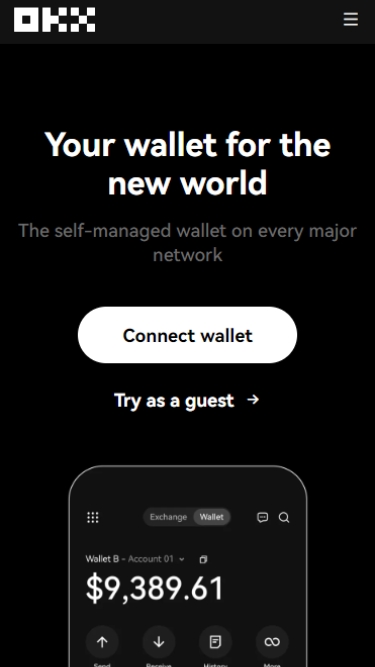
Getting started is simple. OKX provides demo accounts where you can test crypto trading strategies using virtual funds. There are also trading bots available, including DCA and grid bots, which can execute trades around the clock and help automate your portfolio management.
The OKX Wallet is another plus. It works across desktop, mobile, and browser extension, and supports more than 130 blockchains. It’s one of the most flexible wallets I’ve tested on any crypto exchange.
As for fees, OKX uses a tiered fee structure. Regular users pay maker fees starting at 0.08% and taker fees at 0.10%, which decrease as your trading activity increases. This makes OKX a strong pick for anyone interested in advanced trading with a scalable cost model.
| Ethereum spot and futures trading | Yes |
| ETH exchange fees | 0.08% maker / 0.1% taker |
| Buying ETH with a credit card (fee) | ≈2%–3% |
Pros
- Competitive maker-taker fees
- Built-in wallet with wide blockchain support
- Automated bots and demo trading accounts
Cons:
- Fiat deposit fees can be higher depending on the method
| Besides being one of the best exchanges to buy Ethereum, OKX is also one of the best platforms to find the following coins with great potential. If you want to stay up to date, take a look at our updated guide with the new OKX listings. |
6. Binance: P2P trading and a built-in coin wallet
I was pleased to find that Binance, an Ethereum exchange, provides a wide range of crypto trading features, including spot trading, margin, futures, P2P, and various order types like stop-limit and market orders.
The platform also supports crypto donations through Binance Charity, which continues to fund global projects.
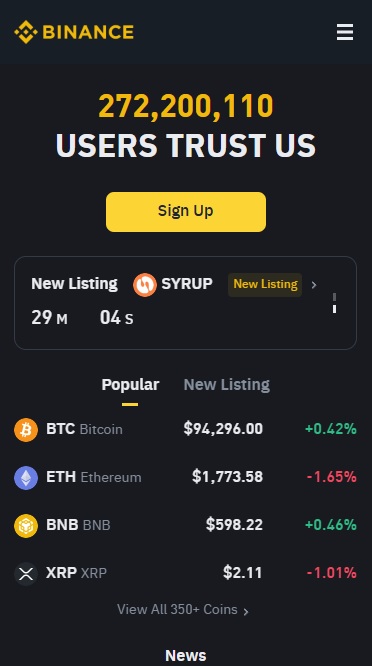
Binance offers some of the lowest fees in the industry, starting at 0.10% for both maker and taker fees. Users can reduce their trading costs even further by paying with BNB.
The exchange now supports around 410 cryptocurrencies, giving access to everything from Bitcoin and Ethereum to smaller digital assets and stablecoins.
Security remains a major focus. The $1 billion Secure Asset Fund for Users (SAFU) acts as an emergency insurance fund to protect users in case of hacks or serious breaches, which is a feature not found in many crypto exchanges.
I also liked its P2P feature, which connects buyers and sellers directly and allows fiat payments with local options. Just note that the in-person cash trading option, known as the P2P Cash Zone, was removed in March 2025.
Users can toggle between a beginner-friendly interface and an advanced trading platform, which includes deeper charting tools and order types that will appeal to experienced traders.
Binance also provides a built-in Web3 wallet, accessible through its mobile app. The wallet supports multiple chains and lets users store and manage a wide range of tokens securely.
| Ethereum spot and futures trading | Yes |
| ETH exchange fees | ≈0.1%; 0.075 % when paying fees with BNB. |
| Buying ETH with a credit card (fee) | ≈2% |
Pros
- Huge variety of cryptoassets and advanced trading features
- Among the best crypto exchanges by global trading volume
- Built-in wallet and strong security backing through SAFU
Cons:
- Legal controversies around compliance and money laundering
7. Uphold: Excellent Ethereum exchange for beginners
Uphold is a popular Ethereum exchange that could be an excellent choice for beginners who want to start exploring crypto trading. The platform lets users open an account within minutes and begin investing with as little as $1.
Those who prefer to use a mobile app have access to a native iOS and Android version, which mirrors the functionality of the Uphold website. This makes it easy to manage trades, set up recurring purchases, or apply a dollar-cost averaging strategy directly from your phone.
I also liked how easy it was to diversify. You can trade across more than 250 digital assets, including crypto, fiat currencies, and even precious metals. There’s no need to transfer crypto between platforms, which adds convenience and reduces transaction costs.
Another feature worth noting is Uphold’s curated baskets. These group assets together into themes like AI, the Metaverse, or the “Big Three”: BTC, ETH, and XRP. With one click, you can gain exposure to entire sectors instead of trading individual coins.
| Ethereum spot and futures trading | Spot trading only |
| ETH exchange fees | 1.4%–1.6% |
| Buying ETH with a credit card (fee) | Varies by region and payment provider |
Pros
- Over 250 cryptocurrencies, metals, and fiat currencies
- Ideal for beginners exploring crypto exchanges
- Themed investment baskets for diversified exposure
Cons:
- Trading fees are higher than what you’ll find on most other platforms
What is Ethereum?
Ethereum is a decentralized blockchain network that went live in July 2015. While Bitcoin was designed primarily as a digital cash system, Ethereum expands on that concept by enabling smart contracts, which are self‑executing programs that run directly on the blockchain. These contracts support decentralized finance (DeFi), non‑fungible tokens (NFTs), gaming, and other applications.
By 2025 Ethereum is the second‑largest cryptocurrency by market size, and its trading activity often rivals Bitcoin’s. For example, in the first quarter of 2025, average daily ETH spot volume reached about $17.2 billion, slightly higher than Bitcoin’s $16.4 billion. Millions of people now interact with Ethereum, and the network handles trillions of dollars worth of assets each year.
What to look out for when choosing Ethereum exchanges
When deciding where to trade Ether, consider the following factors:
- Proof of reserves specific to ETH – Exchanges should publish on‑chain evidence that customer ETH balances are fully backed. A well-structured proof-of-reserves program compares on-chain assets with user liabilities, allowing customers to verify their deposits.
- Liquidity and number of ETH pairs – High liquidity reduces slippage, helping you get the price you expect. For its part, a wide selection of Ethereum pairs against fiat currencies, Bitcoin, stablecoins, and other altcoins offers flexibility.
- Fees for buying and trading ETH – Compare maker/taker fees as well as any charges for using cards or other funding methods. Competitive spot fees around 0.1% are common on leading platforms
- Regulation and security – Licensed exchanges such as Kraken and Coinbase must meet strict compliance requirements. Also, look for insurance funds, two‑factor authentication and other security measures available.
- Payment methods and access – If you plan to buy ETH with fiat currency, check which payment options are available in your region and the associated fees.
- User experience – A smooth interface, educational resources, staking or lending features and integrated wallets can all enhance your trading experience, especially if you’re new to crypto.
| For more guidance on evaluating platforms, you can explore our article about the 6 mistakes beginners make when choosing a crypto exchange. |
Starting capital for ETH spot and futures trading
In general, you don’t need a large balance to start trading Ether in a crypto exchange. Most platforms let you begin with a small amount, although traders usually keep a bit more aside so orders run smoothly. Now, what’s also important is which kind of Ethereum trading suits you best.
The main one for beginners is spot trading, which simply means buying or selling ETH at the going rate. This way, you can build up your position over time as your confidence grows.
Another trading option available is trading ETH futures. This option is different because it involves a posting margin, which is a deposit that covers potential losses. Margin requirements vary by platform, and even with micro-contracts, the amount needed is higher than what you would use for a simple spot trade.
Futures can magnify both gains and losses, so it’s wise to start with a modest position size and understand how liquidation works before increasing your exposure.
Conclusion
The best Ethereum exchange for you depends on what you value most. You probably won’t choose the same exchange if you are new or if you are already experienced, or if you aim for derivatives or spot trading.
That said, my favorite choice is Kraken, for multiple reasons: it’s regulated, has a long track record of security, it’s very simple to use, and has a straightforward fee structure. Altogether, make it a reliable place to buy and trade Ether.
However, whatever you choose, make sure to start with a modest amount that allows you to become familiar with the interface and the way of trading Ethereum. As you grow more comfortable, you can diversify across different exchanges to spread counterparty risk and take advantage of each one’s unique features.