


Trust Wallet is a popular option for managing multiple cryptocurrencies, but it may not suit everyone’s needs. After reviewing many alternatives, I have decided on Best Wallet for its multi-chain support and seamless crypto exchanges.
However, if you want a quick summary, here are the best Trust Wallet alternatives to consider.
Best Wallet Review
- Buy, store and spend thousands of cryptocurrencies
- 60+ chains supported including Bitcoin, Ethereum and Solana
- Earn rewards with staking, cashback and airdrops

Best Trust Wallet Alternatives for Your Crypto in 2025
- Best Wallet: The winner for multi-chain functionality and inbuilt crypto swaps, making it the go-to for users who want ease with assets across chains.
- OKX Wallet: A non-custody, secure crypto wallet that is featured because of its enhanced security due to multi-party computation. It offers access to more than 200 decentralized exchanges.
- Zengo: A digital crypto wallet with additional advanced security features, such as biometric authentication, that can let users securely store and manage their assets.
- Ledger Nano X: A premium hardware crypto wallet used for the cold storage of crypto assets, increasing the security of those who opt to keep crypto cold offline.
- Trezor Safe 3: A budget-friendly hardware wallet designed with long-term crypto storage as an option, providing security and user-friendly functionality for its customers.
- Metamask: Widely trusted as a non-custodial crypto wallet due to its seamless integration of dApps and Ethereum-based assets.
- BitGo: This crypto wallet is meant for users whose central interest is the security and insurance of their digital assets.
- Guarda Wallet: Supports more than 400,000 assets and has integrated staking options and a highly user-friendly interface.
An in-depth look at the best Trust Wallet alternatives of 2025
After evaluating the key contenders, it’s time to examine each crypto wallet in more detail. From security to usability, this section provides a comprehensive look at the features and benefits of the best Trust Wallet alternatives for 2025.
1. Best Wallet – Best for multi-chain support and built-in crypto swaps
Why Best Wallet is one of the best Trust Wallet alternatives
I chose Best Wallet because of its unrivaled function in efficiently handling multiple blockchain networks, which house over 60 blockchains.
Every crypto wallet is integrated with a DEX aggregator to guarantee the lowest fee and smooth crypto swaps between various chains.
Best Wallet’s feature-rich ecosystem houses innovative features such as cross-chain swaps, making it a very good choice for users who need flexibility in operating diversified digital assets across chains.
Overview of Best Wallet
Best Wallet is a multifunctional, non-custodial, anonymous crypto wallet whose sole purpose is to simplify crypto management for investors of any level.
Besides supporting more than 4,000 cryptocurrencies, the crypto wallet is integrated with numerous decentralized exchanges that grant users the ability to swap tokens without third-party service involvement. The ‘Upcoming Tokens’ feature of the crypto wallet is highly useful for early adopters since it offers easy access to presale tokens.
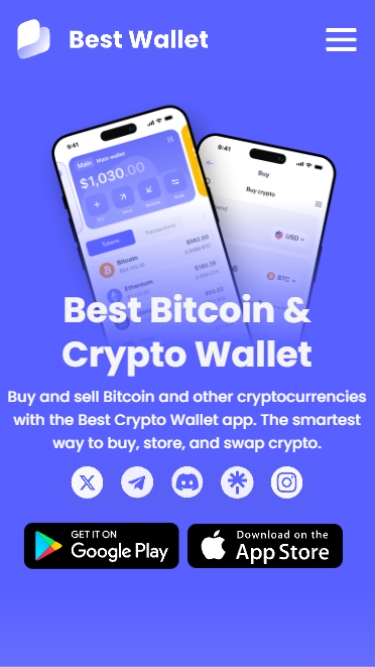
One of the distinguishing features of Best Wallet is its seamless integration with real-world payment systems, such as Google Pay and Apple Pay, through its Best Card, which enables the direct payment of crypto. Security is another strong point, including options from biometric authentication to PIN encryption and 2FA, while keeping all private keys and funds fully controlled by the user.
Best Wallet coins, fees, security & more
| Supported blockchains | 60+ |
| BTC support | Yes |
| Browser extension | No |
Pros and cons of Best Wallet
Pros
- Integrated DEX aggregator for low-fee crypto swaps.
- Access to presale tokens within the wallet.
- Strong security with biometric login and 2FA.
- Real-world spending via Best Card integration.
Cons:
- Mobile-only access; lacks desktop support.
- Network fees can fluctuate based on blockchain activity.
2. OKX Wallet – Best for non-custodial security and DeFi
Why OKX Wallet is one of the best Trust Wallet alternatives
I chose the OKX Wallet because it emphasizes non-custodial security, whereby users can control their assets completely.
It’s perfect for highly active DeFi individuals because it makes access to decentralized finance applications, such as staking and lending/borrowing, smooth and seamless without sacrificing security.
Its broad compatibility with various blockchain networks further extends its usefulness to users who deal with a wide variety of portfolios.
Overview of OKX Wallet
OKX Wallet is a functionally-rich, non-custodial wallet aimed at DeFi enthusiasts and supported on more than 70 different blockchains.
The app also integrates an in-wallet DEX, through which users can swap tokens across more than 20 networks at optimal rates. OKX also supports access to dApps on many networks, making it quick and easy to perform advanced DeFi activities like staking, lending, and NFT trading.
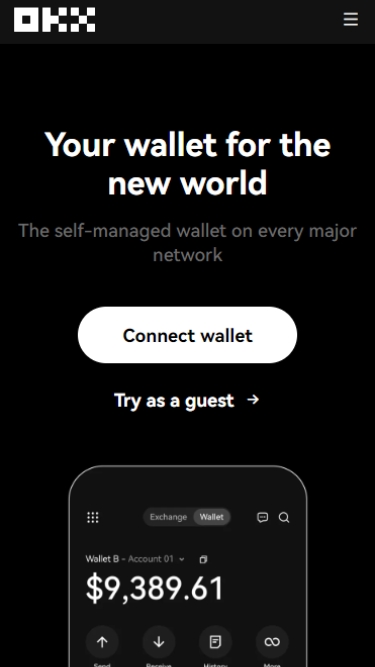
While this crypto wallet is powerful, feature-filled, and ideal for more advanced users, it may be information overload for the complete beginner. For anyone looking for a feature-rich tool to support multi-chain assets and private key control, OKX Wallet has all it takes.
OKX Wallet coins, fees, security & more
| Supported blockchains | 90+ |
| BTC support | Yes |
| Browser extension | Yes |
Pros and cons of OKX Wallet
Pros
- Integrated DEX enables seamless swaps across networks.
- No KYC is required for basic usage, ensuring privacy for users.
- Comprehensive DeFi and NFT trading support across multiple blockchains.
- Advanced security features, including 2FA and private essential control.
Cons:
- The platform’s complex DeFi features can be overwhelming for beginners.
- Some blockchains, like Ethereum, may have high gas fees, making smaller trades less cost-effective.
3. Zengo Wallet – Best for secure and user-friendly biometrics
Why Zengo Wallet is one of the best Trust Wallet alternatives
ZenGo Wallet is popular due to its modern keyless security, which utilizes biometric authentication to change recovery phrases.
The strong security and innovativeness of the system make it perfect for users who value ease but do not want to trade it off for protection.
Overview of Zengo Wallet
The ZenGo Wallet provides an intuitive user experience, balancing ease of use and advanced security. This unique approach employs biometric facial recognition instead of recovery phrases, topped with multi-party computation technology.
This multi-party system means that your private keys are not controlled by any one person, including you. Instead, they are divided and shared among different parts of the system. This way, no person or company can access or lose your keys, making your crypto more secure.
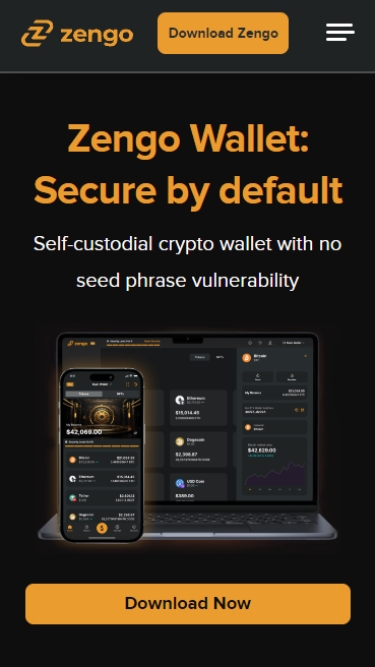
Beyond security features, ZenGo integrates easily with decentralized finance platforms and NFTs and supports over 70 cryptocurrencies. It also features the ClearSign firewall, which segregates Web3 transactions into different risk levels for added protection.
ZenGo’s design and ease of use are highly suitable for beginners, while advanced functionality is still available.
Zengo Wallet coins, fees, security & more
| Supported blockchains | 15+ |
| BTC support | Yes |
| Browser extension | No |
Pros and cons of Zengo Wallet
Pros
- Biometric security for easy and secure access.
- Keyless system eliminates the need for traditional recovery phrases.
- Supports over 70 cryptocurrencies with NFT and DeFi integrations.
- Built-in Web3 firewall (ClearSign) for enhanced protection.
Cons:
- Lacks full control over private keys, which may not appeal to crypto purists.
- Relies on ZenGo’s servers for part of the keyless security setup.
4. Ledger Nano X – Best for secure cold storage and portability
Why Ledger Nano X is one of the best Trust Wallet alternatives
I believe the Ledger Nano X is the perfect hardware wallet, given its first-class mix of security and mobility.
Its capacity to securely store crypto assets offline with Bluetooth functionality ensures users’ convenience in mobile portfolio management without sacrificing safety; hence, it is suitable for anyone who wants both the ease of cold storage and the flexibility to transact anytime and anywhere.
Overview of Ledger Nano X
The Ledger Nano X is a high-end hardware wallet that can support upwards of 1,800 different cryptocurrencies.
With features such as Bluetooth connectivity, the major benefit is managing assets via the Ledger Live app, available both on desktop and mobile. This provides users with the ability to transact securely, even on the move.
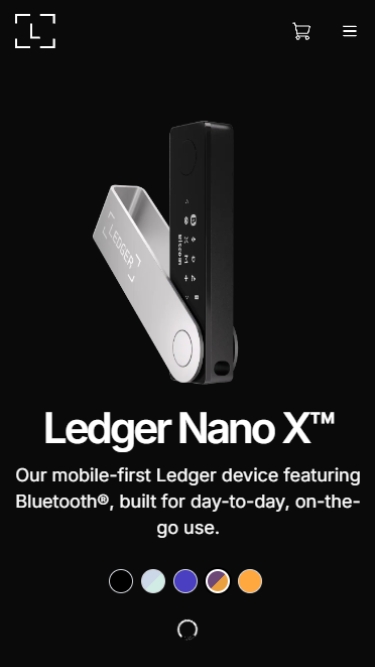
Equipped with a CC EAL5+ certified secure chip, the private keys and recovery phrases are granted top protection. It also allows the installation of up to 100 crypto apps, making it versatile for users operating with numerous different types of assets.
The Nano X provides more storage capacity and is even more portable than its predecessor, the Ledger Nano S. The addition of Bluetooth does raise some question marks over security, although it is encrypted to minimize risk.
One possible disadvantage could be that it is marginally more expensive than some cold wallets, but added features and portability justify the price.
Ledger Nano X coins, fees, security & more
| Supported blockchains | 100+ |
| BTC support | Yes |
| Browser extension | No |
Pros and cons of Ledger Nano X
Pros
- Offers secure cold storage while being portable, thanks to Bluetooth connectivity.
- Easy asset management via the Ledger Live app, available on both desktop and mobile.
- Enhanced security with a certified secure chip and PIN protection.
- Allows installation of up to 100 crypto apps, ideal for users with diverse portfolios.
Cons:
- More expensive than other hardware crypto wallets, priced around $149.
- Some users are concerned about Bluetooth security, although it is encrypted.
5. Trezor Safe 3 – Best for affordable cold storage and basic security
Why Trezor Safe 3 is one of the best Trust Wallet alternatives
We chose the Trezor Safe 3 because it offers so much good security for its price and is an excellent option for people who simply need to put their crypto in a safe place without breaking the bank.
Through its Secure Element and extensive asset support, it offers good security and is user-friendly for both complete beginners and advanced users.
If you’re seeking budget-friendly cold storage solutions, look no further than the Trezor Safe 3.
Overview of Trezor Safe 3
The Trezor Safe 3 is one of the latest hardware wallets from Trezor, offering a balance of security and affordability. Priced at $79, it is designed with a focus on basic yet effective security. It features the OPTIGA™ Trust M Secure Element chip, which enhances physical security and protects PIN and recovery phrases from unauthorized access.
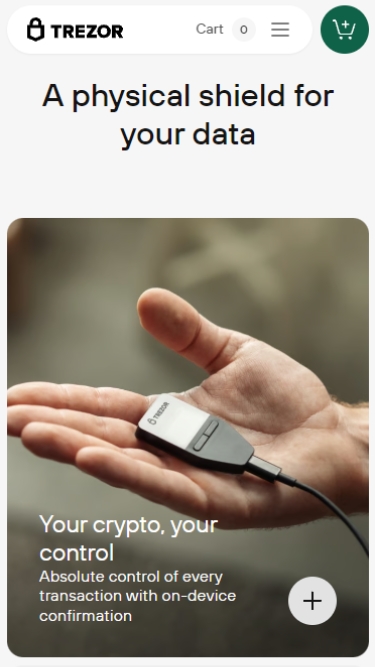
This secure crypto wallet supports over 8,000 cryptocurrencies, including significant assets like Bitcoin, Ethereum, ERC-20 tokens, and NFTs. While it lacks the touchscreen seen in higher-end models, its user interface remains simple and easy to navigate, using two physical buttons.
Users can create a Shamir Backup for enhanced security, which splits recovery information across multiple keys.
However, the device’s simplicity may not appeal to users who prefer more advanced features, such as integration with decentralized finance platforms or non-custodial staking.
Trezor Safe 3 coins, fees, security & more
| Supported blockchains | 16+ |
| BTC support | Yes |
| Browser extension | No |
Pros and cons of Trezor Safe 3
Pros
- Affordable price point makes it accessible for budget-conscious users.
- Secure Element chip adds an extra layer of physical security.
- Shamir Backup option allows secure multi-key recovery.
- No KYC requirement, offering privacy-friendly usage.
Cons:
- Lacks advanced features like a touchscreen or built-in staking options.
- No direct support for DeFi or dApp integration.
6. Metamask – Best wallet for Ethereum and Web3 integration
Why Metamask is one of the best Trust Wallet alternatives
If you are into Ethereum and Web3 applications, Metamask is my go-to place.
The seamless integration with the Ethereum-based decentralized applications, NFTs, and DeFi protocols makes it the best Trust Wallet alternative for those seeking an accessible bridge into these ecosystems.
Overview of Metamask
Metamask is developed as a non-custodial cryptocurrency wallet targeted at Ethereum and Ethereum-compatible blockchains. Such applications, in turn, attract much attention when it comes to easy access to Web3, including the possibility of working with decentralized finance applications and non-fungible tokens.
Along with Ethereum, Metamask also supports multiple Layer 2 networks such as Optimism, Polygon, and Arbitrum. However, these have to be added manually by the user.
If you are more into ERC-20 token management, here are some other options for ERC-20 wallets to help you out.
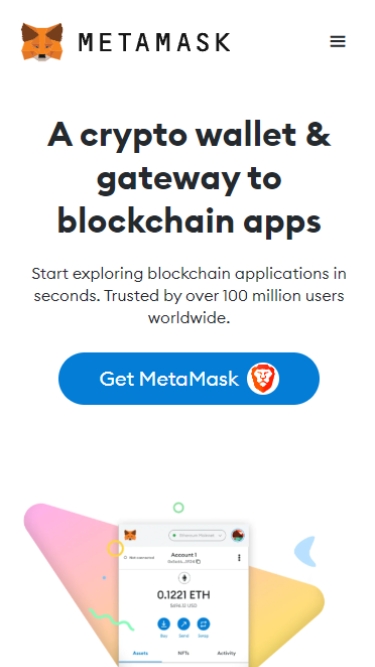
Metamask also integrates with hardware wallets like Trezor and Ledger for additional security. The software is primarily recognized for its open-source nature; users have complete control over their private keys, which naturally means they are responsible for their wallet’s security.
One weakness is that, out of the box, it does not support other blockchains outside of Ethereum-related ones. Additionally, while Metamask is very popular, its interface can be overwhelming for a new user, and there is no native two-factor authentication in the product. Otherwise, this supports custom transaction fees via EIP-1559 and staking, too.
Metamask coins, fees, security & more
| Supported blockchains | 5+ |
| BTC support | No |
| Browser extension | Yes |
Pros and cons of Metamask
Pros
- Seamless Web3 and dApp integration, ideal for DeFi and NFT enthusiasts.
- Compatible with hardware wallets for enhanced security.
- Open-source and non-custodial, giving users full control over their assets.
- Allows users to adjust gas fees and supports custom fee configurations via EIP-1559.
Cons:
- Can be confusing for beginners due to a steep learning curve.
- Requires manual network configuration for non-Ethereum chains like Polygon and Binance Smart Chain.
7. BitGo Wallet – Best for institutional-grade security and digital asset insurance
Why BitGo Wallet is one of the best Trust Wallet alternatives
BitGo Wallet is my number one recommendation for institutional-grade security, outpacing the rest in protecting high-value assets.
From a combination of cold storage solutions to a huge insurance policy, this is the go-to for any business or institution looking to safeguard substantial digital holdings.
Overview of BitGo Wallet
BitGo Wallet leads the pack in terms of active digital asset security and custodial services for institutional clients holding sizable digital assets.
The cryptocurrency wallet provides hot and cold storage solutions, but what sets BitGo apart is that it was among the first to deploy multi-signature wallets with full insurance coverage. BitGo’s $700 million crypto insurance policy, underwritten by Lloyd’s of London, brings added peace of mind for institutions storing assets in cold storage.
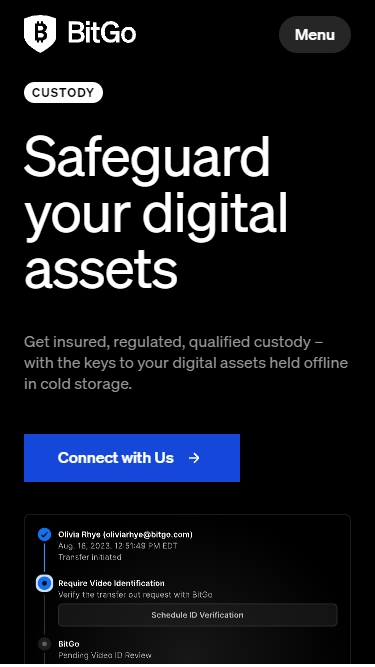
Moreover, BitGo can support a range of advanced security features, including multi-signature protocols, along with customizable cryptocurrency wallet policies such as address whitelisting and spending limits. The system is, however, more fitted for institutional use, and the services might be overkill for the individual user.
BitGo Wallet coins, fees, security & more
| Supported blockchains | 20+ |
| BTC support | Yes |
| Browser extension | No |
Pros and cons of BitGo Wallet
Pros
- Industry-leading $700 million insurance for digital assets in cold storage.
- Multi-signature support for enhanced transaction security.
- Offers both custodial and self-custodial solutions for flexibility.
- Ideal for institutional clients seeking regulatory-compliant services.
Cons:
- Services are geared toward institutions, making it less user-friendly for individuals.
- Insurance coverage only applies to assets held in cold storage.
8. Guarda Wallet – Best for staking and multi-asset management
Why Guarda Wallet is one of the best Trust Wallet alternatives
I have chosen Guarda Wallet because it provides strong possibilities for staking and managing several crypto assets on blockchains. In other words, it can serve as an all-in-one solution for those who seek diversification with reward draws via staking.
Overview of Guarda Wallet
Multi-asset wallet Guarda Wallet is versatile and non-custodial. It secures over 400,000 crypto assets on more than 50 blockchains.
This platform allows users to store, manage, and stake crypto. It is web, mobile, and desktop-friendly. Guarda is one of the most popular services for staking, and it includes Tezos, Cardano, and Tron. The return will differ for each asset.
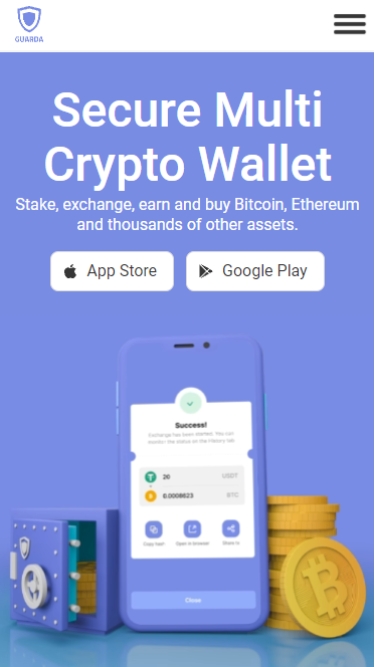
Among the standout features are an intuitive interface for new and advanced users and integration with hardware wallets, such as Ledger, for added security. The platform does not charge fees for transfers or exchanges above what is standard on the network or from the partners.
However, those looking for more advanced functionality with DeFi or wanting to connect directly to dApps may find Guarda a little limited compared to other cryptocurrency wallets that provide them with a bit more advanced functionality for DeFi interaction.
Guarda Wallet coins, fees, security & more
| Supported blockchains | 70+ |
| BTC support | Yes |
| Browser extension | Yes |
Pros and cons of Guarda Wallet
Pros
- Offers staking options for various cryptocurrencies, allowing users to earn passive income.
- Non-custodial, giving users full control over their private keys.
- Compatible with hardware wallets like Ledger for additional security.
- User-friendly interface available on web, desktop, and mobile.
Cons:
- May not be the best crypto wallet choice for users who prioritize advanced DeFi interactions.
- Staking rewards and features vary between assets and may not be as competitive as some specialized staking platforms.
Why look for Trust Wallet alternatives?
Trust Wallet handles the essentials well, but some users need features that go beyond mobile access and a browser extension. The wallet does not offer a full desktop application, and it only works on supported Chromium-based browsers. Anyone who prefers Firefox, Safari, or a dedicated desktop wallet may need something that fits their setup better.
Security is another reason people consider other options. Trust Wallet uses a traditional seed phrase, while some wallets rely on shared key systems that avoid a single recovery phrase or use physical hardware devices that stay offline to reduce the risk of remote attacks. These differences matter if you store meaningful amounts of crypto or want an extra layer of protection and follow good crypto wallet security habits.
Features also vary across wallets. Some alternatives focus on stronger DeFi tools, others provide better NFT support, and some give you more control over how transactions are reviewed or approved. For all these reasons, it helps to explore Trust Wallet alternatives like the ones in this guide and choose the setup that feels right for your needs.
What to consider when searching for a Trust Wallet alternative
Finding the best crypto wallet alternative to Trust Wallet requires an understanding of your particular needs in managing crypto wallets. Some key considerations that come into play are:
- Security features: Choose a wallet that offers crypto wallet security essentials like two-factor authentication, biometric security, and encryption. If you use a lot of crypto or are very concerned about privacy, consider wallets offering cold storage or non-custodial options that keep your private keys offline and safeguard your private data, as explained in the guide on how to store crypto safely.
- Supported cryptocurrencies: The wallet should support the specific cryptocurrencies you intend to manage. Some, like Metamask, focus on Ethereum wallet support, while others handle a broader range of blockchains, such as the Binance Smart Chain. This flexibility ensures you can easily buy, sell, and store your assets, and it ties in with how wallets like Trust Wallet and MetaMask compare in practice.
- Wallet type: Choose between software wallets (hot wallets) for easy online access and hardware wallets (cold wallets) for offline storage and extra security. Non-custodial wallets provide full control over your crypto assets and private keys, while custodial wallets rely on third-party management.
- Costs and fees: Hardware wallets from Ledger or Trezor require an upfront purchase, while most software wallets have no cost. Additionally, there are transactional fees for swaps, network fees, or withdrawal fees when you sell crypto or transfer assets between platforms.
- Backup and recovery options: Ensure the wallet has reliable backup systems, such as seed phrases or biometric backups. Without these safety measures, losing access to your wallet could lead to the permanent loss of your digital assets, especially if you can’t recover data from previous wallets.
Conclusion
In this review, I considered a range of Trust Wallet alternatives, from secure hardware options like Ledger Nano X and Trezor Safe 3 to versatile software wallets like MetaMask vs Trust Wallet and Guarda. Regardless of the type of user you are, the best choice depends on your needs, whether it’s smart contracts, DeFi wallet integration, or browser extension support.
Overall, Best Wallet stands out as the top pick, offering cross-chain transfers, support for over 60 blockchains, and a built-in DEX for low-fee crypto exchanges. While it doesn’t currently offer staking rewards, its multi-chain features and real-world payment integration make it an ideal choice for users diving deeper into the crypto world.

How We Rate Cryptocurrency Wallets
We manually review the cryptocurrency wallets on our list. Below are the key metrics we check before cryptocurrency wallets on the website. For further details, you can also take a look at our crypto wallets rating guide, featured on ValueWalk.
Security
Chains support
Customization
User experience
Development
FAQs
What is more secure than Trust Wallet?
Is Trust Wallet 100% safe?
Is there a better wallet than Trust Wallet?
Is Trust Wallet at risk?
References
- Buy Crypto with Apple Pay & Google Pay in Trust Wallet | Trust Wallet | 2025
- Best Wallet Targets 40% Market Share by 2026 with New Multi-Chain App | Phemex | 2025
- WalletProbe: A Testing Framework for Browser-based Cryptocurrency Wallet Extensions | Ningyu He via Arxiv | 2025
- Zengo Enters Partnership with Onramper to Unlock Global Crypto Access | PRNewswire | 2025
- Trezor Unveils ‘Quantum-Ready’ Safe 7 Hardware Wallet | Decrypt | 2025