



As the crypto industry evolves, the best proof-of-stake coins are leading the charge in creating more sustainable and scalable blockchains. They’re gaining significant adoption because proof-of-stake systems offer lower energy costs and increased transaction speed.
Currently, the proof-of-stake market is valued at over $2.8T, showing a clear demand for these innovative networks. In this article, we’ll present a comprehensive list of proof-of-stake coins that impact the space.

 ETH
ETH- USDT
 Debit
Debit


- ETH
- BNB
- USDT
- +2


- ETH
- BNB
- USDT
- +1

- ETH
- USDT
- Debit

- ETH
- USDT
- SOL
- +1

Best Proof-of-Stake crypto in 2025
As we open 2025, let’s explore some of the top PoS coins to watch, considering their potential for growth and exciting features.
- Best Wallet (Best Wallet Token): Powers the Best Wallet ecosystem and offers high staking rewards.
- LiquidChain Layer 3 (LIQUID): Unified execution layer for the top three blockchains with generous staking yields.
- Scroll (SCR): Leverages proof of stake and zkEVM rollups to address Ethereum’s scalability challenges.
- Metis (METIS): Ethereum Layer-2 scaling solution focused on speed, cost efficiency, and scalability.
- Algorand (ALGO): Pure Proof-of-Stake, offering lightning-fast transactions.
- Polygon (POL): Enhances Ethereum’s ecosystem with cutting-edge Layer 2 solutions.
- Linea (LINEA): Scales Ethereum with cheaper, faster transactions, reinforcing ETH’s security and monetary value
- Kaia (KAIA): Merges Klaytn and Finschia to deliver fast, EVM-compatible Web3 inside Asian superapps.
Reviewing the best PoS tokens in 2025
Best Wallet (BEST WALLET TOKEN): Feature-rich PoS wallet with governance rights
Best Wallet Token ($BEST) integrates a robust proof of stake (PoS) mechanism, enabling holders to earn high APY rewards through its staking aggregator. This aggregator optimizes staking opportunities across multiple blockchains, ensuring maximum returns.
In addition, $BEST holders enjoy reduced transaction fees and governance rights, empowering them to influence the platform’s future. With exclusive early access to the best crypto presales and projects, $BEST delivers tangible value to its community.

Best Wallet is a feature-rich, non-custodial crypto wallet supporting over 50 major chains, including Bitcoin, Ethereum, and USDT. With its seamless interface, users can buy, swap, and hold thousands of cryptocurrencies within the app.
The upcoming Best Card will extend its utility by enabling real-world purchases, offering cashback and reduced fees for $BEST holders. Additionally, the Best DEX aggregates liquidity from over 50 decentralized exchanges, ensuring cost-efficient swaps and cross-chain compatibility.
LiquidChain Layer 3 (LIQUID): Feature-rich PoS wallet with governance rights
LiquidChain Layer 3 (LIQUID) is one of the leading proof-of-stake projects, as it unites the top three blockchains: Bitcoin, Ethereum, and Solana via a unified execution layer, while also bringing generous staking yields for investors who decide to lock their tokens.
This project is designed to address fragmented liquidity, which has negatively affected both user experience and developer efforts. With LiquidChain, the top three blockchains are connected, enabling users to move their assets seamlessly and developers to deploy a single app that unlocks the liquidity across these blockchains.
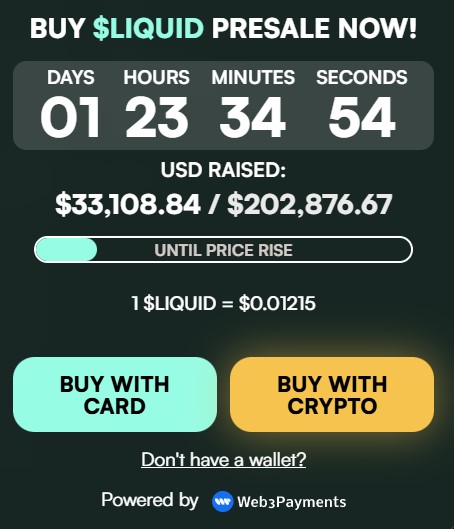
Interested investors can buy the LIQUID token, which is currently sold at a discount during its presale, and stake it to earn generous yields. Once the project launches, the LIQUID token will be used to pay network and execution fees, to provide liquidity and earn rewards, or to provide developer grants to grow the ecosystem.
The LiquidChain project will also enable combining BTC, ETH, and SOL liquidity into a shared pool and unlock institutional capital into multi-chain markets.
Scroll (SCR): Efficient Ethereum scaling with zkRollup Proof of Stake
Scroll (SCR) leverages the proof of stake mechanism through Binance Launchpool, enabling users to stake BNB and FDUSD to earn SCR tokens. This initiative highlights the growing integration of proof of stake coins in enhancing blockchain ecosystems.
As a zkEVM rollup for Ethereum, Scroll merges zkRollup technology with staking rewards, cutting transaction costs while letting users earn through staking positioning it among the best staking coins for those seeking both innovation and profitability.
Scroll’s bytecode-compatible zkEVM rollup enhances Ethereum’s capabilities by lowering transaction fees and boosting throughput. Its Mainnet launch signifies a major step toward real-world application support, empowering developers to deploy cost-effective Ethereum-based solutions.
With robust security measures, including a bug bounty program and zero-knowledge proofs, Scroll ensures privacy, reliability, and open-source collaboration. This innovative proof-of-stake blockchain embodies scalability and community-driven growth within the Ethereum ecosystem.
Metis (METIS): Secure proof of stake crypto tackling Ethereum’s challenges
Metis employs a proof of stake (PoS) algorithm to secure its Layer-2 infrastructure, allowing users to stake METIS tokens and participate as decentralized sequencers.
This unique model ensures economic security and offers staking rewards while reducing token supply. Recent initiatives, like OKX committing 20,000 METIS tokens, highlight its focus on strengthening the proof of stake blockchain model.
Metis distinguishes itself with a hybrid roll-up system, blending Optimistic Rollups and Zero-Knowledge proofs for secure and developer-friendly scalability. Its off-chain data storage approach further reduces costs compared to Ethereum Layer-1.
The developer-centric project offers modular tools to build and customize dApps effortlessly. Additionally, its DAC framework simplifies migration to Web 3.0, empowering entrepreneurs. With advancements in transaction speed, security, and reduced costs, Metis is among the top PoS coins advancing Ethereum’s ecosystem.
Algorand (ALGO): Effortless staking and sustainability on Algorand blockchain
Algorand stands out in the list of proof-of-stake coins due to its efficient and inclusive Pure Proof-of-Stake (PPoS) consensus mechanism. It offers stakers a 4.37% annualized reward rate with instant payouts—10 ALGO per block plus 50% of transaction fees—making rewards accessible without delays.
Unlike other PoS cryptos, Algorand removes traditional staking pain points such as token lockups and slashing penalties, ensuring flexibility and user confidence. These features, combined with its low entry requirement of just one ALGO token, make Algorand a leader among top PoS coins.
Launched in 2019, Algorand is a high-performance blockchain designed for real-world applications. It achieves scalability, security, and speed, processing transactions in just 2.8 seconds with negligible fees. The blockchain supports diverse use cases, from decentralized apps (dApps) to tokenized money markets.
Algorand’s growing ecosystem features prominent partnerships, including World Chess, India’s digital identity program for women, and NFT projects with the Australia Zoo. Its energy-efficient and environmentally friendly design further distinguishes it from competitors like Ethereum. With a $3 billion market cap and a ranking among the 50 most valuable cryptocurrencies, Algorand remains a dominant force in the proof of stake blockchain space.
Polygon (MATIC): Proof-of-Stake blockchain driving tokenized financial innovation
Polygon (MATIC)’s popularity as an ERC-20 token stems largely from its ability to improve Ethereum’s scalability and functionality. With a market cap of $750 million and an annual reward rate of 4.91%, Polygon offers an appealing staking option for investors. The project uses the Plasma framework to allow for scalable smart contract execution within the Ethereum ecosystem.
By enabling rollups and sidechains, Polygon ensures that Ethereum remains scalable while maintaining low fees and fast transaction speeds—up to 65,000 transactions per second. Polygon’s PoS mechanism secures these transactions and ensures the network remains decentralized and resilient.
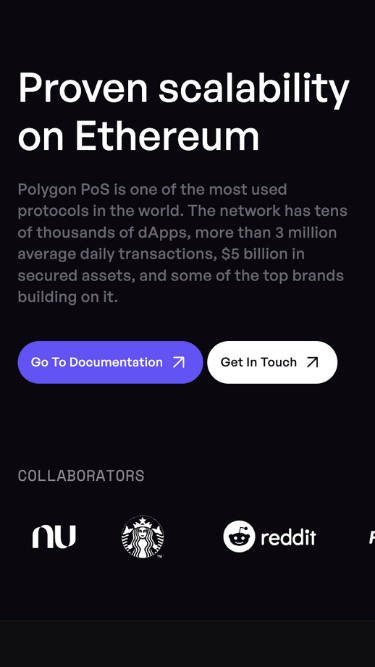
Polygon is quickly becoming a prominent PoS solution due to its focus on making Ethereum a multi-chain ecosystem. With Polygon’s framework, developers can build decentralized applications (dApps) using a wide range of protocols, from Ethereum-compatible rollups to standalone chains.
This versatility is key in the growing decentralized finance (DeFi) space. Polygon is already home to over 50 dApps and supports various use cases, including finance, gaming, and NFTs. Polygon’s ability to scale Ethereum while maintaining security makes it a standout PoS platform. The project integrates zkEVM technology, further boosting Ethereum’s scalability, attracting enterprises, and enhancing Polygon’s role as a Layer 2 solution.
Linea (LINEA): Extending Ethereum’s power with scalable, secure zkEVM mechanics
Linea earns its place among the best Proof of Stake coins in 2025 for its deep alignment with Ethereum’s ecosystem. Rather than competing with Ethereum, Linea functions as an extension, scaling its security and monetary logic while improving cost and speed.
Developers benefit from full EVM equivalence, which lets them deploy existing dapps without modification. Users enjoy faster and cheaper transactions, with zkSNARK-based proofs ensuring security and fraud resistance.
What sets Linea apart is its capital efficiency model. ETH bridged to Linea is natively staked, creating risk-adjusted yield opportunities and powering DeFi activity. The tokenomics also reinforce Ethereum’s value: every transaction burns ETH, while 20% of gas fees are burned directly and 80% are used to burn LINEA. This dual-burn system ties network activity to value accrual for both assets.
Linea’s ecosystem continues to grow, with integrations such as Owlto Finance, Mendi Finance, EchoDEX, Zonic, and HAPI. Its design channels value back into Ethereum while positioning LINEA as a core Proof of Stake asset for the future.
Kaia (KAIA): Asia-focused Proof-of-Stake chain powering Web3 inside everyday messengers at scale
Kaia (KAIA) earns a place on our 2025 Proof-of-Stake list not just because it has earned close to a billion-dollar market cap ($943 million) because it pairs real distribution with high-throughput, finality-by-design infrastructure.
Born from the merger of Klaytn and Finschia, Kaia anchors itself to Asia’s biggest messenger ecosystems, KakaoTalk and LINE, giving developers and users a direct path to Web3 inside apps used by more than 250 million people.
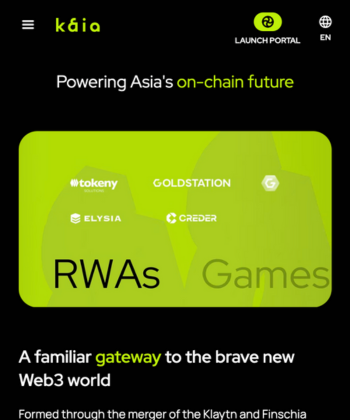
Its EVM-compatible chain runs an optimized Istanbul BFT variant, delivering one-second blocks, immediate finality, and around 4,000 transactions per second, so staking secures a network built for consumer scale rather than lab demos.
Validators stake KAIA and form a council/committee model that keeps throughput high while preserving PoS security. Stakers earn rewards while securing fast finality.
For everyday usability, Kaia supports role-based multi-key accounts and native fee delegation, so apps can cover gas and let new users transact before holding KAIA. Add a maturing dapp set, low fees, and institutional backers from Kakao and LINE, and you get a PoS asset with clear adoption rails plus credible performance to match.
What does Proof of Stake (PoS) mean?
Proof of Stake (PoS) is a consensus mechanism blockchains use to validate transactions and secure the network. Unlike Proof of Work (PoW), which relies on miners solving complex puzzles to earn rewards, PoS focuses on coin ownership.
In PoS, validators are chosen based on the amount of cryptocurrency they hold (their stake) to verify transactions and add new blocks to the blockchain. Holding a larger stake increases the probability of being selected as a validator, and successful validation earns rewards in the form of a new cryptocurrency.
Pros and cons of Proof-of-Stake
Pros
- Lower barrier to entry for participation.
- Faster transaction speeds and scalability.
- Reduced risk of centralization in mining power.
- Increased network security through staking.
- Incentivizes long-term holding.
- Reduced environmental impact.
- Lower operational costs.
- Flexibility in governance.
- Higher rewards for early adopters.
- Easier integration with decentralized finance (DeFi).
Cons
- Proof of Stake lacks natural coin creation.
- Validators require prohibitively high coin holdings.
- PoS advantages rich holders over the community.
- PoS networks may be more centralized.
- Security risks from fewer validators.
- Staking rewards can be volatile.
- Energy consumption is still an issue.
- Validator node requirements can be technical and complex.
How does Proof of Stake work?
Proof of Stake (PoS) is a consensus mechanism numerous cryptocurrencies use to validate transactions more efficiently than Proof of Work (PoW).
With PoS, owners of cryptocurrency can stake their coins to become validators. Staking involves locking up coins to participate in the process of verifying and confirming transactions on the blockchain.
When a block of transactions is ready for processing, the PoS protocol selects a validator node to review and verify the transactions. If the validator confirms the transactions are correct, they add the block to the blockchain and receive rewards in the form of cryptocurrency.
However, if the validator proposes an incorrect block, they face penalties, losing some of their staked coins. This system ensures validators act honestly and ensures the integrity of the blockchain.
In PoS, the likelihood of being selected as a validator is proportional to the amount of cryptocurrency a user has staked. Larger stakes increase the chances of being chosen. However, staking smaller amounts results in a very low probability of selection.
To improve these odds, many participants join staking pools, where coins are pooled together to enhance the chances of being selected as a validator. Pool owners typically charge a small fee, and rewards are distributed proportionally among the participants.
This explanation focuses on the most widely used Proof-of-Stake mechanism; however, it omits discussion of emerging alternatives, but does not encompass other industry developments. Below, you’ll find a comparison of the rest.
A comparison of PoS consensus mechanisms
| Feature | Delegated Proof of Stake (DPoS) | Pure Proof of Stake (PPoS) | Leased Proof of Stake (LPoS) | Proof of Validation (PoV) | Liquid Proof of Stake (LPoS) |
|---|---|---|---|---|---|
| Consensus Mechanism | Delegates are elected to validate blocks | Validators are selected randomly based on their stake | Users lease their coins to validators | Hybrid consensus combining PoS and PoW | Coins are usable while staked |
| Centralization | High | Low | Medium | Medium | Low |
| Scalability | High | Medium | High | High | High |
| Security | Medium | High | Medium | High | High |
| Energy Consumption | Low | Very low | Low | Medium | Low |
| Reward Distribution | Rewards shared between delegates and voters | Rewards distributed to validators based on their stake | Rewards shared between validators and lessors | Network security contributions and stake determine validator rewards | Stakers receive rewards regardless of participation. |
| User Participation | Limited to voting for delegates | Requires staking a significant amount of coins | Allows users with smaller amounts of coins to participate | Requires significant coin stake and network security involvement | Increases liquidity and flexibility for stakers |
| Networks | Solana, Tron | Cardano, Tezos, Polygon | NEM, Ark | Algorand | Cosmos |
Is Ethereum proof of stake still profitable?
Ethereum’s transition to a Proof-of-Stake (PoS) consensus mechanism has significantly altered the way users can participate in the network. While it has enhanced security and energy efficiency, it has also introduced new dynamics for earning rewards.
In the PoS model, users stake their ETH to validate transactions and secure the network. In return, they receive rewards in the form of additional ETH. This process, often referred to as “staking,” has become a popular way for individuals and organizations to contribute to the Ethereum ecosystem and earn passive income.
Profitability of Ethereum Staking
The profitability of Ethereum staking is influenced by several factors:
- Staking costs: While there are no direct fees associated with staking ETH, there are indirect costs to consider. These include the initial investment required to purchase ETH, gas fees for setting up a validator node, and potential operational costs.
- ETH price: The price of ETH fluctuates significantly. A rising ETH price can increase the overall value of staking rewards, even if the APR remains low. Conversely, a declining ETH price can reduce the profitability of staking.
- Reward rate: The annual percentage rate (APR) for staking ETH has historically been relatively low compared to other blockchain networks. This is due to factors such as network congestion and competition among validators.
Challenges and considerations
While Ethereum staking offers a unique opportunity to participate in the network’s security and earn rewards, it also presents certain challenges:
- High ETH requirements: To run a validator node independently, users must stake a significant amount of ETH. This high barrier to entry limits the participation of larger entities and wealthy individuals.
- Low APR/APY: As mentioned earlier, the APR/APY for Ethereum 2.0 staking has been relatively low compared to other blockchain networks (around 3.92%, according to Staking Rewards). This can make it less attractive for yield-seeking investors.
- Other tokens offer higher yields: Many other blockchain networks, such as Solana, Cardano, and Polkadot, offer higher staking rewards and lower barriers to entry. This can divert users away from Ethereum staking.
Liquid staking solutions
To address the high ETH requirement and improve accessibility, liquid staking solutions have emerged. These platforms allow users to stake their ETH and receive liquid tokens that can be used for various purposes, such as trading or lending.
While these solutions can reduce the initial investment required, they often come with their own fees and potential risks.
That said, Ethereum staking remains a valid method to support network security while earning passive rewards. However, due to its relatively low APR/APY and steep ETH entry point, it has become less appealing compared to staking some of the best Web3 coins. As the Ethereum ecosystem matures, this dynamic could shift making it important for investors to stay informed.
How PoS chains have improved in 2025
Scalability
Proof-of-stake networks lifted raw capacity and cut costs. Ethereum’s Dencun upgrade (EIP-4844) introduced blob transactions that make rollup data far cheaper, translating into materially lower L2 fees and higher throughput.
Modular data-availability layers advanced in parallel, with Celestia’s mainnet supporting growing rollup usage to offload data posting.
And performance clients arrived: Solana’s Firedancer progressed toward mainnet with million-TPS lab benchmarks, aimed first at resilience and then speed. On the execution side, Arbitrum’s Stylus brought WebAssembly to EVM rollups, enabling faster, lower-cost compute for heavy workloads while staying interoperable with Solidity.
Together, these steps raised effective capacity without sacrificing decentralization.
Security
Validator-set security deepened on multiple fronts. Restaking moved from concept to production: EigenLayer and its actively validated services (AVSs) launched on mainnet, letting new protocols borrow Ethereum’s economic security.
Providers outlined 2025 upgrades for rewards and slashing to harden incentives and reduce operator risk. Client diversity also improved network robustness; on Solana, the Firedancer client advanced through non-voting and test phases to bolster resilience against single-client faults.
Meanwhile, Ethereum’s validator base continued to expand, supporting greater decentralization and liveness. The combined effect is higher cost-to-attack and better fault tolerance across major PoS ecosystems.
User experience
Wallets felt simpler and safer. Account abstraction (ERC-4337) smart accounts spread across major L2s, bringing social recovery, one-click batching and sponsored gas via Paymasters so users transact without holding ETH.
Industry dashboards and reports show a sharp rise in 4337 deployments and “gasless” user operations through 2024 into 2025 as bundlers and paymasters matured. At login, passkeys based on WebAuthn gained traction in web3 SDKs, reducing phishing risk and easing recovery when paired with smart-account guardians.
The practical result is lower onboarding friction, fewer failed approvals and fewer seed-phrase support tickets—key drivers of mainstream adoption.
Interoperability
Cross-chain moved toward safer, more standardized plumbing.
The Inter-Blockchain Communication Protocol shipped IBC v2 in early 2025, improving upgradeability and expanding deployment beyond Cosmos-SDK chains; teams even demonstrated IBC on Optimism.
In parallel, zero-knowledge light-client bridges advanced from research to early mainnets, reducing reliance on multisigs and external trust.
On the institutional side, Chainlink’s CCIP broadened adoption across tokenized-asset pilots, connecting banks, FMIs and public chains for secure cross-chain messaging and settlement.
These pieces make value and messages flow with fewer trusted parties and clearer guarantees about finality and proofs.
Sustainability
PoS chains kept energy footprints tiny versus PoW. Ethereum’s switch to staking slashed electricity use by ~99.9 percent, a change documented by independent analyses and widely cited across industry reporting.
Solana’s foundation reports annualized network consumption in the thousands of MWh, with per-transaction energy measured in milliwatt-hours, and ongoing work on validator-level emissions tracking and offsets.
Broader PoS benchmarking from CCRI shows consistently lower energy and emissions profiles across leading networks. The net effect in 2025 is that scaling and UX improvements arrived without a surge in power draw, strengthening the environmental case for PoS infrastructure.
Regulatory compliance
Rules grew clearer, and compliance tooling tightened. In the EU, MiCA’s CASP regime has applied since December 30, 2024; through 2025 ESMA issued guidance on knowledge and competence, while supervisors enforced stablecoin timelines and “sell-only” windows for non-compliant EMTs/ARTs.
The EU Travel Rule also took effect, pushing VASP-to-VASP identity sharing across the bloc. In the UK, HM Treasury published draft 2025 rules to bring key crypto activities into the Regulated Activities Order, and the FCA proposed stricter consumer protections, including limits on buying crypto with borrowed funds and clearer disclosures around staking.
These moves set firmer guardrails for PoS services and staking providers.
Is Bitcoin Proof of Stake?
No, Bitcoin is not a proof-of-stake (PoS) cryptocurrency. It utilizes a different consensus mechanism called proof-of-work (PoW), which relies on miners solving complex mathematical puzzles to validate transactions and secure the network.
This process requires significant computational power and results in high energy consumption, which has been a subject of growing environmental concern.
While Bitcoin remains the most valuable cryptocurrency by market capitalization, its PoW consensus mechanism has sparked discussions and explorations of alternative approaches.
Several projects, including Core Network (CORE) and LENX Finance (XD), aim to bring decentralized finance (DeFi) functionalities to the Bitcoin ecosystem.
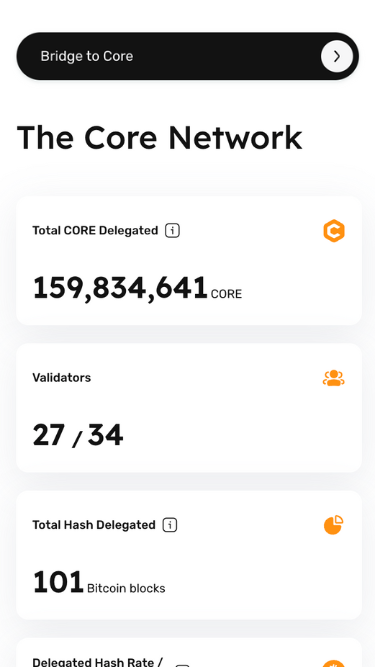
These projects often utilize wrapped Bitcoin (wBTC) tokens on other blockchains with PoS or other consensus mechanisms, allowing users to participate in DeFi activities without directly leaving the Bitcoin network.
It is important to note that implementing a major shift in Bitcoin’s consensus mechanism, like transitioning to PoS, is a complex and controversial undertaking. The Bitcoin community is known for its decentralized nature and adherence to the original whitepaper.
Any significant change would require a broad consensus among miners, developers, and users, which can be challenging to achieve. Currently, there are no concrete plans to switch Bitcoin to a PoS system.
FAQs
What is the best proof of stake coin?
Is proof of stake profitable?
Is Ethereum proof of stake better?
Will Bitcoin ever be proof of stake?
What is the most popular proof-of-stake coin?
What is proof of staking in crypto?
What was the first PoS coin?
What is the disadvantage of proof of stake?
What are the benefits of proof of stake?
Who invented proof of stake?
References
Argentinian Airline Issues Every Ticket as an NFT | CoinDesk
Robert Irwin announces Australia Zoo’s first ever collectible NFT series | 7NEWS
Proof of Work vs. Proof of Stake: Comparing blockchain consensus | Business Insider
BlackRock expands its tokenized money market fund to Polygon and other blockchains | CNBC