


This list of the best crypto lending platforms explores the leading options for earning and borrowing in the decentralized finance (DeFi) space. Decentralized lending has rebounded impressively, surpassing $130B in total YTD value, according to DeFiLlama. Driven by the efficiency of smart contracts and renewed interest following Bitcoin’s rally, the sector is poised for growth.
With the global digital lending market projected to hit $34.6 billion by 2028 at a CAGR of 21.9%, this listicle highlights the platforms shaping the future of DeFi lending.
- Show Full Guide
Top centralized and decentralized crypto lending platforms
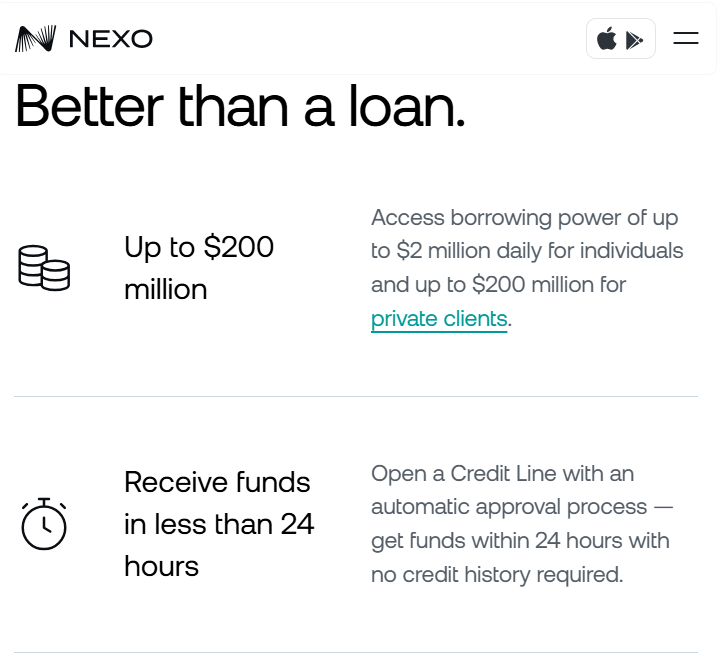
- Nexo: Obtain instant crypto loans using your cryptocurrencies as collateral. A credit history is unnecessary; the loan can be made in crypto or via a bank transfer.
- Binance: Offering a wide range of cryptocurrencies for collateralized loans, with competitive interest rates and flexible repayment options.
- MEXC: Offering a plethora of crypto assets for both lending & borrowing, with flexible terms plus competitive interest rates.
- Coinbase: Letting users borrow against their crypto holdings for liquidity without selling for earned interest.
- KuCoin: Facilitates peer-to-peer lending and borrowing, connecting users directly for customized loan agreements.
- OKX: Provides a comprehensive platform for lending, borrowing, and staking crypto assets, focusing on high liquidity and low fees.
- Figure: Offers interest-only, 12-month loans secured by crypto, with fast approval and segregated custody.
- Aave: DeFi protocol enables users to lend and borrow crypto assets without intermediaries, utilizing a unique flash loan feature.
- Liquity: Decentralized stablecoin protocol that allows users to borrow stablecoins against Ethereum collateral without liquidation risk (V2 is in testnet).
- Unilend: Decentralized lending and borrowing protocol that supports various crypto assets and offers flexible loan terms.
- BENQI: A decentralized lending and borrowing protocol built on Avalanche offers high yields and low borrowing costs.’
- Mutuum Finance: A non-custodial DeFi protocol for overcollateralized crypto lending, borrowing, and yield.
What is crypto lending?
Crypto lending is a financial service enabling individuals to borrow cryptocurrencies using decentralized or centralized platforms. Lenders can deposit their crypto assets into a lending pool and earn regular interest payments.
Borrowers, in turn, use their existing cryptocurrency holdings as collateral to access funds, typically in the form of stablecoins or other digital assets. Smart contracts facilitate the automation and security of transactions without intermediaries.
Lenders can earn passive income from idle crypto assets, often at higher rates than traditional savings accounts. Borrowers gain liquidity without needing to sell their holdings, allowing them to retain exposure to potential asset appreciation.
Nexo: Instant crypto loans without credit checks
Founded in 2018, Nexo is a regulated firm in the United Kingdom and other regions. It operates in over 150 jurisdictions.
Great news for US-based crypto holders: Nexo has returned to the United States and is available to both retail and institutional clients. American customers can now enjoy high-yield crypto products and credit lines backed by digital assets.
Stablecoins or bank transfers
The crypto loan can be wired to your bank account or taken in stablecoins, USDC, or USDT. You can hold onto your assets and access liquidity without initiating tax events (tied to selling) to mitigate tax events.
A credit check or history is not required.
Multiple cryptocurrencies can be combined and used as collateral. Hold onto your assets while accessing liquidity without triggering taxable events that come with selling.
Besides Bitcoin, many cryptocurrencies can be used for collateral, such as Algorand, Optimism, Cardano, Ripple, Berachain, Worldcoin, and others. Visit Nexo for the full list.
Nexo AI assistant
Nexo unveiled a new AI assistant in public beta. The AI assistant provides insights into the crypto markets, trends, and APY rates on your crypto holdings. While it is more suitable for other features, such as crypto lending, it is a key feature when it comes to earning on your cryptos and portfolio management.
If you hold cryptocurrencies and wish to earn interest via Nexo, you can choose one of their savings/flexible plans. Nexo may lend or use some of your digital assets for liquidity, allowing you to earn interest (paid daily) on your cryptos.
Nexo uses cold storage accounts provided by BitGo. Be sure to read our comprehensive Nexo review for a more in-depth analysis of the platform.
| Best for | Flexible crypto credit line with fiat or stablecoin drawdown |
| Collateral accepted | Major assets incl. BTC, ETH, SOL (asset list varies) |
| Borrowable assets | USDT/USDC or fiat to bank account |
| Rate type | Variable (by loyalty tier; promos may apply) |
| Typical borrow APR range | ~2.9%–18.9% (tier-dependent) |
| Loan term | Open-ended credit line |
| Min / max loan size | Min $50 (stables) / $500 (bank); max $2M per day |
| Fees | No origination; 0.26% fee on crypto repayments (no early-repay fee) |
| Liquidation threshold & penalty | Auto-repayment trigger at 83.33% LTV (crypto-only collateral); penalties N/A |
| KYC/AML required | Yes |
Binance: Secure loans, flexible rates, fast execution
Binance loans are one of the most comprehensive crypto lending services, offering users an efficient and secure way to access liquidity using their crypto holdings as collateral. Whether you’re an individual or an institution, Binance offers tailored solutions to meet various borrowing needs.
Binance loan types
Binance’s crypto lending platform offers multiple loan options, including flexible and fixed-rate loans, designed to accommodate different types of users and investment strategies.
With competitive interest rates, these loans are calculated minute-by-minute, providing dynamic pricing for borrowers. Here’s an overview of the primary loan types:
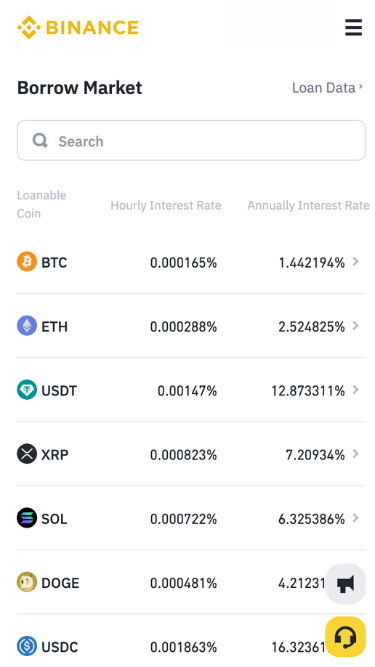
- Flexible rate loans: Borrow funds for Spot, Margin, or platforms for crypto futures trading, as well as for staking to earn high APYs. There are no transaction fees, and you can repay at any time.
- Fixed-rate loans: Borrow against collateral with a custom interest rate. This option supports multi-asset collateral, offering more flexibility.
- VIP loans: Designed for institutional-level users, VIP loans aggregate assets across accounts to enhance capital efficiency, with the added benefit of delayed liquidation.
The Loan-to-Value (LTV) ratio for most assets on Binance can go up to 80%, though many are capped at 65%. This means you can borrow a significant amount relative to the value of your crypto assets, maximizing the potential liquidity without needing to liquidate your holdings.
As of September 2024, for the Binance VIP loan, the following digital assets are now loanable: Mitosis (MITO), Dolomite (DOLO), World Liberty Financial (WLFI), and Somnia (SOMI).
Binance institutional loans
In July 2025, Binance introduced institutional loans with up to 4x leverage. These loans are available for VIP users at level 5 or corporate users. For those who qualify, a rebate program may obtain funding at 0% interest.
Up to $10 million can be borrowed in USDT or USDC. API can repay, borrow, or link additional collateral accounts.
Additionally, Binance users can earn competitive interest rates while using their assets as collateral for loans, helping them to grow their portfolios without liquidating holdings.
One of Binance’s key advantages is its integration with the broader platform, allowing users to access funds for trading, investing in Launchpool, or engaging in P2P trading. The versatility of Binance loans makes it a top choice for anyone looking to leverage their digital assets.
Binance lending & borrowing: Collateral, LTV, Rates, Fees (2025)
| Best for | Exchange users needing crypto-only borrowing with fixed or flexible terms |
| Supported chains | Wide collateral/borrow lists on platform (varies by asset) |
| Borrowable assets | Crypto only (e.g., USDT, BTC, ETH; product-specific) |
| Rate type | Fixed-rate loans and flexible loans available |
| Max LTV (headline) | N/A (asset-specific) |
| Loan term | Fixed terms available; flexible option also exists |
| Min / max loan size | Fixed Rate Loans: min ~$50,000; max depends on caps/collateral |
| Fees | Liquidation fee ~2% on Flexible Loans; other fees N/A |
| KYC/AML required | Yes |
MEXC: Secure crypto borrowing, instant flexibility
MEXC Loans offers an innovative way to unlock liquidity by allowing users to collateralize their cryptocurrency holdings. The platform provides an easy method for borrowing crypto assets, which can be used for various investment purposes such as trading, derivatives, or withdrawals.
Flexible crypto loans
With MEXC Loans, users can pledge one cryptocurrency as collateral to borrow another. This feature is particularly useful for traders or investors who need immediate liquidity but don’t want to sell their assets. The platform currently supports token pairs, such as TON and USDT, enabling users to stake and borrow cryptocurrency.
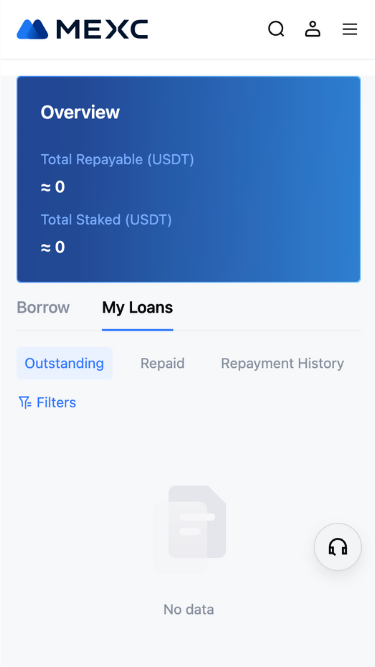
Interest on the borrowed amount is calculated daily, with MEXC’s platform offering a simple interest structure. Borrowers can repay the loan after a set period, but early repayment is not supported. The Loan-to-Value (LTV) ratio is a key aspect of MEXC Loans, indicating the proportion of the loan amount to the collateral.
MEXC’s LTV system helps ensure the collateral remains sufficient to cover the borrowed assets. It’s important to note that MEXC Loans supports full repayments after 30 days, with no partial repayment option currently available.
By offering competitive interest rates and a flexible repayment period, MEXC provides an excellent way for users to manage their crypto assets. However, borrowers must remain aware of market fluctuations, as a decline in the collateral value may trigger liquidation.
Whether you’re seeking quick liquidity or an opportunity to enhance your trading strategy, MEXC Loans provides a reliable crypto lending solution tailored to the needs of modern crypto traders.
MEXC lending & borrowing: Collateral, LTV, Rates, Fees (2025)
| Best for | Borrowing against specific staking pools on MEXC (early rollout) |
| Supported chains | Varies by pool; example shown: stake TON → borrow USDT |
| Collateral accepted | Pool-specific (e.g., TON at launch) |
| Borrowable assets | USDT (example), others per pool |
| Rate type | Simple daily interest; fixed at time of borrowing |
| Loan term | Early repayment is not supported until ≥30 days after the borrow |
| KYC/AML required | Yes |
Coinbase: Flexible lending for retail and institutions
Coinbase is offering institutional and retail lending. Through a new integration with Morpho, Coinbase is offering non-custodial lending and borrowing to millions of users. Over $450M USDC has already been deposited.
Borrowing has competitive fees, while lenders earn a yield of +5.45% APY at the time of this writing (the yield fluctuates). Coinbase’s clients can deposit their USDC to Steakhouse USDC (managed by Steakhouse Financial). Unlike institutional accounts, you can start with as little as 1 or 2 USDC in the new Steakhouse vault.
Opening an account in Coinbase and using their wallet will simiflfy the whole process for you.
Institutional-grade crypto lending
Coinbase’s crypto lending platform caters to institutional users, providing a secure and flexible lending experience for large-scale borrowers.
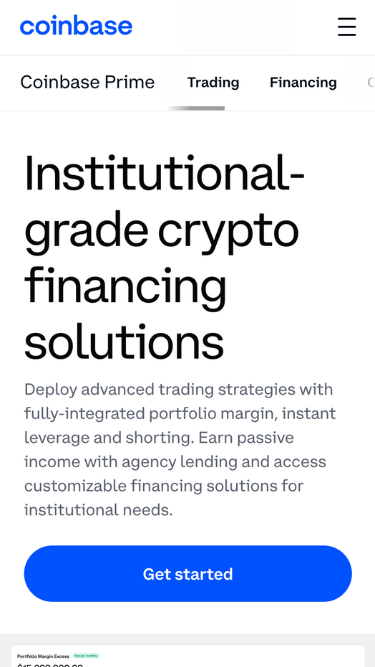
The platform offers overcollateralized loans to eligible users, including BTC, ETH, and USDC. Loans are typically initiated and delivered via email notifications. While there is no Service Level Agreement (SLA) for loan approval, Coinbase ensures that users are informed through a transparent process.
Coinbase’s lending solutions for institutional users enable advanced trading strategies like portfolio margin and leverage trading. However, these loans require due diligence and an underwriting process.
The USDC Borrow feature, in particular, is a unique offering. It allows users to borrow USDC while using non-USDC assets as collateral. This feature prevents the liquidation of other collateral, offering flexibility in managing negative balances.
Following the new U.S. administration, led by President Trump, Coinbase is now allowing US clients to borrow up to 100,000 USDC using Bitcoin as collateral.
Coinbase lending & borrowing: Collateral, LTV, Rates, Fees (2025)
| Best for | USDC liquidity against BTC while staying in the Coinbase ecosystem |
| Type | CeFi (front end) using DeFi rails (Morpho) |
| Supported chains | Open-ended (as long as LTV is maintained) |
| Collateral accepted | BTC (converted to cbBTC) |
| Borrowable assets | USDC only |
| Rate type | Variable (set via Morpho market) |
| Max LTV (headline) | Must keep LTV < 86% |
| Typical borrow APR range | N/A (market-driven) |
| Loan term | Open-ended (as long as LTV is maintained) |
| Min / max loan size | Up to ~$1,000,000 per borrower (as of Apr 30, 2025) |
| Fees | Liquidation penalty 4.38% if liquidated |
| KYC/AML required | Yes |
KuCoin: Institutional lending, low-interest rates, and flexibility
KuCoin Crypto Lending offers an innovative way for users to earn passive income by lending their crypto assets. Through a decentralized lending platform, users can earn interest by matching their idle tokens with borrowers who require liquidity. The process is transparent and allows you to manage your lending scale flexibly.
Passive income with flexibility
KuCoin’s Crypto Lending platform connects lenders with borrowers seeking liquidity. As a lender, you earn interest based on your lending amount and market rates, best part is – interest is paid out hourly for real-time earnings.
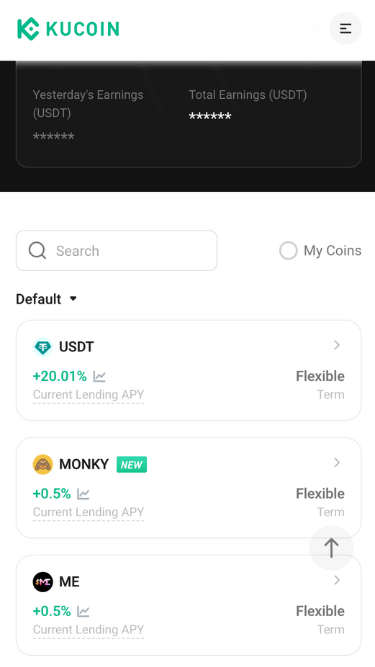
This is one of those centralized crypto lenders that focuses on the Margin Loan Market, where lenders provide their tokens to margin traders, allowing them to borrow assets for leveraged trading. Lenders earn interest from borrowers who repay based on the market rates, which are set hourly.
Managing your subscription scale is essential for consistent returns in the volatile crypto market. Price fluctuations can impact token demand, leading to potential delays in fund redemptions if demand exceeds supply. To avoid redemption issues, it’s important to monitor market conditions and adjust your subscription accordingly.
KuCoin’s Crypto Lending platform is a flexible and low-risk way to generate token income. With competitive APYs, quick interest payouts, and the option to lend or redeem your assets at any time, it provides an attractive opportunity for users seeking passive income.
Institutional lending on KuCoin: KuCoin also offers VIP and institutional lending services with low interest rates and flexible terms. These services are designed for professional traders to borrow up to $20 million with up to 5x leverage and aggregate margins across multiple accounts. Adjusted interest rates ensure competitive, real-time borrowing costs.
KuCoin lending & borrowing: Collateral, LTV, Rates, Fees (2025)
| Best for | Traders needing borrow for spot-margin on many pairs |
| Supported chains | Exchange assets (pair-dependent) |
| Collateral accepted | Margin collateral per account/pairs (varies) |
| Borrowable assets | Many spot-margin assets (pair-dependent) |
| Rate type | Variable interest on margin borrows |
| Loan term | Open while debt ratio stays below limits |
| Liquidation threshold & penalty | Alert at ~90% debt ratio; forced liquidation at ~97% (KuCoin margin) |
| KYC/AML required | Yes |
OKX: Flexible crypto loans, diverse collateral options
OKX Crypto Loans offers a seamless and flexible solution for users seeking liquidity without selling their digital assets. With an initial loan-to-value (LTV) ratio of 65% and APRs as low as 1%, this platform stands out among the best crypto lending platforms for borrowers who need fast, reliable access to funds.
Access liquidity without selling your crypto
OKX crypto lending allows you to use your digital assets as collateral to secure a loan, making it easier to unlock liquidity while preserving your long-term investment strategies.
With over 150 cryptocurrencies available for collateral, including BTC and ETH, you have a wide range of options to choose from. Whether you’re borrowing to trade or earn, OKX offers an efficient and user-friendly process that enables you to apply for loans with instant approval and no late fees.
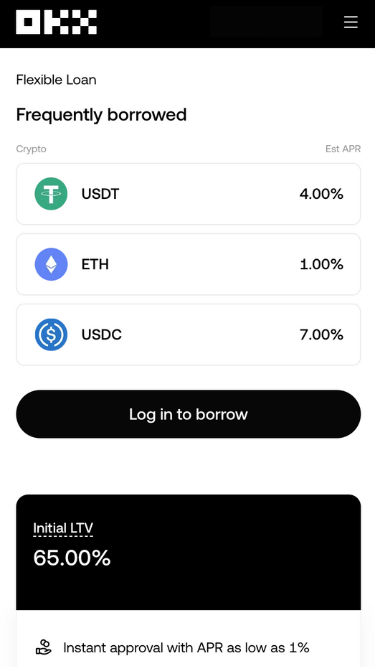
The loan application process is simple and straightforward. Start by specifying the amount you’d like to borrow and the cryptocurrency you’d like to pledge as collateral. Once your collateral is securely frozen on the platform, the loan is disbursed promptly to your account, allowing you to use the funds however you choose.
Additionally, OKX offers various ways to earn with your loan funds, including On-chain Earn, Simple Earn, and Structured Products, each designed to help you easily maximize your returns. The exchange recently added ZORA, VIRTUAL, and 2Z to its flexible loan services.
The ability to repay at any time, without penalty, adds even more flexibility to an already attractive crypto lending option.
OKX lending & borrowing: Collateral, LTV, Rates, Fees (2025)
| Best for | Borrowing crypto against a broad collateral set |
| Supported chains | Exchange assets (varies) |
| Collateral accepted | Many supported assets (see Borrow page) |
| Borrowable assets | Crypto (USDT, USDC, etc.; asset-dependent) |
| Rate type | Flexible and fixed options (product-dependent) |
| Typical borrow APR range | Varies by asset/term (see app) |
| Loan term | Flexible and fixed (term options vary) |
Figure: Interest-only loans secured by crypto assets
Figure is a U.S. fintech lender best known for fast, fully online HELOCs and blockchain-enabled lending. It reports $7B+ in funded loans across products and promotes same-day approval, pairing consumer-grade UX with capital-markets plumbing.
It also touts an A+ BBB rating and a 4.8/5 Trustpilot score. Through its affiliated Figure Markets platform, Figure extends borrowing to crypto while keeping custody transparent and on-chain. That mix of regulated lending DNA and crypto rails makes Figure a credible pick when you compare the best crypto lending platforms in 2025.
Figure ‘Crypto-Backed Loans’
You can borrow against BTC, ETH, or SOL with an initial LTV up to 75%. A conservative 50% LTV qualifies for the lowest rate. At 50% LTV, Figure lists 8.91% (9.999% APR); at higher LTVs, recent disclosures cite 11.5%.
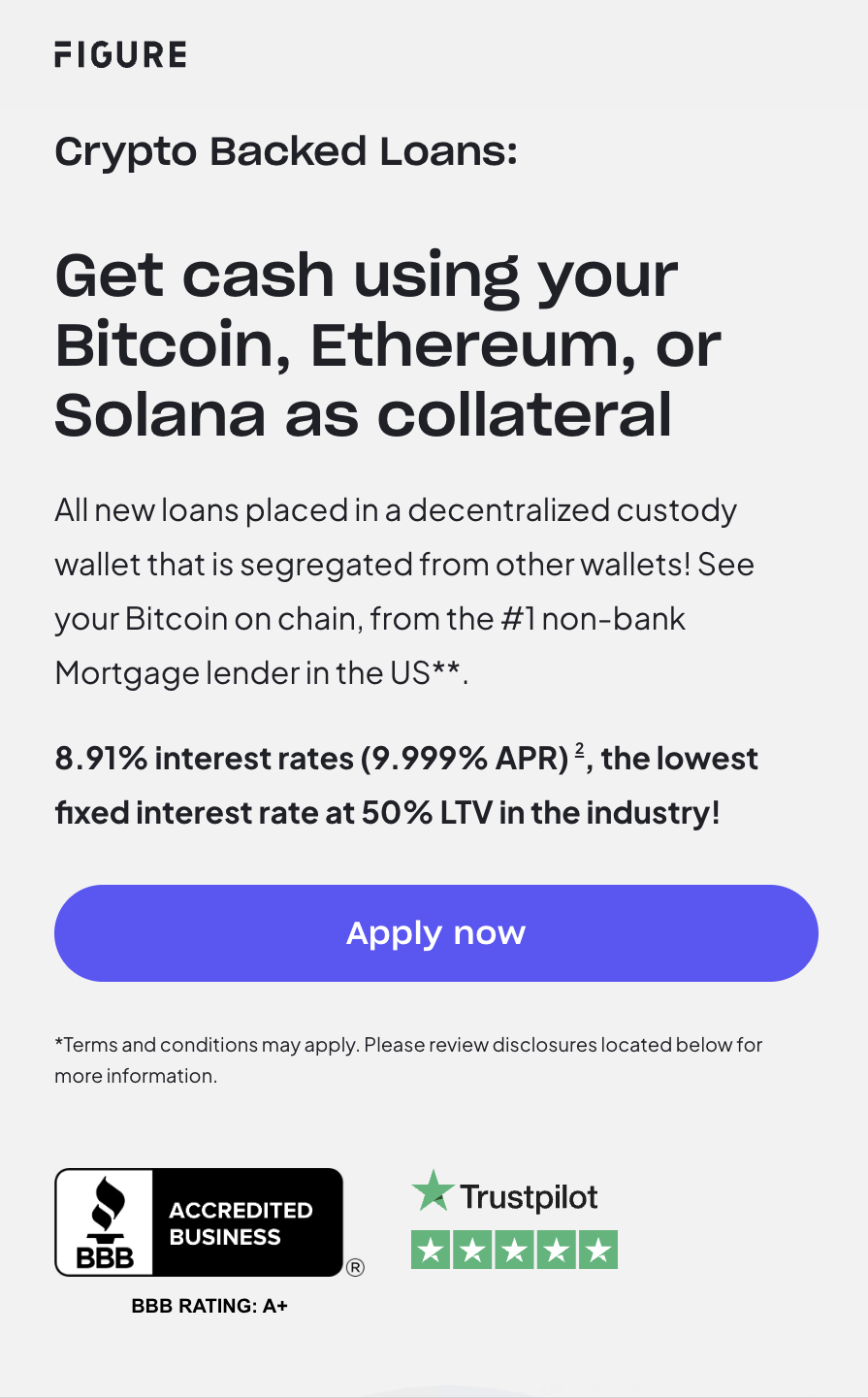
The term is 12 months, interest-only. You may pay interest monthly or defer it, then repay principal plus any deferred interest at maturity; a deferral fee may apply. Figure uses a qualified custodian and decentralized, segregated wallets; collateral isn’t rehypothecated. There’s no hard credit pull, only a soft check.
The flow is simple: create an account in the Figure Markets app, deposit collateral, receive cash or crypto to your account. Common uses include home projects, debt consolidation, large purchases, or adding to positions.
Writer’s note: Watch your LTV: price drops can trigger margin calls and liquidation if you don’t top up or pay down.
Figure lending & borrowing: Collateral, LTV, Rates, Fees (2025)
| Best for | Fixed-term cash loans against BTC/ETH/SOL with clear LTV rules |
| Collateral accepted | BTC, ETH, SOL |
| Borrowable assets | Fiat (cash) and sometimes crypto via Figure Markets account |
| Rate type | Fixed (rate depends on LTV; example posted 8.91% at 50% LTV) |
| Max LTV (headline) | Initial LTV up to 75% (margin call rules apply) |
| Typical borrow APR range | Posted examples vary by LTV; see site |
| Loan term | Typically 12-month interest-only term |
| Fees | Possible 1% origination on renewals; 2% processing on certain liquidations (jurisdiction-dependent) |
| KYC/AML required | Yes |
Aave: Leading the charge in DeFi lending
Aave is a decentralized, non-custodial liquidity market protocol that stands out in the world of crypto lending platforms. It uses smart contracts to allow users to borrow and lend digital assets without the need for intermediaries.
Aave’s flexible and innovative approach to decentralized lending has made it one of the top choices for both borrowers and lenders in the crypto space.
Aave V3 went live on Aptos, its first non-EVM deployment, initially supporting APT, USDC, USDT and sUSDe with caps raised as demand grew. Aave also pushed dev tooling (new SDKs and GraphQL) and continued GHO’s multichain work. V4 is targeted for Q4 2025 with a hub-and-spoke design that pools liquidity and enables specialized markets. Expect tighter risk controls and modular “Spokes” once V4 ships.
Non-custodial liquidity markets for lending
Aave functions with liquidity pools, allowing users to deposit crypto for interest and borrow assets. It supports various tokens like ETH and USDC across Polygon, Avalanche, and Arbitrum.
Aave features dynamic interest rates that adjust based on supply and demand; for instance, USDC rates can exceed 16% APR, while borrowing ETH can be as low as 3% APR.
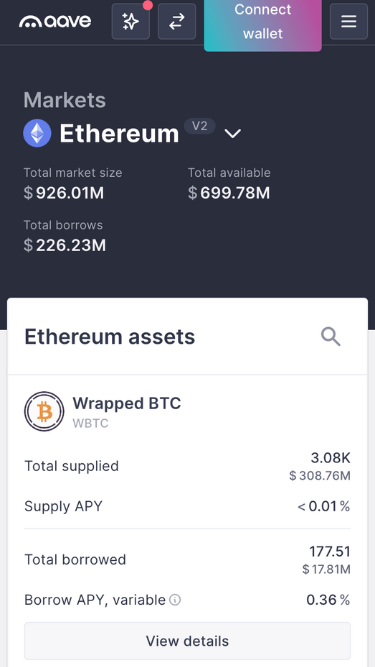
Aave’s decentralized lending offers flexible borrowing and lending options. Lenders earn interest in the same crypto asset they deposit, contributing to liquidity pools. Aave also features Flash Loans, allowing users to access instant, short-term loans that must be repaid within the same blockchain block, enabling arbitrage opportunities without collateral.
Aave’s over-collateralization model ensures collateral value always exceeds loan value, protecting lenders from volatility. If collateral drops too low, liquidations occur automatically. The “health factor” is a stability metric for loans; a higher health factor indicates safer loans, while a lower one increases liquidation risk.
By allowing users to vote on governance proposals using AAVE tokens, Aave further strengthens its decentralized nature, making it a continuously evolving platform based on community input.
AAVE lending & borrowing: Collateral, LTV, Rates, Fees (2025)
| Best for | On-chain borrowing/lending across multiple networks |
| Supported chains | Ethereum, Arbitrum, Optimism, Polygon, Avalanche, Base; Aptos deployment announced/live for v3 |
| Collateral accepted | Many listed tokens per market (asset-specific) |
| Borrowable assets | Major stables and listed tokens (market-specific) |
| Rate type | Variable only (stable-rate borrowing deprecated) |
| Max LTV (headline) | N/A (asset-specific) |
| Typical borrow APR range | N/A (market-specific) |
| Typical earn APY range | N/A (market-specific) |
| Loan term | Open-ended |
| KYC/AML required | No (protocol); some frontends may gate access |
Liquity: Interest-free loans with Ether collateral
Liquity is a decentralized borrowing platform that stands out for its unique approach to crypto lending. It allows Ether (ETH) holders to secure interest-free loans by using their ETH as collateral, borrowing against it in the form of LUSD, a USD-pegged stablecoin.
This platform has new features and is decentralized, making it a good choice for people who want to maximize their ETH holdings.
Interest-free loans using ETH collateral
Liquity is an Ethereum-based borrowing platform that allows users to take out loans without paying interest. You can use ETH or staked ETH as collateral for these loans. The platform gives loans in LUSD, a stablecoin linked to the US dollar. It focuses on keeping fees low and maintaining a clear, reliable structure.
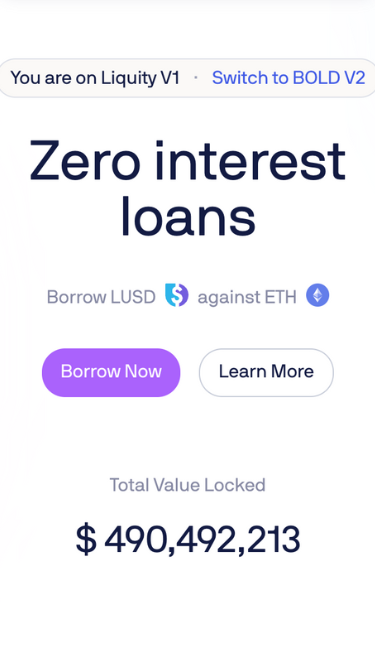
Unlike traditional lending platforms that charge ongoing interest, Liquity charges only a one-time fee of 0.5% per loan issued, making it an appealing option for users looking to avoid interest accrual.
Liquity’s governance-free, algorithmic model ensures the protocol remains secure and stable. Borrowers must maintain a minimum collateral ratio of 110%, offering a buffer against market fluctuations and ensuring the platform’s overall health.
Liquity’s advanced liquidation mechanism adjusts automatically if collateral value drops, maintaining the protocol’s stability. The introduction of Liquity V2 expands the platform’s utility with support for staked ETH collateral and user-set interest rates, enhancing its appeal to DeFi users.
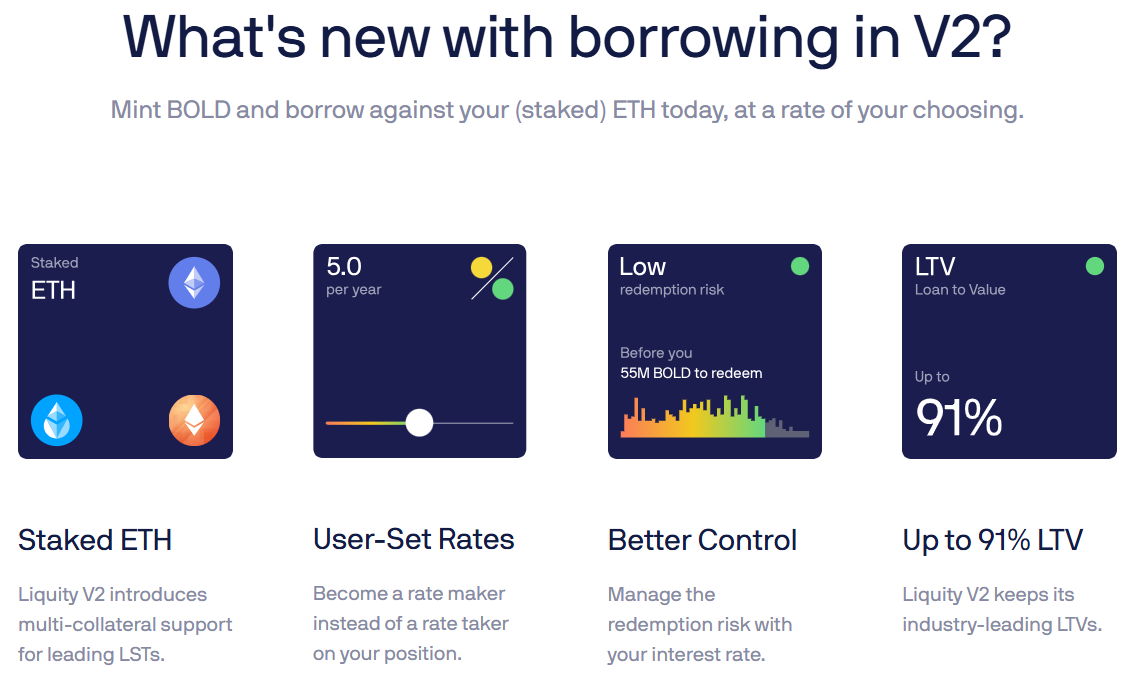
Liquity V2 is live on mainnet (May 19). You set your own borrow rate and mint BOLD using ETH, wstETH, or rETH as collateral. BOLD secured integrations across Curve (quad pool), Yearn (yBOLD), sBOLD, Pendle, Spectra, and Euler loops. The team reported a successful stress event with ~$3.4M liquidations processed.
BOLD is available on decentralized exchanges; however, trading volumes are still low (under $1M at the time of this writing).
Liquity lending & borrowing: Collateral, LTV, Rates, Fees (2025)
| Best for | ETH/LST-backed, governance-minimal borrowing with user-set rates |
| Supported chains | Ethereum |
| Collateral accepted | WETH, wstETH, rETH (V2) |
| Borrowable assets | BOLD (USD-pegged) |
| Rate type | User-set variable rate per market (V2) |
| Max LTV (headline) | Min collateral ratio 110% → ~90.91% max LTV |
| Typical borrow APR range | N/A (market-driven) |
| Loan term | Open-ended |
| KYC/AML required | No |
Unilend: Permissionless DeFi lending for all assets
This is a DeFi protocol combining spot trading with lending and borrowing functionality for all ERC20 tokens.
UniLend is unique because it allows any ERC20 token to be listed without needing permission. This differs from traditional DeFi platforms, which only support a limited number of assets. With over 9,000 assets supported, UniLend is a standout among the Best decentralized finance coins, pushing the boundaries of what’s possible in DeFi.
UniLend includes advanced features like concentrated liquidation and dual asset pools. Concentrated liquidation reduces market impact when selling assets, making the process more efficient and lowering losses for users.
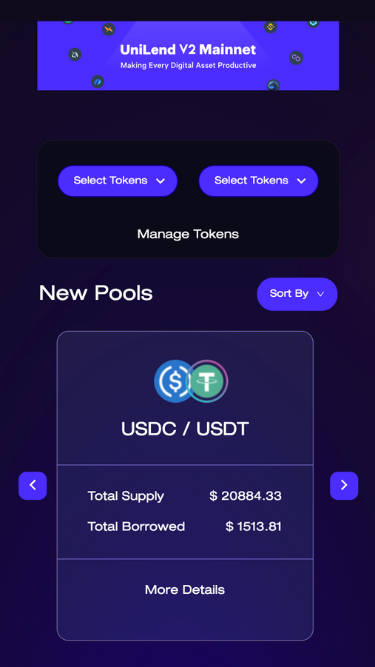
The isolated dual asset pools provide enhanced security, as each pool operates independently, eliminating risks from cross-collateralization. This makes the platform a safer choice for users seeking lending and borrowing options without the volatility risks associated with other protocols.
UniLend also embraces innovation with its NFT integration. NFTs on the platform can serve as collateral, unlocking new possibilities for asset utilization. The UFT token is crucial for governance and incentives, allowing holders to participate in decisions, while liquidity providers earn rewards through mining and transaction fees, promoting sustainable growth.
The project also advances the technology of its AI agents within the DeFi space.
UniLend lending & borrowing: Collateral, LTV, Rates, Fees (2025)
| Best for | Permissionless, isolated ERC-20 lending pools (any asset pair) |
| Supported chains | EVM; any ERC-20 (deployments vary by network) |
| Collateral accepted | Pool-defined ERC-20s (permissionless listing) |
| Borrowable assets | Pool-defined ERC-20s |
| Rate type | Variable (per pool) |
| Max LTV (headline) | N/A (pool-specific) |
| Loan term | Open-ended |
| KYC/AML required | No |
BENQI: DeFi lending powerhouse on Avalanche
BENQI is a decentralized liquidity market and liquid staking protocol built on the Avalanche network. It enables users to lend, borrow, or earn interest on digital assets with low fees and high scalability. Let’s explore BENQI Markets, its innovative lending platform.
Seamless lending and borrowing with BENQI Markets
BENQI Markets provides users with the tools to lend, borrow, and earn interest on digital assets, leveraging the speed and efficiency of Avalanche. By supplying liquidity, depositors earn algorithmically determined interest, while borrowers access funds through over-collateralized loans.
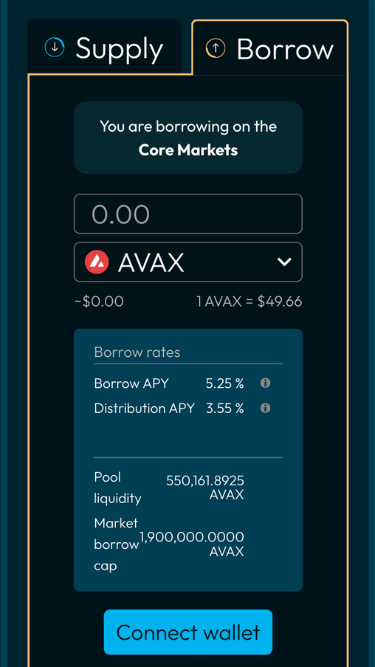
BENQI is offering the following:
- Core markets: Cater to highly liquid assets like AVAX, USDC, and WBTC, offering low-risk lending pools.
- Avalanche ecosystem markets: Support a wider array of assets, including tokenized real-world assets (RWAs), while ensuring market independence and stability.
Users benefit from flexibility, using their holdings as collateral to borrow against or earn interest. For example, depositing $QI tokens as collateral allows borrowing $USDC, which can be reinvested. This setup helps users maintain exposure to potential asset appreciation while accessing liquidity.
However, users should monitor their collateral ratio to avoid liquidation risks due to asset price fluctuations. BENQI Markets empowers users with capital efficiency, flexible borrowing, and the ability to maximize their portfolio’s growth potential.
When Bitcoin was heavily sold due to the U.S. tariffs when they were first announced, Benqi saw $6.3M in liquidations in 24 hours. The liquidations were successfully managed, and bad debt was reduced by 10%.
BENQI Markets’ robust infrastructure, dual market system, and Avalanche integration make it an ideal platform for users seeking efficient and affordable decentralized lending solutions.
BENQI added one-click cross-chain deposits and repayments via EnsoBuild, so you can fund or service positions from other chains in a single flow. “Ignite Stake” lets you stake QI while BENQI runs Avalanche validators for you. sAVAX staking crossed 17.5M AVAX with 63k+ stakers reported in September 2025. These upgrades deepen BENQI’s Avalanche hub and cut user friction.
BENQI lending & borrowing: Collateral, LTV, Rates, Fees (2025)
| Best for | AVAX-native lending/borrowing and sAVAX strategies |
| Supported chains | Avalanche (C-Chain) |
| Collateral accepted | AVAX, sAVAX, and listed blue-chips (market-specific) |
| Borrowable assets | Listed Avalanche assets (market-specific) |
| Rate type | Variable |
| Max LTV (headline) | N/A (asset-specific collateral factors) |
| Loan term | Open-ended |
| Fees | Liquidation bonus typically ~10% (historical metric) |
| KYC/AML required | No |
Mutuum Finance: Non-custodial DeFi lending and borrowing with P2P plus pooled liquidity
Mutuum Finance deserves a spot on any list of the best crypto lending platforms in 2025. You get non-custodial, decentralized lending with smart-contract control for crypto loans. Mutuum offers P2C and P2P lending, over-collateralized loans, mtToken yield, variable rates, and automated on-chain liquidations.
Why it stands out
Mutuum has direct P2P matches, so you can lend into liquidity or set custom terms one-to-one. Loans are over-collateralized and managed on-chain; if collateral drops below a threshold, liquidations trigger to protect lenders.
As a lender, you deposit assets like USDC and receive mtTokens that track your share and earn yield that adjusts with pool use. As a borrower, you post approved collateral and repay on your schedule while interest accrues in real time. Rates adjust in response to pool utilization to strike a balance between yield and access.
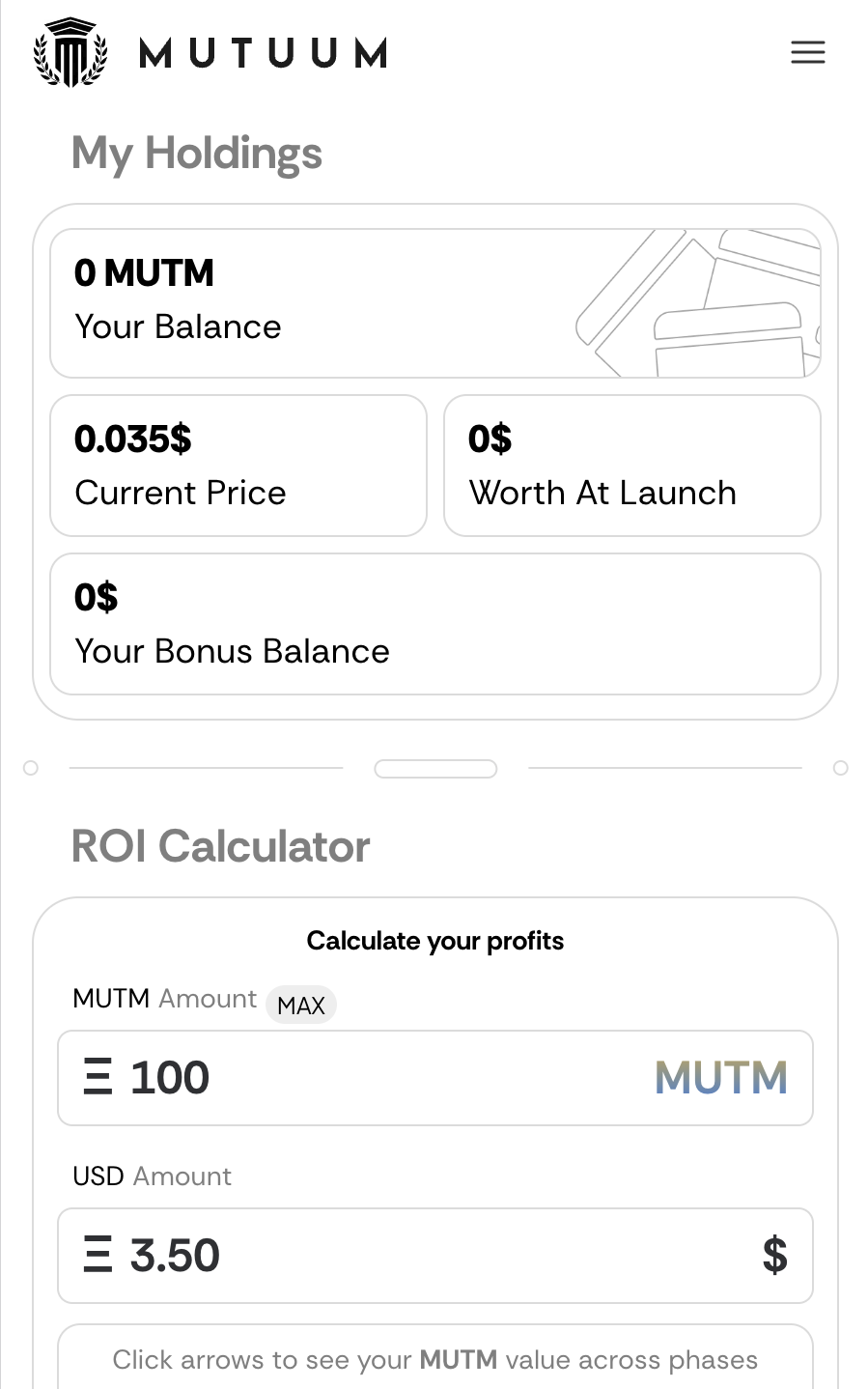
The MUTM token powers utility, governance, staking, and a revenue buy-and-distribute model. By October 2025, the presale had raised over $17M from 17,035 holders, with steady progress toward launch. The roadmap includes a public testnet, and the mainnet is expected to launch in Q4 2025 but may be delayed. The company is registered as MUTUUM FINANCE LTD.
If you’re looking for a non-custodial, data-driven choice among the top crypto lending platforms, Mutuum Finance provides clear mechanics for crypto loans and a straightforward path into DeFi lending platforms.
Mutuum Finance lending & borrowing: Collateral, LTV, Rates, Fees (2025)
| Best for | Non-custodial DeFi lending with both P2C pools and P2P deals |
| Supported chains | EVM (launch chain TBA; public testnet planned) |
| Collateral accepted | Approved assets; over-collateralized (details TBA) |
| Borrowable assets | USDC and listed assets (market-specific / TBA) |
| Rate type | Variable (utilization-based) |
| Max LTV (headline) | N/A (asset-specific collateral factors) |
| Loan term | Open-ended |
| Fees | Protocol interest; on-chain gas; liquidation penalty/bonus when thresholds are hit (TBA %) |
| KYC/AML required | No |
Comparing the top crypto lending platforms
| Platform | Type | Supported chains | Collateral accepted |
| Nexo | CeFi | BTC, ETH, SOL (and others) | Major assets incl. BTC, ETH, SOL |
| Binance | CeFi | Exchange assets (varies by asset) | Many assets on the platform (varies) |
| MEXC | CeFi | Pool-dependent; example TON | Pool-specific (e.g., TON) |
| Coinbase | CeFi front end on DeFi rails (BTC via Morpho) | BTC (via cbBTC on-chain) | BTC tokenized as cbBTC |
| KuCoin | CeFi | Exchange assets (pair-dependent) | Pair-dependent exchange assets |
| OKX | CeFi | Exchange assets (varies) | Many supported exchange assets |
| Figure | CeFi | BTC, ETH, SOL | BTC, ETH, SOL |
| Aave v3 | DeFi | Ethereum, Arbitrum, Optimism, Polygon, Avalanche, Base | Listed tokens per market |
| Liquity (V2 – BOLD) | DeFi | Ethereum | WETH, wstETH, rETH |
| UniLend v2 | DeFi | EVM networks (ERC-20) | Pool-defined ERC-20s |
| BENQI | DeFi | Avalanche (C-Chain) | AVAX, sAVAX, listed Avalanche assets |
| Mutuum Finance | DeFi | EVM-compatible | Approved, over-collateralized assets; includes USDC for pool deposits (full list TBA) |
Notes:
 LTV and interest rates: These figures are highly dynamic and subject to frequent changes.
- Platform specifics: Always refer to the official platform websites or documentation for the most accurate and up-to-date information.
 LTV and interest rates: These figures are highly dynamic and subject to frequent changes.
Writer’s note: The volatile nature of the cryptocurrency market makes it difficult to provide specific numbers for loan-to-value ratios and interest rates, and these figures may have changed since we compiled this information.
Pros and cons of crypto lending
Pros
- Earn yield on idle crypto
- Borrow against holdings without selling
- Keep market exposure while raising cash
- 24/7 access with fast funding
- Transparent, programmable terms on-chain (DeFi)
- Flexible LTVs, durations, and collateral choices
- Potential loyalty points, token rewards, or boosts
- Global reach with minimal credit checks
- Easy refinancing or rolling positions
Cons
- Liquidation risk from price volatility
- Smart contract bugs and exploits (DeFi)
- Counterparty or insolvency risk (CeFi)
- Overcollateralization reduces capital efficiency
- Rate, LTV, and fee changes can be sudden
- Oracle manipulation or bad price feeds
- Custody risks and key-management failures
- Tax complexity on interest and liquidations
How does crypto lending work?
Crypto lending operates through platforms that connect lenders and borrowers, offering an innovative way to earn interest on digital assets or access liquidity. It can occur via centralized platforms or decentralized finance (DeFi) protocols, each employing distinct mechanisms.
For crypto lenders
The process begins with users depositing their crypto assets into a lending pool managed by the platform or protocol. The assets are then made available to borrowers, who use them to access funds for trading, investing, or other purposes.
Lenders receive periodic interest payments based on the terms of the agreement, creating a passive income stream. Interest rates vary depending on market demand, asset type, and the platform used.
For crypto borrowers
The journey starts with providing collateral, often another cryptocurrency, to secure the loan. This collateral is stored in the platform and acts as a safeguard for the lender.
Borrowers typically receive funds in stablecoins or other digital assets. The loan-to-value (LTV) ratio determines how much they can borrow relative to their collateral’s value. A 50% LTV, for example, allows borrowing $5,000 for $10,000 worth of collateral.
How platforms handle the crypto lending process
In centralized platforms, the process is managed by a custodial service. The platforms act as intermediaries, verifying user identities, overseeing transactions, and handling interest payments. While they offer a user-friendly experience, they introduce risks like counterparty failure and custody vulnerabilities.
In DeFi protocols like Aave, smart contracts automate lending and borrowing. These self-executing programs eliminate intermediaries, ensuring transparency and reducing costs. Borrowers and lenders interact directly with the protocol, with terms predefined in the smart contract.
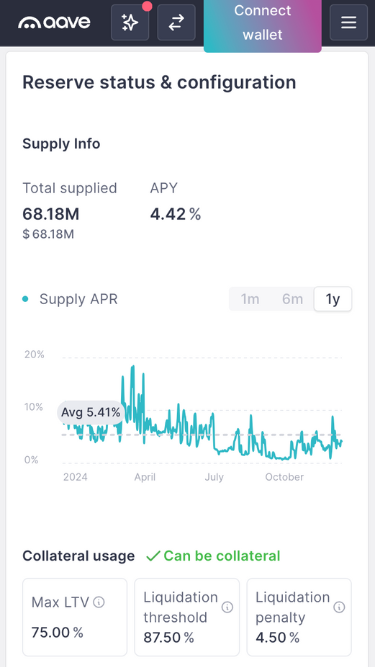
However, DeFi platforms require users to manage risks like volatile collateral values and smart contract vulnerabilities.
To maintain stability, crypto loans are overcollateralized, meaning borrowers must pledge assets exceeding the loan’s value. If collateral values drop below a critical threshold due to market volatility, a margin call is triggered, requiring borrowers to add more collateral or risk liquidation.
Crypto lending creates opportunities for lenders to earn passive income and borrowers to access liquidity without selling their holdings. It leverages blockchain technology to provide a secure, efficient, and flexible financial ecosystem.
Institutional banks are joining crypto loans
According to Reuters, JPMorgan is considering to offer loans backed by clients’ crypto holdings such as Bitcoin and Ethereum. Other banks, Bank of America and Citibank are in the process of developing stablecoins in light of the recent US regulations.
The push for crypto loans signals the wide adoption of cryptocurrencies and its demand. Individuals that are unfamiliar with decentralized lending and borrowing protocols may favor exchanges or banks due to their simplicity.
The benefits of crypto loans
- No credit checks required: Allows individuals without traditional credit to access loans.
- Instant loan approvals: Automated platforms approve loans quickly without paperwork.
- Passive income for lenders: Lenders earn interest on their idle crypto assets.
- Flexible repayment terms: Many platforms offer adjustable loan durations and terms.
- Portfolio diversification for lenders: Lenders can diversify by providing liquidity for various assets.
Disadvantages of crypto loans
- High collateral requirements: Borrowers must provide collateral often exceeding the loan amount.
- Regulatory uncertainty: Legal frameworks vary by region and may change suddenly.
- Tax implications: Borrowing and earning interest may have tax implications depending on the jurisdiction.
- No insolvency protection: If the lending platform is bankrupt, all your crypto assets are at risk. No insurance is available.
- Security: Crypto lending platforms are often targeted by hackers. If the platform is exploited, you may lose your funds.
Applying for crypto loans on centralized lending platforms
Sign Up/Log In
Either log in to your existing account or create a new one on a platform of your choice — Binance, KuCoin, or OKX.
Complete identity verification (KYC)
Go to the verification page and finish the KYC procedure. You’ll typically need to submit personal information and identification documents.
Proceed to the 'Loans' section
The platform’s loan and lending options are conveniently located in a section easily accessible via the main menu, often found under the “Finance” tab or a similar heading.
Choose the Loan Type
Select the type of loan you wish to apply for, such as a crypto-backed loan or a margin loan. Each platform offers slightly different options.
Select collateral
Choose the cryptocurrency you want to use as collateral. Review the required collateral amount and ensure you have sufficient assets in your account.
Enter loan details
Input the loan amount, duration, and other necessary details. The system will calculate your repayment terms and interest rates. Be sure you carefully read the loan terms, including repayment schedule, interest rates, and liquidation conditions.
Confirm application
Submit your loan application. Note: Some platforms may go through the loan process quicker and approve loans instantly, while others may require additional review.
Receive funds
Upon receiving approval for your loan application, the funds will be transferred and credited to your account. You can use the funds as specified in the loan terms.
Monitor and repay loan
Track your loan status, collateral value, and repayment schedule in your account dashboard. Make repayments as required to avoid liquidation of your collateral.
Applying for crypto loans on decentralized lending platforms
Sign up or Connect Wallet
Connect your cryptocurrency wallet (e.g., MetaMask, Ledger, etc.) to the decentralized platform, such as Aave. Ensure your wallet is compatible with the platform.
Deposit collateral
Choose and deposit the cryptocurrency you wish to use as collateral into the platform’s liquidity pool. The platform will usually display the collateral requirements and supported assets.
Browse the available loan options
Select the type of loan you need, such as a fixed-rate or variable-rate loan. Review the available assets you can borrow and their associated interest rates.
Borrowing Limits & Terms
Based on your collateral, the platform will display the loan amount you are eligible for. Review the loan terms, including the interest rate, repayment period, and liquidation risk.
Select loan amount; review details
Enter the amount of the asset you want to borrow, ensuring it is within your borrowing limit. Based on your collateral, the platform will display the loan amount you are eligible for. Review the loan terms, including the interest rate, repayment period, and liquidation risk.
Confirm borrowing
Once approved, the loaned amount will be credited to your wallet. You can use the funds as desired, but remember that the collateral remains locked in the platform.
Monitor loan & collateral
Track the status of your loan, including interest accrual and collateral value, through the platform’s interface. Stay aware of your collateral’s health to avoid liquidation.
Repay the Loan
To repay, send the borrowed amount (plus interest) back to the platform’s liquidity pool. Your collateral will be released once the loan is fully paid off.
Is crypto lending and borrowing legal in the United States?
Yes. Nexo has launched its services in the United States. Even more, the Federal Housing Finance Agency (FHFA) has ordered Fannie Mae and Freddie Mac to produce proposals for using digital assets for mortgage loans without needing to liquidate the cryptos to USD before closing the loan.
Crypto lending must still follow strict rules. Due to the current US administration’s approach to cryptocurrencies, the lending market may continue thriving.
How we determined crypto lending platforms to list: Our methodology
Our selection of the best crypto lending platforms for 2025 was based on a detailed evaluation of the following criteria:
- Reputation, security, and compliance
- Preference was given to platforms demonstrating a history of success, robust security features like audits and insurance, and full regulatory adherence.
- Coinbase and Binance stand out for their global reputation, reliability, and stringent compliance. As a result, they have become trusted options for users seeking crypto loans. Furthermore, these platforms are ideal for individuals prioritizing security and regulatory oversight.
- Ease of use and accessibility
- The ease of use and the smooth borrowing/lending process were crucial. The scores were higher for platforms designed for users of all skill levels.
- Binance, Coinbase, and Liquity shine in this area with their intuitive design and comprehensive educational resources. Meanwhile, Aave impresses with its straightforward DeFi lending interface.
- Asset support and liquidity
- Our evaluation of crypto loan platforms considered the breadth of cryptocurrency support, encompassing stablecoins, and the presence of sufficient liquidity for efficient transactions.
- Here MEXC, Binance and KuCoin were hard to beat in terms as CeFi options due to their extensive token offerings and high liquidity, again Aave leads the DeFi space with multi-chain support and innovative solutions like flash loans.
- Competitive rates and incentives
- Platforms offering favorable interest rates for both lenders and borrowers ranked higher, with additional incentives like staking rewards and token benefits adding value.
- Aave’s flexible rates and unique features, like governance tokens, make it the standout choice in DeFi. MEXC and Binance maintain competitive rates in the CeFi space, while platforms like Coinbase focus on VIP and institutional users.
- Community trust and innovation
- An active community and a track record of innovation were significant factors. Features like NFT collateralization, governance options, and ecosystem growth set platforms apart.
- Aave leads with its innovative DeFi tools and is a standout on socials, demonstrating a commitment to evolving its ecosystems and maintaining user trust.
Writer’s verdict
This methodology highlights why MEXC and Binance are exceptional choices for CeFi users, while Aave emerges as the best option for those seeking a transparent and innovative DeFi lending platform.
Decentralized alternatives such as Liquity, Unilend, and BENQI should not be overlooked, though. They offer safe ways to leverage crypto for higher yields and capital, utilizing over-collateralization and unique features such as flash loans.
FAQs
Is lending cryptocurrencies safe?
What happens if I borrow cryptocurrencies and don’t pay?
What is the best cryptocurrency to lend?
What cryptocurrency do most people borrow?
Is lending and borrowing cryptocurrencies regulated?
References
Liquity DeFi Protocol Launches to Mainnet, LQTY Token Pumps 900% | Yahoo Finance
Coinbase to Stop Issuing New Loans Via Coinbase Borrow | CoinDesk
Understanding Liquidity Risk in Banks and Business, With Examples | Investopedia
BlockFi Inc. Files Chapter 11 Bankruptcy | Louisiana Office of Financial Institutions