

Crypto gaming coins are digital tokens designed for blockchain-based games, allowing players to securely earn, trade, and own in-game assets. These coins have gained popularity due to their ability to provide players with real ownership of cryptocurrencies and offer play-to-earn opportunities.
As the gaming industry increasingly adopts blockchain technology, an increasing number of investors and gamers are turning to gaming crypto tokens. As a result, our team at ValueWalk has done thorough research, analyzing hundreds of projects to narrow down the top gaming crypto coins of 2025.
Each token on our list has been evaluated based on utility, market potential, community engagement, scalability, and the overall gaming experience.

 ETH
ETH BNB
BNB USDT
USDT- +1


A short list of the best gaming crypto coins of 2025
With blockchain technology fast infiltrating the gaming sector, there are already countless projects to choose from. We’ve narrowed things down with the picks below.
- Pepenode: A mine-to-earn meme project where players build virtual rigs to generate rewards, with token burns built into every upgrade.
- MemeClip: A meme-powered arcade ecosystem bringing back nostalgic mini-games with play-to-earn rewards and staking features.
- Decentraland: Metaverse project allowing users to buy and sell virtual ‘land’ using MANA, its proprietary token.
- The Sandbox: Similar to Decentraland, this project allows users to own in-game assets and trade pieces of themed, virtual worlds, which are minted as NFTs.
- Axie Infinity: Similar to classic franchises like Pokemon, Axie Infinity allows users to acquire, train, and battle virtual creatures called ‘Axies’. Players can earn in-game assets or crypto by completing quests.
A closer look at the top gaming crypto in 2025
Here is a closer look at our four favorite gaming coins, complete with each project’s background, features, advantages, and drawbacks.
1. Pepenode (PEPENODE): Mine-to-earn gaming crypto with deflationary tokenomics
- Max. Supply: 210 billion+
- Blockchain platform: Ethereum
- Inception: 2025 (presale phase)
Pepenode is among the most inventive meme-gaming projects launching in 2025. Instead of just holding a token, players set up and upgrade virtual mining rigs through a dashboard.
These digital nodes generate $PEPENODE rewards over time, simulating real crypto mining without hardware costs or energy consumption.
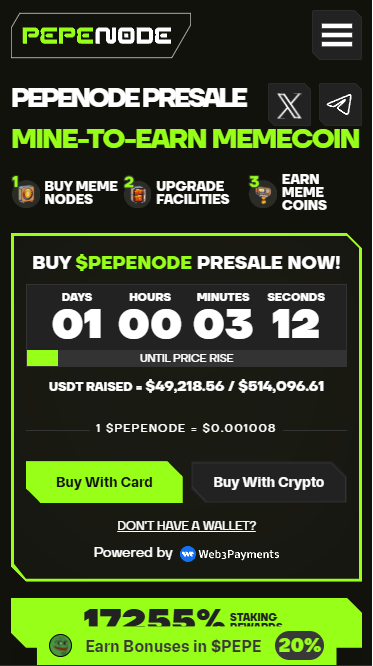
A key part of the design is its deflationary economy. Seventy percent of all tokens spent on upgrades are permanently burned, reducing the circulating supply with every in-game action. This direct link between gameplay and scarcity is rare in meme-based tokens and could help support long-term value.
Beyond mining, holders can stake $PEPENODE, with yields currently advertised at around 3,561% APY. The project also includes a referral program that allocates 2% of mining rewards to inviters, encouraging community-led growth.
The presale is still in progress, but has already raised about $500,000, showing early traction, and the smart contract has been independently audited with no critical issues flagged.
Pros
- Virtual mining model adds unique, interactive gameplay
- Deflationary burn system ties activity directly to token scarcity
- High staking and referral rewards boost user participation
Cons
- Early-stage project with no live gameplay yet
- Long-term sustainability of very high yields is uncertain
2. MemeClip (MCLIP): Meme-powered arcade token with play-to-earn rewards
- Max. supply: ~9 billion
- Blockchain platform: Ethereum
- Inception: 2025 (presale phase)
MemeClip blends meme culture with the nostalgia of early-2000s Miniclip games, offering a mobile arcade ecosystem with quick, addictive titles such as Pepe’s Pool Party, Popcat’s Soccer Showdown, and DogeKart.
Each game integrates play-to-earn mechanics, where users can earn $MCLIP through gameplay, tournaments, and NFTs.
The $MCLIP token serves multiple roles: it powers staking, in-game wagers, NFT purchases, and governance decisions.
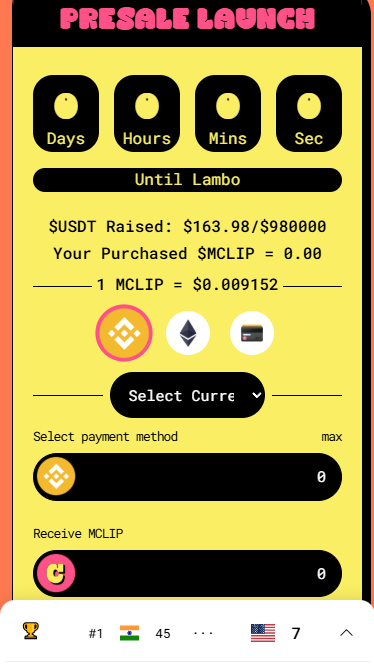
To encourage adoption, around 15% of the supply is allocated to play-to-earn rewards and another 12% to staking incentives. Early staking opportunities advertise up to 100% APY.
What gives MemeClip an edge at this early stage is that several features are already operational. Wallet integration and staking functions are now live, and the smart contract has undergone independent auditing, enhancing trust in its rollout.
The team also plans to drive adoption through community tournaments and NFT drops, providing the project with a clearer roadmap than many meme coins.
For casual gamers, MemeClip could be an accessible way into Web3, while for investors, its tokenomics and working infrastructure suggest it’s more than a short-lived meme play.
Pros
- Nostalgic arcade gameplay with meme branding attracts a broad audience
- Clear token allocation between gameplay rewards and staking
- Audited contract and live features add credibility at an early stage
Cons
- Success depends on quality of game delivery and user adoption
- Smaller market cap may result in high volatility
3. Decentraland (MANA): Gamified virtual real estate and full ownership of in-game assets
- Max. supply: 2.2 billion
- Blockchain platform: Ethereum
- Inception: 2018
Another Ethereum-powered virtual reality project, Decentraland, brings a computer-generated world split into segments that can be bought and sold.
Decentraland’s virtual world, ‘Genesis City’, is made up of ‘LAND’ parcels, which can be owned, rented, and sold in exchange for $MANA, the project’s native currency.
Aside from being exchanged for LAND, $MANA is eligible to be used across the entire Decentraland ecosystem. For instance, items such as in-game wearables and creative services such as professional development studios are available for purchase.
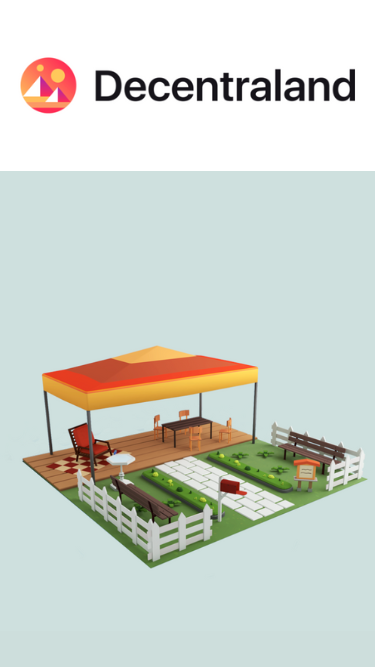
The unique and engaging concept behind Decentraland has clearly resonated, with the project raising $24m in 2017 in one of the best crypto ICOs of all time. The $MANA token also went on to surpass $5 in 2021, despite launching at just $0.025.
Despite crashing throughout 2022, the token has rebounded during 2023, up by nearly 25%. It also boasts a market cap of over $630K.
Pros
- Unique concept
- Community owned and governed/li>
Cons
- Currently has a low player count
4. The Sandbox (SAND): Metaverse gaming platform based on user-generated content
- Max. supply: 3 billion
- Blockchain platform: Ethereum
- Inception: 2020
Like Decentraland, The Sandbox is a blockchain-based metaverse platform, encouraging the creation of virtual environments and the exchange of LAND.
As its name implies, The Sandbox draws inspiration from platforms like Roblox, placing a strong emphasis on creativity and player-driven design. In contrast, Decentraland leans more toward immersive gaming elements. Both are often mentioned among the best metaverse tokens for their innovation and growing user communities.
$SAND, the project’s native ERC-20 token, powers the ecosystem, being used to buy virtual avatars and elements called ‘ASSETS’. ASSETS are generated through ERC-115 smart contracts and can be both fungible and non-fungible.
The Sandbox saw huge upticks in value following its launch, soaring to an all-time high of $8.44 in November 2021, despite launching at just $0.04 around a year earlier.
Like Decentraland, $SAND has experienced a dip in recent years but appears to be stabilizing again in 2025, despite the market’s gradual decline.
The project boasts a market cap of $946 million, with more than 2.2 billion tokens in circulation
Pros
- NFTs ensure safe and secure ownership of virtual land
- Wide scope for creativity and autonomy
Cons
- $SAND is only useful to users of the platform, meaning that it carries limited value
5. Axie Infinity (AXS): Pokemon-like avatars where players earn, battle, and trade in a play-to-earn economy
- Max. supply: 270 million
- Blockchain platform: Ethereum
- Inception: 2021
Among CoinMarketCap’s top-10 gaming coins and the largest blockchain games project on this list by market cap, Axie Infinity is widely recognized as a leading force in the world of GameFi.
In a nutshell, the project revolves around Axies, a series of collectible, Pokemon-like characters. Players can buy and sell any of the millions of Axies available on the platform.
Axis can be collected, bred, battled, and used to earn further assets that can be traded on the platform’s internal marketplace. According to the game developers, an Axie was once sold for a record-breaking $820,000.
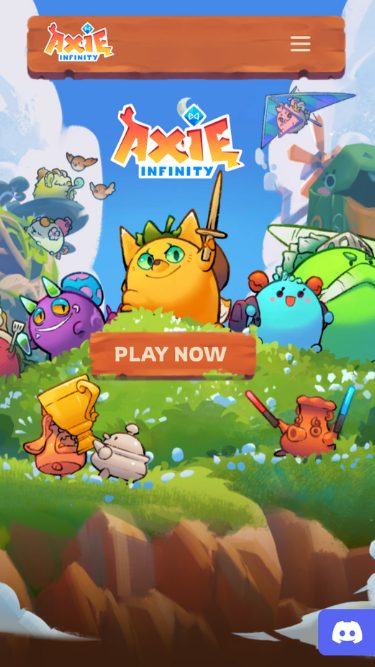
The project features two primary gaming coins – Axie Infinity Shards (AXS), which serve as the native currency of the ecosystem, and Smooth Love Potion (SLP), a reward-based token earned through gameplay.
Beyond its strong in-game economy, Axie Infinity is widely regarded as a pioneer in play-to-earn crypto gaming and a leader in the NFT gaming space. It’s also a frequent topic of discussion in popular crypto Telegram groups where gamers and investors share strategies and updates.
Pros
- Considered to be the leader in GameFi
- Fun, engaging concept
Cons
- Entry cost equivalent to around $500
What are GameFi coins?
GameFi coins are cryptocurrencies that facilitate transactions within play-to-earn blockchain games.
They merge decentralized finance (DeFi) with gaming, enabling players to earn cryptocurrency through gameplay, trade in-game items, and stake tokens for additional rewards.
These coins serve as in-game currencies, governance tools, and mediums for purchasing NFTs within blockchain-powered games.
Their integration with DeFi protocols also enables lending, borrowing, and yield farming, further expanding their utility beyond gaming.
Pros and cons of gaming crypto coins
Advantages of gaming crypto coins
- Huge market potential: Recent forecasts suggest the blockchain gaming market could reach around $165.4 billion by 2032, so the space is still in a fast-growth phase for early adopters.
- True ownership: In-game items can be issued as NFTs, which means players can hold, trade, or sell them outside the game instead of losing everything if a server shuts down.
- Play-to-earn and staking rewards: Many projects let users earn tokens through gameplay, quests, and staking, adding an extra layer of utility on top of entertainment.
- Strong communities: Active Discord, Telegram, and X (Twitter) communities often help test new features, shape roadmaps, and keep interest high between major releases
- Early access to innovation: Backing new gaming coins can give investors exposure to emerging genres, mechanics, and metaverse projects before they reach a wider audience.
Disadvantages of gaming crypto coins
- High volatility: Gaming tokens can move sharply on hype, listings, or delays, so prices may swing much more than large-cap cryptocurrencies.
- Smart contract and security risk: Bugs or exploits in games, marketplaces, or staking contracts can lead to lost funds or stalled development.
- Regulatory uncertainty: Evolving rules around crypto, NFTs, and online gaming could affect how some projects operate in certain regions.
How to choose the top gaming crypto coins?
Selecting crypto gaming coins can often be challenging due to the huge number of gaming coins being developed. However, not all gaming tokens are built the same, and many fail due to poor tokenomics or lack of real-world use. Therefore, here are some of the criteria to consider when buying the best gaming crypto of 2025.
- Utility and use cases: A strong gaming crypto token should have a clear function. Some are used as in-game currencies, others enable governance, and some power NFT transactions. The more integral the token is to the game, the more likely it will retain value. Tokens like SAND (The Sandbox) and AXS (Axie Infinity) have strong in-game applications, making them more sustainable than speculative tokens with no clear function.
- Project roadmap and development team: A well-established team with a history in blockchain gaming or crypto development signals credibility. The roadmap should include clear milestones, upcoming features, and regular updates. Projects with an inactive development team or no visible progress are often risky investments.
- Tokenomics: The top web3 gaming crypto coins have a well-balanced supply model that avoids excessive inflation. Tokens with a limited supply or built-in burning mechanism tend to hold value better than those with high emissions. One such project is Catslap, which has a deflationary mechanism that might hold the price better than other gaming projects.
- Market performance and liquidity: Gaming tokens with high trading volumes and listings on reputable exchanges are much more stable than other coins. If a coin has low liquidity, selling it without significant price impact can be difficult. Therefore, when deciding what gaming crypto coin to pick, consider its presence on major platforms such as Binance, Coinbase, and decentralized exchanges.
Gaming crypto trends in 2025
The gaming cryptocurrency space has undergone significant changes since the first wave of play-to-earn tokens in 2021. Back then, hype alone could push a project to the top. In 2025, investors and gamers are looking for more than speculation.
Here are the key trends shaping which gaming cryptos are gaining traction this year.
Token economies built for longevity
Axie Infinity highlighted both the appeal and the risks of play-to-earn models. Its rapid rise was followed by a sharp fall as inflation eroded value.
New projects have learned from this, focusing on balanced token supply, deflationary burns, and staking mechanisms that reward long-term holders.
Investors are drawn to models where digital assets can retain their value instead of devaluing quickly.
Migration to low-cost blockchains
High gas fees once made it difficult for players to spend tokens or join games. In 2025, more projects are expected to launch on Polygon, BNB Chain, and other cost-efficient networks.
This shift makes it easy for new players to enter, while also enhancing adoption in markets where every transaction is crucial. The result is broader access and faster growth for gaming ecosystems.
Gaming and immersive environments
Metaverse projects have moved from testing stages to active communities. Decentraland and The Sandbox continue to evolve, while newer projects introduce VR and AR layers to enhance the realism of experiences.
These platforms now serve not only as games but also as places where users can own, trade, and build digital assets with real-world value.
Community-led development
Players today expect more than just entertainment. They want action in the form of clear governance and transparent updates.
To grow, projects are opening decisions to token holders and making it easy for communities to vote on future features. This involvement increases trust and helps projects adapt to demand more quickly.
Overall, the gaming cryptos most likely to succeed in 2025 will be those that align sustainable tokenomics with active communities and real ownership of digital assets.
Best gaming crypto tokens by category (2025)
The growth of blockchain gaming has led to the development of various types of tokens, and categorizing them makes it easier to compare projects and understand their market positioning.
These are the top GameFi tokens of 2025, categorized into distinct groups.
Best play-to-earn gaming tokens
Axie Infinity (AXS)
Known as the pioneer of play-to-earn, Axie Infinity built a multibillion-dollar economy where players earn AXS and SLP by battling and breeding Axies. Despite a smaller user base today, it remains one of the most liquid GameFi tokens.
Gala (GALA)
Gala hosts multiple blockchain games and pays rewards in GALA. The project has partnerships with major entertainment brands and has consistently stayed among the top gaming tokens by market capitalization.
Illuvium (ILV)
An open-world RPG with NFT creatures called Illuvials. ILV is used for governance and staking rewards, and the game has been highlighted as one of the first AAA-quality blockchain projects.
Beam (BEAM)
A gaming network on Avalanche backed by Merit Circle DAO. BEAM secures the ecosystem through staking and is integrated into several upcoming play-to-earn titles, making it attractive for long-term GameFi growth.
Pixels (PIXEL)
A community-driven social RPG where players farm, explore, and trade NFTs. PIXEL has quickly risen in market cap rankings in 2025 after listing on major exchanges, showing strong retail interest.
Best metaverse gaming tokens
Decentraland (MANA)
One of the first virtual worlds built on Ethereum. MANA lets users buy digital land and assets, and the token maintains strong liquidity due to its role in metaverse real estate transactions.
The Sandbox (SAND)
A voxel-based world where land and in-game assets are NFTs. SAND benefits from ongoing partnerships with brands like Warner Music and Adidas, giving the ecosystem mainstream visibility.
ApeCoin (APE)
The governance token for the Otherside metaverse by Yuga Labs. With its connection to the Bored Ape Yacht Club, APE remains one of the most recognisable tokens in the metaverse sector.
Star Atlas (ATLAS)
A space exploration MMO built on Solana. ATLAS is used for in-game trading of ships and resources, and the project is known for its ambitious economy and cinematic visuals.
Highstreet (HIGH)
A space exploration MMO built on Solana. ATLAS is used for in-game trading of ships and resources, and the project is known for its ambitious economy and cinematic visuals.
Best NFT gaming tokens
Gods Unchained (GODS)
A trading card game where every card is an NFT on ImmutableX. GODS is used for card crafting and rewards, and the game has been steadily growing its player base.
My Neighbour Alice (ALICE)
A farming and building game where players buy and trade land as NFTs. ALICE is used for in-game purchases and governance, making it a straightforward NFT play with casual gamer appeal.
Enjin Coin (ENJ)
A long-established token designed for minting and trading NFTs across multiple games. ENJ is one of the earliest gaming tokens listed on major cryptocurrency exchanges, which has given it strong investor recognition.
ImmutableX (IMX)
A layer 2 scaling solution focused on NFT gaming. IMX is used for paying fees and staking, and it underpins leading NFT games, such as Illuvium and Gods Unchained.
Pudgy Penguins (PENGU)
A top NFT brand expanding into gaming. $PENGU connects the popular Pudgy Penguins IP with interactive NFT ownership, offering investors exposure to a Web3 brand with mainstream traction.
Best staking gaming altcoins
Ronin (RON)
A sidechain built for Axie Infinity. Staking RON secures the network and provides rewards; Ronin continues to process millions of daily transactions within the Axie ecosystem.
ImmutableX (IMX)
IMX can be staked for protocol rewards and voting rights. With more than 200 projects building on Immutable, the token plays a central role in Web3 gaming infrastructure.
Xai (XAI)
A gaming-focused layer built on Arbitrum. Holders can stake XAI to participate in validator operations, and the project is backed by Offchain Labs, adding credibility to its growth.
Beam (BEAM)
BEAM staking powers Merit Circle’s DAO. Over 1.5 million players have joined through Beam-integrated titles, and stakers benefit from treasury-driven incentives.
A cross-chain gaming network supported by LayerZero. PORTAL stakers get access to launchpad allocations and governance, positioning it as a gateway to early Web3 gaming projects.
Best meme gaming tokens
Pepenode (PEPENODE)
A mine to earn meme token where users run virtual rigs to generate rewards. Pepenode’s referral system and deflationary supply model have made it one of the fastest-growing meme gaming tokens of 2025.
MemeClip (MCLIP)
A mobile gaming ecosystem inspired by meme culture. MCLIP is used for rewards and in-game utilities, and its focus on casual players makes it a rare meme token with real use cases.
Floki (FLOKI)
Originally a meme coin, FLOKI has expanded into GameFi through its Valhalla metaverse. It boasts one of the largest meme token communities, which helps maintain high liquidity and trading volume.
Magic (MAGIC)
The native token of Treasure DAO, a community gaming ecosystem. MAGIC supports NFT trading and game economies, and has become a recognized altcoin in the crossover between the meme and gaming sectors.
Dogami (DOGA)
A pet-themed game where players raise and trade NFT dogs. DOGA appeals to investors seeking niche GameFi projects with strong branding in the virtual pet space.
How to buy and store gaming cryptos?
As gaming crypto tokens become increasingly popular, many people wonder how and where to purchase them. Additionally, selecting the right wallet to store them safely is even more challenging. Here’s a step-by-step guide on how to buy these coins and where to store them:
Choose a reliable exchange
The first steo to acquiring gaming crypto coins is to find a reputable exchange where you can purchase them. Some of the most popular exchanges include Binance, Coinbase, and KuCoin to name a few.
Set up a crypto wallet
Once you’ve purchased your gaming crypto tokens, you’ll need a secrute wallet to store them. One of our highest recommendations is Best Wallet, which offers a user-friendly interface, and support for multiple blockchains.
Transfer your coins to your wallet
After setting up your wallet, the next step is to transfer your web3 gaming coins from the exchange to your wallet address.
Start using your gaming crypto coins
Now that your coins are securely stored, you can start using them in their respective gaming ecosystems.
Conclusion
This guide has introduced a mix of mature gaming tokens such as Decentraland, The Sandbox, and Axie Infinity, along with early-stage projects including Pepenode and MemeClip. Together, they offer a broad view of how the space is developing and where new ideas are emerging.
A few themes appear across these projects. Consistent progress, meaningful gameplay features, and active communities often separate stronger teams from those that lose momentum. These signals can also help you decide which projects deserve more attention.
Overall, gaming coins could be an interesting addition for investors who want exposure to a growing area of crypto.

How We Rate Cryptocurrencies
We review each cryptocurrency we select. Below are the key metrics we check before listing the cryptocurrency on the website. For further details, you can also take a look at our cryptocurrencies rating guide, featured on ValueWalk.
Security
Popularity and potential
Liquidity
Tokenomics
Social media activity
FAQs
What is the best gaming crypto coin to buy in 2025?
Which gaming crypto has the highest market cap in 2025?
Are gaming cryptos a good investment?
How do gaming cryptos make money?
Where can I buy gaming crypto coins?
How do I store gaming cryptos safely?
References
- With 21.8% CAGR, Blockchain Gaming Market Size to Surpass USD 614.91 billion by 2030 | Fortune Business Insights via Yahoo Finance | 2023
- Top Gaming Tokens by Market Capitalization | CoinMarketCap | 2025
- AR & VR – Worldwide | Statista | 2025
- Blockchain Gaming Market Size, Share and Forecast, 2025-2032 | Coherent Market Insights | 2025
- Decentralized Intelligence in GameFi: Embodied AI Agents and the Convergence of DeFi and Virtual Ecosystems | Fernando Jia, Jade Zheng, Florence Li via Arxiv.org | 2024
- Gaming Industry Report 2025: Market Size & Trends | Udonis | 2025